Wayground logo

Free Printable Worksheets

Font size

S
M
L
XL
Worksheets

Chapter 1: Introduction to Anatomy

Total questions: 40

Worksheet time: 29mins

Name
Class
Date
1.
The study of the structure and shape of the body. 
a)
Anatomy
b)
Physiology
c)
Cytology
d)
Histology
2.
What division of Anatomy is concerned with those structures in the body large enough to be seen with the naked eye?
a)
Microscopic
b)
Gross
c)
Surface
d)
Systemic
3.
The study of tissues. 
a)
Histology
b)
Cytology
c)
Anatomy
d)
Physiology
4.
The study of the functions of the body. 
a)
Anatomy
b)
Physiology
c)
Cytology
d)
Histology
5.
What is the highest level of structural organization?
a)
Organ
b)
Organ system
c)
Organism
d)
Tissues
6.
What level of structural organization includes atoms and molecules?
a)
Chemical 
b)
Cellular
c)
Organ
d)
Tissues
7.
A group of organs that cooperate to accomplish a common purpose. 
a)
Organism
b)
Tissues
c)
Organ systems
d)
Organelle
8.
What body system provides framework and support?
a)
Nervous
b)
Cardiovascular
c)
Skeletal
d)
Muscular
9.
What body system maintains the body's electrolyte level and regulates the acid-base balance of the blood?
a)
Cardiovascular
b)
Endocrine
c)
Lymphatic
d)
Urinary
10.
Sweat glands, skin, hair, and nails are structures of this body system. 
a)
Endocrine
b)
Integumentary
c)
Lymphatic
d)
Nervous
11.
Blood cell production occurs in this system. 
a)
Cardiovascular
b)
Nervous
c)
Lymphatic
d)
Skeletal 
12.
What body system is responsible for the exchange of oxygen and carbon dioxide between air and blood?
a)
Cardiovascular
b)
Nervous
c)
Endocrine
d)
Respiratory
13.

What body system defends against infection?

a)

Endocrine

b)

Cardiovascular

c)

Nervous

d)

Lymphatic/Immune

14.
The process of breaking down food into simple molecules. 
a)
Growth
b)
Metabolism
c)
Digestion
d)
Movement
15.
The ability to sense changes in the environment and then react to them. 
a)
Responsiveness
b)
Metabolism
c)
Maintaining boundaries
d)
Growth
16.
Chemical substances used for energy and cell building. 
a)
Nutrients
b)
Water
c)
Oxygen
d)
Cells
17.
The ability to maintain a stable internal environment. 
a)
Normalcy
b)
Homeostasis
c)
Stimulus
d)
Response
18.

Who is considered the father of human anatomy?

a)

Antonio Banderas

b)

Andrew Virtue

c)

Andreas Vesalius

d)

Andre Agassi

19.
What is the first component of homeostatic control mechanisms that recognizes the change (stimulus) in the body or environment. 
a)
Receptor
b)
Control center
c)
Effector
d)
Regulation
20.
The third component of homeostatic control mechanisms that provides the means for the control center's response to the stimulus (change) in the body or environment. 
a)
Receptor
b)
Regulation
c)
Effector
d)
Effective
21.
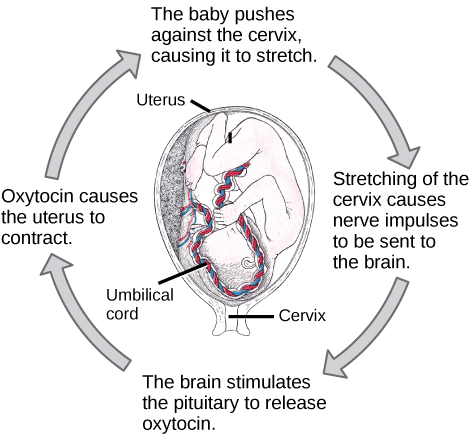
Childbirth is an example of what type of feedback?
a)
Negative
b)
Positive
22.
The type of feedback that shuts down the stimulus. 
a)
Negative
b)
Positive
23.
What body system includes the brain and spinal cord?
a)
Nervous
b)
Muscular
c)
Skeletal
d)
Endocrine
24.
Most homeostatic control mechanisms are what type?
a)
Negative
b)
Positive
25.
As you get dehydrated, your blood becomes thicker and harder to pump. Your kidneys will respond by stopping urine production, sending the water from urine into your bloodstream to thin your blood back to normal level.
a)
Positive Feedback Response
b)
Negative Feedback Loop 
26.
If the calcium in your blood decreases below homeostasis levels, a gland in the brain will sense the decrease and send a chemical message to your bones. Your bones will release calcium into the blood, bringing blood calcium levels back up.
a)
Positive Feedback Response
b)
Negative Feedback Loop 
27.

What is the basic unit of structure and function of all LIVING organisms?

a)

organism

b)

species

c)

cell

d)

tissue

e)

organ system

28.

Which of these is NOT a characteristic of life?

a)

movement

b)

growth

c)

excretion

d)

sleeping

e)

reproduction

29.

Small structures within cells that carry on specific functions are:

a)

organelles

b)

tissues

c)

molecules

d)

parasites

e)

hormones

30.

The sum of all chemical reactions in the body is called

a)

metabolism

b)

assimilation

c)

growth

d)

digestion

31.

Measuring an organ's size would relate more closely to the science of ...

a)

anatomy

b)

physiology

c)

both anatomy and physiology

32.

Measuring the acid content of the stomach would relate more closely to the science of ...

a)

anatomy

b)

physiology

c)

both anatomy and physiology

33.
Which is the correct structural order?
a)
tissue-cells-organ-organ system
b)
cells-tissue-organ system-organ
c)
tissue-cells-organ system-organs
d)
cells-tissue-organ-organ system
34.
What are the definitions for anatomy anatomy and physiology?
a)
Anatomy=function
Physiology=structure
b)
Anatomy = structure
Physiology = function
35.

The smallest particle in the structural makeup of the body is:

a)

cell

b)

molecule

c)

atom

d)

tissue

36.

Reorder the following levels of structural organization from highest to lowest levels.

a)

organism

b)

organ system

c)

organs

d)

tissues

e)

cellular

1)
2)
3)
4)
5)
37.

Match the following body system with the correct organ.

a)

1.

cardiovascular system

b)

2.

respiratory system

c)

3.

urinary system

d)

4.

lymphatic system

e)

5.

nervous system

38.

Match the following function to the correct body system.

a)

transports oxygen, wastes, and nutrients

1.

cardiovascular system

b)

movement and posture

2.

muscular system

c)

produces hormones

3.

endocrine system

d)

breaks down ingested food

4.

digestive system

e)

protects internal organs and provides framework

5.

skeletal system

39.
What type of feedback loop is shown?
a)
negative
b)
neutral 
c)
positive
40.

What is the purpose of NEGATIVE FEEDBACK loops in your body?

a)

To maintain homeostasis

b)

To destabilize your body systems

c)

To enhance or amplify an effect

d)

To provide constructive criticism