
 Worksheets
E. Science
Total questions: 40
Worksheet time: 40mins
Name
Class
Date
1.
The energy from the sun is created by a process called:
a)
nuclear fission
b)
nuclear fusion
c)
nuclear reaction
d)
nuclear core
2.
The middle layer of the sun's interior that contains very tightly packed gas is called the _____________.
a)
photosphere
b)
chromosphere
c)
radiation zone
d)
convection zone
3.
In which area of the sun does gas rise as it heats up, then fall back down as it cools?
a)
the core
b)
the radiation zone
c)
the convection zone
d)
the corona
4.

The moon is a natural ______ of Earth.
a)
comet
b)
axis
c)
satellite
d)
space probe
5.

Earth's ________ on its axis causes day and night.
a)
rotation
b)
revolution
c)
phase
d)
comet
6.

One full orbit of an object around another object is called a ________.
a)
axis
b)
rotation
c)
revolution
d)
satellite
7.

The __________ has planets, moons, comets, and asteroids.
a)
solar system
b)
earth
c)
rotation
d)
United States
8.
One of the main differences between the outer and inner planets is __________.
a)
The inner planets all have water
b)
the inner planets are much bigger than the outer planets
c)
the outer planets are gas planets
d)
the outer planets have rings, and the inner planets don't
9.

In the northern hemisphere, the __________ occurs on June 21or 22,
a)
Spring equinox
b)
fall equinox
c)
summer solstice
d)
winter solstice
10.

The phase of the Moon that immediately precedes (comes before) the new moon is the ___________.
a)
waxing crescent
b)
waning crescent
c)
3rd Quarter
d)
waning gibbous
11.

Why do globes lean sideways?
a)
To allow them to spin easier.
b)
To demonstrate the tilt of Earth's axis.
c)
To demonstrate the effects of gravity.
d)
To demonstrate day and night.
12.

Which type of eclipse is being modeled: Lunar or Solar
a)
Lunar Eclipse
b)
Solar Eclipse
13.
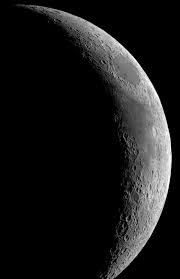
Name the moon phase
a)
waning crescent
b)
waxing crescent
c)
waning gibbous
d)
waxing gibbous
14.
Does the moon revolve?
a)
yes
b)
no
15.
Which is the MAIN cause of the ocean's tides?
a)
the tilt of the Earth's axis
b)
The earth's rotation on it's axis
c)
the gravitational pull of the moon,
d)
the uneven heating of the oceans by the sun
16.
What is responsible for the moon's illumination?
a)
infrared rays
b)
sunlight reflecting on the surace of the moon
c)
sunlight bouncing off the earth's atmosphere
d)
gamma rays
17.

What is the phase of the moon in the picture?
a)
New Moon
b)
Third Quarter
c)
First Quarter
d)
Waxing Gibbous
18.
When the moon appears to be "getting smaller", we call this _______________.
a)
Waxing
b)
Waning
c)
Shrinking
d)
Disappearing
19.
Huge looping eruptions of gas; usually near sunspots; arch out into outer layers than fall back down.
a)
corona
b)
core
c)
prominence
d)
solar flare
20.
What is the sun mostly made up of
a)
Helium
b)
Core
c)
Carbon
d)
Hydrogen
21.
The middle of the Sun is called the
a)
Corona
b)
Photosphere
c)
Core
d)
Convection Zone
22.
What layer are you looking at when you take a picture of the sun?
a)
Core
b)
Photosphere
c)
Solar Wind
d)
Corona
23.

What is this
a)
Prominice
b)
sun spot
c)
core
d)
Earth
24.

What are spots on the sun that are cooler than the rest of the sun?
a)
Solar Flares
b)
Corona
c)
Sun Spots
d)
Sun Rays
25.

What is an explosion on the sun that gives out huge amounts of energy?
a)
Sun Spot
b)
Solar Flare
c)
Sun Ray
d)
Sun Gases
26.
One full orbit of an object around another object is called a ________.
a)
axis
b)
rotation
c)
revolution
d)
satellite
27.

Which season is taking place in the Northern Hemisphere in Position 3?
a)
Winter
b)
Spring
c)
Summer
d)
Fall
28.

What happens when the area in which you live tilts away from the sun?
a)
It is summer.
b)
It is spring.
c)
It is winter.
d)
It is fall.
29.

What branch of science does this picture represent?
a)
Oceanography
b)
Meteorology
c)
Geology
d)
Astronomy
30.

What branch of science does this picture represent?
a)
Oceanography
b)
Meteorology
c)
Geology
d)
Astronomy
31.

What sphere does the picture represent?
a)
Geosphere
b)
Atmosphere
c)
Exosphere
d)
Hydrosphere
32.

What branch of science does this picture represent?
a)
Oceanography
b)
Meteorology
c)
Geology
d)
Astronomy
33.
Studies the solid portions of the earth, including volcanoes, earthquakes, and fossils.
a)
Geology
b)
Geography
c)
Cartography
d)
Oceanography
34.
There are two types of data. Which type of data involves numbers that are obtained by counting or measuring?
a)
quantitative
b)
qualitative
35.
There are two types of data. Which type of data involves descriptions that cannot be counted or measured?
a)
qualitative
b)
quantitative
36.
A set of related hypotheses that have been confirmed to be true many times and can explain a great amount of data is a(n)
a)
experiment
b)
hypothesis
c)
theory
d)
law
37.
Which planet is the hottest planet?
a)
Mercury
b)
Mars
c)
Venus
d)
Saturn
38.
What is the correct order of the planets from the sun?
a)
Mercury, Venus, Earth, Mars, Jupiter, Saturn, Uranus, Neptune.
b)
Mercury, Earth, Venus, Mars, Jupiter, Saturn, Uranus, Neptune.
c)
Mercury, Venus, Earth, Mars, Saturn, Jupiter, Uranus, Neptune.
d)
Mars, Venus, Earth, Mercury, Jupiter, Saturn, Uranus, Neptune.
39.
How long does earth's rotation last?
a)
90 hours
b)
about 1 hour
c)
24 hours
d)
48 hours
40.
The SUN REVOLVES around the:
a)
Moon
b)
Earth
c)
The Sun doesn't revolve
100 %

