
 Worksheets
Cycling of Energy
Total questions: 40
Worksheet time: 2hrs 2mins
Name
Class
Date
1.

What is this called?
a)
Food Web
b)
Food Chain
c)
Abiotic Factors
2.
If a frog is the prey, what could be the predator?
a)
Grass
b)
Insect
c)
Snake
d)
Snail
3.
What does a Primary Consumer eat?
a)
Tertiary Consumers
b)
Secondary Consumers
c)
Producers
4.

An organism that lives by breaking apart dead organic matter into simpler parts is...
a)
scavenger
b)
consumer
c)
decomposer
d)
carnivore
5.
A third-level consumer has to be which type?
a)
Carnivore.
b)
Decomposer.
c)
Producer.
d)
Herbivore.
6.

An animal that eats other animals is a....
a)
carnivore
b)
omnivore
c)
herbivore
d)
decomposer
7.

What does a food web represent?
a)
All connections of energy flow throughout all organisms in a ecosystem.
b)
The specific ways that mutualism is carried out.
c)
A single pathway or energy flow between organisms.
d)
How carnivores get their food.
8.
Bacteria, fungi, and earthworms are examples of:
a)
scavengers
b)
predators
c)
prey
d)
decomposers
9.
What is missing from this food chain?
Grass > Grasshopper > Bird > Snake
Grass > Grasshopper > Bird > Snake
a)
Producer
b)
Primary Consumer
c)
Secondary Consumer
d)
Decomposer
10.

Which of the following is a herbivore?
a)
cricket
b)
frog
c)
hawk
d)
shrew
11.

__________ is an organism that eats BOTH plants and animals for energy.
a)
Omnivore
b)
Darnivore
c)
Carnivore
d)
Herbiovre
12.

Lions only eat buffalo, antelopes, zebras and crocodiles. They are called __________.
a)
Omnivore
b)
Herbivore
c)
Carnivore
d)
Delivore
13.

Which organism recieves the least amount of energy from the producer?
a)
Owl
b)
Grasshopper
c)
Lilypad
d)
Mouse
14.
Which is a producer?
a)
deer
b)
tall grass
c)
lion
d)
worm
15.

Which level will contain plants?
a)
A
b)
B
c)
C
d)
D
16.
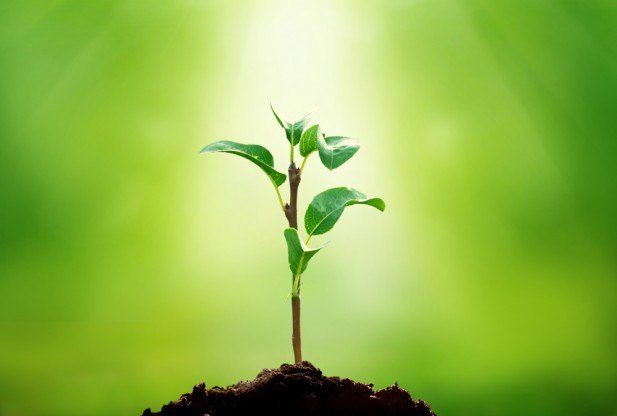
An organism that uses sunlight to create its own food is known as a:
a)
Producer
b)
Heterotroph
c)
Consumer
d)
Decomposer
17.
How much energy is available to be passed on to the next trophic level in an ecosystem?
a)
100%
b)
10%
c)
50%
d)
75%
18.

The rabbit in this food web would be considered a:
a)
Decomposer
b)
Producer
c)
Secondary Consumer
d)
Primary Consumer
19.
All energy on Earth ultimately comes from what source?
a)
Water
b)
Sun
c)
Consumers
d)
Oxygen
20.

What is this called?
a)
Food Web
b)
Food Chain
c)
Abiotic Factors
21.
Why is there a limited amount of energy that can be passed on to the next feeding level?
a)
There is never enough sunlight available.
b)
Some ecosystems have limited resources.
c)
Organisms use some of the energy they get from eating.
d)
All the energy is available to be passed on.
22.

An energy pyramid represents what?
a)
How much sunlight is available for the ecosystem to use.
b)
How much energy a particular organism needs.
c)
How much energy is needed to build a pyramid.
d)
The amount of energy available to the next 'feeder' in a food web.
23.
A producer in a food chain.
a)
Elephant
b)
Prey
c)
Consumer
d)
Autotroph
24.
The smallest unit of life that can sustain itself is called...
a)
an organism.
b)
the biosphere.
c)
a population.
d)
a community.
25.
What are groups of different populations living togther in the same place at the same time called?
a)
An organism
b)
A population
c)
A community
d)
A biosphere
26.
What are the ecological levels of organization from smallest to the largest?
a)
organism, population, community, ecosystem, biome, biosphere
b)
organism, community, population, ecosystem, biome, biosphere
c)
organism, population, community, biome, ecosystem, ecosphere.
d)
organism, community, population, biome, ecosystem, ecosphere
27.
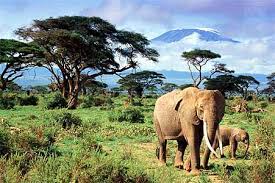
What are the biotic factors in this image?
a)
sunlight, elephants, and grasses
b)
sunlight, water, and air
c)
elephants, plants, trees
28.
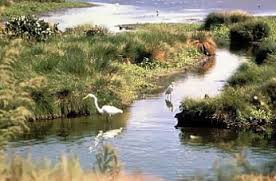
What are the abiotic factors in this image?
a)
water, sunlight, air
b)
birds and plants
c)
water, plants, and birds
29.
Nonliving factor that affects an ecosystem...
a)
biotic factor
b)
abiotic factor
c)
food chain
d)
biome
30.
Living factors or organisms that affect an ecosystem
a)
abiotic factors
b)
species
c)
trophic level
d)
biotic factors
31.

The study of organisms and how they interact with one another and their environment is best described as
a)
Biology
b)
Ecology
c)
Zoology
d)
Botany
32.
__________ is a pesticide that caused serious problems for birds, insects, and people.
a)
DDT
b)
Carbo
c)
Iron
d)
Chloroplasts
33.

What level of organization can be observed in the image?
a)
Species
b)
Population
c)
Community
d)
Ecosystem
34.
TRUE or FALSE: An ecosystem contains only biotic factors.
a)
TRUE
b)
FALSE
35.
_________ is a waste product of photosynthesis.
a)
Carbon Dioxide
b)
Oxygen
c)
Fat
d)
Energy
36.
A green pigment in plants that absorbs sunlight is _________
a)
ribosome
b)
nucleic acid
c)
lysosome
d)
chlorophyll
37.
Temperature, water, sunlight, shelter, and space are resources that are often __________.
a)
limiting factors
b)
wet
c)
messy
d)
found in rocks
38.
Some deep ocean and cave ecosystems do not rely on the sunlight for energy, instead they receive their nutrients, through a process called,
a)
Photosynthesis
b)
Chemosynthesis
c)
They do not receive nutrients
d)
???????
39.

What would happen if the population of hawks suddenly increased? How would it affect the other organisms in the ecosystem?
a)
The snakes would decrease due to more hawks eating them
b)
All of the population of organisms would increase
c)
The biotic factors in the ecosystem would increase
d)
The hawks predators would decrease
40.
_________ are global recycling systems that interconnect the biotic and abiotic components of an ecosystem
a)
Biogeochemical Cycle
b)
Bicycle
100 %

