
 Worksheets
Weather Tools, Clouds, & the Water Cycle
Total questions: 30
Worksheet time: 33mins
Name
Class
Date
1.
A rain gauge measures what?
a)
Air pressure
b)
Wind speed
wind speed
wind speed
c)
Amount of rain fall
d)
Wind direction
2.

This weather instrument is a...
a)
anemometer
b)
barometer
c)
wind vane
d)
thermometer
3.

This weather instrument is a...
a)
anemometer
b)
Christmas ornament
c)
wind vane
d)
barometer
4.

What does this tool measure?
a)
Wind speed
b)
Wind direction
c)
Air pressure
d)
Temperature
5.

This weather instrument is an...
a)
wind vane
b)
anemometer
c)
barometer
d)
thermometer
6.
The weather forecast tomorrow says there will be a 15 mph northeast wind and a high temperature of 52 degrees. What three instruments will a meteorologist use to make this prediction?
a)
anemometer, wind vane, thermometer
b)
barometer, hygrometer, wind vane
c)
thermometer, satellite image, hygrometer
d)
wind vane, satellite image, barometer
7.
Which tool measures air pressure?
a)
Thermometer
b)
Barometer
c)
Wind Vane
d)
Hygrometer
8.
Which tool measures wind speed?
a)
Anemometer
b)
Hygrometer
c)
Barometer
d)
Wind Vane
9.
A high pressure system means we might have this weather.
a)
Snow blizzard
b)
Sunny and dry
c)
Rain storm
d)
Tornado
10.
A low pressure system means we might have this weather.
a)
Sunny
b)
A clear sky
c)
Dry day
d)
Stormy or wet
11.
What does a barometer measure?
a)
measures high and low pressure in the air
b)
measures humidity in the air
c)
measures speed of the wind
d)
measures the amount of rain that has fallen
12.
What is the name of a person who forescast weather?
a)
weather man
b)
geologist
c)
meteorlogist
d)
scientist
13.
They are highest clouds in the sky. They look curly, white and feathery. Usually mean good weather.
a)
Cumulus
b)
Cumulonimbus
c)
Cirrus
d)
Stratus
14.
This is sometimes called a thunderhead cloud. It looks very tall like mountains and heavy rain comes from it.
a)
Cumulus
b)
Cirrus
c)
Stratus
d)
Cumulonimbus
15.
They are low in the sky and look soft and fluffy.
a)
Cirrus
b)
Cumulonimbus
c)
Cumulus
d)
Stratus
16.
These clouds are the closest to the ground. Their name means layer- or sheet like. They bring rain or snow and cover most of the sky.
a)
Cirrus
b)
Stratus
c)
Cumulonimbus
d)
Cumulus
17.
Which cloud brings nice weather?
a)
Cumulonimbus
b)
Cumulus
c)
Stratus
18.
Low clouds (like fog), that are thick, cover the sky, and block the sun. Usually bring continuous precipitation (rain or snow).
a)
stratus
b)
cumulus
c)
cirrus
d)
nimbo
19.
Nimbostratus and cumulonimbus clouds can signal what type of upcoming weather?
a)
fair skies
b)
hot, sunny weather
c)
windy weather
d)
rainy weather
20.
During which part of the water cycle do a cloud form?
a)
Evaporation
b)
Precipitation
c)
condensation
d)
Run off
21.
Which of these is an example of precipitation?
a)
snow
b)
air
c)
clouds
d)
vapor
22.
Which best explains why runoff is important?
a)
It returns water to other locations on Earth
b)
It increases the chance of flooding
c)
It makes evaporation occur faster
d)
It increases condensation
23.

What does groundwater do?
a)
It sends water to our buildings, houses, and water transplant places
b)
to the sky
c)
to the sun
d)
To the Earth's surfaces
24.

What is it called when plants give off water vapor as a waste product?
a)
condensation
b)
evaporation
c)
sublimation
d)
transpiration
25.
What is the water cycle?
a)
the 3 forms of water
b)
the movement of water on, above, or below the surface of the Earth
c)
when water melts
d)
when clouds form
26.
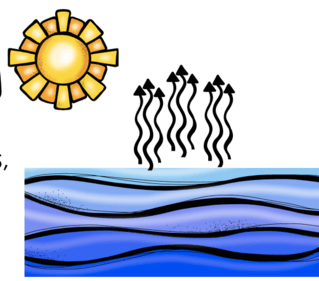
What part of the water cycle does this picture show?
a)
condensation
b)
precipitation
c)
evaporation
27.
What is condensation?
a)
The part of the water cycle when the sun heats up water, turning it from a liquid into water vapor or steam. It rises from the ground into the air.
b)
The part of the water cycle when the water vapor in the air gets cold. The water turns back into a liquid and forms clouds.
c)
The part of the water cycle when clouds get heavy and can no longer hold the liquid water. This causes the water to fall from the sky to the earth as rain, snow, sleet, or hail.
28.
What is evaporation?
a)
The part of the water cycle when the sun heats up water, turning it from a liquid into water vapor or steam. It rises from the ground into the air.
b)
The part of the water cycle when the water vapor in the air gets cold. The water turns back into a liquid and forms clouds.
c)
The part of the water cycle when clouds get heavy and can no longer hold the liquid water. This causes the water to fall from the sky to the earth as rain, snow, sleet, or hail.
29.
What is precipitation?
a)
The part of the water cycle when the sun heats up water, turning it from a liquid into water vapor or steam. It rises from the ground into the air.
b)
The part of the water cycle when the water vapor in the air gets cold. The water turns back into a liquid and forms clouds.
c)
The part of the water cycle when clouds get heavy and can no longer hold the liquid water. This causes the water to fall from the sky to the earth as rain, snow, sleet, or hail.
30.
When water condenses, the liquid water forms ______________.
a)
water vapor
b)
steam
c)
air
d)
clouds
100 %

