
 Worksheets
Unit 2 Matter
Total questions: 44
Worksheet time: 24mins
Name
Class
Date
1.
All matter is made of what
a)
energy
b)
atoms
c)
electrons
d)
compounds
2.
The positive particles of an atom are
a)
electrons
b)
positrons
c)
neutrons
d)
protons
3.
The central region of an atom where its neutrons and protons are is its
a)
nucleus
b)
electron cloud
c)
core
d)
center
4.
An atom with atomic number 6 would have how many protons
a)
6
b)
12
c)
3
d)
cannot be determined
5.
Particles in an atom that are neutral and have no charge are
a)
negatrons
b)
electrons
c)
neutrons
d)
protons
6.
True or False? Neutrons have a negative charge
a)
True
b)
False
7.
What is the atomic number for an element with three protons?
a)
2
b)
1
c)
3
d)
6
8.
A particle that moves around the nucleus is a(n)...
a)
Proton
b)
Neutron
c)
Electron
d)
Quark
9.
In the modern periodic table elements are arranged by:
a)
atomic mass
b)
atomic number
c)
valence electrons
d)
number of isotopes
10.

What does the 1.00794 stand for?
a)
Hydrogen
b)
atomic number
c)
atomic mass
d)
atomic explosion
11.
A measure of how much matter an object has is--
a)
weight
b)
gravity
c)
mass
d)
volume
12.
Most of the mass in an atom is made up of _____________________?
a)
protons and electrons
b)
protons and neutrons
c)
neutrons and electrons
d)
electrons and quarks
13.
The atomic number represents the identity of the ________________.
a)
mass of the atom
b)
element
c)
electrons
d)
isotopes
14.
What is the electrical charge of a proton?
a)
1+
b)
1-
c)
neutral
d)
2-
15.
Atoms of the same element which have a different number of neutrons are called _________________.
a)
ions
b)
isotopes
c)
quarks
d)
molecules
16.
What is the atomic number?
a)
the number of protons
b)
the number of protons and neutrons
c)
the number of neutrons
d)
the number of protons and electrons
17.
What is the mass number?
a)
the number of protons
b)
the number of protons and neutrons
c)
the number of neutrons
d)
the number of protons and electrons
18.

What is the atomic number of this atom?
a)
1
b)
3
c)
4
d)
7
19.

What is the mass number of this atom?
a)
7
b)
14
c)
21
d)
none of the above
20.
The atomic number represents the identity of the ________________.
a)
mass of the atom
b)
element
c)
electrons
d)
isotopes
21.
What two properties unify all matter?
a)
Mass and Weight
b)
Volume and Weight
c)
Mass and Volume
22.
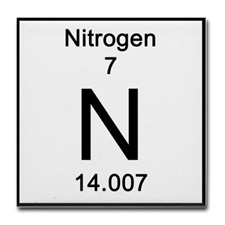
What is the number of protons that the element in this image contain?
a)
14
b)
7
c)
15
d)
18
23.
The first energy level can hold up to how many electrons?
a)
8
b)
4
c)
2
d)
5
24.

What is the atomic mass of "F"
a)
9
b)
18
c)
17
d)
19
25.
all matter is made of what
a)
energy
b)
atoms
c)
electrons
d)
compounds
26.
Which of the following is a negatively charged subatomic particle?
a)
Electron
b)
Proton
c)
Neutron
d)
Quark
27.
Which of the following is NOT considered matter?
a)
Air in an empty room
b)
Car exhaust
c)
Light and Sound
d)
The nucleus of an atom
28.
Which of the following is NOT a force that exists inside an atom?
a)
Weak
b)
Strong
c)
Gravitational
d)
Sound
29.

What is the current model of the atom called?
a)
Thomson
b)
Bohr
c)
Dalton
d)
Newton
30.

What scientist is best known for his "Plum Pudding" model of the atom?
a)
J.J. Tomson
b)
Ernest Rutherford
c)
John Dalton
d)
Democritus
31.

What contribution did John Dalton make to atomic theory?
a)
He discovered that every atom was positively charged.
b)
He discovered that every element consisted of one type of atom.
c)
He discovered that atoms had nuclei.
d)
He discovered that atoms could be divided into smaller parts.
32.
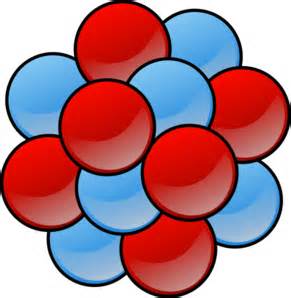
What does the nucleus of an atom contain?
a)
Electrons and neutrons
b)
Protons and neutrons
c)
Neutrinos and positrons
d)
DNA and RN
33.

Who came up with this model of an atom?
a)
J.J. Thompson
b)
Ernest Rutherford
c)
Neils Bohr
d)
James Chadwick
34.
True or False: The majority of an atom is made up of empty space
a)
True
b)
False
35.
Contributes basically no mass to an atom.
a)
protons
b)
neutrons
c)
electrons
d)
protons and neutrons
36.
The majority of an atom's mass exists where?
a)
In the nucleus
b)
In the electron cloud
c)
In the space between the nucleus and the electrons
d)
In the neutrons
37.
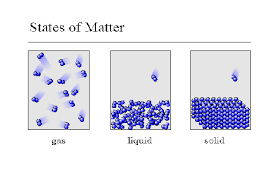
At higher temperatures
a)
particles in an object have less energy
b)
particles in an object move faster
c)
a gas contracts
38.
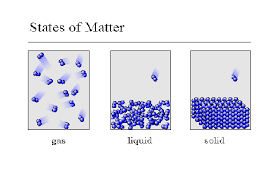
A gas
a)
has a definite shape but no definite volume
b)
has a definite volume but no definite shape
c)
has fast-moving particles
39.
Boiling
a)
liquid to gas
b)
gas to solid
c)
gas to liquid
d)
solid to liquid
40.
Freezing
a)
Solid to gas
b)
Liquid to solid
c)
Gas to solid
d)
Liquid to gas
41.
Particles (molecules) in a ______________________ have more energy than the other states of matter.
a)
gas
b)
solid
c)
liquid
42.
What is condensation?
a)
gas to solid
b)
gas to liquid
c)
liquid to solid
d)
solid to liquid
43.
Particles of a liquid
a)
are tightly packed together and stay in a fixed position.
b)
have no viscosity.
c)
decrease in volume with increasing temperature.
d)
are free to move around one another but still touch.
44.
The state of matter that has no definite size or shape is
a)
Solid
b)
Liquid
c)
Gas
100 %

