
 Worksheets
05. Atomic Structure
Total questions: 25
Worksheet time: 17mins
This particle determines the element's identity.
electron
proton
neutron
valence shell
What is the mass of a single proton or a single neutron?
1 amu
1 grams
1 gmu
1 molecular masses

Which subatomic particle has no effect on the mass of the atom?
proton
neutron
electron


Using the Periodic Table, what is the element name of the atom pictured?
Fluorine
Neon
Argon
Potassium
What represents the number of protons in an element?
Atomic Mass
Mass Number
Valence Electrons
Atomic Number

The number 16 for the atomic element sulfur is the
ionic number
isotope
atomic mass
atomic number
The name of this particle means indivisible and it is the building block of matter
molecule
compound
atom
isotope
Unlike the Bohr Model, where electrons are likely to be found as they travel around the nucleus:
Nucleus
Electron Cloud
Within a Proton
Within a Neutron

How many neutrons does Fluorine have?
9
19
10
2
Discovered the electron within the atom and proposed a model of the atom
Thomson
Chadwick
Schrodinger & Heisenberg
Dalton
Stated that atoms of the same element are identical to each other in the Atomic Theory
Bohr
Rutherford
Dalton
Thomson
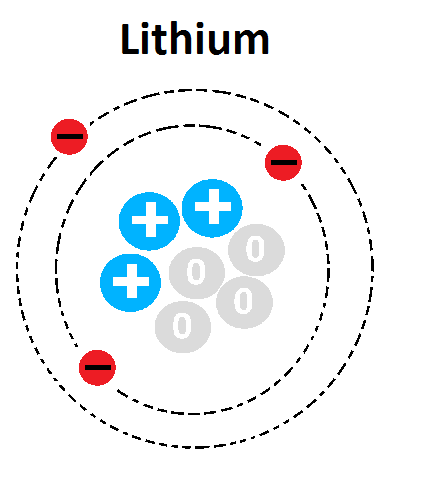
What is the mass number of this atom?
1
3
4
7
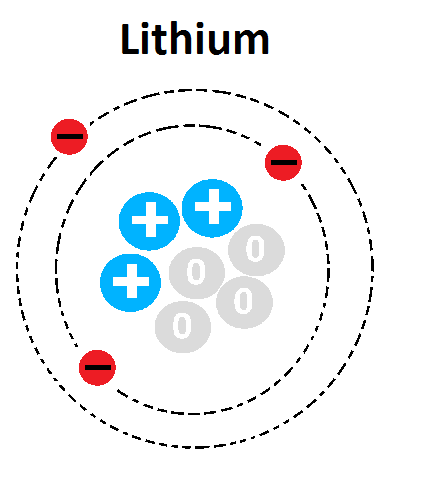
What is the atomic number of this atom?
1
3
4
7
Which of the following is correct?
Protons are positive, electrons are negative, neutrons are neutral.
Protons are neutral, electrons are negative, neutrons are positive
Protons are negative, electrons are positive, neutrons are neutral
Protons are positive, electrons are neutral, neutrons are negative
Which was the last subatomic particle to be discovered?
nucleus
neutron
proton
electron
Representative groups are groups 1A-8A and they represent
protons
neutrons
electron shells
valence electrons

