
 Worksheets
The Imminent Revolution 2017
Total questions: 95
Worksheet time: 1hrs 15mins
Name
Class
Date
1.
What act taxed the tea that was brought into the colonies?
a)
The Quartering Act
b)
The Tea Act
c)
The Sugar Act
d)
The Stamp Act
2.

What did the Stamp Act tax?
a)
paper and documents
b)
houses
c)
farm animals
d)
imports
3.

Define boycott.
a)
An organized campaign to refuse to buy certain products
b)
import tax
c)
Citizen soldiers who could be ready to fight at a minute's notice
d)
to surrender
4.
Which of these was a common slogan associated (connected) with the American Revolution?
a)
"Remember the Alamo!"
b)
"No taxation without representation!"
c)
"Fifty-four forty or fight!"
d)
"Remember the Maine!"
5.
Who was involved in the Boston Tea Party?
a)
Sons of Liberty
b)
Native Americans
c)
British soldiers
d)
King George III
6.
Why did the Sons of Liberty dress up as Native Americans and dump tea in the Boston Harbor?
a)
To protest and fight back against taxes on tea and other items
b)
To celebrate 4th of July
c)
To celebrate their American Revolution victory over the British
d)
To protest against the Declaration of Independence
7.
Why did the Sons of Liberty dress up as Native Americans and dump tea in the Boston Harbor?
a)
To protest and fight back against taxes on tea and other items
b)
To celebrate 4th of July
c)
To celebrate their American Revolution victory over the British
d)
To protest against the Declaration of Independence
8.
Who lead the 116 men into throwing the tea overboard?
a)
Samuel Adams
b)
John Cena
c)
George Washington
d)
Ben Franklin
9.
Who Organized the Boston tea Party?
a)
Colonists
b)
Sons of liberty
c)
The British
d)
Crispus Attucks
10.
What act was the cause of the Boston Tea party?
a)
The Townshend act
b)
Tea Act
c)
Sugar Act
11.
What was the punishment the British gave after the Tea Party?
a)
The Sugar Act
b)
closing the Harbor
c)
Taking all of the tea away
d)
Attacking The colonies
12.
Who was the King during the American Revolution?
a)
King Arthur
b)
Martin Luther King Jr.
c)
King George III
d)
King Henry VIII
13.
Why did the soldiers march to Concord?
a)
They marched to Concord to burn houses
b)
They didn't march to Concord
c)
They marched to Concord to destroy weapons
d)
They marched to put down the Boston Massacre
14.
Lexington and Concord were the first battles in what war?
a)
Revolutionary War
b)
World War I
c)
War of 1812
d)
French and Indian War
15.
Who jumped on the horse to warn the colonist that the British were coming?
a)
Paul Revere
b)
King George III
c)
John Adams
d)
John Wayne
16.
What are militia?
a)
People who are ready to fight in minutes
b)
Everyday people training for battle
c)
Soldiers coming from England
d)
Lobsterbacks
17.
Where did the colonist hide their weapons?
a)
Boston
b)
Lexington
c)
Concord
d)
Salem
18.
How many troops did England send to Concord to destroy the weapons?
a)
Seven hundred troops
b)
Four thousand troops
c)
Five hundred troops
d)
Countless Troops
19.
The Battle of Lexington was the result of…
a)
Boston Tea Party
b)
Boston Massacre
c)
General Gage ordering troops to get colonial weapons
d)
The Son's of Liberty abusing power
20.
The "shot heard 'round the world" was which battle?
a)
Battle of Bunker Hill
b)
Battle of Lexington and Concord
c)
Battle of Trenton
d)
Battle of Quebec
21.
The _____________ were colonists that did not want to separate from Britain.
a)
militia
b)
Loyalists
c)
Patriots
d)
minutemen
22.
The __________ were colonists that supported independence from Britain.
a)
militia
b)
Loyalists
c)
Patriots
d)
minutemen
23.
Why did General Thomas Gage send troops to Lexington and Concord?
a)
to seize weapons and arrest leaders
b)
to meet with the local governors
c)
to buy weapons and pay Paul Revere
d)
to arrest George Washington
24.

What as the name of the political body that represented Americans and challenged British control?
a)
Coercive Acts
b)
Continental Congress
c)
Sons of Liberty
d)
Suffolk Resolves
25.

The Intolerable Acts, First Continental Congress, and Common Sense all happened during what era?
a)
The era of westward expansion
b)
The era of Good Feelings
c)
The Revolutionary Era
d)
The Jacksonian Era
26.

What was the immediate effect due to the passing of the Stamp Act in 1765?
a)
Colonists sought military support from France.
b)
Colonists organized boycotts of British goods.
c)
Colonists signed the Declaration of Independence.
d)
Colonists dumped tea into the Boston Harbor
27.

The Sugar Act, Quartering Act, and the Stamp Act all contributed to the start of the Revolutionary War by....
a)
Restricting trade with American Indians
b)
Imposing regulations on colonial agriculture
c)
Angered colonists who believed that civil liberties had been violated
d)
Punishing colonists for resisting the authority of Parliament
28.

After colonist threw rocks, sticks and snowballs at British forces, this event happened leading to tense relations between the British military and colonists.
a)
firing on Lexington and Concord
b)
Boston Tea Party
c)
Boston Massacre
d)
Battle at Bunker Hill
29.
What was the colonial response to the Tea Act?
a)
Boston Massacre
b)
The battle at Lexington
c)
The Quartering Act
d)
The Boston Tea Party
30.
What was Britain’s response to the Boston Tea Party?
a)
The Intolerable Acts
b)
The Stamp Act
c)
The Townshend Act
d)
Sugar Acts
31.
The 1st Continental Congress was a response for which Acts?
a)
Intolerable
b)
Stamp
c)
Townshend
d)
Quartering
32.
What group was created as a response to the Stamp Act?
a)
Son of liberty
b)
The patriots
c)
The red coats
d)
The loyalists
33.

Minutemen were trained to act "at a minute's warning."
a)
True
b)
False
34.

The Intolerable Acts, also known by the British as the Coercive Acts,
a)
were a series of laws to punish the Massachusetts colony
b)
banned committees of correspondence
c)
allowed Britain to house its troops wherever necessary
d)
all of the above
35.

Paul Revere is most famously known for his midnight ride to warn the colonists that the British were coming. However, he was caught before he could complete the mission.
a)
True
b)
False
36.
Who fought in the French and Indian War?
a)
French vs. Indians
b)
British vs. French
c)
British vs. French and Indians
d)
Indians vs. British
37.
Why do you suppose the Indians helped the French in the French and Indian War?
a)
The French forced them to fight because the Indians were enslaved by them.
b)
The British attacked the Indians first, and the French decided to help the Indians.
c)
The French and Indians cooperated with one another often; traded with one another and taught each other many techniques for survival.
d)
The French were fighting the Indians in the war.... The Indians didn't help the French at all.
38.
Who won the French and Indian War?
a)
England
b)
France
c)
Indians
d)
Spain
39.
As a result of the cost of the war, what did King George III do to the colonists?
a)
Killed them
b)
Removed them from the land in the colonies just like the Indians.
c)
Imposed taxes to pay for the war
d)
Paid for the war out of his own pocket
40.
What created a temporary border at the Appalachian Mountains, restricting the movement of the colonists?
a)
Appalachian Line of 1769
b)
Proclamation of 1763
c)
Northwest Ordinance of 1767
d)
Colonial Border of 17
41.
What was the purpose of the Albany Plan of Union?
a)
To create a plan of attack against the French
b)
To unite the Native Americans against the French
c)
To create one general government for the colonies
d)
To prevent excursions over the Allegheny Mountains
42.
During the French and Indian War, the British and French were fighting over control of which area?
a)
Mississippi River Valley
b)
Ohio River Valley
c)
Connecticut River Valley
d)
Pennsylvania River Valley
43.
What is an ally?
a)
A military partner
b)
A girl in the 6th grade
c)
a metal used to make guns
d)
an enemy
44.
A formal agreement between two countries
a)
Treaty
b)
Rebellion
c)
Ally
d)
Proclamation
45.
What was the result of the French and Indian War
a)
France lost its territory in North America to the British
b)
France took over all of Canada
c)
Native-Americans succesfully kicked out the British and French from North America
d)
France defeated the British
46.
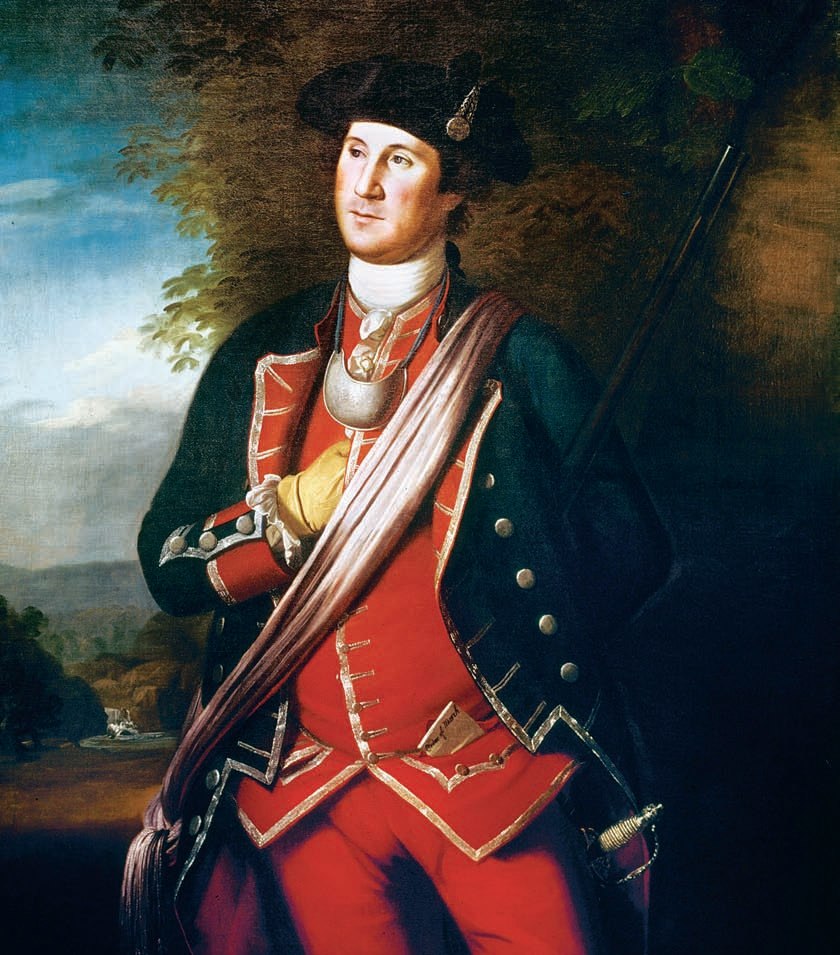
Who was the young military leader from Virginia who was sent to western Pennsylvania to fight the French?
a)
William Pitt
b)
Edward Braddock
c)
King George III
d)
George Washington
47.
What document was signed that officially ended the French and Indian War?
a)
Treaty of Versailles
b)
Proclamation of 1763
c)
Constitution
d)
Treaty of Paris
48.
Why was the French and Indian War significant?
a)
the Spanish Empire is no longer in North America
b)
the Indians are no longer in North America
c)
the French Empire is no longer in North America
d)
the colonists are ready to fight the British
49.
Which of these was a result of the French and Indian War?
a)
The British government had a large war debt
b)
The colonists were given their independence
c)
The British government stayed out of colonial politics
d)
The Spanish were free to move west of the Appalachians
50.
Which of these groups gained territory in North America as a result of the French and Indian War?
a)
Spanish
b)
British
c)
Indians
d)
French
51.
Which of the following best explains the conflict between the British and French in the Ohio River Valley?
a)
French wanted to halt westward expansion by the English
b)
The Spanish-French alliances against the English
c)
French attacks on English colonies along the coast
d)
The English built too many forts on the Ohio River
52.
What responsibilities did the Grand Council have under the proposed Albany Plan of Union?
a)
determine the boundaries for North America
b)
determine the laws, raise taxes, and set up a defense
c)
decide on whether or not to sign the Treaty of Paris
d)
decide how much money France owes Britain for losing the French and Indian War
53.
What group of Indians worked with the British?
a)
Iroquois
b)
Cherokee
c)
Shawnee
d)
Hurons or Algonquins
54.
What group of Indians fought for the French?
a)
Iroquois
b)
Cherokee
c)
Shawnee
d)
Hurons or Algonquins
55.
What was the name of the fort that George Washington built at Great Meadows?
a)
Minor
b)
Ticonderoga
c)
Necessity
d)
Marineford
56.
Where did a majority of the fighting for the French and Indian War take place?
a)
Atlantic Ocean
b)
Ohio River Valley
c)
New Jersey
d)
Delaware
57.
After the British won, what did the colonists believe they would be able to do?
a)
move west past the Appalachian Mountains
b)
fight the French on their own
c)
nothing
d)
move into Florida
58.
What was the world-wide conflict that the French and Indian war was involved in?
a)
World War I
b)
War of the Roses
c)
Seven Years War
d)
Revolutionary War
59.
Who began a mini war between the Native American tribes in the midwest and the British?
a)
Tecumseh
b)
Geronimo
c)
Crazy Horse
d)
Pontiac
60.
This created a temporary border at the Appalachian Mountains, restricting the movement of the colonists
a)
Appalachian Line of 1769
b)
Proclamation of 1763
c)
Northwest Ordinance of 1767
d)
Colonial Border of 17
61.
Why did the colonists not agree to the Albany Plan of Union?
a)
They didn't think a war would happen
b)
They didn't want to give up individual power
c)
They thought it was stupid
d)
Rhode Island was uncooperative
62.
The ______ was sent to King George III to ask that the king protect colonists’ rights and tell him that the colonists do not want war.
a)
List of Grievances
b)
Olive Branch Petition
c)
Declaration of Independence
d)
Magna Carter
63.
Who was put in charge of the Continental Army?
a)
Abraham Lincoln
b)
Alexander Hamilton
c)
George Washington
d)
Benjamin Franklin
64.
Where was the Continental Congress held?
a)
Philadelphia
b)
Jamestown
c)
New York City
d)
Boston
65.
Which Continental Congress sent the Olive Branch Petition?
a)
First
b)
Second
c)
Third
d)
None
66.
Why were both Continental Congress held?
a)
To vote for the first president
b)
To decide when to go to war with Great Britain
c)
To discuss a solution to the colonists’ complaints of Great Britain
d)
To write the Constitution
67.
What did the Continental Congress decide to do with British trade?
a)
Buy British goods
b)
Raise tariffs
c)
Destroy all British goods
d)
Boycott all British goods
68.
Which Continental Congress demanded the repeal of 13 Acts by Parliament?
a)
First
b)
Second
c)
Third
d)
None
69.
Where was the Battle of Bunker Hill located?
a)
Bunker Hill
b)
Breeds Hill, near Boston
c)
Bull Run
d)
Massachusetts
70.
Who said, "don't fire until you see the whites of their eyes?"
a)
Colonel William Prescott
b)
George Washington
c)
Thomas Jefferson
d)
Ben Franklin
71.
Who won the Battle of Bunker Hill?
a)
the British
b)
the Colonists
c)
the Hessians
d)
Nobody wins any war
72.
The British attacked the colonists three times and took the hill because?
a)
The colonists all died.
b)
The colonists ran out of ammunition.
c)
The colonists gave the hill up by writing a letter.
73.
Lobsterbacks was another name for..
a)
British
b)
Colonists
74.
What was thrown at soldiers to start the Boston Massacre?
a)
Manure
b)
Snowballs
c)
Paper
d)
Hay
75.
Hundreds of people died in the Boston Massacre.
a)
True
b)
False
76.
The crowd of colonists was peaceful in Boston prior to the Massacre.
a)
True
b)
False
77.

The Boston Tea Party was when colonists:
a)
had a nice lunch and drank tea
b)
dressed like Indians and threw tea in the harbor
c)
gave tea to their friends
d)
stopped drinking tea
78.
What was The other name for the Intolerable Act?
a)
Stamp act
b)
Coercive Act
c)
Sugar Act
d)
Military Act
79.

What event does this drawing show?
a)
Tarring and feathering
b)
Boston Tea Party
c)
Boston Massacre
d)
American Revolution
80.
Information that is spread with the purpose of supporting a cause
a)
Boycott
b)
Propaganda
c)
Monopoly
d)
Bias
81.
What Act was passed after the Boston Tea Party?
a)
Stamp Act
b)
Tea Act
c)
Sugar Act
d)
Intolerable Act
82.
Finish this American Colonist Motto, "No Taxation without..."
a)
Transportation
b)
Relaxation
c)
Representation
d)
Sensation
83.

What was this poster's meaning?
a)
The Colonies needed to be united
b)
Serpents can grow back together
c)
Colonies need to be independent
d)
Ben Franklin didn't know why he made this
84.
This event broke tensions between the colonist and the British troops where shots were fired. Crispus Attucks was the first to be killed.
a)
Lexington and Concord
b)
Boston Tea Party
c)
Boston Massacre
d)
Bloody Valentine
85.
Which was the punishment for the Boston Tea Party?
a)
Intolerable Acts
b)
Sugar Acts
c)
Quartering Acts
d)
Stamp Acts
86.
Colonists were forbidden to settle west of the Appalachian Mountains.
a)
Proclamation line of 1763
b)
Proclamation boundary
c)
Manifest Destiny
d)
Borderlands
87.

Which phrase became popular after passage of the Stamp Act?
a)
“The rights of Englishmen”
b)
“Give me liberty or give me death”
c)
“Life, liberty, and the pursuit of happiness”
d)
“No taxation without representation“
88.
What does Quartering mean?
a)
To allow troops to stay in your home
b)
Hitting someone with a quarter
c)
To give someone a quarter
d)
Giving a quarter of your earnings to Britain
89.
The Olive Branch Petition was written as a last attempt at …
a)
Freedom
b)
Peace
c)
Loyalty
d)
Rebellion
90.
Great Britain was responsible for making the laws for the colonists, similar to our Congress. What was this group called?
a)
Senate
b)
House of Representatives
c)
Congress
d)
Parliament
91.
The 13 colonies were fighting for freedom from England. What is another word for freedom?
a)
taxes
b)
tariff
c)
liberty
d)
patriot
92.
In 1765, the Parliament of Great Britain passed the Stamp Act. The purpose of this act was to
a)
get rid of colonists who were willing to support the king
b)
raise money by putting a tax on tea, sugar, and molasses
c)
get rid of French colonists in the Northern colonies
d)
raising money by passing a tax on newspapers and other paper products
93.
Why were the colonists angry about "taxation without representation?"
a)
The colonists wanted to pay taxes on stamps and tea
b)
The colonists had no representation in Parliament
c)
The colonists fought to write the Declaration of Independence
d)
The colonists were loyal to the British and wanted to keep them happy
94.
What 2 countries were fighting in the French and Indian War?
a)
America and France
b)
France and Britain
c)
Britain and Germany
d)
France and Spain
95.
The Stamp Act required people to buy a stamp for
a)
newspapers
b)
clothing
c)
food
d)
furniture
100 %

