wayground logo

Free Printable Worksheets

Font size

S
M
L
XL
Worksheets

The Greek World

Total questions: 109

Worksheet time: 1hrs 14mins

Name
Class
Date
1.
The winner of the Persian Wars was ______________________.
a)
Persia
b)
Greece
2.
He was the founder of the Persian Empire.
a)
Xerxes
b)
Cyrus II (the Great)
c)
Darius I
3.
Which city-state had a powerful navy and defeated the Persian navy at the Battle of Salamis?
a)
Athens
b)
Ionia
c)
Sparta
4.
This city-state had the strongest army in Greece.
a)
Athens
b)
Ionia
c)
Sparta
5.
The ancient Persian Empire started in what we now know as __________________.
a)
India
b)
Ireland
c)
Iran
6.
Cyrus was successful in his expansion of the empire because 
a)
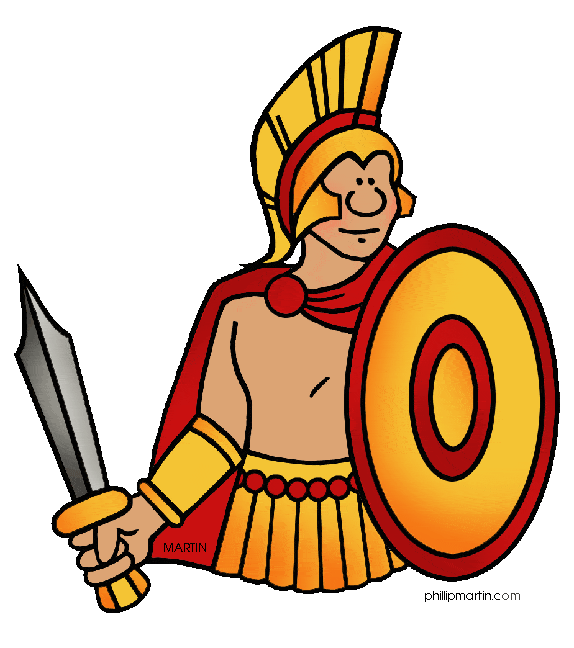
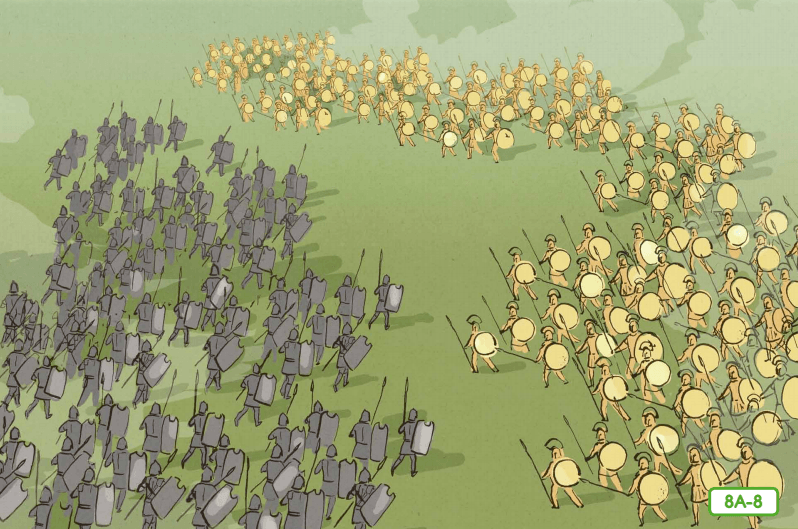
Everyone had to follow his religion and  laws.
b)
He allowed people to do whatever they wanted.
c)
The people had to follow his laws but kept their religion and customs.
7.
Who took over when Cambyses died?
a)
Hannah
b)
Darius
c)
Xerxes
d)
Zorastrianism
8.
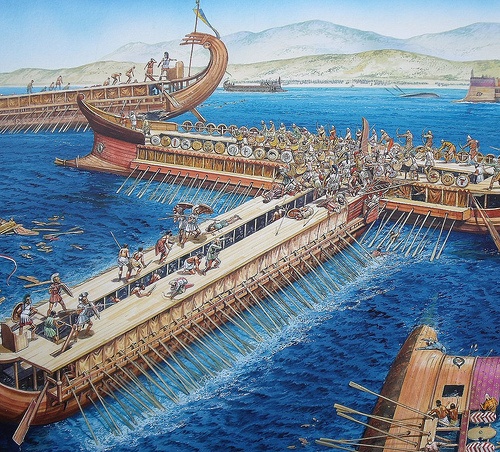
How did the Greeks defeate the Persians in the strait of Salamis?
a)
They had fewer boats, but they were smaller.
b)
They had more boats and they were bigger.
c)
Their boats were smaller, but they had more of them.
9.
Who took over the throne when Cyrus the Great died?
a)
Cambyses
b)
Darius
c)
Xerxes I
10.
Which popular sporting activity resulted from the first battle of the Persian Wars?
a)
The Marathon
b)
The Triathlon
c)
The Olympics
11.
Which of the following statements is true concerning the Persian Wars?
a)
The Persians defeated the Greek city-states
b)
Athens started its decline after the end of the war
c)
Sparta and Athens were united against the Persians
12.
Which city-state had a Democracy and voted? 
a)
Sparta
b)
Athens
c)
Both
13.
Athens' main rival was the city-state of
a)
Anatolia
b)
Marathon
c)
Sparta
14.
What did the satraps do?
a)
They were Persian leaders
b)
They went around giving out presents
c)
They acted like governors and collected taxes
d)
They collected taxes independently
15.
Greece was divided into city-states. Cyrus II divided the Persian Empire into _______________________.
a)
provinces
b)
kingdoms
c)
states
d)
sects
16.
What was the name of the capital that Darius made?
a)
Sparta
b)
Persepolis
c)
Zoroaster
17.
Why did Darius invade Greece in Marathon?
a)
To get revenge on rebel city-states
b)
Greeks didn't pay their taxes
18.
This battle ended the Persian Wars and caused Persia to leave Greece.
a)
The Battle of Marathon
b)
The Battle of Thermopylae
c)
The Battle of Plaetea
19.
_____ won the battle of Thermopylae
a)
Persians
b)
Athenians
c)
Spartans
20.
Which type of government is ruled by a small group of people?
a)
Tyranny
b)
Democracy
c)
Theocracy
d)
Oligarchy
21.
Which type of government is where the power is held by the nobility?
a)
Aristocracy
b)
Democracy
c)
Oligarchy
d)
Theocracy
22.
What is one of the world’s oldest monotheistic religions?
a)
Buddhism
b)
Christianity
c)
Zoroastrianism
d)
Animism
23.
The Spartans conquered a neighboring area and forced its residents to become
a)
colonists
b)
slaves
c)
soldiers
d)
tyrants
24.
Women in Sparta were expected to be
a)
Beautiful
b)
Intelligent
c)
Quiet and obedient
d)
Emotionally and Physically Tough
25.
City-state of Greece, NOTED FOR ITS MILITARISM AND EMPHASIS ON BEING PHYSICALLY STRONG
a)
Athens
b)
Sparta
c)
Marathon
d)
Crete
26.
Which city-state started training soldiers at age 7? 
a)
Sparta
b)
Athens
c)
Both
d)
Neither 
27.
Which city-state had women who had rights? 
a)
Sparta
b)
Athens
c)
Both
d)
Neither 
28.
Is this statement about Sparta, Athens or both of them: There are more slaves than citizens.
a)
Sparta 
b)
Athens
c)
Both
29.
Why was communication difficult between communities in Ancient Greece?
a)
They did not have telephones
b)
Mountains and Water
c)
communication was easy
d)
most people had horses
30.
Is this statement about Sparta, Athens or both of them:  Women could own land and run a business.
a)
Sparta 
b)
Athens
c)
Both
31.
Men expected to work in the military until age 60. 
a)
Athens 
b)
Sparta
32.
Girls did not go to school. Trained to be good mothers. 
a)
Athens
b)
Sparta
33.
Service to the state was above everything. 
a)
Athens
b)
Sparta
34.
Valued Education 
a)
Athens
b)
Sparta
35.
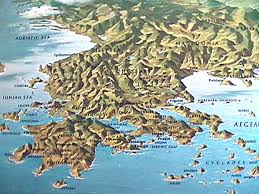
Greece is a peninsula which means
a)
a mountain range with a river running through it. 
b)
land surrounded by water on 3 sides
c)
an area with major rivers running through it
d)
a very mountainous region
36.
Who did most of the work in Sparta?
a)
Citizen-soldiers
b)
Soldiers' wives
c)
Helots
d)
Free immigrant laborers
37.
Athens was the birthplace of what kind of political system?
a)
Democracy
b)
Aristocracy
c)
Tyranny
d)
Monarchy
38.
The Peloponnesian war was fought between
a)
French & British
b)
Athens & Greece
c)
US & British
d)
Babylonia & Persians
39.
Greece is surrounded by
a)
the Mediterranean Sea
b)
the Ionian Sea
c)
the Agean Sea
d)
all the above
40.
The geography of Greece was important because
a)
it affected the creation of city-states
b)
many cities grew independently
c)
increased sea trade
d)
all the above
41.
An army of 300 Spartans guarded a narrow pass at 
a)
Athens
b)
Crete
c)
Marathon
d)
Thermopylae
42.
enslaved people of Sparta
a)
democrats
b)
clever
c)
helots
d)
barracks
43.
Always put the city's needs before your own 
Feared slave revolt, so believed in an armed camp 
Punishment
a)
Sparta
b)
Athens
44.
Believed in Strong Education
Believed in different Philosophies
a)
Athens
b)
Sparta
45.
Girls in Sparta trained to 
a)
take care of the house
b)
weave
c)
fight
d)
play a lyre
46.
In the Peloponnesian Wars, Pericles had the idea to build walls around Athens. Everyone from the polis moved inside the walls to be protected from the Spartans.  What did he not predict would happen?
a)
Spartans would use ladders to climb the walls and attack
b)
Spartans trained war gophers to dig under the walls to attack
c)
Building the walls meant they didn't have materials to build houses
d)
The overcrowding would lead to a plague spreading throughout the city
47.
Athens was a member of the
a)
Peloponnesian League
b)
Delian League
c)
Spartan League
d)
Justice League
48.
Sparta was a member of the
a)
Peloponnesian League
b)
Delian League
c)
Spartan League
d)
Justice League
49.
Which of the following WAS NOT a cause of the Peloponnesian Wars?
a)
Athens was acting like/becoming an Empire
b)
Athenian settlers started moving into colonies that belonged to other city-states
c)
Athens spent Delian league money on beautifying itself
d)
Athens became allies with the Persians 
50.
Which of the following WAS NOT a result of the Peloponnesian Wars?
a)
Athens loses, Sparta installs a new government in Athens
b)
Athens wins and takes over all of Greece
c)
Athens and Sparta are both weakened, Greece eventually collapses
d)
Cities, land & resources are destroyed & wasted, thousands of Greeks die
51.
What was the original purpose for the creation of the Delian League?
a)
To expand Greek trade into Africa
b)
To make Athens the most wealthy city-state
c)
To create an alliance with the Persian Empire
d)
To collect resources for a defense against future invasions
52.
Athens (Delian League) & Sparta (Peloponnesian League) fought against each other in the __________ ?
a)
Persian Wars
b)
Trojan Wars
c)
Peloponnesian Wars
d)
Battle of Salamis
53.
The 300 died at what battle? 
a)
Palatea
b)
Marathon
c)
Thermopylae
d)
Salamis
54.
At the Battle of Marathon, ________________.
a)
Persian Empire was defeated by Alexander the Great.
b)
Athens was defeated by Persian Empire.
c)
Sparta was defeated by Athens. 
d)
Persian Empire was defeated by Athens.
55.
What was a Greek soldier called and what was the name of the formation that he often fought in?
a)
Hoplite, phalanx
b)
Hoplite, trireme
c)
Spartan, greaves
d)
Cuirass, hoplite
56.
All of the following are true about the second Persian War, except.
a)
In 480 B.C the Persians invaded Greece for a second time
b)
The Athenians sunk the Persian navy
c)
The Spartans won a glorious victory at Thermopylae
d)
The Athenians were victorious at the battle of Salamis
57.
A marathon is a foot race that covers ____ miles.
a)
10
b)
26
c)
150
d)
18
58.
The Spartan leader who led the Greek army at Thermopylae was
a)
Lycurgus
b)
Themistocles
c)
Leonidas
d)
Pheidippides
59.
______________ controlled and dominated the Delian League.
a)
Athens
b)
a peace keeping Sparta
c)
Persia
d)
Macedonia
60.
_____________ controlled and dominated the Peloponnesian League
a)
Athens
b)
Sparta
c)
Ionia
d)
Troy
61.
Which foreign power came to Sparta's aid to fight the Athenians?
a)
Rome
b)
Macedonia
c)
Persia
d)
Egypt
62.
The Persian navy was destroyed at this battle.
a)
Plataea
b)
Salamis
c)
Thermopylae
d)
Marathon
63.
The red area on the map marks the region where __________ is located
a)
Persia
b)
Athens
c)
Sparta
d)
Macedonia
64.
The yellow area on the map marks the region where __________is located.
a)
Athens
b)
Sparta
c)
Persia
d)
Macedonia
65.
Why did Sparta refuse to join the Delian League?
a)
They didn't want Athens to dominate Greece
b)
They didn't have the money to pay the membership
c)
They have their own Army and don't need Athens to fight Persia
66.
One cause of the Peloponnesian War:
a)
Many Greeks outside of Athens resented Athenian domination.
b)
Pericles got sick.
c)
Sparta destroyed the Acropolis in Athens.
d)
Sparta was against oligarchy, while Athens was for it.
67.
Which City-State won the Peloponnesian War?
a)
Troy
b)
Athens
c)
Ionia
d)
Sparta
68.
Persian Empire was located in what modern Country.
a)
Iran
b)
Saudi Arabia
c)
America
d)
Europe
69.
Name of the first King of Persia?
a)
Zacharius
b)
Darius
c)
Alexander
d)
Nicholas
70.
Zoroastrianism is what?
a)
Form of money
b)
Government
c)
City
d)
Religon
71.
Who was the legendary author of the two Ancient Greek Poems, the “Odyssey” and the “Iliad”?
a)
Darius
b)
Zeus
c)
Plato
d)
Homer
72.
Who was the Ancient Greek Historian who wrote “The Histories”?
a)
Herodotus
b)
Homer
c)
Plato
d)
Xerxes
73.
Who were Socrates, Plato, and Aristotle
a)
three early kings of ancient Greece
b)
three noblemen who influenced Greek culture
c)
teachers of Alexander the Great
d)
great thinkers and philosophers of Athens who have influenced our Western world.
74.

Who won the Persian Wars?

a)

Persia

b)

Greece

75.

Known as the king of kings, he reorganized and strengthened the Persian Empire.

a)

Xerxes I

b)

Cyrus the Great

c)

Darius I

76.

4. This Greek city-state had a powerful navy, and defeated the Persian navy at the Battle of Salamis.

a)

Athens

b)

Sparta

c)

Marathon

77.

More than 1,700 miles long, its creation allowed Persian

messengers to travel quickly throughout the empire.

a)

Persepolis

b)

Zoroastrianism

c)

Royal Road

78.

10,000 soldiers, chosen for their bravery and skill,

made up the heart of the Persian army.

a)

Immortals

b)

Cavalry

c)

satraps

79.
What can you infer about the ancient Greeks based upon their achievements?
a)
The ancient Greeks most valued warfare and battle.
b)
The ancient Greeks valued philosophy and art.
c)
the ancient Greeks were most interested in farming.
d)
The ancient Greeks felt that  literature was pointless.
80.
Greek philosophers believed that one thing was more important than anything else in life.  What was it?
a)
using the human mind to think and understand
b)
helping others to be happy and comfortable
c)
encouraging people to worship the gods
d)
understanding how the human body works
81.
The greatest Greek Doctor
a)
Thucydides
b)
Hippocrates
82.
A famous Greek Playwright
a)
Sophocles
b)
Hypatia
83.
a building constructed in Athens in the 400s BC.
a)
Parthenon
b)
Hypatia
84.
The ancient Olympic Games, which occurred every four years in Greece, were held in honor of 
a)
Hera
b)
Ares
c)
Zeus
d)
Hermes
85.
a massive tactical formation of heavily armed foot soldiers
a)
acropolis
b)
polis
c)
phalanx
d)
citizen
86.
In which field did Pythagoras make important contributions?
a)
literature
b)
architecture
c)
mathematics
d)
philosophy
87.
A government in which all citizens could vote on all lawmaking decisions, is best described as a/an ________?
a)
Democracy
b)
Monarchy
c)
Oligarchy
d)
Tyranny
88.
In which field did Pythagoras make important contributions?
a)
literature
b)
architecture
c)
mathematics
d)
philosophy
89.
A way of teaching by asking students questions. This teaching strategy was created by Socrates. It is still used by teachers today.
a)
Sophists
b)
Socrates
c)
Plato
d)
Socratic method 
90.
He wrote more than 200 works on topics such as government, astronomy, and political science. He started a school called the Lyceum. At this school, he taught his students the "golden mean."
a)
philosophy
b)
Plato
c)
Aristotle
d)
Herodotus
91.
The three orders of Greek columns are called:
a)
Socrates, Plato, Aristotle
b)
Doric, Ionic, Corinthian
c)
Dorian, Isosceles, Corinthian
d)
Monarchy, Oligarchy, Democracy
92.

A government that is controlled by a small group of wealthy aristocrats is known as a (a)   .

93.

All students get to vote on how long recess will last. What type of government does this represent?

a)

Representative Democracy

b)

Oligarchy

c)

Tyranny

d)

Direct Democracy

94.

How were decisions made in an Assembly?

a)

Discussion

b)

Fighting

c)

Voting

d)

Competitions

95.

The Assembly, The Council of 500, and the Juries are all similar in that they __________________________________________.

a)

All make decisions that impact everyday Athenians

b)

Made of up random citizens

c)

Examples of Direct-Democracy at work

d)

All of the above.

96.

Mark all the people that were not allowed to vote in Athenian Democracy.

a)

Men

b)

Women

c)

Slaves

d)

Immigrants

97.

In the United States, they vote for people to make laws and regulations for them. This is called a ___________________-________________________.

(a)  

98.

Match the vocabulary word to the definition:

city-state

a)

a government ruled by its citizens

b)

a city and nearby community that share an independent government

c)

a group of citizens who are asked to give a verdict, or ruling, in a legal case

d)

a form of government in which the people rather than a representative decide issues

e)

having the status of being a citizen of a state or country

99.
What type of democracy existed in Ancient Athens?
a)
Direct
b)
Representative
100.
What was the "ASSEMBLY"?
a)
Where all citizens could debate issues and vote
b)
Where 500 people supervised the running of the government
c)
Where elected representatives voted on issues
d)
Where they would put people on trial for crimes
101.
How were the member of the Council of 500 chosen?
a)
Election
b)
By Lottery (at random)
102.
Participating in government was seen as a 
a)
right
b)
responsibility
c)
right and responsibility
d)
freedom
103.
_________________ is known as the father of Democracy.
a)
Peisistratus
b)
Solon
c)
Cleisthenes
d)
Pericles
104.
The Greek word for city-state is _____________.
a)
oligarchy
b)
polis
c)
agora
d)
Athens
105.

In which type of government does an individual take power by force?

a)

Democracy

b)

Monarchy

c)

Oligarchy

d)

Tyranny

106.
Who was Pericles?
a)
A Prisoner
b)
An Athenian Leader and General
c)
An Athenian Professor
d)
A Basketball Player
107.
Where was the Acropolis located?
a)
North of the city of Athens on top of mount Olympus
b)
Just outside the city walls
c)
On a hill at the center of the city
d)
Between Athens and Sparta
108.

Another word for judge?

a)

jury

b)

magistrate

c)

assembly

d)

polis

109.

Spartans most valued.....

a)

Military

b)

Art

c)

Education

d)

French Fries