
 Worksheets
Renaissance & Reformation Test
Total questions: 55
Worksheet time: 28mins
Name
Class
Date
1.
Who was the German Monk who wrote 95 arguments against the Catholic Church?
a)
Martin Luther King Jr.
b)
King Edward
c)
Martin Luther
d)
Christopher Columbus
2.
When the Protestants broke away from the Catholic Church, it was called...
a)
The Protestant Reformation
b)
The English Purification
c)
The Protestant Restoration
d)
Paradise Lost
3.
What does Renaissance mean?
a)
Creativity
b)
Restoration
c)
Rebirth
d)
Knowledge
4.
The writer of "The Prince," who wrote that leaders should do whatever it takes to keep power and protect their city, even lie and kill was...
a)
Petrarch
b)
Erasmus
c)
Machiavelli
d)
Shakespeare
5.
Leonardo da Vinci's most famous contributions to Renaissance art were
a)
The "Last Supper" and the ceiling of the Sistine Chapel
b)
The "Pieta" and "David"
c)
"David" and the ceiling of the Sistine Chapel
d)
The "Mona Lisa" and the "Last Supper"
6.
The "rebirth" of interest in learning and art after the Middle Ages, particularly in the ideas of ancient Greece and Rome was
a)
humanism
b)
the Renaissance
c)
the Enlightenment
d)
secularism
7.
Which was NOT a characteristic of humanism?
a)
an emphasis on the individual and society
b)
gaining knowledge through reason and not just religious faith
c)
an emphasis on the Catholic Church
d)
It was based on Greek and Roman ideas
8.
During the Renaissance, people began to become more interested in more worldly events-not just religious ones. This was known as
a)
secularism
b)
urbanization
c)
the vernacular
d)
humanism
9.
The Renaissance first began in the city-state of
a)
Florence
b)
Rome
c)
Venice
d)
Milan
10.
The English writer of plays, sonnets, and poems...
a)
Erasmus
b)
Machiavelli
c)
Durer
d)
Shakespeare
11.
Who wrote "The Praise of Folly", a book that criticized the Pope?
a)
Sir Thomas More
b)
Erasmus
c)
Machiavelli
d)
Da Vinci
12.

Which artist was famous for this piece of artwork?
a)
Michelangelo
b)
Da Vinci
c)
Raphael
d)
Thomas More
13.
Which family was a patron of artists like Leonardo da Vinci?
a)
Bourbons
b)
Medici
c)
Tudors
d)
Holy Roman Emperors
14.
What invention had the greatest influence on the spread of ideas in the Northern Renaissance?
a)
gunpowder
b)
moveable type
c)
compass
d)
rudder
15.
Renaissance art was notable for:
a)
showing religious themes for the first time
b)
focusing on humans and their emotions
c)
including many military scenes
d)
having flat backgrounds with figures up front
16.
Michelangelo is famous for his work in what building?
a)
Westminster Abbey
b)
Tower of Pisa
c)
Notre Dame
d)
Sistine Chapel
17.
Who is known as "the father" of Humanism? He was famous for writing sonnets/poems.
a)
Machiavelli
b)
Petrarch
c)
Leonardo da Vinci
d)
Michelangelo
18.

Which artist was responsible for this work?
a)
Leonardo da Vinci
b)
Petrarch
c)
Michelangelo
d)
Erasmus
19.
The invention of the printing press (moveable type) led to what?
a)
The mass spread of ideas and beliefs took place globally
b)
An increase of militaristic wars took place
c)
The immediate mass destruction of forests took place
d)
Criminal activity greatly decreased in most urban areas
20.
Based on the time period in history, with the invention of the printing press, what types of books were widely published?
a)
Cook books
b)
Bible texts
c)
Political ideologies
d)
Agricultural techniques
21.
In the Renaissance period, which factor was emphasized by the philosophy of humanism?
a)
Superiority of medieval thought
b)
Value of the individual
c)
Devotion to religion
d)
Obedience to government officials
22.
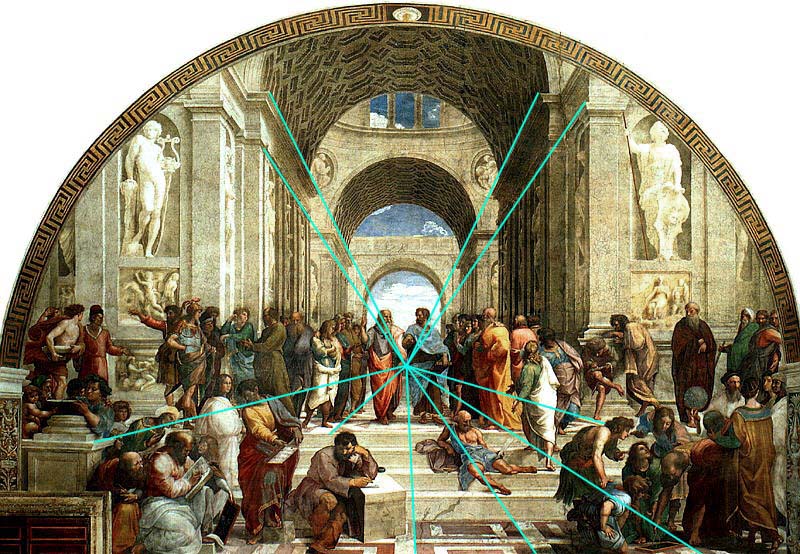
What is the artistic technique that is used to show depth and distance on a flat surface?
a)
realism
b)
perspective
c)
idealism
d)
distancism
23.
Where did the Renaissance begin?
a)
Italy
b)
France
c)
England
d)
Germany
24.
Which of the following is NOT a reason why the Renaissance began in Italy?
a)
Wealthy Italian patrons supported the arts
b)
Cultural diffusion encouraged curiosity and spread Arab and African ideas
c)
The Black Plague did not hit Italy as a result of the Alps
d)
Renewed interest in the cultures of Ancient Greece and Rome
25.

Where was the protestant message spread?
a)
Africa
b)
America
c)
Northern Europe
d)
Spain
26.

What event took place in Luther's early life that made him decide to become a monk?
a)
Falling off a horse
b)
Went to church
c)
Mother died
d)
Getting struck by lighting
27.

Martin Luther is credited as being a person who began the reformation by doing what action?
a)
Believing in predestination
b)
Supporting the Pope
c)
Painting the Sistine Chapel
d)
Writing the 95 theses
28.

What were Indulgences?
a)
Eating too much chocolate
b)
Forgiveness of sins committed during a person's lifetime
c)
Taxes put on loans
d)
A punishment during the Inquisition
29.

What vernacular language did Luther use in his Bible?
a)
Greek
b)
Latin
c)
English
d)
German
30.

All were abuses of the Catholic Church except.
a)
Selling Indulgences
b)
Charging fees for religious services.
c)
Popes were living like kings
d)
Priests did not wear socks
31.
True or False: Martin Luther believed in salvation through good works
a)
True
b)
False
32.
John Calvin preached the tenet of _______________________ which stressed the idea that God's grace would save the elect whose duty was to spread Christianity.
a)
predestination
b)
justification by faith
c)
divine right of kings
d)
holy matrimony
33.
John Calvin developed a ____________________ in Geneva, Switzerland, which inspired future Calvinist leaders throughout Europe.
a)
theocracy
b)
oligarchy
c)
democracy
d)
republic
34.
Cardinal Richelieu was a Cardinal from . . .
a)
Germany
b)
England
c)
France
d)
Spain
35.
Why did Henry VIII break away from the Catholic Church?
a)
Henry VIII had deep theological disagreements with the Church
b)
The Pope Excommunicated Henry VIII
c)
Henry VIII started a war with the king of Spain, the Pope's distant cousin
d)
He wanted to annul his marriage to marry his girlfriend to get an heir to the throne
36.
Which monarch was finally able to establish the Anglican Church as the official church of England?
a)
Henry VII
b)
Mary I
c)
Elizabeth I
d)
James I
37.
What were French Calvinists called?
a)
French Calvinists
b)
Calvinistas
c)
Fran-Calvins
d)
Huguenots
38.
Who were the primary combatants in the Thirty Years War?
a)
French and Spanish
b)
English and Spanish
c)
Germans and English
d)
German Catholics and German Lutherans
39.
How did French Cardinal Richelieu respond to the Thirty Years War?
a)
He helped France remain neutral
b)
He helped the Catholics against the Protestants
c)
He helped the Protestants against the Catholics
d)
He attacked both sides to take over German Territory
40.
What was the effect of the Edict of Nantes?
a)
It outlawed the Catholic Church
b)
It outlawed the Huguenots
c)
It provided Freedom of Worship for Huguenots
d)
It made France a secular state
41.
The Council of Trent was created for the purpose of . . .
a)
determining which Protestant faiths would be acceptable in Europe
b)
to evaluate Catholic Church doctrine in the wake of the Protestant Reformation
c)
To strategise a Continental War against Protestants
d)
To overthrow the Pope and replace him with a Protestant
42.
What was a result of the Council of Trent?
a)
The practice of selling indulgences was prohibited by the Pope
b)
The Pope acknowledged to the church that he was not infallible
c)
The Society of Jesus (Jesuits) were called heretics
d)
The church allowed priests to marry, but later rescinded this provision
43.
The invention of the Printing Press was significant in . . .
a)
developing religious tolerance
b)
spreading the ideas of the Renaissance and Reformation
c)
Growth of Individualism
d)
All of the Above
44.
Who was the Holy Roman Emperor that outlawed Martin Luther?
a)
Henry VIII
b)
Charles V
c)
Frederick of Saxony
d)
John Tetzel
45.
Martin Luther's Ninety-Five Theses were a call for
a)
revolt against German princes.
b)
reforming the Catholic Church.
c)
greater papal authority.
d)
spreading Christianity.
46.
What was the result of the Protestant Reformation?
a)
The Catholic Church destroyed all of the reformers
b)
Everyone lived happily ever after
c)
Protestant Churches became more powerful and numerous
d)
The Samurai invaded England
47.
How did the Church respond to heresy at this time?
a)
By ignoring it
b)
By educating people
c)
By expanding the Inquisition
d)
By praying
48.
Who is Ignatius of Loyola?
a)
Founder of a University
b)
the author of the 95 Theses
c)
Founder of the Jesuits
d)
the head of the Anglican Church
49.
The Renaissance began around...
a)
1050
b)
1250
c)
1350
d)
1550
50.
Which of the following is not a branch of Christianity today?
a)
Roman Catholic
b)
Eastern Orthodox
c)
Protestant
d)
Sunni
51.
The Protestant Reformation occurred because of the resistance to change in which type of institution?
a)
Cultural
b)
Economic
c)
Political
d)
Religious
52.
Martin Luther most likely drew inspiration from...
a)
Gutenberg
b)
Pope Leo X
c)
Jan Huss
d)
John Calvin
53.
Which of the following events happened last?
a)
Middle Ages
b)
Catholic Reformation
c)
Protestant Reformation
d)
Renaissance
54.
People who hold unorthodox views against the Catholic Church were called _______________.
a)
Huguenots
b)
Jesuits
c)
Heretics
d)
Anglicans
55.
Around 1500, Catholic mass and the Bible were both rendered in Latin. After the Council of Trent...
a)
both were rendered in the vernacular
b)
mass was no longer practiced
c)
these practices remained in tact
d)
only the Bible remained in Latin
100 %

