
 Worksheets
CBA #2
Total questions: 104
Worksheet time: 2hrs 24mins
Name
Class
Date
1.
Particles in an atom that are neutral and have no charge are
a)
negatrons
b)
electrons
c)
neutrons
d)
protons
2.
all matter is made of what
a)
energy
b)
atoms
c)
electrons
d)
compounds
3.
The positive particles of an atom are
a)
electrons
b)
positrons
c)
neutrons
d)
protons
4.
the central region of an atom where its neutrons and protons are is its
a)
nucleus
b)
electron cloud
c)
core
d)
center
5.
the central region of an atom where its neutrons and protons are is its
a)
nucleus
b)
electron cloud
c)
core
d)
center
6.
an atom with atomic number 6 would have how many protons
a)
6
b)
12
c)
3
d)
cannot be determined
7.
What is the atomic number for an element with three protons?
a)
2
b)
1
c)
3
d)
6
8.
A particle that moves around the nucleus is a(n)...
a)
Proton
b)
Neutron
c)
Electron
d)
Quark
9.
In the modern periodic table elements are arranged by:
a)
atomic mass
b)
atomic number
c)
valence electrons
d)
number of isotopes
10.

What does the 1.00794 stand for?
a)
Hydrogen
b)
atomic number
c)
atomic mass
d)
atomic explosion
11.

As you move down the first group, reactivity _________.
a)
Increases
b)
Decreases
c)
Stays the same
d)
They are all inert
12.

Which group on the Periodic Table is inert?
a)
Group 1
b)
Group 2
c)
Group 17
d)
Group 18
13.

Which two groups on the Periodic Table are the MOST reactive?
a)
Group 1 and Group 17
b)
Group 2 and Group 16
c)
Group 13 and Group 15
d)
Group 17 and Group 18
14.
How would you describe reactivity on the Periodic Table?
a)
Elements in the same period tend to react.
b)
Elements in the same group tend to react.
c)
Elements on opposite sides of the table tend to react.
d)
All elements are inert.
15.
How many valence electrons are elements trying to reach in their outer shells?
a)
1
b)
2
c)
5
d)
8
16.
How many valence electrons does Oxygen have?
a)
8
b)
2
c)
16
d)
6
17.
How many valence electrons does Phosphorus have?
a)
31
b)
5
c)
15
d)
4
18.
How many valence electrons does Neon have?
a)
18
b)
8
c)
10
d)
2
19.
How many valence electrons does Sulfur
a)
16
b)
32
c)
6
d)
3
20.
How many valence electrons does Krypton have?
a)
36
b)
18
c)
8
d)
4
21.
How many valence electrons does Carbon have?
a)
4
b)
12
c)
6
d)
14
22.
How many valence electrons does magnesium have?
a)
1
b)
2
c)
12
d)
24
23.
How many valence electrons does sodium have?
a)
1
b)
2
c)
3
d)
4
24.
How many valence electrons does Hydrogen have?
a)
1
b)
2
c)
3
d)
4
25.
Group 18 elements are known as the __________ and have full valence shells.
a)
royal gases.
b)
supreme solids.
c)
noble gases.
d)
legit liquids.
26.
Each column in the periodic table is called a
a)
period
b)
group
c)
cluster
d)
unit
27.
How many Valance electrons does Iodine Have?
a)
6
b)
16
c)
7
d)
17
28.
A valence electron or electrons exist in the ______ energy level.
a)
Farthest in
b)
Middle
c)
Furthest out
29.
Elements in the same column of the periodic table always have the same # of _______ as one another.
a)
Protons
b)
Neutrons
c)
Electrons
d)
Valence Electrons
30.
Magnesium & Beryllium both have 2
a)
Protons
b)
Neutrons
c)
Electrons
d)
Valence Electrons
31.
Noble gases have _____ valence electrons shells.
a)
empty
b)
partially full
c)
full
32.
What will weigh more when a chemical change is complete? The reactants before the chemical reaction, or the product after the reaction is complete?
a)
They both will weigh the same
b)
The product always weighs more than the reactant
c)
The reactant will weigh more than the product
d)
They both will loose mass after the reaction
33.
What types of systems are there?
a)
Mechanical and Electrical Systems
b)
Inside and Outside Systems
c)
Open and Closed Systems
d)
Human and Machine Systems
34.
What is the Law of Conservation of mass?
a)
Mass is created in a chemical reaction
b)
Mass is created in a physical change
c)
New chemicals formed from a chemical reaction have a larger overall mass than the original reactants
d)
Mass is never created or destroyed
35.
The number to the lower side of an element is a
a)
Subscript
b)
Superscript
c)
Coefficient
d)
Charge
36.
Since gasses weigh nothing, when they are produced in a reaction they do not have to be accounted for.
a)
True
b)
False
37.
The coefficient in 3H2O is
a)
6
b)
2
c)
3
d)
5
38.
A precipitate is a
a)
liquid that forms when two solids are reacted
b)
a solid that forms when two liquids are mixed
c)
a gas that forms when vinegar and baking soda react
d)
a change of color in a solution
39.
In a reaction A + B ----> C, reactant A has 5g and product C has 9g. How many grams does reactant B should have?
a)
4g
b)
5g
c)
9g
d)
14g
40.
If reaction starts with 20g of reactants it should produce
a)
a total of 40g of products
b)
a total of 10g of products
c)
a total of 80 g of products
d)
a total of 20g of products
41.
Which are the reactants in the following reaction?
2Mg + O2 ---> 2MgO
2Mg + O2 ---> 2MgO
a)
Mg and O
b)
MgO
c)
Mg and MgO
d)
O and MgO
42.
A chemical reaction is balanced when
a)
both sides have the same elements
b)
Both sides have the same number of atoms
c)
Same subscripts
d)
Same coefficients
43.
Matter can not be created nor destroyed: it can only be
a)
Destroyed a little bit
b)
Invisible
c)
Transformed, changed
d)
None of the above
44.
Which is Chemical Equation is Balanced?
a)
CH₄+O₂------CO₂+2H₂O
b)
H₂+O₂-----2H₂O₄
c)
4Al+3O₂-----2Al₂O₃
45.
Which problem is balanced?
a)
PbO2 + 2H2
b)
SO2 + H20 --> H2SO4
c)
2Na + 2H2O --> 2NaOH + H2
46.
How many nitrogen atoms does NH3 have?
a)
1
b)
2
c)
3
d)
4
47.

How many oxygen atoms are in this chemical formula?
a)
6 oxygen atoms
b)
2 oxygen atoms
c)
3 oxygen atoms
d)
4 oxygen atoms
48.
Is this balanced?
Al + O2 → 2Al2O3
Al + O2 → 2Al2O3
a)
Yes
b)
No
49.
Is this balanced?
2HgO → 2Hg + O2
2HgO → 2Hg + O2
a)
Yes
b)
No
50.
The total amount of matter (atoms) before and after a chemical reaction (change), remains the same.
a)
True
b)
False
51.
The mass after a physical change, such as ice melting into water, stays the same
a)
True
b)
False
52.
Molecule
a)
A group of atoms bonded together
b)
Basic unit of a chemical element
c)
Coefficient
d)
Subscript
53.
Can matter be created or destroyed?
a)
Yes, it can be created.
b)
Yes, it can be destroyed.
c)
No, matter is always conserved
d)
None of these
54.
What will weigh more when a chemical change is complete? The reactants before the chemical reaction, or the product after the reaction is complete?
a)
They both will weigh the same
b)
The product always weighs more than the reactant
c)
The reactant will weigh more than the product
d)
They both will loose mass after the reaction
55.
Evidence of a chemical reaction include:
a)
Phase change
b)
No new substance
c)
Bubbles forming
d)
Shape change
56.
Evidence of a chemical change does NOT include:
a)
New substances
b)
Heat produced
c)
Phase change
d)
Light produced
57.
How is a physical change different from a chemical change?
a)
There is absolutely no difference
b)
Chemical changes produce a new substance, physical changes stay the same substance
c)
Chemical changes create and destroy matter, physical changes don't
d)
Physical changes create and destroy matter, chemical changes dont
58.
Tearing paper is an example of
a)
physical change.
b)
chemical change.
c)
chemical reaction.
d)
solution.
59.
If you break a piece of glass, the shape of the glass changes, but the properties in the fragments remain the same. Which of the following has occurred?
a)
A chemical change.
b)
A temperature change.
c)
A phase change.
d)
A physical change.
60.
Which of the following does not show a chemical change?
a)
change of state of matter
b)
color change
c)
production of a gas
d)
all show a chemical change
61.
Mark is observing a burning candle. He notices the melted wax drips down the side of the candle and hardens again. The candle has____.
a)
formed a new substance
b)
undergone a physical change
c)
undergone a chemical change
d)
undergone a physical and chemical change
62.
A chemical change creates a ______.
a)
change in volume
b)
new substance
c)
mixture
d)
solution
63.
A different chemical substance is formed when _____.
a)
water boils
b)
metal rusts
c)
ice melts
d)
rock is crushed
64.

A group of students investigated physical and chemical changes using paper. The students recorded their observations in a table.
Which student correctly recorded all the changes that took place?
Which student correctly recorded all the changes that took place?
a)
Student 1
b)
Student 2
c)
Student 3
d)
Student 4
65.

The smell made from a decomposing fish.
a)
Chemical Change
b)
Physical Change
66.

Green bananas turning yellow on their own as they ripen.
a)
Chemical Change
b)
Physical Change
67.

a copper penny turning greenish after a few years.
a)
Chemical Change
b)
Physical Change
68.

An gel ice pack getting cold after you put it in the freezer for an hour.
a)
Chemical Change
b)
Physical Change
69.

Melting an ice cube
a)
Chemical Change
b)
Physical Change
70.
Definition of chemical property
a)
Properties that describe how a substance changes into a completely different substance
b)
properties are those that can be observed without changing the identity of the substance
71.
What is an example of a physical property?
a)
reactivity
b)
color
72.
Example for Chemical property
a)
ice melting
b)
not easily reversed
73.
Which of the following describes a precipitate?
a)
a liquid forms when a block of metal is heated
b)
a solid forms when one liquid is poured into another
c)
a gas forms when a solid is placed in a liquid
d)
bubbles form when an acid is poured on a rock
74.
Which is a physical change?
a)
digesting food
b)
burning natural gas
c)
exploding firework
d)
chopping onions
75.
Digesting your food is an example of
a)
chemical change
b)
physical change
76.
Dissolving sugar in water is an example of a
a)
physical change
b)
chemical change
77.

Photosynthesis is an example of a
a)
physical change
b)
chemical change
78.
2H2 + O2 ----> 2H2O What is the product?
a)
------>
b)
2H2O
c)
2H2+ O2
79.
2H2 + O2 --------> 2H2O What is the yield?
a)
2H2O
b)
------>
c)
2H2 + O2
80.
Which is the correct formula for:
three hydrogen (H)
one sulfur (S)
four oxygen (O)
three hydrogen (H)
one sulfur (S)
four oxygen (O)
a)
H3SO4
b)
HSO4
c)
H4S3O
d)
H2O
81.
Which of the following is a compound?
a)
Co
b)
O2
c)
C
d)
CO2
82.
How many Sodium (Na) are in 6NaCl?
a)
1
b)
12
c)
6
83.
How many atoms of Carbon are in the compound C2H8O ?
a)
8
b)
2
c)
1
d)
11
84.
a capital letter or combination of a capital letter and a small letter that is used to represent an element is called a(n) ________
a)
chemical symbol
b)
element sign
85.
Which equation obeys the law of conservation of mass?
a)
H2 + O2 ------> H20
b)
C + 2H2 ----> CH4
c)
2Fe2O3 ------> 2O2 + 4Fe
86.

What is the number of protons that the element in this image contain?
a)
14
b)
7
c)
15
d)
18
87.
There are over 100 pure substances called -
a)
elements
b)
molecules
c)
compounds
d)
substances
88.
The smallest part of an element is an -
a)
atom
b)
comound
c)
mixture
d)
solution
89.
Substances that combined but can be separated again are called -
a)
mixtures
b)
solutions
90.
How many protons are in C-14?
a)
14
b)
6
c)
8
d)
7
91.
How many Hydrogens are in 3H2O
a)
2
b)
3
c)
5
d)
6
92.
How many total atoms are in 2Fe2O3
a)
4
b)
2
c)
10
d)
6
93.
What is the number that is in FRONT of a formula called? Like the 3 in 3H2O
a)
subscript
b)
coefficient
c)
symbol
d)
superscript
94.
What are the small numbers that go AFTER an element symbol called? Like the 2 in H2O ?
a)
subscript
b)
symbol
c)
coefficient
d)
superscript
95.
How many Hydrogen are in 4H2O?
a)
6
b)
8
c)
2
d)
4
96.
How many Magnesium are in 10MgCl2?
a)
10
b)
5
c)
20
97.
Number of H in 3(NH₄)₂CrO₄
a)
4
b)
2
c)
8
d)
24
98.
How many atoms are there TOTAL in:
H2SO4
H2SO4
a)
6
b)
5
c)
7
d)
3
99.
How many elements are in C6H12O6?
a)
1
b)
2
c)
3
d)
4
100.
Number of N in (NH₄)₂CrO₄
a)
1
b)
2
c)
8
d)
16
101.
(Element or Compound)
C2H8O
C2H8O
a)
Element
b)
Letters
c)
Numbers
d)
Compound
102.
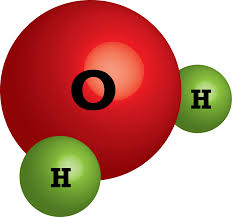
How many atoms of Hydrogen are in this compound
a)
1
b)
2
c)
3
d)
4
103.

In this compound structure of alcohol, how many Hydrogen atoms are there?
a)
2
b)
4
c)
6
d)
8
104.
Atoms form ions in order to become this
a)
isotopes
b)
stable
c)
metals
d)
nonmetals
100 %

