
 Worksheets
Atoms, Ions, Periodic Table
Total questions: 80
Worksheet time: 56mins
The positive particles of an atom are ___________.
electrons
protons
neutrons
The center of an atom where its neutrons and protons are is called the _____________.
nucleus
electron cloud
center

UP and DOWN columns on the periodic table are
groups
periods
SIDE TO SIDE rows on the periodic table are
groups
periods

USE THE PERIODIC TABLE
How many valence electrons does Phosphorus have?
31
5
15
4
What element would have the same number of shells as Sodium?
Nitrogen
Oxygen
Magnesium
Helium
How many valence electrons does Hydrogen have?
1
2
3
4
5
How many valence electrons does Helium have?
1
2
3
4
5
How many valence electrons does Lithium have?
1
2
3
4
5
How many valence electrons does Beryllium have?
1
2
3
4
5
How many valence electrons does Boron have?
1
2
3
4
5
How many valence electrons does Sodium have?
1
2
3
4
5
How many valence electrons does Magnesium have?
1
2
3
4
5
How many valence electrons does Phosphorus have?
4
5
6
7
8
How many valence electrons does Oxygen have?
4
5
6
7
8
How many valence electrons does Chlorine have?
4
5
6
7
8
How many valence electrons does Argon have?
4
5
6
7
8
How many valence electrons does Krypton have?
4
5
6
7
8
How many valence electrons does Neon have?
4
5
6
7
8


This picture illustrates copper's
brittleness
malleability
ductility


Ions are formed when atoms gain or lose ___.
electrons
protons
neutrons
atomic mass

What property is being measured in this diagram?
Density
Ionization Energy
Atomic Radius
Atomic Mass
Which of the following atoms has the greatest atomic radius?
nitrogen
phosphorus
potassium
cesium
If a potassium atom lost one electron, what would be the symbol for that ion?


Which element in period 4 has the highest electronegativity?
potassium
calcium
copper
bromine

Which of these elements in group 1A has the largest atomic radius?
cesium
rubidium
potassium
sodium
The common charge on an atom in group 17 would be....
+1
+7
-7
-1
17

What type of elements are poor conductors of heat and electricity?
transition metals
inner transition metals
metals
nonmetals
It is the measure of the mean distance from the center of nucleus to the boundary of the surrounding cloud where the electron revolves.
Electronegativity
Atomic radius
Electron affinity
Metallic property
Given: Al, O, Cl, and N.
Which has the greatest tendency to lose electrons to form positive ions?
Al
Cl
O
N
Which of the following are the characteristics of the most active nonmetals?
Small radii and high ionization energies
Large atomic radii and low ionization energies
Small radii, low ionization energies
Large atomic radii, high ionization energies
Which element is the most metallic?
Na
Mg
Cs
Fr
As you look down a group, ionization energy and electronegativity
increases
decreases

Which element has the greater ionization energy?
Magnesium (Mg)
Phosphorus (P)

Which element has the greater ionization energy?
Iodine (I)
Chlorine (Cl)


Which element has a higher electronegativity value?
Niobium
Tin
Cadmium
Iodine

Which element has a lower electronegativity value?
Calcium
Barium
Electronegativity trends are the same as:
Atomic radius trends
Ionization energy trends
Both of these
None of these


Cations
Gain electrons, has an overall positive charge
Lose electrons, has an overall positive charge
Lose electrons, has an overall negative charge
Gain electrons, has an overall negative charge
Anions
Gain electrons, has an overall positive charge
Lose electrons, has an overall positive charge
Lose electrons, has an overall negative charge
Gain electrons, has an overall negative charge
What is a cation's charge?
positive
negative
neutral
depends on the element
What is an anion's charge?
positive
negative
neutral
depends on the element's charge
What is an anion?
a positive ion
a negative ion
a dsylexic onion
What is a cation?
a positive ion
a negative ion
an electrically charged cat

Matter is made of tiny particles called atoms and molecules.
True
False

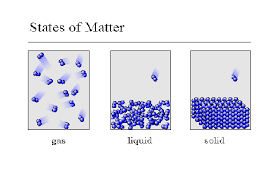
State of matter that takes the shape of it's container and has a definite volume.
Solid state
Liquid state
Gas state
Plasma state

State of matter that can fill containers with no fixed shape or volume.
Solid state
Liquid state
Gas state
Plasma state
What element has the symbol Al
Argon
Aluminium
Silver
Gold
What is the symbol for Neon
No
Nn
Ne
N

