
 Worksheets
Classifying Matter
Total questions: 38
Worksheet time: 2hrs 54mins
Name
Class
Date
1.

Density is an example of a _________________.
a)
chemical property
b)
chemical change
c)
physical property
d)
physical change
2.

A characteristic of matter that allows it to change to something new is a ______________________.
a)
physical property
b)
physical change
c)
chemical property
d)
chemical change
3.

All of the following are examples of physical changes except _________________.
a)
melting
b)
evaporating
c)
burning
d)
solidifying
4.
All of the following are examples of chemical weathering except __________________.
a)
acid rain
b)
cave formations
c)
rocks breaking because of ice
d)
pollution
5.
Which of the following is an example of a chemical change?
a)
bending a pop can
b)
evaporation of milk
c)
melting wax
d)
burning paper
6.
Three examples of physical change are __________________.
a)
boiling of water, bursting of a balloon, and crumpling a piece of paper
b)
burning of gasoline, rotting of an egg, and exploding fireworks
c)
freezing of water, evaporation of gasoline, and a rusting nail
d)
sawing of wood, crushing a can, and toasting a marshmallow
7.
The shape of an apple is a _____________________.
a)
chemical change
b)
chemical property
c)
physical change
d)
physical property
8.
Fog is an example of a ____________.
a)
colloid
b)
compound
c)
solution
d)
substance
9.
When a log burns in a fire, __________________.
a)
a physical change has occurred
b)
mass is gained
c)
mass is lost
d)
new substances are formed
10.
_______________________is another name for a homogeneous mixture.
a)
Liquid
b)
Solution
c)
Substance
d)
Suspension
11.
When two or more substances are combined so that each substance can be separated by physical means, the result is a(n) ___________________.
a)
chemical change
b)
compound
c)
element
d)
mixture
12.
A _____________________ is NOT a mixture.
a)
colloid
b)
compound
c)
suspension
d)
solution
13.
The scattering of light by colloids is called _____________.
a)
air pollution
b)
conservation
c)
suspension
d)
The Tyndall effect
14.
What do two or more elements combine (chemically) to form?
a)
a compound
b)
an element
c)
a substance
d)
a solution
15.
The following are examples of physical properties EXCEPT _____________.
a)
density
b)
shape
c)
color
d)
ability to react with oxygen
16.
Magnetism easily separates what mixture?
a)
sand and glass
b)
sand and iron
c)
sand and clay
d)
sand and aluminum
17.
Orange juice being squeezed from fresh oranges is an example of __________________
a)
physical property
b)
physical change
c)
chemical property
d)
chemical change
18.
Plants making food out of water and carbon dioxide is an example of ____________________________.
a)
physical property
b)
physical change
c)
chemical property
d)
chemical change
19.
Wind and water erosion is an example of which of the following?
a)
physical property
b)
physical change
c)
chemical property
d)
chemical change
20.
Leaves changing colors in the fall is an example of which of the following?
a)
physical property
b)
physical change
c)
chemical property
d)
chemical change
21.
The wall is the color blue.
a)
physical property
b)
physical change
c)
chemical property
d)
chemical change
22.
Which of the following would be a physical change in paper?
a)
burning paper
b)
tearing paper
c)
dipping paper into acid
d)
digesting paper
23.
Which of the following would be a chemical change in a piece of paper?
a)
tearing paper
b)
folding paper
c)
cutting paper
d)
burning paper
24.

Are made from a combination of 2 or more elements...
a)
Molecules
b)
Pure Substances
c)
Compounds
d)
Elements
25.
A mixture that is NOT evenly distributed is called ....
a)
Compounded
b)
Homogenous
c)
Heterogenous
d)
Salty
26.
Mixture, such as mixed nuts or dry soup mix, in which different materials are unevenly distributed and are easily identified.
a)
suspension
b)
homogeneous mixture
c)
heterogeneous mixture
d)
colloid
27.

Substance with atoms that are all alike.
a)
element
b)
compound
c)
homogeneous mixture
d)
heterogeneous mixture
28.
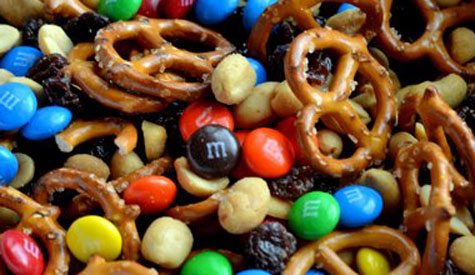
What type of mixture is this?
a)
homogenous mixture
b)
chemical
c)
heterogeneous mixture
d)
solid mix
29.

All matter is made up of .....
a)
Compounds
b)
Atoms
c)
Molecules
d)
Sunshine
30.
Which of the following would you use to separate sand from iron?
a)
a bar magnet
b)
paper
c)
hot plate
31.

Which of the following is an element?
a)
Sugar
b)
Salt
c)
Water
d)
Oxygen
32.
Changing the phase, size or shape of something....
a)
Chemical change
b)
Physical Change
c)
Suspension
d)
Colloid
33.
Which is NOT a chemical change?
a)
Leaves changing colors in the fall
b)
Iron rusting
c)
Digesting Lunch
d)
Ice Melting
34.
A mixture that is evenly distributed is called ...
a)
Heterozygous
b)
Heterogenous
c)
Homogenous
d)
Periodic
35.
If you change a substance into a new substance...
a)
Partial Change
b)
Physical Change
c)
Chemical Change
d)
Freezing
36.
What is viscosity?
a)
ability to be drawn into a wire
b)
ability of a substance to change states
c)
the ability of the substance to flow
d)
ability of a substance to regenerate
37.
A pure substance represented by one or two letters is called
a)
a mixture
b)
a compound
c)
an element
38.
When paper is folded to make an origami bookmark, what physical property of the paper changes?
a)
mass
b)
weight
c)
shape
d)
smell
100 %

