
 Worksheets
Hydrosphere
Total questions: 34
Worksheet time: 47mins
Name
Class
Date
1.
Which is the opposite of condensation?
a)
runoff
b)
evaporation
c)
precipitation
d)
transpiration
2.
What do we call the land area that supplies water to a river system?
a)
runoff
b)
recharge
c)
watershed
d)
valley
3.
Water stored below the Earth's surface is called:
a)
Groundwater
b)
Bogs
c)
Water in the ground
4.
An aquifer is a(n)
a)
well in which water rises because of pressure
b)
underground layer of rock or sediment that holds water
c)
type of hot spring from which the water periodically erupts
d)
place where groundwater bubbles or flows out of cracks in the rock
5.

Because they have large connected pores, materials such as sand and gravel allow water to pass through. This is known as
a)
Permeable
b)
Impermeable
6.

The land around these rivers is known as the ________________.
a)
tributary
b)
divide
c)
water system
d)
watershed
7.

Able to allow water to pass through
a)
Permeability
b)
Runoff
c)
Pores
d)
Permeable
8.
Impermeable materials...
a)
have an abundance of pores.
b)
let water in.
c)
have little to no pores.
9.
Placement of the aquifer between impervious rock layers can "squeeze" the groundwater, placing it under pressure, forming a or an ______________ aquifer.
a)
Confined
b)
Unconfined
c)
Artesian
d)
Karst
10.
Porosity refers to...
a)
the shape of the particles
b)
The sorting of the particles
c)
% of pore space in a material
d)
% of cement in a material
11.
The name of the area that is the upper level of the zone of saturation:
a)
Zone of Saturation
b)
Zone of Aeration
c)
Water Table
12.
Temperature of the moving water is a result of where the current originates. Currents flowing out from the equator are
a)
warm
b)
cold
13.
Two types of water currents are
a)
local and global
b)
sea and land
c)
surface and deep
d)
warm and cold
14.

What is the name of the point where a river ends?
a)
Tributary
b)
Water Shed
c)
Confluence
d)
Mouth
15.
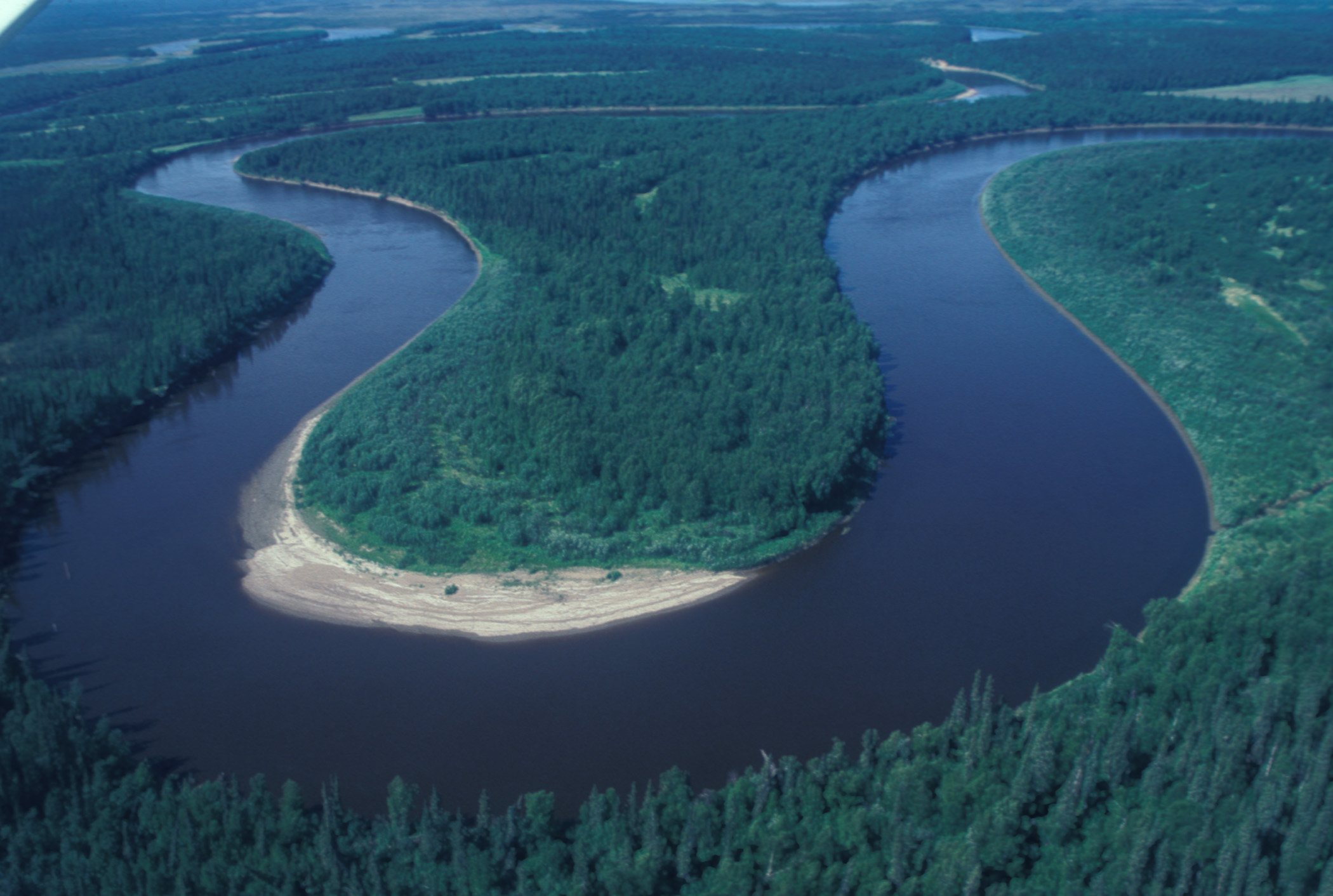
What river feature does this picture show?
a)
Oxbow Lake
b)
Meander
c)
Estuary
d)
Tributary
16.
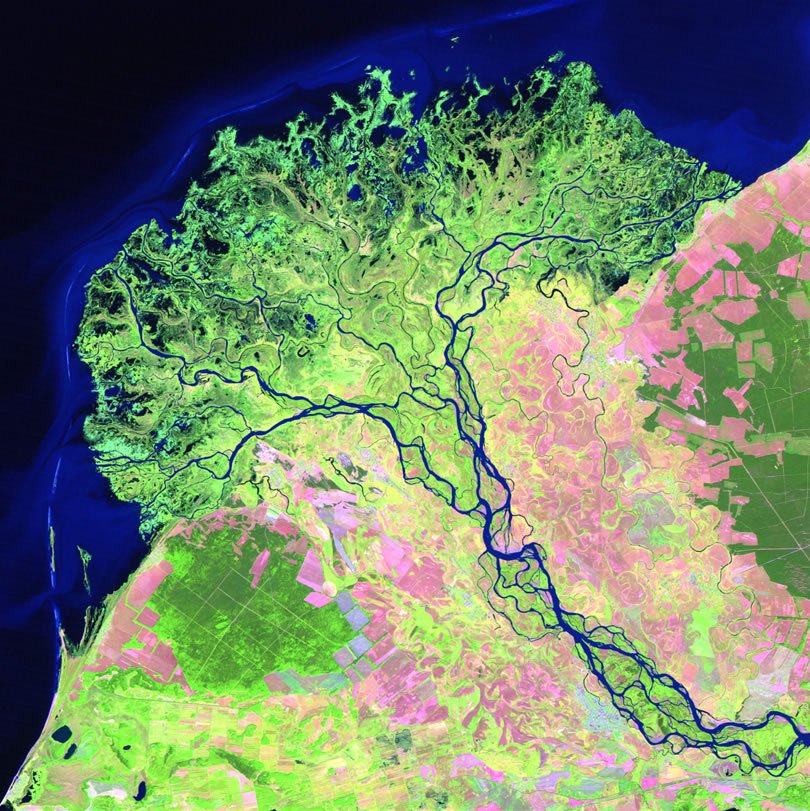
What does this image show?
a)
Oxbow Lake
b)
Headwaters
c)
Runoff
d)
Delta
17.
One-fifth of Earth's total freshwater supply is in ________.
a)
A) ponds
b)
B) the ocean
c)
C) groundwater
d)
D) estuaries
18.
The ___________________ the grain size, the faster the water will move through the soil.
a)
more mixed
b)
smaller
c)
larger
19.

An underground layer of rock or sediment that holds water?
a)
Reservoir
b)
Aquifer
c)
Groundwater
d)
Watershed
20.
What is NOT an example of freshwater?
a)
Rivers
b)
Lakes
c)
Oceans
d)
Groundwater
21.
When water goes from being a liquid to a gas (water vapor), that process is called
a)
Condensation
b)
Evaporation
c)
Precipitation
d)
Transpiration
22.
When water goes from being a gas (water vapor) to a liquid, that process is called
a)
Condensation
b)
Evaporation
c)
Transpiration
d)
Precipitation
23.
What is the best combination of water temperature and atmosphere temperature to make it rain?
a)
Warm Water, Warm Atmosphere
b)
Warm water, Cold Atmosphere
c)
Cold Water, Warm Atmosphere
d)
Cold Water, Cold Atmosphere
24.
The process that cycles water around Earth and it's atmosphere is called
a)
The Natural Cycle
b)
The Carbon Cycle
c)
The Water Cycle
25.
Trees and plants releasing water vapor into the air is called
a)
Transpiration
b)
Precipitation
c)
Evaporation
d)
Condensation
26.
What is the energy source for the water cycle?
a)
the sun
b)
the earth
c)
water
d)
the moon
27.
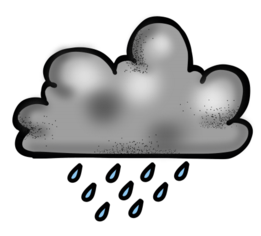
What part of the water cycle does this picture show?
a)
condensation
b)
precipitation
c)
evaporation
28.
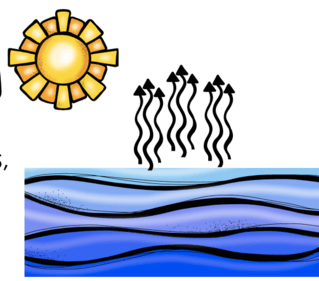
What part of the water cycle does this picture show?
a)
condensation
b)
precipitation
c)
evaporation
29.

Is humidity the amount of water in the air?
a)
Yes
b)
No
30.

Does warm water evaporate quicker than cold water?
a)
Yes
b)
No
31.
Which of these is an example of precipitation?
a)
snow
b)
air
c)
clouds
d)
vapor
32.

Which stages does liquid water from the ocean turn into water vapor?
a)
condesantion
b)
evaporation
c)
precipitation
d)
run off
33.

Which stage does ground water try to return to the ocean or soak into the ground?
a)
condensation
b)
evaporation
c)
precipitation
d)
run off
34.

Which stages does liquid water from the ocean turn into water vapor?
a)
condesantion
b)
evaporation
c)
precipitation
d)
run off
100 %

