
 Worksheets
Unit 3 Part 1 test review
Total questions: 30
Worksheet time: 24mins
Name
Class
Date
1.

Fruit fly body cells have 8 chromosomes. After mitosis, you would expect a resulting fruit fly daughter cell to have ...
a)
16 chromosomes.
b)
46 chromosomes.
c)
8 chromosomes.
d)
4 chromosomes.
2.

Structure (b) is a ____.
a)
chromosome
b)
chromatid
c)
centromere
3.

Name the phase:
a)
Anaphase
b)
Telophase
c)
Metaphase
d)
Prophase
4.

What is the next phase of mitosis?
a)
Prophase
b)
Metaphase
c)
Anaphase
d)
Telophase
5.

Name the previous phase.
a)
Prophase
b)
Metaphase
c)
Anaphase
d)
Telophase
6.

The stages of mitosis in order
a)
Metaphase, Anaphase, Prophase, Telophase
b)
Prophase, Anaphase, Metaphase, Telophase
c)
Prophase, Metaphase, Anaphase, Telophase
d)
Anaphase, Prophase, Telophase, Metaphase
7.
When a cell is not actively dividing, it is in what phase?
a)
interphase
b)
anaphase
c)
prophase
d)
telophase
8.
If the message never gets through for a cell to stop dividing and it just keeps dividing over and over again, what can form?
a)
tumor
b)
freckle
c)
goosebump
d)
scab
9.
In meiosis, the haploid number of chromosomes in a human sex cell is:
a)
46
b)
92
c)
22
d)
23
10.
Another name for a sex cell is a:
a)
gamete
b)
embryo
c)
bone cell
d)
muscle cell
11.

The process on the left is:
The process on the right is:
The process on the right is:
a)
Left: meiosis
Right: meiosis
Right: meiosis
b)
Left: meiosis
Right: cloning
Right: cloning
c)
Left: mitosis
Right: meiosis
Right: meiosis
d)
Left: mitosis
Right: mitosis
Right: mitosis
12.
Which of the following is an advantage of asexual reproduction
a)
The organism can increase in number quickly.
b)
It is a slow process.
c)
Two parents are needed.
d)
It introduces genetic diversity into the offspring.
13.
What process does a multicellular organism use to replace its damaged body cells?
a)
meiosis
b)
mitosis
c)
transcription
d)
replication
14.
When a cell divides, what do we call the 2 new cells?
a)
mother cells
b)
father cells
c)
daughter cells
d)
son cells
15.
Before a cell can divide, what must happen?
a)
Nothing, it is always ready to divide
b)
The number of chromosomes must be cut in half
c)
The number of chromosomes must double
d)
The number of chromosomes must triple.
16.
What is the diploid number of cells found in a human body cell?
a)
23
b)
46
c)
92
d)
47
17.
When you start with 1 cell, at the end of mitosis, how many identical cells will you have?
a)
1
b)
2
c)
3
d)
4
18.
Why is sexual reproduction better than asexual reproduction?
a)
It gives an advantage to organisms to be different than the rest, if the environment changes.
b)
It is better for all organisms to be the same.
c)
It happens faster.
d)
It helps skin cells divide faster to heal wounds.
19.

Place these cells in order of mitosis.
a)
A, B, C, D, E
b)
B, E, D, A, C
c)
C, E, A, D, B
d)
B, D, A, E, C
20.
Requires two parents
a)
sexual
b)
asexual
21.
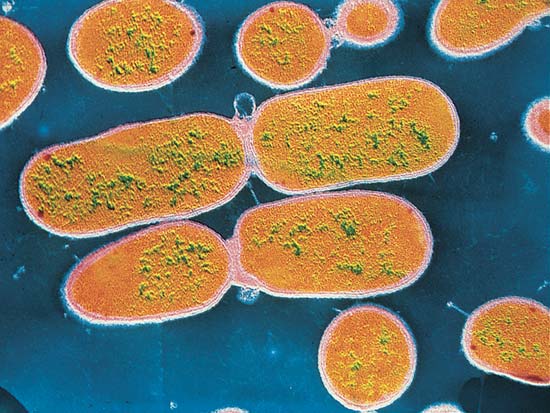
The offspring from asexually reproduced organisms are?
a)
Different than their parents
b)
Identical to parents
c)
Like a combination from both parents
d)
A different species
22.

Prokaryotes (bacteria) reproduce asexually via -
a)
spore formation
b)
bud creation
c)
vegetative propagation
d)
binary fission
23.
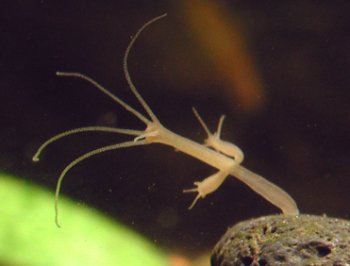
This is when a new organism grows by cell division on the body of its parent. The bud, or offspring is identical to the parent. The bud, when large enough, can break off of the parent and live on its own. Examples of this include yeast, hydra and potatoes.
a)
Regeneration
b)
Vegetative propagation
c)
Fission
d)
Budding
24.
What part of our cells holds our DNA?
a)
cytoplasm
b)
cell membrane
c)
nucleus
d)
ribosomes
25.

Why is DNA important?
a)
it is very small and very complicated
b)
it's in everything
c)
it serves as the blueprint for traits of all living things
d)
because we eat it every day for energy
26.
more genetic diversity among offspring.
a)
sexual
b)
asexual
27.
A hydra reproduces when an outgrowth, or bud, forms and continues to develop until if falls off of the parent. This is an example of:
a)
Binary Fission
b)
Sporulation
c)
Budding
d)
Vegetative Propagation
28.
How many parent(s)are needed for asexual?
a)
4
b)
1
c)
9
d)
100
29.
What percentage of chromosomes are handed down by a parent cell in asexual reproduction?
a)
75%
b)
25%
c)
50%
d)
100%
30.
When a starfish grows a new body off a broken arm, what kind of reproduction is this?
a)
Sexual
b)
Differentiation
c)
Asexual
d)
Specialization
100 %

