
NEW
Font size
S
M
L
XL
 Worksheets
Weathering, Erosion, & Deposition
Total questions: 39
Worksheet time: 32mins
Name
Class
Date
1.
Bobby observed that a metal trash can was covered with rust. What type of weathering caused the rust on the trash can?
a)
Mechanical weathering
b)
Wind weathering
c)
Chemical weathering
d)
Erosion weathering
2.
What is likely to cause cracks on the sidewalk?
a)
Repeated freezing and thawing of water
b)
Tree roots or plant roots growing bigger
c)
Both and A and B
d)
Neither A or B
3.

Which diagram represents mechanical weathering?
a)
G
b)
F
c)
H
d)
J
4.
Which type of climate would cause the greatest rate of weathering?
a)
Cold and dry
b)
Cold and humid (wet)
c)
Warm and humid (wet)
d)
Warm and dry
5.
A student hiking in a rock area on a mountain notices that wide, deep cracks have formed in some of the large rocks. Some of the cracks are so large that the rocks have broken apart. Which process most likely caused these rocks to crack and creak?
a)
Erosion by wind
b)
Water freezing and thawing
c)
Erosion by fast-moving
d)
Sediments being deposited.
6.
The surfaces of old concrete statues are often covered with small holes or pits. Which of these MOST LIKELY causes these holes or pits?
a)
The concrete becomes pitted as water freezes in small cracks in the statue.
b)
The concrete is chipped away by sand particles blown by strong winds
c)
The concrete is chemically weathered by acid rain.
d)
Long exposure to sunlight causes the pits to form.
7.
What is the weathering process in which rocks are broken down into smaller pieces (sediments) and do not change the rock composition?
a)
Acid weathering
b)
Gravity weathering
c)
Chemical weathering
d)
Mechanical weathering
8.

Which of the following is the most important agent of chemical weathering to form this cave?
a)
Water - It can carry acid and dissolve rock
b)
Erosion - Moves the rocks from one place to another
c)
Wind - It displaces rocks
d)
Exfoliation - New cracks give chemical reactions the chance to operate
9.
Rain washing away soil from a hillside
a)
Weathering
b)
Erosion
c)
Deposition
10.
Layers of sediment forming at the bottom of the ocean floor
a)
Weathering
b)
Erosion
c)
Deposition
11.
Glaciers dropping rock and sand to form moraines (deposition of debris)
a)
Weathering
b)
Erosion
c)
Deposition
12.
Deltas forming at the mouths of rivers
a)
Weathering
b)
Erosion
c)
Deposition
13.
Water getting into cracks, freezing, and breaking the rocks or pavement apart
a)
Weathering
b)
Erosion
c)
Deposition
14.
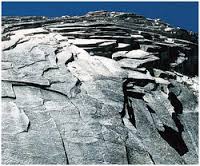
What is mechanical weathering?
a)
Process through which rocks are physically broken into smaller pieces.
b)
Rocks are broken down through chemical changes.
c)
Rocks are worn away from acid in plant roots.
d)
Rocks broken down by machinery.
15.
What's the difference between erosion and deposition
a)
no difference
b)
erosion breaks down rocks; deposition moves it
c)
erosion moves the rock particles; deposition drops it off
d)
erosion breaks down rocks into smaller pieces; deposition moves it
16.
Which type of climate will have faster chemical weathering?
a)
Hot and Wet
b)
Cold and Dry
c)
Hot and Cold
d)
Cold and Wet
17.
Which type of river has fast waters that are cool with a V-shaped channel?
a)
Old
b)
Young
c)
Mature
18.
Which of the following is not a type of river classification?
a)
Young
b)
Old
c)
Mature
d)
Adult
19.
A river that moves slow, has many meanders and tributaries, and can create oxbow lakes formations is what type of river?
a)
Young
b)
Old
c)
Mature
20.
Which river has a steep slope?
a)
Young
b)
Old
c)
Mature
21.
Which river has a gentle slope?
a)
Young
b)
Old
c)
Mature
22.
Which river is relatively flat and has a wide floodplain?
a)
Young
b)
Old
c)
Mature
23.
Which type of river contains rapids and waterfalls?
a)
Young
b)
Old
c)
Mature
24.
What is the feature that forms when meanders come together and leave a horseshoe shaped lake behind?
a)
Oxbow Lake
b)
Ox Lake
c)
Bow Lake
d)
Horseshoe lake
25.
In a meander (curve) where can you expect to have erosion?
a)
Inside the curve
b)
Outside the curve
26.
In a meander (curve) where you can expect to have sediments deposited?
a)
Inside the curve
b)
Outside the curve
27.
a sharp, pyramid shaped peak formed by glacial erosion
a)
horn
b)
arete
c)
moraine
d)
kettle
28.
Till deposited in the front of a glacier
a)
ground moraine
b)
lateral moraine
c)
terminal moraine
d)
medial moraine
29.
An alpine/valley glacier generally forms in mountainous areas
a)
true
b)
false
30.
Continental glaciers...
a)
cover millions of square miles
b)
do not cover an entire land mass
c)
carve out cirques and arretes
d)
are responsible for U-shaped valleys
31.
What is a bowl-shaped depression formed by glacial erosion?
a)
cirque
b)
arrete
c)
ice pack
d)
kettle
32.
A sharp, jagged ridge formed by a glacier is called a(n)...
a)
arrete
b)
cirque
c)
erratic
d)
drumlin
33.
Poorly graded (unsorted) rock material deposited directly by a glacier.
a)
glacial drift
b)
stratified drift
c)
till
d)
glacier
34.
Forms when a flowing glacier scoops out an area between two mountains.
a)
U-Shaped Valley
b)
Fjord
c)
Kettle
d)
Moraine
35.
This force causes the movement of glaciers
a)
pressure
b)
ice age
c)
gravity
d)
firn
36.

When a glacier retreats and large, partially buried, ice chunks are left behind to melt, these are formed:
a)
Moraine
b)
Prairie pothole
c)
Kettle Lake
d)
Fjord
37.
glacial erosion causes ______ as it moves across the land?
a)
plucking and striations
b)
beaches and sand bars
c)
sea caves and headlands
d)
sand dunes and losses
38.
Glaciers often form V shaped valleys
a)
true
b)
false
39.
The deposit at the furthest point the glacier ever gets.
a)
moraine
b)
ground moraine
c)
recessional moraine
d)
terminal moraine
Reset

