wayground logo

Free Printable Worksheets

NEW

Font size

S
M
L
XL
Worksheets

Ancient Egypt

Total questions: 46

Worksheet time: 31mins

Name
Class
Date
1.
What title was given to an Egyptian ruler?
a)
pharaoh
b)
king
c)
dictator
d)
emperor
2.
Who was the first pharaoh of Egypt?
a)
King Tut
b)
King Ramses II
c)
Queen hatshepsut
d)
King Menes
3.
Which area of Egypt included the Nile Delta?
a)
Upper Egypt
b)
Lower Egypt
c)
Western Egypt
d)
Eastern Egypt
4.

Which pharaoh ruled the longest?

a)

Menes

b)

Ahmose

c)

Ramses the Great

d)

Tut

5.

Goods that are shipped out of your country are called

a)

imports

b)

taxes

c)

exports

d)

cataracs

6.
Which of these is NOT a natural barrier for protecting Egypt from invaders?
a)
Nile River cataracts
b)
Mediterranean Sea
c)
harsh deserts
d)
tallest mountains in the world
7.
Which of these Egyptian leaders drove the Hyksos out of Egypt?
a)
Menes
b)
Ramses
c)
Ahmose
d)
Hatshepsut
8.
Egyptian life centered around
a)
pyramids
b)
afterlife
c)
the pharaoh
d)
farming
9.
The most famous pharaoh of the Old Kingdom was
a)
King Tut
b)
Queen Hatshupsut
c)
King Khufu
d)
King Menes
10.
Which of these describes the burial practices of the Egyptians?
a)
burned the bodies in ceremonies
b)
buried the dead in the river
c)
brought the dead to neighboring countries
d)
preserved bodies as mummies
11.
Which letter represents the area of Lower Egypt?
a)
F
b)
G
c)
A
d)
C
12.
Letter D on the map shows the location of 
a)
Mediterranean Sea
b)
Persian Gulf
c)
Nile River
d)
Red Sea
13.
Letter C on the map represents the location of
a)
Upper Egypt
b)
Thebes
c)
Lower Egypt
d)
Memphis
14.
Most people in ancient Egypt worked as
a)
farmers
b)
traders
c)
scribes
d)
slaves
15.
Ancient Egypt was united as one kingdom and had the first pharaoh during the 
a)
Old Kingdom
b)
Middle Kingdom
c)
New Kingdom
16.
What was one advantage of being a scribe in ancient Egypt?
a)
You were one of the wealthiest citizens.
b)
You were given land for your service.
c)
You didn't have t pay taxes.
d)
You were buried in a pyramid with the pharaoh
17.
Which of these was NOT a legacy of the ancient Egyptians?
a)
inventing the chariot
b)
a number system based on ten
c)
a lunar calendar
d)
creating an obelisk
18.
Where is the Nile Delta located?
a)
in Upper Egypt
b)
in the center of Egypt
c)
in western Egypt
d)
where the Nile River meets the Mediterranean Sea
19.
What did a double crown symbolize? 
a)
two channels of the Nile River
b)
uniting Upper and Lower Egypt
c)
uniting western and eastern Egypt
d)
two pharaohs who ruled at the same time
20.
To protect the pharaoh's body, the Egyptians developed a process called___________.
a)
Hieroglyphics
b)
Burying
c)
Embalming
d)
Cremation
21.
The wrapped body of the dead pharaoh was called a ___________.
a)
Priest
b)
Mummy
c)
Cataract
d)
Delta
22.
The _____________ were built as tombs during the Old Kingdom.
a)
Mummies
b)
Sphinx
c)
Pyramids
d)
Cataracts
23.
This ancient Egyptian ruler began her rule as a substitute ruler for her son and went on to rule as a pharaoh equal in political and religious powers to other pharaohs of the New Kingdom. Which leader is described
a)
Ramses II
b)
Cleopatra VII
c)
Hatshepsut
d)
Khufu
24.

When ____ drove the Hyksos out of Egypt, it was the beginning of the _____

a)

Ahmose; New Kingdom

b)

Queen Hatshepsut; Middle Kingdom

c)

Ramses II, New Kingdom

d)

Ahmose; Old Kingdom

25.
Ramses the Great came to power and reigned for a short period of time.
a)
True
b)
False
26.
A sphinx is a....
a)
A huge triangular tomb built by the Egyptians
b)
Imaginary create with a human head and the body of a lion that was often shown on Egyptian statues.
c)
specially treated body wrapped in cloth for preservation
27.
During this time period, ancient Egypt's power reached its height.
a)
The Old Kingdom
b)
The Middle Kingdom
c)
The New Kingdom
d)
Kingdom 2.0
28.
Hatshepsut is remembered for her promotion of ....
a)
religious values
b)
feminism
c)
trade
d)
a strong military
29.
Whose tomb was discovered in 1922 and led to us knowing about Egyptian burial practices and beliefs?
a)
Khufu
b)
Ramses the Great
c)
Cleopatra
d)
King Tutankhamen
30.
How does the Nile River flow?
a)
starting in the south to the north 
b)
starting in the north to the south 
c)
starting in the middle to the north 
d)
starting in the middle to the south 
31.

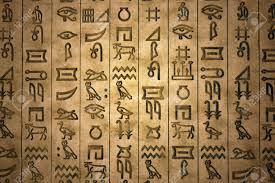
What is this system of writing called?

a)

calligraphy

b)

Hieroglyphs

c)

Cuneiform

d)

Alphabet

32.
Lower Egypt is located in southern Egypt
a)
True
b)
False
33.
an ancient writing paper
a)
perfume
b)
papyrus
c)
hieroglyphics
d)
stone
34.
What was on the Rosetta stone?
a)
random marks
b)
a list of rules
c)
3 languages
d)
a tomb
35.
Why were tombs filled with art, jewelry, and other treasures?
a)
The tombs served as museums.
b)
The tombs were the private storage rooms fo the pharaoh.
c)
Egyptians believed tombs to be the safest places in the kingdom.
d)
Egyptians believed the dead (ka) enjoyed such materials in the afterlife.
36.
In the Egyptian social order, which class was a part of the bureaucracy which helped the pharaoh run the government and temples?
a)
nobles
b)
scribes
c)
craftspeople
d)
servants
37.
 What is a dynasty?
a)
ruler of Egypt
b)
a series of rulers from the same family
c)
a type of government ruled by priests or gods
d)
a system of offices and officials who handle governmental business
38.
In Egypt, pyramids were built of all sizes and used for
a)
storing food
b)
tombs for pharaohs
c)
protection against invaders
d)
market places
39.
What is a cataract?
a)
strong rapids
b)
waterfalls
c)
strong animals 
d)
Strong mountains
40.
What is a Delta?
a)
A triangle shaped area of land 
b)
food
c)
A multitude
d)
Money
41.
The Middle Kingdom came to an end when
a)
Ramses was defeated by the Sumerians
b)
The Nobles challenged the power of the pharaoh and the Hyksos invaded 
42.
In the mummification embalming, the organ left inside the body was a brain.
a)
True
b)
False
43.

Which of these items was very important in the mummification process?

a)

water

b)

salt

c)

iron

d)

silt

44.

Which of these was used to determine if a pharaoh was worthy of the afterlife?

a)

brain

b)

kidneys

c)

heart

d)

liver

45.

If you were not a pharaoh or noble, where were you buried?

a)

in the desert

b)

in the Nile River

c)

You were not buried.

d)

under your home

46.

What is the significance of the Nile River?

a)

It is the widest river in the world.

b)

It is the deepest river in the world.

c)

It is the longest river in the world.

d)

It is the only river on the continent of Africa.