
NEW
Font size
S
M
L
XL
 Worksheets
Energy 6.7.8
Total questions: 30
Worksheet time: 30mins
Name
Class
Date
1.
What is the definition of CONVECTION
a)
When heat transfers through waves.
b)
When heat transfers from objects that are touching.
c)
Is the transfer of energy as heat by movement of the heated substance itself, as currents in fluids
d)
Heat traveling from the sun
2.
What is the definition of CONDUCTION?
a)
When heat is transferred from objects like rays of light or electromagnetically.
b)
a hot liquid or air that expands, becomes less dense, and rises or becomes more dense, and sinks.
c)
Transfer of thermal energy through direct contact
d)
When heat transfers through the heater or AC in your house.
3.

A group of friends gather around a fire to stay warm.
a)
conduction
b)
convection
c)
radiation
4.

What do the lines around this magnet represent?
a)
North Pole
b)
South Pole
c)
Magnetic Declination
d)
Magnetic Field
5.
Which is NOT an insulator.
a)
Wool
b)
Plastic
c)
Copper
d)
Wax
6.
An _________ is a type of magnet in which the magnetic field is produced by an electric current.
a)
Electromagnet
b)
Electromagnet Field
c)
Metal Magnet
7.
After a car is turned on, the engine becomes hot. The hood will become warm as heat is conducted from the engine to the hood. This is a example of...
a)
Conduction
b)
Convection
c)
Radiation
8.
A heater inside the balloon heats the air and so the air moves upward. This causes the balloon to rise because the hot air gets trapped inside. When the pilot want to descend, he releases some of the hot air and cool air takes it place, causing the balloon to lower.
This is a example of..
This is a example of..
a)
Convection
b)
Conduction
c)
Radiation
9.
A few friends sit by a warm fire at night to keep them warm. This is a Example of..
a)
Radiation
b)
Conduction
c)
Convection
10.
What is a example of Radiation?
a)
Using heat from an oven to warm up
b)
Putting a wooden spoon in boiling water
c)
Using something as a energy source
d)
When heat goes into something metal.
11.
a soft metal core made into a magnet by the passage of electric current through a coil surrounding it. What am I?
a)
Iron
b)
Metal
c)
Electromagnet
12.
Why are metals useful for making electrical wire?
a)
Metals do not bend.
b)
Metals hold much heat.
c)
Metals are insulators.
d)
Metals are conductors.
13.
Is Iron a Conductor or Insulator?
a)
Conductor
b)
Insulator
14.
A great conductor of energy is:
a)
wood
b)
plastic
c)
metal
d)
cloth
15.

Pans A & B shown above have been on a hot stove for 10 minutes. Pan A has a metal handle and pan B has a plastic-coated handle. Which handle would be hotter?___________ Why?_________________
a)
Pan A because the metal is a conductor of heat.
b)
Pan B because there is an insulator on the pan.
c)
Pan A because there metal is an insulator.
d)
Pan B because the metal conducts heat.
16.
An insulator . . .
a)
Allows a lot of heat to escape
b)
Makes the temperature of an object rise
c)
Moves heat from one place to another
d)
Traps heat inside an object
17.
In order to make an electromagnet, you need a
a)
battery, nail, and magnet
b)
battery, wire, and nail
c)
magnet, nail, and wire
d)
all of the above
18.

The plastic covering is there to:
a)
Provide a conductor for electrical energy to flow.
b)
Provide an insulator so that electrical energy will not pass outside of the wires.
c)
Provide a conductor so that electrical energy can NOT flow.
d)
Provide an insulator so that electrical energy can flow.
19.
Gold is an example of ________.
a)
a conductor
b)
an insulator
20.
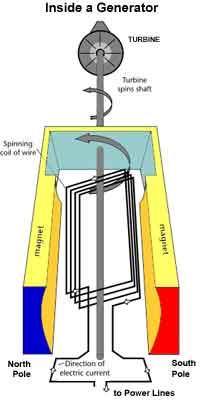
In large generators in power plants, ___________ rotate inside a coil of wire to produce an electric current.
a)
Wind
b)
Water
c)
Magnets
d)
Circuits
21.
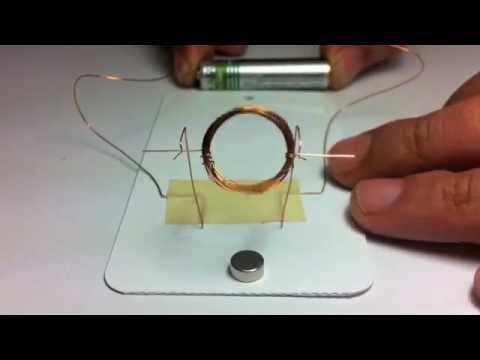
What does a motor do?
a)
Moves up and down
b)
Rotates without electricity
c)
It does
d)
Uses electricity to rotate
22.
What can magnets stick to?
a)
copper
b)
wood
c)
iron
d)
plastic
23.

This is called an __________________.
a)
bomb
b)
circuit
c)
electromagnet
d)
coil
24.
Hot objects begin to cool as-
a)
cooler air is transferred to the hot object.
b)
thermal energy in the object is transferred to the surrounding air.
c)
atoms in the object react with the oxygen in the air.
d)
thermal energy in the object cancels out energy in the air
25.

what type heat energy is this example of-
a)
Conduction
b)
Convection
c)
Radiation
26.

The picture shows a microwave oven. As a microwave oven is operated, electrical energy is transformed into all of the following types of energy EXCEPT —
a)
solar
b)
light
c)
thermal
d)
mechanical
27.
Radiation is heat transfer by-
a)
Touch
b)
Circles
c)
Waves
28.

In the winter, some people heat their homes by burning logs in the fireplace. How does the heat from the fire get to the other side of the room?
a)
it travels through the carpet by conduction
b)
it travels through the air by convection
c)
it travels through the carpet by radiation
d)
it travels with the smoke by condensation
29.

What is the best definition of radiation?
a)
Heat is transferred by the movement of currents within a fluid (a liquid or a gas).
b)
The average kinetic energy of all the particles in an object
c)
The transfer of energy by electromagnetic waves. (You can feel this from a bonfire or heat lamp.)
d)
1. The heat required to raise the temperature of one gram of a substance one degree Celsius.
30.
What is the definition of RADIATION?
a)
Is the transfer of energy through space without particles of matter colliding or moving to transfer the energy
b)
Thermal energy transfer in space
c)
Something that gives off heat
d)
Is the transfer of energy as heat by movement of the heated substance itself, as currents in fluids
Reset

