
 Worksheets
Y7 Energy
Total questions: 32
Worksheet time: 45mins
Name
Class
Date
1.

What type of energy is in this picture?
a)
Kinetic
b)
Elastic Potential
c)
Chemical Potential
d)
Sound
2.
Energy of movement is which type of energy?
a)
Elastic Potential
b)
Kinetic
c)
Sound
d)
Gravitational Potential
3.

What type of energy is mostly represented in this picture?
a)
Thermal
b)
Gravitational Potential
c)
Nuclear
d)
Kinetic
4.

What type of energy is represented in the picture?
a)
Thermal
b)
Chemical Potential
c)
Sound
d)
Light
5.

A battery converts what type of energy to another?
a)
sound to kinetic
b)
light to heat
c)
mechanical to electrical
d)
chemical to electrical
6.
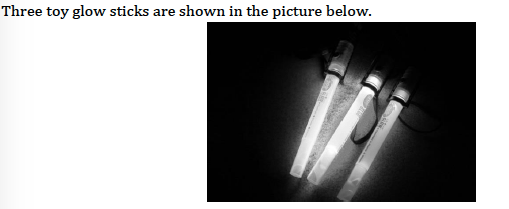
The glow sticks produce light for a short amount of time. The light from the glow stick is a conversion from what to what?
a)
thermal to light
b)
gravitational potential to electrical
c)
radiant to electrical
d)
chemical potential to light
7.
Wind turbines convert what type of energy to another?
a)
Kinetic to electrical
b)
Gravitational potential to electrical
c)
Light to elastic potential
d)
Thermal to sound
8.
On a roller coaster, where is the maximum gravitational potential energy?
a)
At the bottom of a big hill
b)
When going around a corner
c)
When going upside down
d)
At the top of a big hill
9.
On a roller coaster, where is the maximum kinetic energy?
a)
At the bottom of a big hill
b)
When going around a corner
c)
When going upside down
d)
At the top of a big hill
10.
According to which law of energy, energy can't be created or destroyed?
a)
First Law of Motion
b)
The Law of Tacos
c)
The Grand Laws of Energy
d)
The Law of Conservation of Energy
11.

What type of device might this Sankey be about?
a)
A very efficient LED light bulb
b)
A very inefficient incandescent light bulb
c)
A coal power plant
d)
A wind turbine
12.

What might a title be for this sankey diagram?
a)
Electrical energy
b)
Efficient light bulb
c)
25 Joules of heat
d)
Sankey for a good heater
13.
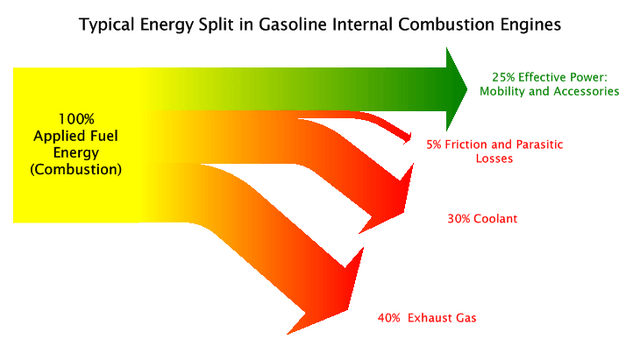
Which fraction best describes the efficiency of this car?
a)
4/10
b)
1/4
c)
2/4
d)
3/5
14.

If a typical house uses $1900 on energy, approximately how much goes on heating and cooling?
a)
About 4
b)
About $950
c)
Most of the energy
d)
About $1200
15.
What are the 3 main fossil fuels?
a)
A. Coal, oil, and vegetable oil.
b)
B. Coal, Oil, and Natural Gas
c)
C. Electricity, Gasoline, Petroleum
d)
D. Coal, Oil, Wind
16.
Hydroelectric power generates electricity using.....
a)
Wind
b)
Sunlight
c)
Moving water
d)
Dung
17.
The energy resource that is most affected by change in weather is_____________?
a)
geothermal
b)
wind
c)
nuclear
d)
natural gas
18.
When a pot is touching a stove that is on, what type of heat transfer is happening?
a)
I don't know?
b)
Radiation
c)
Conduction
d)
Convection
19.
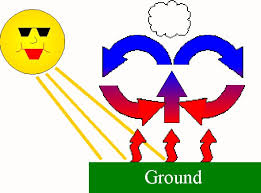
Warm air rising and cool air sinking demonstrates this type of heat transfer...
a)
conduction
b)
convection
c)
radiation
d)
Insolation
20.
What is the definition of CONDUCTION?
a)
When heat is transferred from objects like rays of light or electromagnetically
b)
A hot liquid or gas that expands, becomes less dense, and rises or becomes more dense, and sinks
c)
When heat transfers between objects that are touching
d)
When heat transfers through the heater or AC in your house
21.
What is the definition of CONVECTION
a)
When heat transfers through waves
b)
When heat transfers from objects that are touching
c)
A hot liquid or gas that expands, becomes less dense, and rises or becomes more dense, and sinks
d)
Heat travelling from the sun
22.
Which of the following best describes how electricity is generated for homes?
a)
The spinning of a windmill's blades creates electric current without a generator
b)
Nuclear reactions cause electric current to flow around the reaction chamber
c)
Steam pushes turbine blades in a generator, which changes the kinetic energy into an electric current
d)
Water released from a dam generates kinetic energy, which is transformed into sound energy
23.
On a sunny day, Sarah fills a small backyard pool with water. As time passes, the water warms. Which statement explains this effect?
a)
The sun heats the water through gravity
b)
The sun heats the water through radiation
c)
The sun heats the water through convection
d)
The sun heats the water through conduction
24.
George is trying to understand the difference between heat and temperature. He records some ideas. Which statement is correct?
a)
Heat and temperature are synonyms
b)
Heat and temperature are antonyms
c)
Heat is how much energy is in an object (measured in J), and temperature is how hot or cold something is (measured in °C)
d)
Heat is how hot or cold something is, and measured in °C
25.
What is a renewable resource?
a)
A resource you can reuse
b)
An object you cannot replace
c)
Fossil fuels
d)
Polluted resources
26.
What is a non-renewable resource?
a)
Solar energy
b)
A resource that cannot be reused or replaced within our lifetime
c)
Wind energy
d)
Biomass
27.
Where does most of Earth's energy originally come from?
a)
The Sun
b)
Mars
c)
Wind
d)
Water
28.
An energy resource that uses Earth's interior heat is called...
a)
Geothermal
b)
Solar Energy
c)
Wind Energy
d)
Hydroelectricity
29.
A gas ALWAYS produced when a fossil fuel is burnt is...
a)
Carbon dioxide
b)
Methane
c)
Oxygen
d)
Nitrous oxide
30.
One disadvantage of nuclear energy is:
a)
It requires wind in order to maintain clean enough facilities to manage the reaction
b)
The waste is hazardous and can affect the
environment for thousands of years
environment for thousands of years
c)
It can't be produced in violent weather
d)
It has a high cost of fuel, but it is renewable
31.
_____ are formed by natural processes such as the decomposition of buried organisms. Examples include coal, oil and natural gas.
a)
geofuels
b)
renewable resources
c)
conservation
d)
fossil fuels
32.
Coal is sometimes called “buried sunshine”. What is the most likely reason for this nickname?
a)
coal is bright yellow
b)
coal is the remains of dead plants that collected the Suns energy
c)
when mined underground, coal glows like the Sun
d)
coal is meteorites from the Sun
100 %

