
 Worksheets
Earthquakes
Total questions: 20
Worksheet time: 20mins
Name
Class
Date
1.

The outside layer of the earth is called ______________________.
a)
core
b)
crust
c)
mantle
d)
outer core
2.

The huge pieces of the earth's crust are called ____________________________.
a)
crust
b)
plates
c)
directions
d)
seismos
3.
What occurs when two plates move, bump or slide past each other?
a)
An Earthquake
b)
Nothing
c)
Movement
4.

What is the name of this plate boundary that forms fold mountains and causes earthquakes?
a)
Conservative
b)
Collision
c)
Destructive
d)
Constructive
5.

What is the vocabulary word for the movement on the surface of the Earth resulting from underground movement between two plates?
a)
An Earthquake
b)
Shaking Earth
c)
Volcano
6.
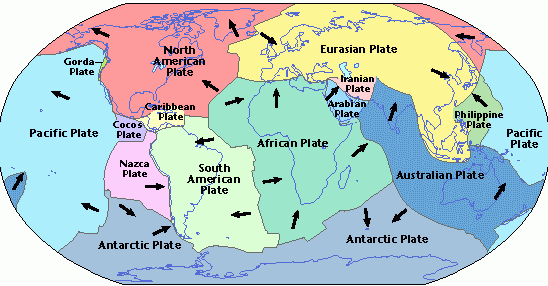
Many earthquakes happen along the borders of...
a)
Countries
b)
Tectonic Plates
c)
Climate Zones
d)
None of the above.
7.
The epicenter of an earthquake is
a)
The point below the surface where rock begins to break and the first motion occurs
b)
The seismic station closest to the earthquake
c)
The place where the greatest damage occurs
d)
The point on the surface directly above the focus
8.
What is the name of the largest conservative plate boundary in the USA where large earthquakes happen?
a)
Altyn Tagh Fault
b)
Mid Atlantic Ridge
c)
Denali Fault
d)
San Andreas Fault
9.
An instrument that detects and measures earthquakes is a
a)
seismogram
b)
focus seismic map
c)
focus
d)
seismograph
10.
The focus of an earthquake is
a)
The point (below Earth's surface) where rock breaks
b)
The closest seismic station
c)
The place where the greatest damage occurs
d)
A fault
11.
The Richter scale measures:
a)
the amount of radon gas released
b)
the movement of plates
c)
the strength of an earthquake
d)
the weight of tectonic plates
12.
During an earthquake, the earth's crust can crack.
a)
true
b)
false
13.
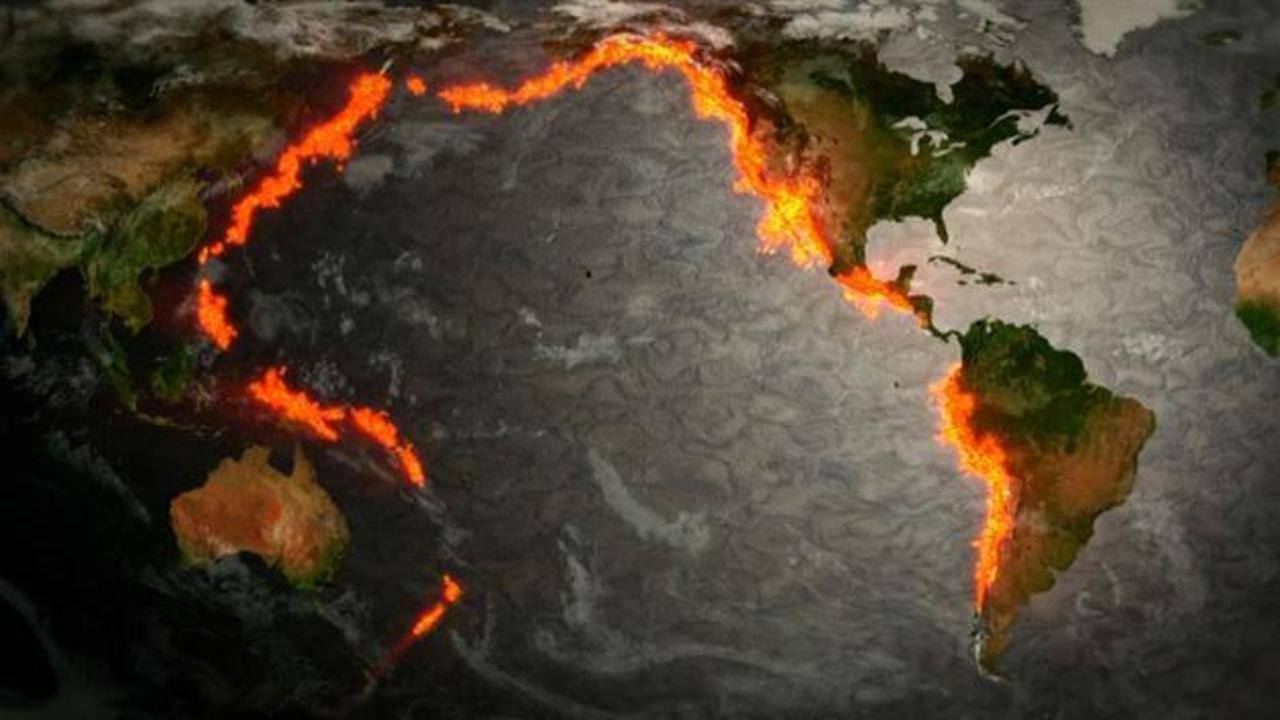
Which ocean in the world is also known as the "Ring of Fire"
a)
Atlantic
b)
Indian
c)
Arctic
d)
Pacific
14.
What is a smaller earthquake that follows a larger earthquake?
a)
Aftershock
b)
Liquefaction
c)
Seismic Gap
d)
Tsunami
15.

Earthquakes happen every day. Most are too small for humans to notice.
a)
True
b)
False
16.
________________ measures the strength of an earthquake on a scale of 1-10.
a)
Seismometer
b)
Richter Scale
c)
Magnitude
d)
Seismology
17.
Odd one out: Which one of these effects are NOT a primary effect of an earthquake?
a)
People are killed or injured
b)
Damage to buildings
c)
Famine
d)
Homes destroyed
18.
What is the definition of a secondary effect of an earthquake?
a)
You heard about it from someone else
b)
Occur as a result of the primary effects
c)
Occur as a direct result of the ground shaking
d)
They aren't as important
19.
What are seismic waves?
a)
The shaking movements that start at the focus
b)
Waves in the ocean
c)
Big hand movements
d)
Where the earthquake ends
20.
What earthquake will cause the most destruction?
a)
San Francisco 6.7mg
b)
Christchurch 3.5mg
c)
Chile 4.7mg
d)
Tokyo 8.9mg
100 %

