wayground logo

Free Printable Worksheets

NEW

Font size

S
M
L
XL
Worksheets

Wed/Soil Test Review

Total questions: 32

Worksheet time: 29mins

Name
Class
Date
1.
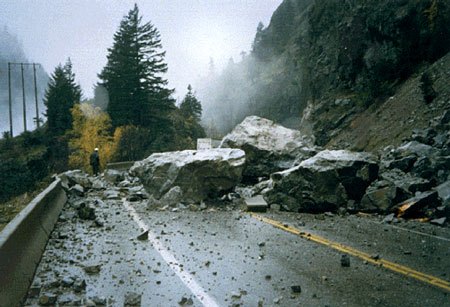
Alec saw footage of a landslide on the news. He saw rocks falling from the side of a mountain, with some of them smashing into each other and breaking apart. Alec witnessed 
a)
erosion and weathering. 
b)
erosion and compacting
c)
weathering and compacting
d)
weathering and sedimentation 
2.
How will an increase in wind speed affect soil erosion?
a)
Soil erosion will increase
b)
Soil erosion will decrease
c)
Soil erosion will stop
d)
Soil erosion will remain the same 
3.
Which of the following is an example of a process that changed Earth's surface in a very short period of time? 
a)
Water weathered rocks and carried them downstream
b)
Large amounts of rainfall caused a river to flood its banks
c)
Wind eroded the side of a hill
d)
A glacier carried sand and rocks 
4.
Which event would change Earth's surface in the shortest amount of time? 
a)
landslide
b)
erosion
c)
glacial motion 
d)
lake evaporation 
5.

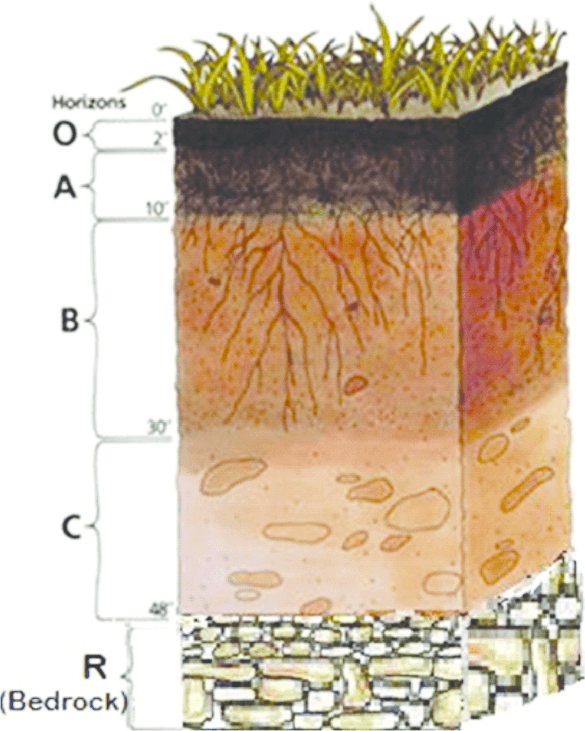
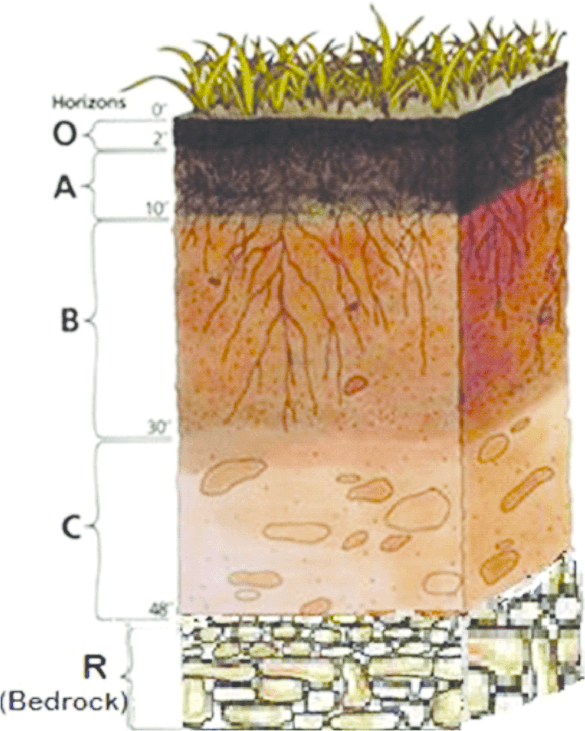
Mr. Green had his students collect soil samples from various areas of the school campus. The students noticed that the upper layer of the soil in the wooded area of the campus was darker than the upper layer of the sandy playing field. Why would there be a difference in color in the upper layer of the two soil samples?

a)

A. The soil in the wooded area was made primarily of organic matter and not rock particles.

b)

B. The soil in the wooded area was made primarily of rock particles and not organic matter.

c)

C. There is less erosion on the playing field due to fewer plants growing on the field.

d)

D. There is more erosion in the wooded area due to more plants growing in the area.

6.
Which layer most likely contains the most rocks and the least amount of organic matter? 
a)
Horizon A-topsoil
b)
Horizon B-subsoil
c)
Parent Material 
d)
Bedrock 
7.
Which layer contains the majority of bacteria, mushrooms, worms, and other organic material.  
a)
Top soil - Horizon A
b)
Horizon B-Sub soil
c)
Parent Material
d)
Bedrock 
8.
Mary is studying swampy marshlands near her school. She notices there are many thriving plants in the wet soil. What type of soil is she likely to see? 
a)
soil mostly of broken rocks
b)
soil mostly of sand grains 
c)
soil with many minerals
d)
soil with decaying organic material 
9.

The top layer of soil is called ______.

a)

topsoil

b)

subsoil

c)

bedrock

10.

The bottom layer of soil is called ______.

a)

topsoil

b)

subsoil

c)

bedrock

11.

When a rock gets broken down into soil, this process is called ______.

a)

topsoil

b)

water capacity

c)

weathering

d)

erosion

12.

Which layer of soil has the most humus?

a)

topsoil

b)

subsoil

c)

bedrock

13.

The decayed remains of plants and animals is called ______.

a)

soil

b)

subsoil

c)

humus

d)

weathering

14.
What is the name of Soil Horizon O?
a)
Bedrock
b)
Topsoil
c)
Organic Layer
d)
Subsoil
15.
What is the name of Soil Horizon B?
a)
Subsoil
b)
Topsoil
c)
Bedrock
d)
Transition Zone
16.
What are the two types of weathering?
a)
Rain and Snow
b)
Precipitation and Temperature
c)
Physical and Chemical
d)
Metal and Nonmetal
17.

Large rocks fall from mountainsides

a)

Chemical weathering

b)

Mechanical weathering

c)

Erosion

d)

Deposition

18.

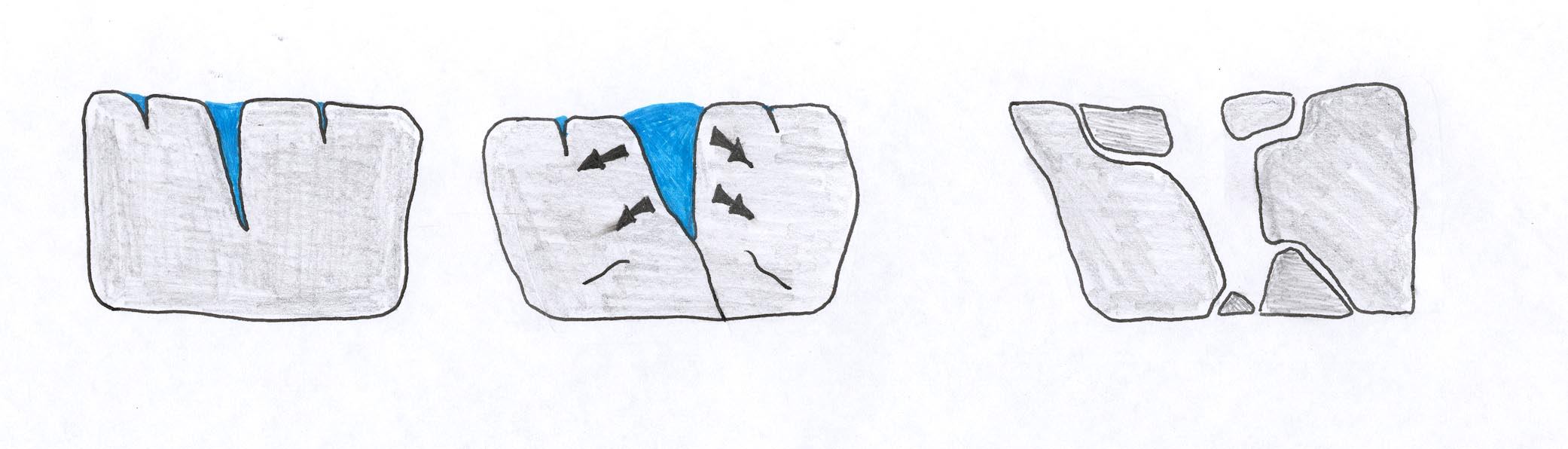
When water gets into a rock, freezes, and expands

a)

hydraulic action

b)

gravity

c)

ice wedging

d)

hydration

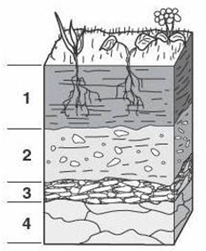
19.
In which layer of the soil profile contains the MOST humus?
a)
Layer 1
b)
Layer 2
c)
Layer 3
d)
Layer 4
20.

How can wind change a sand dune?

a)

Water can wash the sand away.

b)

Strong winds can blow sand off the dunes.

c)

Wind can blow sand into the water.

21.

How can rain change a mountain?

a)

Rain causes flash flooding on mountains.

b)

Water erosion wears down the peaks of a mountain.

c)

Water can cause cracks in the mountainside.

22.

What are the 4 main agents of erosion?

a)

Ice, Snow, Rocks, Soil, Tectonic Plates

b)

Landslides, Erosion, Volcanoes, Flooding

c)

Wind, Water, Waves, Ice, Gravity

d)

Hurricanes, mudslides, creep, slope

23.
Bobby observed that a metal trash can was covered with rust.  What type of weathering caused the rust on the trash can?
a)
Mechanical weathering 
b)
Wind weathering
c)
Chemical weathering
d)
Erosion weathering
24.
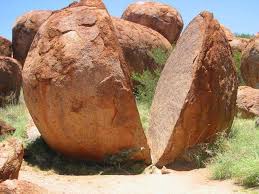
Which diagram represents mechanical weathering?
a)
G
b)
F
c)
H
d)
J
25.
What is the weathering process in which rocks are broken down into smaller pieces (sediments) and do not change the rock composition?
a)
Acid weathering 
b)
Gravity weathering
c)
Chemical weathering
d)
Mechanical weathering
26.

What is erosion?

a)

The movement of sediment

b)

The breaking of sediment

c)

The dropping of sediment

27.

Which of these is an example of erosion?

a)

Light shinning onto a mountain

b)

Rain breaking down rock

c)

Wind blowing away sediment

d)

All of the above

28.
The process by which small pieces of rocks and soil are carried away to new locations is called...
a)
deposition
b)
erosion
c)
weathering
d)
faults
29.
Wind blowing sand from one location to another
a)
Weathering
b)
Erosion
c)
Deposition
30.

What is deposition?

a)

The movement of sediment

b)

The breaking of sediment

c)

The dropping of sediment

31.

Beach waves dropping sand to create a beach is an example of...

a)

weathering

b)

erosion

c)

deposition

32.

A landform made of sediment that is deposited where a river flows into an ocean or lake is called a...

a)

sea cave

b)

mountain

c)

delta