
NEW
Font size
S
M
L
XL
 Worksheets
Weather Unit Test Review
Total questions: 35
Worksheet time: 35mins
Name
Class
Date
1.

What part of the water cycle does this picture show?
a)
condensation
b)
precipitation
c)
evaporation
2.
Which of these is an example of precipitation?
a)
snow
b)
air
c)
clouds
d)
vapor
3.
Snow, sleet, hail, and rain are all examples of ________________.
a)
evaporation
b)
condensation
c)
accumulation
d)
precipitation
4.

What is it called when plants give off water vapor as a waste product?
a)
condensation
b)
evaporation
c)
sublimation
d)
transpiration
5.
Where we live.
a)
stratosphere
b)
thermosphere
c)
troposphere
d)
mesosphere
6.
Where you will find the ozone layer.
a)
stratosphere
b)
thermosphere
c)
exosphere
d)
mesosphere
7.
What happens to the air pressure the higher up in space you go?
a)
the air pressure increases
b)
the air pressure decreases
c)
the air pressure stays the same
d)
there is no air pressure
8.
What gas is important for weather to occur in the troposphere?
a)
Argon
b)
water vapor (H2O)
c)
nitrogen (N)
d)
trace gases
9.
This is the layer where most commercial jet airliners fly.
a)
Troposphere
b)
Stratosphere
c)
Mesosphere
d)
Thermosphere
10.
What is the name of the cloud that is often present during the summer and would likely produce thunderstorms?
a)
stratus
b)
cirrus
c)
cumulonimbus
d)
altostratus
11.
They are highest clouds in the sky. They look curly, white and feathery. Usually mean good weather.
a)
Cumulus
b)
Cumulonimbus
c)
Cirrus
d)
Stratus
12.
They are low in the sky and look soft and fluffy.
a)
Cirrus
b)
Cumulonimbus
c)
Cumulus
d)
Stratus
13.
Low clouds (like fog), that are thick, cover the sky, and block the sun. Usually bring continuous precipitation (rain or snow).
a)
stratus
b)
cumulus
c)
cirrus
d)
nimbo
14.

what type of cloud is shown?
a)
cumulus
b)
cirrus
c)
stratus
15.

What type of cloud is shown?
a)
cumulus
b)
cirrus
c)
stratus
16.
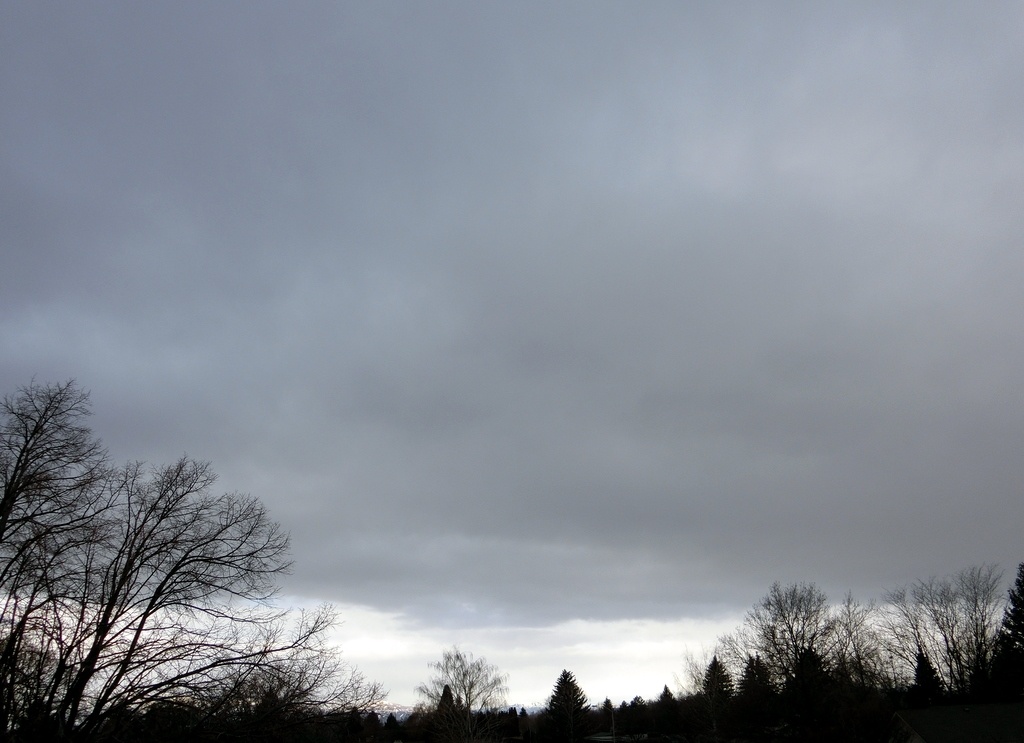
This type of cloud is thin and flat, and the edges are not clearly defined
a)
cirrus cloud
b)
cumulus cloud
c)
stratus cloud
d)
cumulonimbus cloud
17.
What is the Coriolis Effect and how does it effect global winds?
a)
Curving of winds due to rotation of earth curves wind counterclockwise in Northern Hemisphere and clockwise in the Southern Hemisphere
b)
Movement of ocean currents caused by earth rotation' counterclockwise in Northern Hemisphere and clockwise in Southern Hemisphere
c)
curve of global winds caused by global rotation clockwise in Northern Hemisphere and counterclockwise in Southern Hemisphere
18.
How does the Coriolis Effect influence hurricanes and cyclones
a)
determines how powerful they will be
b)
determines where they will go
c)
determines where they form
d)
determines the direction of the wind rotation
19.
Why do hurricanes lose so much of their power when they hit land?
a)
they run into high pressure which kills hurricanes
b)
land is cooler than water therefore the hurricane loses the energy it needs from warm temperatures
c)
the land breezes shear the hurricane therefore making it harder for it to stay together
d)
the hurricane no longer receives heat and moisture from the warm ocean it uses for fuel
20.
Steady winds that flow from east to west towards the equator?
a)
jet stream
b)
breeze
c)
westerlies
d)
trade winds
21.
Which global winds directly effect weather in the U.S.?
a)
Trade Winds
b)
Prevailing Westerlies
c)
Polar Easterlies
d)
Doldrums
22.

What kind of breeze is this & what time of day/night would it form?
a)
Land breeze - daytime
b)
Land breeze - nighttime
c)
Sea breeze - daytime
d)
Sea breeze - nighttime
23.

What kind of breeze is this and when would it form?
a)
Land breeze - daytime
b)
Land breeze - nighttime
c)
Sea breeze - daytime
d)
Sea breeze - nighttime
24.

Why does warm air rise?
a)
Warm air is more dense than cooler air.
b)
Warm air has more pressure than cooler air.
c)
Warm air is less dense than cooler air.
d)
Warm air has a higher dew point than cooler air.
25.
Heat transfer between two substances that are in contact with each other is called
a)
conduction
b)
convention
c)
convection
d)
radiation
26.
What kind of heat transfer happens when the sun is heating your body?
a)
Conduction
b)
Radiation
c)
Convection
d)
Density
27.
Which of the following is an example of convection?
a)
A hair dryer is drying up your hair.
b)
When the AC or heater changes the temperature.
c)
When a car engine turns hot after being turned on.
d)
When you are making soup and the water is rising and lowering.
28.
When a pot is touching a stove that is on, what heat transfer is happening?
a)
I don't know??????
b)
Radiation
c)
Conduction
d)
Convection
29.

The way the heat is moving from the hot coffee is called...
a)
convection
b)
radiation
c)
insulation
d)
conduction
30.
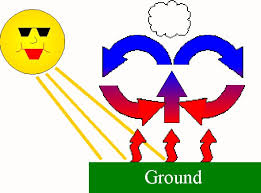
Warm air rises and the cool air sinks demonstrates this type of heat transfer.
a)
conduction
b)
convection
c)
radiation
d)
Insolation
31.
These form when warm, moist air meets cold, dry air
a)
Tornado
b)
Hurricane
32.
Where does a tropical storm get its energy?
a)
Warm ocean water
b)
Warm air temperature
c)
Rapid winds
d)
Severe thunderstorms
33.
What causes damage in a hurricane?
a)
Winds
b)
Flooding
c)
Storm Surge
d)
All of the above
34.
3. Where is Tornado Alley located?
a)
Near the equator of the Earth
b)
Near the North Pole
c)
South Central Los Angeles
d)
Middle states of United States
35.
Lightning can occur Between :
a)
Cloud and Ground
b)
Two different Clouds
c)
top and bottom parts of a same cloud
d)
All the above
Reset

