
 Worksheets
TESS
Total questions: 47
Worksheet time: 1hrs 18mins
Name
Class
Date
1.

Referring to the table, what is the relative mass of a proton?
a)
10
b)
1
c)
0.1
d)
0.01
2.

Referring to the table, what is the relative mass of an electron?
a)
5
b)
1
c)
0.5
d)
0.0005
3.

Referring to the table, what is the relative charge of a proton?
a)
+1
b)
0
c)
-1
d)
-0.5
4.

Referring to the table, what is the relative charge of a neutron?
a)
+1
b)
0
c)
-1
d)
-0.5
5.

The number in the upper corner of an element tile (7 for nitrogen) is called _____
a)
the proton number
b)
the atomic number
c)
the electron number
d)
the mass number
6.

For a given element, the atomic number indicates the number of _____
a)
protons in the nucleus
b)
neutron in the nucleus
c)
electrons in the atom
d)
nucleons in the atom
7.

If an atom contains exactly three protons, then it's an atom of _____
a)
lithium
b)
gold
c)
nitrogen
d)
carbon
8.

If an atom contains exactly 79 protons, then it's an atom of _____
a)
lithium
b)
gold
c)
nitrogen
d)
carbon
9.

If you want to know which atom an element is, then count the _____
a)
protons
b)
neutrons
c)
electrons
d)
nucleons
10.

For an atom to be electrically neutral, it must contain the same number of _____
a)
protons and neutrons
b)
neutrons and electrons
c)
protons and electrons
d)
nucleons and electrons
11.

For an atom, the number of electrons is equal to the number of _____
a)
protons
b)
protons plus neutrons
c)
neutrons
d)
nucleons
12.

Different versions of an element, with differing numbers of neutrons, are called _____
a)
isosceles
b)
isomers
c)
isotopes
d)
isicless
13.

Rounding the atomic weight to the nearest whole number gives us the _____
a)
proton number
b)
mass number
c)
nucleon number
d)
average weight
14.

The mass number identifies the specific _____
a)
state of an element
b)
element
c)
isotope of an element
d)
weight of an element
15.

The sum of the number of protons and the number of neutrons is called the _____
a)
atomic number
b)
mass number
c)
isotope number
d)
average weight
16.
The sum of the number of protons and the number of neutrons is called the _____
a)
atomic number
b)
mass number
c)
isotope number
d)
average weight
17.

number of neutrons = _____
a)
atomic number - mass number
b)
isotope number - atomic weight
c)
mass number - atomic weight
d)
mass number - atomic number
18.

The middle of the atom, which contains protons and neutrons, is called _____
a)
the shell
b)
the nucleus
c)
the cell
d)
the control center
19.

The nucleus contains _____
a)
only protons
b)
protons and neutrons
c)
protons and electrons
d)
electrons and neutrons
20.

In the Bohr model of the atom, electrons can only be in certain _____
a)
shells
b)
nuclei
c)
frames
d)
circles
21.
Aluminum
a)
Al
b)
A
c)
Ai
d)
Au
22.
which elements below included in transition elements?
a)
Na
b)
Al
c)
Fe
d)
Si
23.
Flame colour for copper ions
a)
Blue
b)
Red
c)
Green
d)
Yellow
24.
Flame colour for sodium ions
a)
Blue
b)
Red
c)
Green
d)
Yellow
25.
Flame colour for lithium ions
a)
Blue
b)
Red
c)
Green
d)
Yellow
26.
Metal ion with a lilac flame
a)
Na+
b)
K+
c)
Na2+
d)
K2+
27.
What is a precipitate?
a)
an insoluble reactant formed during a chemical reaction
b)
an insoluble product formed during a chemical reaction
c)
a soluble solvent in a saturated solution
d)
a soluble solute in a saturated solution
28.
What is the chemical formula for dinitrogen pentasulfide?
a)
Mg F2
b)
Si Br4
c)
N2 S5
d)
Sn O2
29.
Si Br4
a)
Silicon Tetra Bromide
b)
Magnesium Fluoride
c)
Zinc Carbonate
d)
Lithium Ion
30.
N2O4
a)
nitrogen tetraoxide
b)
Trinitrogen dioxide
c)
dinitrogen tetraoxide
d)
pentanitrogen oxide
31.

What am I?
a)
endotherm
b)
ectotherm
32.

What am I?
a)
endotherm
b)
ectotherm
33.

What am I?
a)
endotherm
b)
ectotherm
34.

What am I?
a)
endotherm
b)
ectotherm
35.

What am I?
a)
endotherm
b)
ectotherm
36.
Has to eat more often to maintain constant body temperature.
a)
endotherm
b)
ectotherm
37.
Sweats and pants to keep cool.
a)
endotherm
b)
ectotherm
38.
Shivers to keep warm.
a)
endotherm
b)
ectotherm
39.
Has to find heat to get warm and shade to keep cool.
a)
endotherm
b)
ectotherm
40.
Slows down and hibernates when its cold.
a)
endotherm
b)
ectotherm
41.
Body temperature changes with the environment.
a)
endotherm
b)
ectotherm
42.
When you freeze water, it turns to ice. What kind of change is this?
a)
Physical
b)
Chemical
43.

If a chemical reaction is EXOTHERMIC, the temperature would....
a)
Stay the same
b)
Increase
c)
Decrease
44.
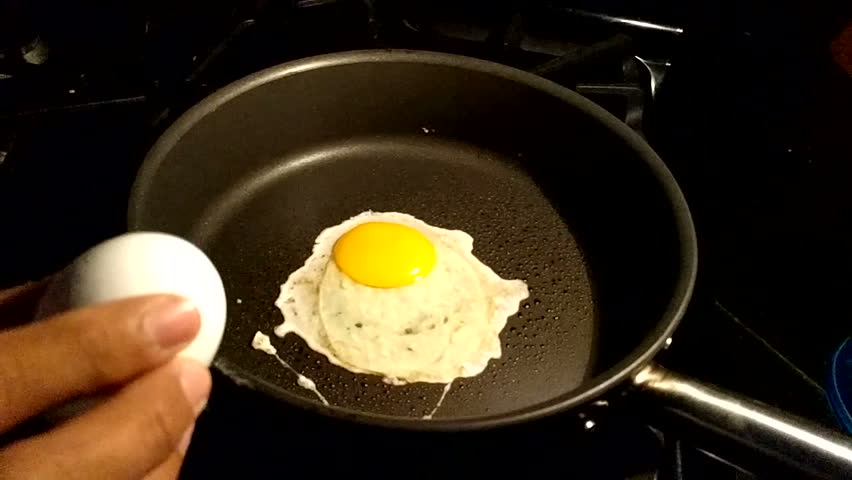
Baking bread and cooking an egg are examples of....?
a)
Endothermic processes
b)
Exothermic processess
c)
None of these
45.

Exothermic reactions...
a)
Absorb energy
b)
Release energy
c)
Release Color
d)
Absorb Color
46.

Is photosynthesis an exothermic or endothermic reaction?
a)
Endothermic
b)
Exothermic
c)
Neither
47.

In an exothermic reaction, heat is ...
a)
taken in or absorbed
b)
given out or released
100 %

