
 Worksheets
Lord of the Flies Final
Total questions: 50
Worksheet time: 25mins
Name
Class
Date
1.
The “beast” on top of the mountain is actually this.
a)
Pilot
b)
Boar
c)
Gorilla
d)
Parachutist
2.
The reason the boys are on the island
a)
Plane Crash
b)
Boat Crash
c)
Born There
d)
What Island?
3.
How do the boys light the fire?
a)
Using two rocks
b)
By rubbing sticks together
c)
Using Piggy's glasses
d)
Using mathces
4.
Why do the boys light the fire?
a)
To cook their food
b)
To fight the 'beastie'
c)
The 'littleuns' are scared of the dark
d)
To signal rescuers
5.
Why does Jack not kill the piglet the first time?
a)
He can't bring himself to kill it
b)
He is a vegetarian
c)
He dropped his knife
d)
It ran away before he gets his knife
6.
How has Jack changed by chapter 3?
a)
He is even more organised than before
b)
He is getting more wild
c)
He is very sad the boys have not been rescued
d)
He is very scared
7.
Which object represents logic and reason?
a)
the conch
b)
the specs
c)
the signal fire
d)
the face paint
8.
Which object represents a hope to be rescued?
a)
the signal fire
b)
the conch
c)
the specs
d)
the beastie
9.
Which character represents all that is good?
a)
Roger
b)
Maurice
c)
Simon
d)
Piggy
10.
Which character enjoys seeing others in pain and discomfort?
a)
Jack
b)
Roger
c)
Maurice
d)
Sam
11.
Who breaks Piggy's specs?
a)
Roger
b)
Maurice
c)
Percival
d)
Jack
12.
Whose job is it to keep the signal fire going?
a)
the littluns
b)
Samneric
c)
the hunters
d)
Piggy
13.
When is Jack able to finally kill a pig?
a)
When he covers his face with paint
b)
When he sharpens a stick at both ends
c)
When he rigs traps within the jungle
d)
When he uses Piggy's specs to start a fire to smoke the pigs out of hiding
14.
Which object could symbolize rules and authority?
a)
the face paint
b)
spears
c)
the conch
d)
the specs
15.

something really absurd, ridiculous
a)
myriad
b)
errant
c)
ludicrous
d)
baffled
16.
optical effect that looks like a pool of water
a)
mirage
b)
pall
c)
incredulous
d)
eccentric
17.
painful, agonizing
a)
eccentric
b)
contemptuous
c)
demented
d)
excruciating
18.
hazardous; dangerous
a)
perilous
b)
obtuse
c)
preposterous
d)
specious
19.
the state of being irritated or annoyed
a)
preposterous
b)
perilous
c)
exasperation
d)
obtuseness
20.
a repeated design or color that unifies a work
a)
furtive
b)
motif
c)
pall
d)
abyss
21.
disbelieving, skeptical
a)
specious
b)
ludicrous
c)
incredulous
d)
contemptuous
22.
deviating from the usual pattern
a)
incredulous
b)
eccentric
c)
opaque
d)
baffled
23.
absurd
a)
effigy
b)
preposterous
c)
perilous
d)
obtuse
24.
in a sly, secretive manner
a)
furtive
b)
pall
c)
motif
d)
exasperation
25.
disrespectful
a)
eccentric
b)
contrite
c)
incredulous
d)
contemptuous
26.
feeling remorse or regret
a)
specious
b)
contrite
c)
preposterous
d)
loathing
27.
straying outside the proper path
a)
perilous
b)
abyss
c)
furtive
d)
errant
28.
hard to understand or interpret
a)
inscrutable
b)
incredulous
c)
errant
d)
blatant
29.
What is a utopia?
a)
A state of chaos
b)
A tyrannical state
c)
A perfect place
d)
An English lesson
30.
What is the 'scar' in the novel describing?
a)
A lagoon
b)
The crash site
c)
The mountain
d)
A gash or wound
31.
Why is Jack so excited about rules?
a)
He loves following rules
b)
He likes punishing rule breakers
c)
He thinks that the boys will benefit from it
d)
Because Ralph made them
32.
What group the the choir boys become?
a)
Army
b)
Foragers
c)
Scouts
d)
Hunters
33.
What is a conch?
a)
A shell
b)
A big rock
c)
A small bag
d)
Civilisation
34.
What rule do they make about the Conch?
a)
Whoever is holding it gets to speak
b)
Whoever is holding it is the leader
c)
Ralph must always hold it
d)
There are no rules
35.
How do the 'littleuns' react to news of a 'beastie'?
a)
They try and fight it
b)
They pray to it
c)
They don't believe it is real
d)
They fear it
36.
What is the first thing the boys eat on the island?
a)
Fruits from the trees
b)
A piglet
c)
Plane food
d)
Candle buds
37.
How does Ralph describe the island
a)
Good
b)
Dangerous
c)
Cold
d)
Disgusting
38.
How does Golding show that Ralph is not perfect
a)
Ralph kills a pig
b)
Ralph is mean to the littluns
c)
Ralph makes fun of Piggy
d)
Wears an eyepatch
39.
anything that stands for something else
a)
metaphor
b)
simile
c)
characterization
d)
symbol
40.

What is allegory?
a)
a fabled wellspring thought to restore youth to whoever bathed in or drank from it
b)
story, poem or play in which the people, things and events have a secondary or symbolic meaning--usually religious or moral
c)
Having a bad reputation; disgraceful
d)
Worthy of respect, usually by reason of age
41.
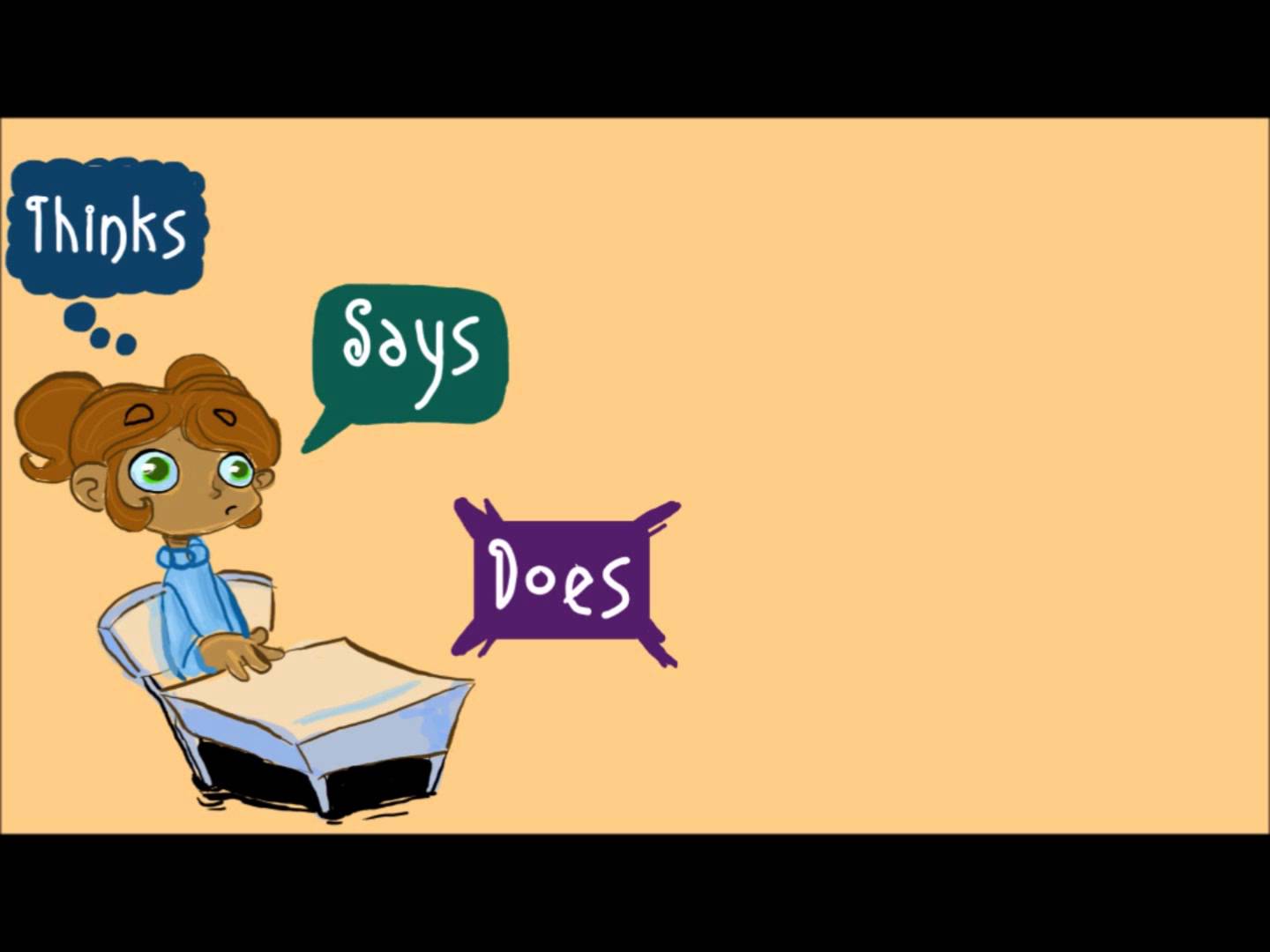
Which of the following is an example of indirect characterization?
a)
Marcia was a good listener and wonderful friend.
b)
Marcia felt the knot in her stomach grow when she saw the number of questions on the test, and she tugged her hair anxiously.
c)
Marcia was a nervous person.
d)
Marcia was an optimist who always believed the best about people.
42.

Which of the following is an example of direct characterization?
a)
Jeff was compassionate when it came to taking care of his nephews.
b)
Jeff spoke gently to his nephews and catered to their needs.
c)
Jeff gave his nephews a big hug when he saw them.
d)
Jeff always asked about how his nephews were doing.
43.
A character trait is an adjective that describes _________________.
a)
an emotion at a specific point in time
b)
personality
c)
appearance
44.
Which is NOT a character trait?
a)
bossy
b)
scared
c)
responsible
d)
shy
45.
STEAL stands for Speech, Thoughts, ______, Actions, and Looks.
What goes in the blank?
What goes in the blank?
a)
Affect on others
b)
Explain to others
c)
Effect on others
d)
Evaluate others
46.
Which acronym helps you to remember the five elements of indirect characterization?
a)
STEEL
b)
STOLE
c)
STEAL
47.
This character is central to the story. The plot revolves around him or her.
a)
Dynamic character
b)
Static character
c)
Protagonist
d)
Antagonist
48.
This figure usually creates a conflict for the main character.
a)
Protagonist
b)
Antagonist
c)
Dynamic character
d)
Static character
49.
This is a character who changes their personality, attitude, and/or beliefs over time. This change is usually a result of a conflict.
a)
Protagonist
b)
Antagonist
c)
Dynamic character
d)
Static character
50.
This is a character who does not change or develop over the course of the story.
a)
Protagonist
b)
Antagonist
c)
Dynamic character
d)
Static character
100 %

