
 Worksheets
Periodic Table Test
Total questions: 50
Worksheet time: 52mins
Name
Class
Date
1.
Each column in the periodic table is called a
a)
period
b)
group
c)
cluster
d)
unit
2.
Which group of the periodic table is composed of inert (not reactive) gases?
a)
alkali metals
b)
alkaline earth metals
c)
halogens
d)
noble gases
3.
Elements which are shiny, conduct electricity and heat are called
a)
metal
b)
nonmetal
c)
metalloid
d)
nonexistent
4.
Which element is not a metal?
a)
H
b)
Re
c)
Al
d)
B
5.

The atoms along the staircase are called
a)
metals
b)
nonmetals
c)
metalloids
d)
noble gases
6.
Which is a halogen?
a)
Helium
b)
Chlorine
c)
Oxygen
d)
Neptune
7.
Which is an alkali metal?
a)
Magnesium
b)
Iron
c)
Sodium
d)
Europium
8.
Metalloids can be described as...
a)
same as nonmetals
b)
bad conductors
c)
characteristics of metals and nonmetals
d)
same as metals
9.
True or False: Elements in a group have the same number of electrons in their outer shell.
a)
true
b)
false
10.
The properties of an element can be predicted from...
a)
color
b)
location on Periodic Table
c)
educated guess
d)
atomic number
11.

In what section would Transition Metals be found?
a)
orange
b)
light blue
c)
blue
d)
white
12.

Which section are the metals in?
a)
dark blue
b)
light blue
c)
purple
d)
pink
13.
What happens to the atomic number of elements as you move left to right, up to down on the Periodic Table?
a)
Increases
b)
Decreases
14.

The atomic number of this pictured element is
a)
28
b)
58.6934
c)
Ni
d)
Nickel
15.
A negatively charged particle that moves around the nucleus is a(n)
a)
proton
b)
neutron
c)
electron
d)
quark
16.
How many electrons do atoms need to be stable?
a)
1
b)
2
c)
6
d)
8
17.
Which of the 4 major groups is the largest? (4.4)
a)
Metals
b)
Semimetals
c)
Nonmetals
d)
Inert/Noble Gases
18.
Which group of elements occur only as compounds in nature because they are extremely reactive?
a)
1
b)
18
c)
11
d)
16
19.
Cations are
a)
positive
b)
negative
c)
on the right side of the periodi table.
d)
nonmetals
20.
Which of the following would produce an anion?
a)
Ca
b)
Al
c)
K
d)
F
21.
What will nitrogen's charge be as an ion?
a)
+3
b)
-3
c)
0
d)
-1
22.
Anions are _______ that form ____________ ions and __________ electrons.
a)
nonmetals, positive, lose
b)
nonmetals, negative, gain
c)
metals, positive, gain
d)
metals, positive, lose
23.
Valence electrons are:
a)
Electrons farthest away from the nucleus
b)
Electrons closest to the nucleus
c)
Electrons that just come and go - they don't stay with the atom
24.
Ions are:
a)
atoms with a positive or negative charge
b)
atoms with no charge
c)
atoms with ONLY a positive charge
d)
atoms with ONLY a negative charge
25.
When an atom loses a valence electron, it becomes a(n) _____________ ion.
a)
positive
b)
negative
c)
neutral
d)
polyatomic
26.
An element has two naturally occurring isotopes. One is 10.013 amu and is 19.9% abundant. The other is 11.01 amu and is 80.1% abundant. What is the average atomic mass? What element is it?
a)
9.012, Beryllium
b)
12.011, Carbon
c)
6.941, Lithium
d)
10.812, Boron
27.
Nitrogen has three occurring isotopes: Nitrogen-13, Nitrogen-14, Nitrogen-15. Which isotope is the most abundant?
a)
Nitrogen-13
b)
Nitrogen-14
c)
Nitrogen-15
d)
Based on the information given, it cannot be determined
28.
Do the following atoms belong to the same element? Explain
Aluminum-27
An atom with 14 protons and 13 neutrons
Aluminum-27
An atom with 14 protons and 13 neutrons
a)
Yes because they have the same number of protons
b)
Yes because they have the same mass
c)
No because they have different number of protons
d)
No because they have different number of neutrons
29.

Calculate the average atomic mass of silver.
a)
106.38649amu
b)
111.91896amu
c)
107.8677amu
d)
121
30.

Calculate the average atomic mass of silver.
a)
106.38649amu
b)
111.91896amu
c)
107.8677amu
d)
121
31.

Complete the missing label on the diagram.
a)
Neutron
b)
Centre
c)
Nucleus
d)
Sub atomic particle
32.
How many neutrons in C-14?
a)
6
b)
7
c)
14
d)
8
33.
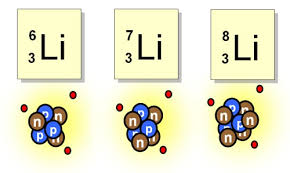
which atom has 4 neutrons?
a)
Li-6
b)
Li-7
c)
Li-8
d)
they have the same # of neutrons
34.
What charge does an electron have?
a)
positive
b)
negative
c)
neutral
d)
no charge
35.
What charge does a neutron have?
a)
positive
b)
negative
c)
no charge
36.
Where are protons located in the atom?
a)
orbitals
b)
nucleus
c)
rings
d)
positive
37.
Where are electrons located in the atom?
a)
Nucleus
b)
Shells/orbitals
c)
rings
d)
center
38.
Where are neutrons located in the atom?
a)
shells/orbitals
b)
rings
c)
center
d)
nucleus
39.
What is the atomic number for an element with three protons?
a)
2
b)
1
c)
3
d)
6
40.

What does the 1.00794 stand for?
a)
Hydrogen
b)
atomic number
c)
atomic mass
d)
atomic explosion
41.
Which particle does not contribute mass to the atom?
a)
Proton
b)
Neutron
c)
Electron
d)
Nucleus
42.
Most of the mass in an atom is made up of _____________________?
a)
protons and electrons
b)
protons and neutrons
c)
neutrons and electrons
d)
electrons and quarks
43.
What particle decides the identity of an atom/element?
a)
proton
b)
neutron
c)
electron
d)
All of the above.
44.

What is the atomic number of this atom?
a)
2
b)
4
c)
6
d)
none of the above
45.
Atom 1 has Mass=12 Protons=6
Atom 2 has Mass= 14 Electrons=6
Are these atoms isotopes of each other or different elements?
Atom 2 has Mass= 14 Electrons=6
Are these atoms isotopes of each other or different elements?
a)
Different Elements - Mg & Si
b)
Different Elements - Ar & Ca
c)
Isotopes of Carbon
d)
Isotopes of Magnesium
46.
Isotopes have different numbers of
a)
protons
b)
neutrons
c)
electron
d)
properties
47.
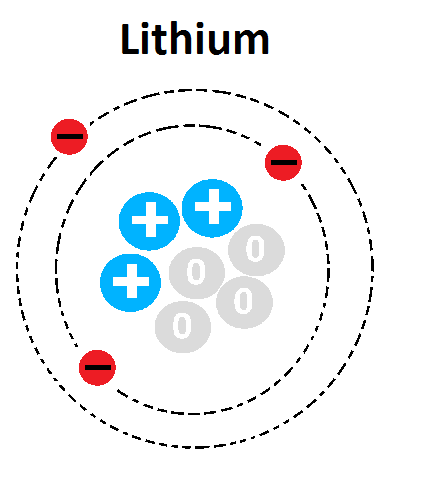
What is the atomic number of this atom?
a)
1
b)
3
c)
4
d)
7
48.
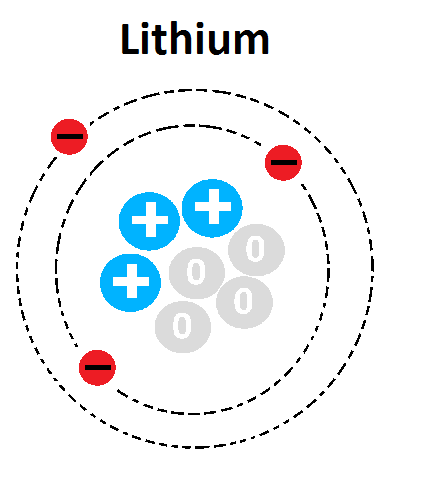
What is the atomic mass of this atom?
a)
1
b)
3
c)
4
d)
7
49.
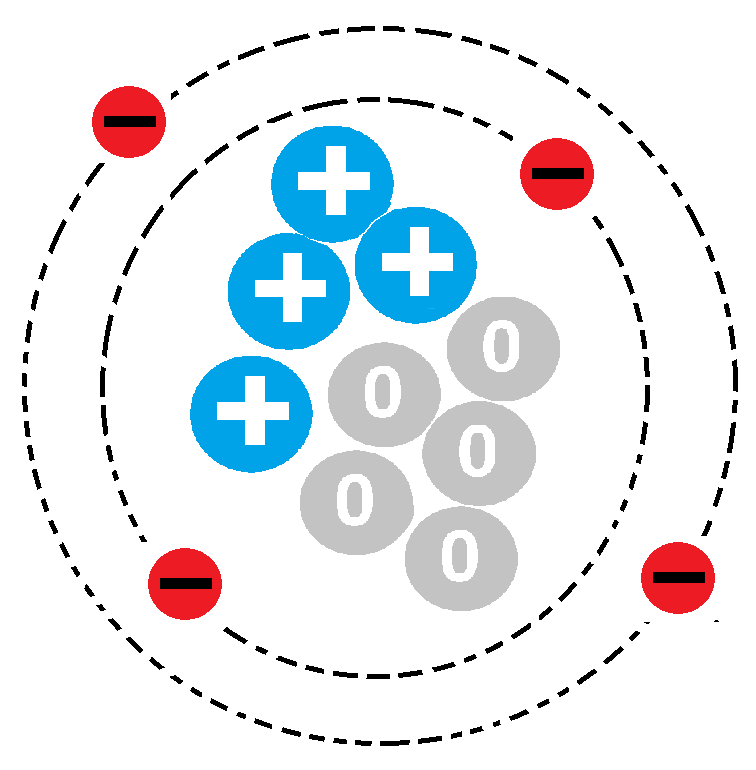
What is the atomic number of this atom?
a)
4
b)
5
c)
9
d)
none of the above
50.

What is the mass number of this atom?
a)
4
b)
5
c)
9
d)
none of the above
100 %

