
 Worksheets
Science Review Game
Total questions: 99
Worksheet time: 4hrs 39mins
Name
Class
Date
1.

This is used specifically to TEST a hypothesis or prediction - by collecting data and using variables to analyze and solve problems.
a)
Theory
b)
Variable
c)
Hypothesis
d)
Experiment
2.
Which of the following is required to be a good, scientific question?
a)
Scientific questions that are easy to answer
b)
Scientific questions that you do not need measurements to answer
c)
Investigation results that other scientists can repeat
d)
Investigation results that depend only on observations made by other scientists
3.
All scientific discoveries should
a)
be Supported by strong evidence
b)
be agreed upon by everyone's opinions
c)
Should make everyone happy
d)
be boring
4.
What is the shape of our milky way galaxy?
a)
Irregular (not normal)
b)
Globular
c)
Spiral
d)
Constellation
5.

Inner planets are mostly made of
a)
Gas
b)
Hydrogen
c)
Rock
d)
Rings
6.
All planets contain rings.
a)
True
b)
False
7.

Which of the following pairs the term correctly with the change of water?
a)
1. Evaporation - water heats up 2. Condensation - water cools down 3. Precipitation - water falls from the sky.
b)
1. Evaporation - water cools down 2. Condensation - water heats up 3. Precipitation - water falls from the sky.
c)
1. Evaporation - water heats up 2. Condensation - water falls from the sky 3. Precipitation - water cools down
8.
Rain, sleet, snow are all examples of :
a)
Condensation
b)
Precipitation
c)
Evaporation
d)
Water cycle
9.

Which of the following describes the water cycle best?
a)
The sun heats the ocean, the water evaporates. Then it cools down, condenses into a cloud, and then falls as precipitation.
b)
Water falls from the sky as snow, as the snow melts the water runs up to earth's mountains.
c)
Water falls from the sky as rain. The water then flows down hill.
d)
Water falls from the sky as hail. The hail is eventually buried in the ground.
10.

What is the function of this organ?
a)
To filter the blood
b)
To pump the blood (which is carrying oxygen) to the rest of the body
c)
To help you make decisions
d)
To be the command center for all other organs
11.

Which organ is this?
a)
Hearts
b)
Lungs
c)
Bladders
d)
Kidneys
12.

The purpose of this organ is to:
a)
Digest food for the first time
b)
Supply the body with blood
c)
Remove water from digested food, bringing it back to the body so we don't get dehydrated
d)
Supply the body with oxygen
13.

The job of this organ is to
a)
Supply the body with blood
b)
Digest food
c)
Supply the body with oxygen
d)
Clean and filter the body's blood
14.

Which part of the human body protects organs, provides support, and forms blood cells?
a)
The brain
b)
The heart
c)
The liver
d)
The skeleton
15.
About how much time does it take the Earth to complete one rotation?
a)
24 hours
b)
7 days
c)
28 days
d)
1 year
16.
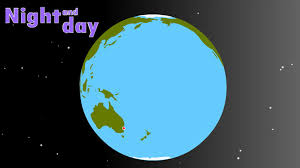
The change from day time to night time, and back again, is caused by
a)
the position of the Moon
b)
the movement of the tides
c)
the brightness of the Sun
d)
the rotation of the Earth
17.
Which of the following best describes why the Earth has the four seasons?
a)
The sun is closer to the Earth during summer and farther away during winter
b)
The sun shines directly onto the equator all year long
c)
The tilt of the Earth is the primary reason for the seasons
18.
What motion of the Earth takes 365 days?
a)
Rotation
b)
Tilting
c)
Revolution
d)
Spinning
19.
Which happens in one year’s time?
a)
The moon makes one complete revolution around Earth.
b)
Earth makes one complete revolution around the sun.
c)
Earth makes one complete spin on its axis.
d)
The sun makes one complete spin on its axis.
20.
The Earth spins on a tilted angle called a (an)
a)
Axis
b)
Invert
c)
Revolution
d)
Bounce
21.

What type of rock is granite?
a)
Sedimentary
b)
Metamorphic
c)
Igneous
d)
Clastic
22.
The density of a rock can be determined by dividing its mass by its________________.
a)
color
b)
weight
c)
volume
d)
specific gravity
23.
Fossils will most likely be found in ______________ _________.
a)
Sedimentary rocks.
b)
Metamorphic rocks.
c)
Igneous rocks.
d)
Pop rocks.
24.

Which type of rock comes from this?
a)
metamorphic
b)
sedimentary
c)
igneous
d)
all rocks
25.

Which mineral property is being shown here?
a)
luster
b)
hardness
c)
cleavage
d)
streak
26.
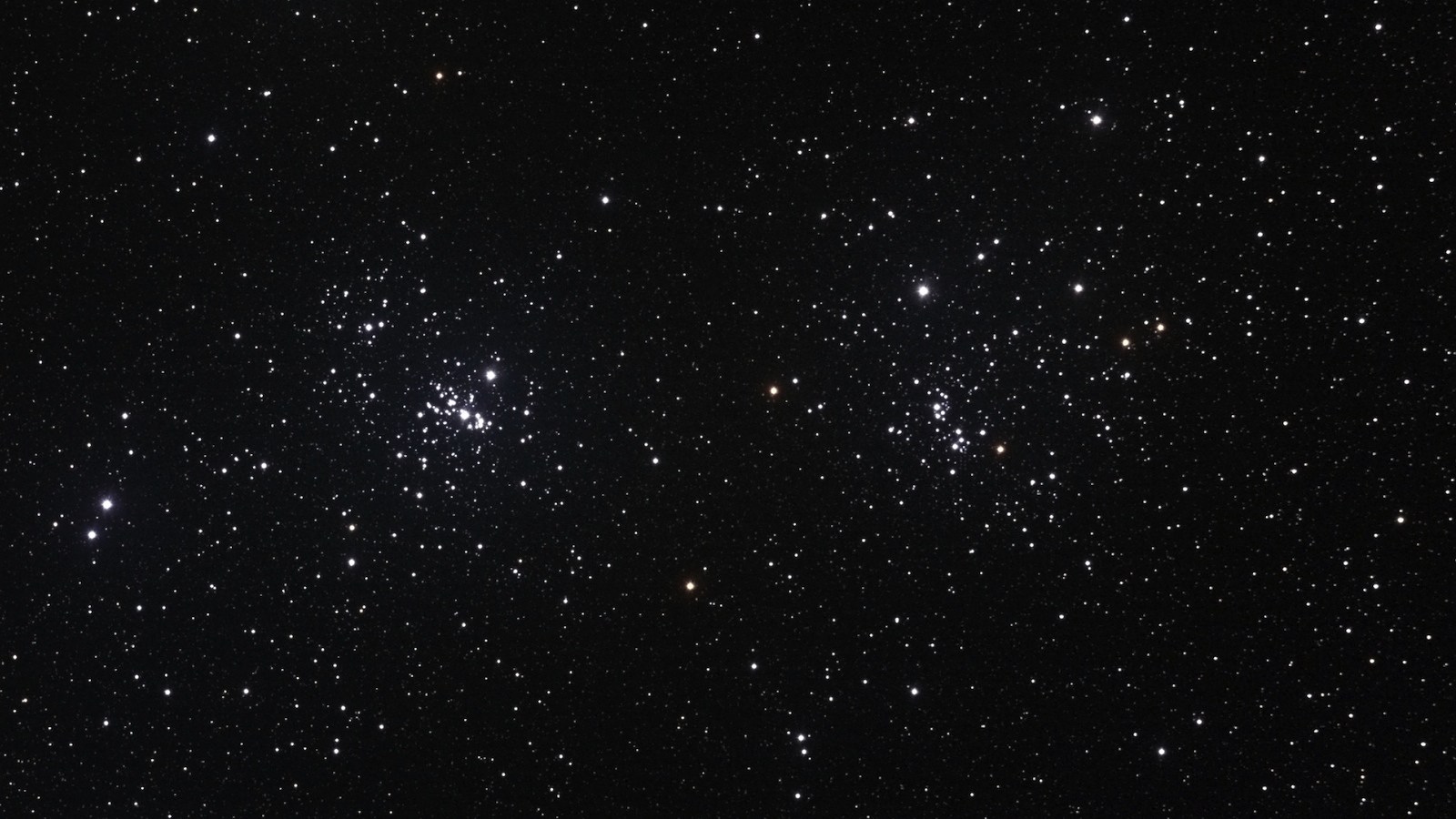
True or False
Stars are really close together in outer space.
Stars are really close together in outer space.
a)
True
b)
False
27.

What is it called when plants give off water vapor as a waste product?
a)
condensation
b)
evaporation
c)
sublimation
d)
transpiration
28.
When water _________, dew forms.
a)
Melts
b)
Evaporates
c)
Condenses
d)
Precipitates
29.
What is the water cycle?
a)
the 3 forms of water
b)
the movement of water on, above, or below the surface of the Earth
c)
when water melts
d)
when clouds form
30.
Food is a form of this type of energy.
a)
Light energy
b)
chemical energy
c)
Sound energy
d)
Thermal energy
31.
A device that takes electrical energy and turns it into thermal energy.
a)
A battery
b)
A hair dryer
c)
A bicycle
d)
Your stomach
32.
A device that converts electrical energy to light energy.
a)
A blender
b)
A light bulb
c)
A bicycle
d)
A balloon
33.
The ability to do work.
a)
Energy
b)
Matter
c)
Weight
d)
Volume
34.
What is an example of nonrenewable energy?
a)
Coal
b)
Solar
c)
Wind
d)
Hydropower
35.
Why are metals useful for making electrical wire?
a)
Metals do not bend.
b)
Metals hold much heat.
c)
Metals are insulators.
d)
Metals are conductors.
36.
What is a PUSH or PULL of an object?
a)
Motion
b)
Force
c)
Friction
d)
Gravity
37.
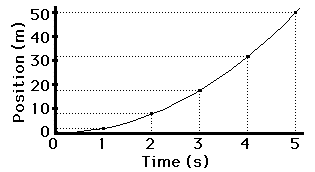
The picture of the position vs. time graph shows an object that is...
a)
accelerating/speeding up
b)
moving at a constant speed
c)
not moving
d)
accelerating/slowing down.
38.
Plants can respond to all of these stimuli EXCEPT
a)
sight of a predator.
b)
presence of light.
c)
force of gravity.
d)
presence of water.
39.
A plant’s vascular system is a system of tubes inside the plant that
a)
carries food, water, and nutrients to all parts of the plant.
b)
uses energy from light to make food.
c)
takes in water and nutrients from the soil.
d)
holds up the leaves so they can absorb sunlight
40.
What is happening when my ice cream changes from a solid to a liquid?
a)
freezing
b)
melting
c)
burning
d)
evaporation
41.
Which form of matter does not take the shape of its container?
a)
liquid
b)
gas
c)
solid
d)
air
42.

Which state of matter has particles arranged like this?
a)
solid
b)
liquid
c)
gas
43.

Which state of matter has particles arranged like this?
a)
solid
b)
liquid
c)
gas
44.

Which state of matter has particles arranged like this?
a)
solid
b)
liquid
c)
gas
45.
Which state of matter has particles that are still close together, but can move around each other?
a)
solid
b)
liquid
c)
gas
46.
Which state of matter has particles that are very far apart and zing around?
a)
solid
b)
liquid
c)
gas
47.
The amount of matter in an object is a measure of the object's ________________.
a)
volume
b)
density
c)
mass
d)
solubility
48.
The measure of how much space something takes up is ______.
a)
Matter
b)
Mass
c)
Volume
d)
Density
49.
Which weather tool measures temperature?
a)
thermometer
b)
barometer
c)
psychrometer
d)
anememeter
50.
Hot air (RISES / FALLS) __________.
a)
RISES
b)
FALLS
51.
Cold air (RISES/ FALLS) _________.
a)
RISES
b)
FALLS
52.
The moon is half lit by the sun at all times.
a)
True
b)
False
53.
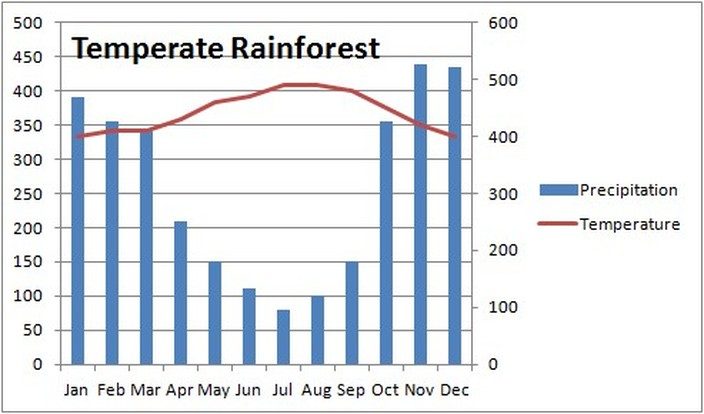
The most important abiotic factors when studying biomes are...
a)
Food and Water
b)
Water and Sunlight
c)
Temperature and Oxygen
d)
Water and Temperature
54.

The moon is a natural ______ of Earth.
a)
comet
b)
axis
c)
satellite
d)
space probe
55.
The moon cycle (lunar cycle) takes approximately _______________ to complete.
a)
a year
b)
29.5 days/about one month
c)
1 day
d)
1 week
56.
In which science tool would you measure in ML (milliliters)?
a)
beaker and graduated cylinder
b)
beaker and ruler
c)
graduated clinder and meter stick
d)
triple beam balance
57.

What is this scientific tool?
a)
beaker
b)
tube
c)
graduated cylinder
d)
balance
58.
Why should an experiment be repeated?
a)
to form a hypothesis
b)
to reduce the chance of error
c)
to change constants
d)
to identify the problem
59.
The variable that is changed on purpose is:
a)
Control
b)
Respondingn (Dependent)
c)
Manipulated (Independent)
d)
Outcome
60.
In order for an explanation to be considered scientific, it must be based on ____________.
a)
an inference
b)
a conclusion
c)
past experience
d)
evidence
61.
When experimenting with the growth of a plant, a scientist uses three plants, two different fertilizers, equal light, and equal water. What type of variable is the water?
a)
Responding (Dependent)
b)
Manipulated (Independent)
c)
Control (constant)
d)
Outcome
62.

A _________ is an idea or object that helps people better understand it.
a)
hypothesis
b)
model
c)
method
d)
theory
63.
Something that is always true and is expected to happen every time is called a _____
a)
conclusion
b)
hypothesis
c)
scientific theory
d)
scientific law
64.
A well-tested explanation for a set of observations is called a ____
a)
scientific law
b)
scientific theory
c)
observation
d)
metaphor
65.
Which state of matter will take both the volume and shape of the container that holds it?
a)
gas
b)
solid
c)
liquid
d)
ice
66.
Ben wants to model how the motion of particles changes with temperature. He considers water in an iron pot. Ben draws a model to show how the water particles and iron particles move at room temperature. Then, he draws a second model to show how the water particles and iron particles move as the pot of water is heated. How should Ben’s second model differ from the first?
a)
The water particles should vibrate faster, and the iron particles should not move.
b)
Both the water particles and the iron particles should slide past each other faster.
c)
The water particles should move freely in all directions, and the iron particles should slide past each other faster.
67.
Raul and Bonnie are trying to classify several objects that they found during a field trip to the beach. They collected a sample of seawater, a piece of driftwood, and several smooth pebbles. What property does the driftwood share with the pebbles that it does not share with the water?
a)
Its particles move freely in all directions
b)
Its particles vibrate, but are locked in place
c)
Its volume does not depend on its container
d)
Its volume will change in different containers
68.
Has a definite volume and shape.
a)
solid
b)
liquid
c)
gas
69.
Has a definite volume but not a definite shape.
a)
solid
b)
liquid
c)
gas
70.
Movement of heat energy from hot to cold object by direct contact.
a)
convection
b)
conduction
c)
radiation
d)
temperature
71.
The transfer of heat by the circulation or movement of the heated parts of a liquid or gas.
a)
convection
b)
conduction
c)
radiation
d)
temperature
72.
A liquid becomes a solid.
a)
evaporation
b)
condensation
c)
melting
d)
freezing
73.
A solid becomes a liquid.
a)
evaporation
b)
condensation
c)
melting
d)
freezing
74.
In which state of matter would sound waves (mechanical waves) travel the fastest?
a)
solid
b)
liquid
c)
gas
75.
States that all matter is made of tiny particles that are in constant motion.
a)
kinetic theory of matter
b)
condensation
c)
melting
d)
freezing
76.
If a container is open, the particles in a gas will spread out and mix with the air in the atmosphere.
a)
True
b)
False
77.
Particles in a _________ are not fixed in place and can move from one place to another.
a)
solid
b)
liquid
c)
gas
78.
The particles in a _______ have the most kinetic energy out of all of the states of matter. It's particles can move easily in any direction.
a)
solid
b)
liquid
c)
gas
79.
SC.8.N.1.1 The dependent variable/outcome variable . . .
a)
Might change as the controlled variable(constants) changes
b)
Always changes as the controlled variable(constants) changesOption 2*
c)
Never change as the independent variable(test variable) changes
d)
May change as the independent variable(test variable) changes
80.
SC.8.N.1.1 A factor that is changed on purpose by an experimenter is called a(n)
a)
Independent/test variable
b)
Dependent/outcome variable
c)
Controlled variable (constants)
d)
None of the above
81.
SC.8.N.1.1 Why do measurements include units?
a)
Without units, measurements can be too long
b)
without units, measurements can be too small
c)
without units, one cannot be sure that a measurement was made
d)
without units, one cannot be sure what the number means
82.
SC.8.N.1.1 Dependent/outcome variable . . .
a)
things we change in an experiment
b)
things that are kept the same in an experiment
c)
outcomes or results of the experiment
d)
observations made by the experimenter
83.
SC.7.N.1.2 One reason for repeating measurements several times in a single experiment is that doing so allows scientists to
a)
reduce the effects of uncontrolled variables
b)
compare the observations with estimates
c)
develop a new hypothesis
d)
determine what is already known
84.
SC.7.N.1.2 Why do many experiments include several trials as opposed to a single trial?
a)
Repetition of trials makes data easier to analyze
b)
Repetition of trials increases the sample size of the data.
c)
Repetition of trials lets the experimenter spend less time making observations
d)
Repetition of trials lets the experimenter change procedures to make the experiment simpler
85.
SC.7.N.1.2 If Todd were to do the same experiment three times, it would be an example of …
a)
replication
b)
repetition
c)
dependent variable
d)
independent variable
86.
Which process is an example of a physical change?
a)
Carrots are cut into small pieces and mixed into a salad.
b)
A peanut butter sandwich is eaten and broken down by enzymes in the stomach
c)
Sodium metal and water are combined to form a basic compound and a flammable gas
d)
Sodium metal and chlorine gas are combined to form sodium chloride, or table salt
87.
Which of these is an example of matter?
a)
sound of thunder
b)
sunlight
c)
heat from an oven
d)
smoke from a fire
88.
Which is not a sign of a chemical change?
a)
change in color
b)
change in shape
c)
formation of a gas
d)
formation of a solid
89.
What is the volume of a box that is 10cm wide, 10cm long, and 1cm high?
a)
21 cm3
b)
21 grams
c)
100 cm3
d)
100 grams
90.
Which of these is an example of matter?
a)
The sound of thunder
b)
sunlight
c)
heat from an oven
d)
smoke from a fire
91.
Pure silver has a density of 10.5g/cm3. What is the mass of 2.0cm3 of silver? mass = density x volume
a)
21 g
b)
5.25 g
c)
0.19 g
d)
12.5 g
92.
Characteristics of a substance that describe its tendency to combine with other substances. Examples: flammability and ability to rust
a)
Physical property
b)
Chemical property
93.
A property of matter that can be observed without changing the chemical composition.
a)
Physical property
b)
Chemical property
94.
A metal coin has certain properties that can be measured. Which property of a coin is different on the moon than it is on Earth?
a)
density
b)
mass
c)
volume
d)
weight
95.

If the mass of an object is 12 g and its volume is 3 ml, what is the object's density?
a)
4 g/ml
b)
36 g/ml
c)
12 g/ml
d)
3 g/ml
96.
If the density of an object is 2 g/ml and its volume is 25 ml, what is the object's mass?
a)
5 g
b)
50g
c)
2 g
d)
25 g
97.
A statue and a coin are made out of exactly the same materials. Which property will likely be the same for both the statue and the coin?
a)
Mass
b)
Reactivity
c)
Volume
d)
Density
98.
Ability of a substance to dissolve in another substance; such as sugar dissolving in water
a)
solution
b)
solute
c)
solubility
d)
solid
99.
Can be determined by calculating L x W x H
a)
mass
b)
volume
c)
density
d)
weight
100 %

