
Font size
S
M
L
XL
 Worksheets
Matter Unit Test
Total questions: 114
Worksheet time: 2hrs 34mins
Name
Class
Date
1.
Particles in an atom that are neutral and have NO charge are
a)
negatrons
b)
electrons
c)
neutrons
d)
protons
2.

The symbol for Carbon is
a)
6
b)
12.011
c)
C
d)
Ca
3.
All matter is made of
a)
energy
b)
atoms
c)
air
d)
chemistry
4.
What is the smallest?
a)
worm
b)
molecule
c)
galaxy
d)
atom
5.
What is the atomic number?
a)
the number of protons
b)
the number of protons and neutrons
c)
the number of neutrons
d)
the number of protons and electrons
6.

What are the 3 subatomic particles that make-up the atom?
a)
protons, neutrons, and isotopes
b)
neutrons, isotopes, and electrons
c)
positives, negatives, and electrons
d)
protons, neutrons, and electrons
7.
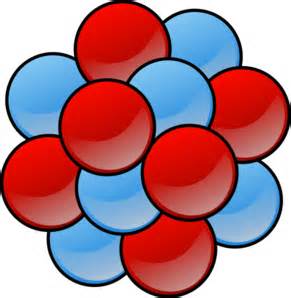
What does the nucleus of an atom contain?
a)
Electrons and neutrons
b)
Protons and neutrons
c)
Neutrinos and positrons
d)
DNA and RN
8.
What is the atomic number?
a)
the number of protons
b)
the number of protons and neutrons
c)
the number of neutrons
d)
the number of protons and electrons
9.

How many electrons does a neutral carbon atom have?
a)
0
b)
2
c)
14
d)
6
10.

How many protons are in an atom of carbon?
a)
12.01
b)
8
c)
6
d)
14
11.

What element is this?
a)
Lithium
b)
Boron
c)
Carbon
d)
Neon
12.
What is at the center of every atom?
a)
An electron
b)
A compound
c)
A molecule
d)
A nucleus
13.
In an atom, what is the number of protons equal to?
a)
The number of electrons.
b)
The number of neutrons.
c)
The number of molecules.
d)
The number of nuclei.
14.

The particles with no charge in an atom are the _______.
a)
electrons
b)
neutrons
c)
protons
d)
protons and neutrons
15.

The positively charged particles of an atom are the ________.
a)
electrons
b)
protons
c)
neutrons
d)
protons & neutrons
16.

The negatively charged particles of an atom are the ______.
a)
electrons
b)
protons
c)
neutrons
d)
protons & neutrons
17.
A particle that moves around the nucleus is a(n)...
a)
Proton
b)
Neutron
c)
Electron
d)
Quark
18.
The center of an atom that holds protons and neutrons?
a)
model
b)
electron
c)
nucleus
d)
neutron
19.

What number indicates an electron?
a)
1
b)
2
c)
3
d)
4
20.

What number indicates the nucleus?
a)
1
b)
2
c)
3
d)
4
21.
Which element has 31 protons ?
a)
Gallium
b)
Germanium
c)
Gadolinium
d)
Polonium
22.
What is the mass number?
a)
the number of protons
b)
the sum of the number of protons and the number of neutrons in the nucleus of an atom
c)
the number of electrons
d)
the number of neutrons
23.

Oxygen’s atomic number is 8. This means that an oxygen atom must have
a)
8 valence electrons
b)
8 protons
c)
8 neutrons
d)
a mass number of 8
24.

What is the mass number of this element?
a)
5
b)
27
c)
32
d)
59
25.

The number in the upper corner of an element tile (7 for nitrogen) is called _____
a)
the proton number
b)
the atomic number
c)
the electron number
d)
the mass number
26.

If you want to know which atom an element is, then count the _____
a)
protons
b)
neutrons
c)
electrons
d)
nucleons
27.

For an atom to be electrically neutral, it must contain the same number of _____
a)
protons and neutrons
b)
neutrons and electrons
c)
protons and electrons
d)
nucleons and electrons
28.

If an atom contains exactly three protons, then it's an atom of _____
a)
lithium
b)
gold
c)
nitrogen
d)
carbon
29.

number of neutrons = _____
a)
atomic number - mass number
b)
isotope number - atomic weight
c)
mass number - atomic weight
d)
mass number - atomic number
30.

In the Bohr model of the atom, what is the maximum number of electrons in the first shell?
a)
1
b)
2
c)
6
d)
8
31.

In the Bohr model of the atom, what is the maximum number of electrons in the second shell?
a)
2
b)
6
c)
8
d)
18
32.

Which subatomic particle has a relative charge of +1?
a)
the proton
b)
the neutron
c)
the electron
d)
the photon
33.

To draw an atom, you'll need to refer to _____
a)
a biology textbook
b)
a dictionary
c)
a periodic table of elements
d)
a thesaurus
34.
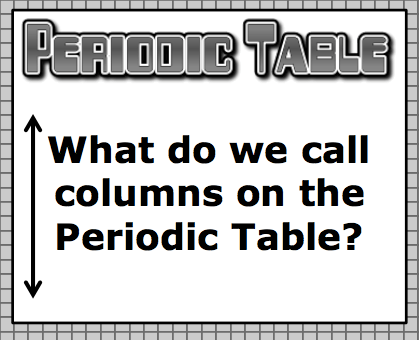
a)
Periods
b)
Groups
35.
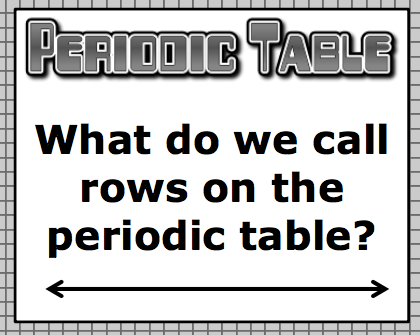
a)
Periods
b)
Groups
36.

a)
energy levels
b)
valence electrons
c)
protons
d)
neutrons
37.
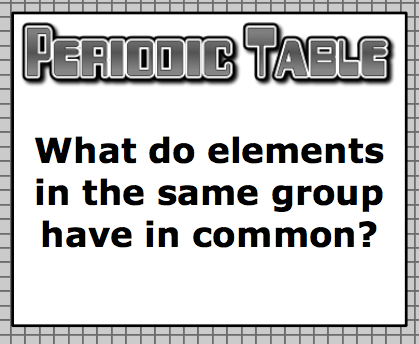
a)
energy levels
b)
valence electrons
c)
protons
d)
neutrons
38.
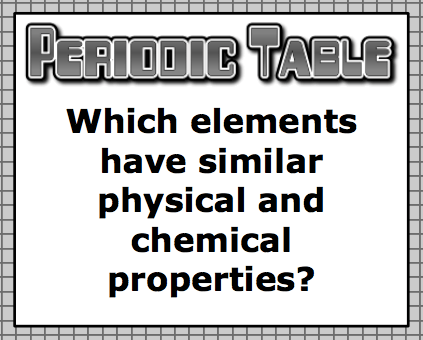
a)
Same group
b)
Same period
39.
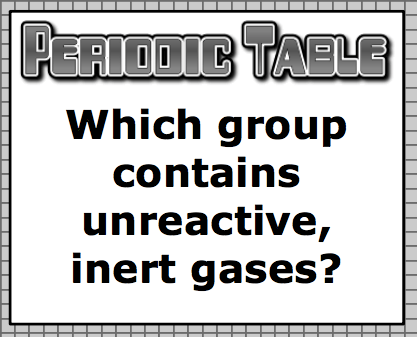
a)
Group 1
b)
Group 17
c)
Group 2
d)
Group 18
40.
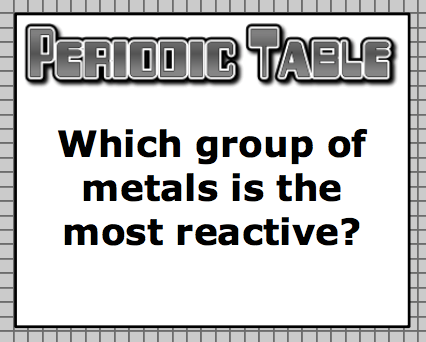
a)
Group 1
b)
Group 17
c)
Group 18
d)
Group 2
41.
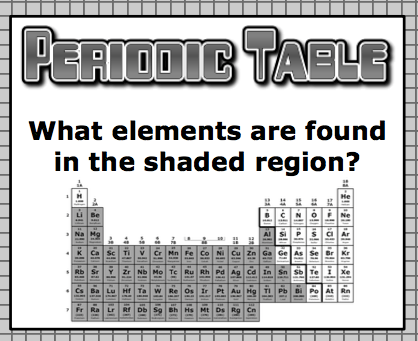
a)
Metals
b)
Nonmetals
c)
Metalloids
d)
noble gases
42.
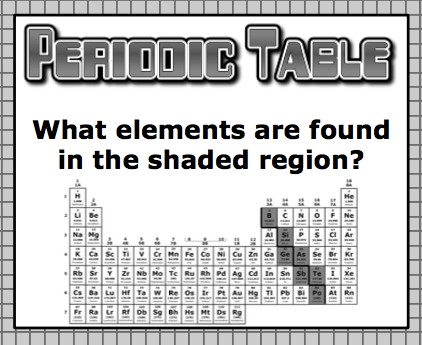
a)
Metals
b)
Nonmetals
c)
Metalloids
d)
noble gases
43.
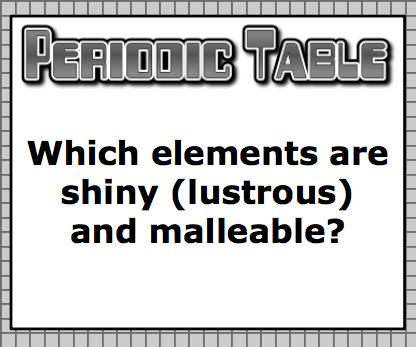
a)
Metals
b)
Nonmetals
c)
Metalloids
d)
noble gases
44.
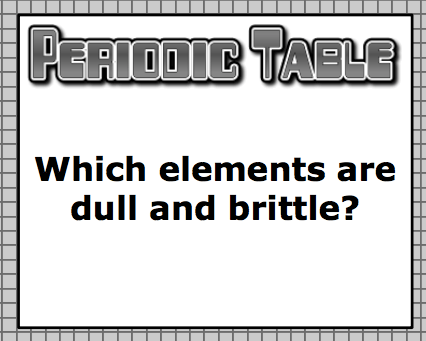
a)
Metals
b)
Nonmetals
c)
Metalloids
d)
noble gases
45.
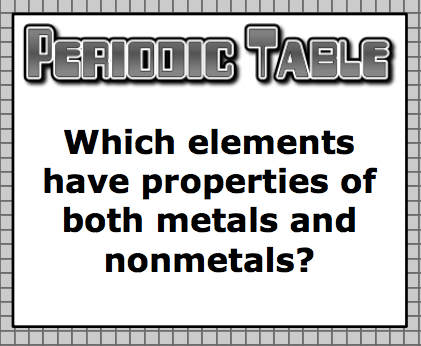
a)
Metals
b)
Nonmetals
c)
Metalloids
d)
noble gases
46.
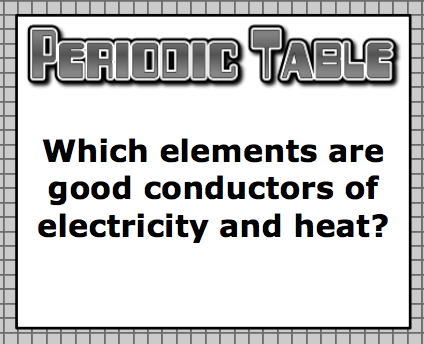
a)
Metals
b)
Nonmetals
c)
Metalloids
d)
noble gases
47.
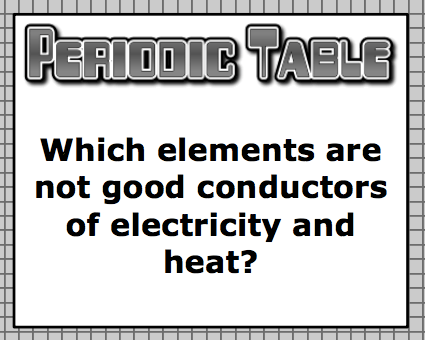
mixtures
a)
Metals
b)
Nonmetals
c)
Metalloids
48.
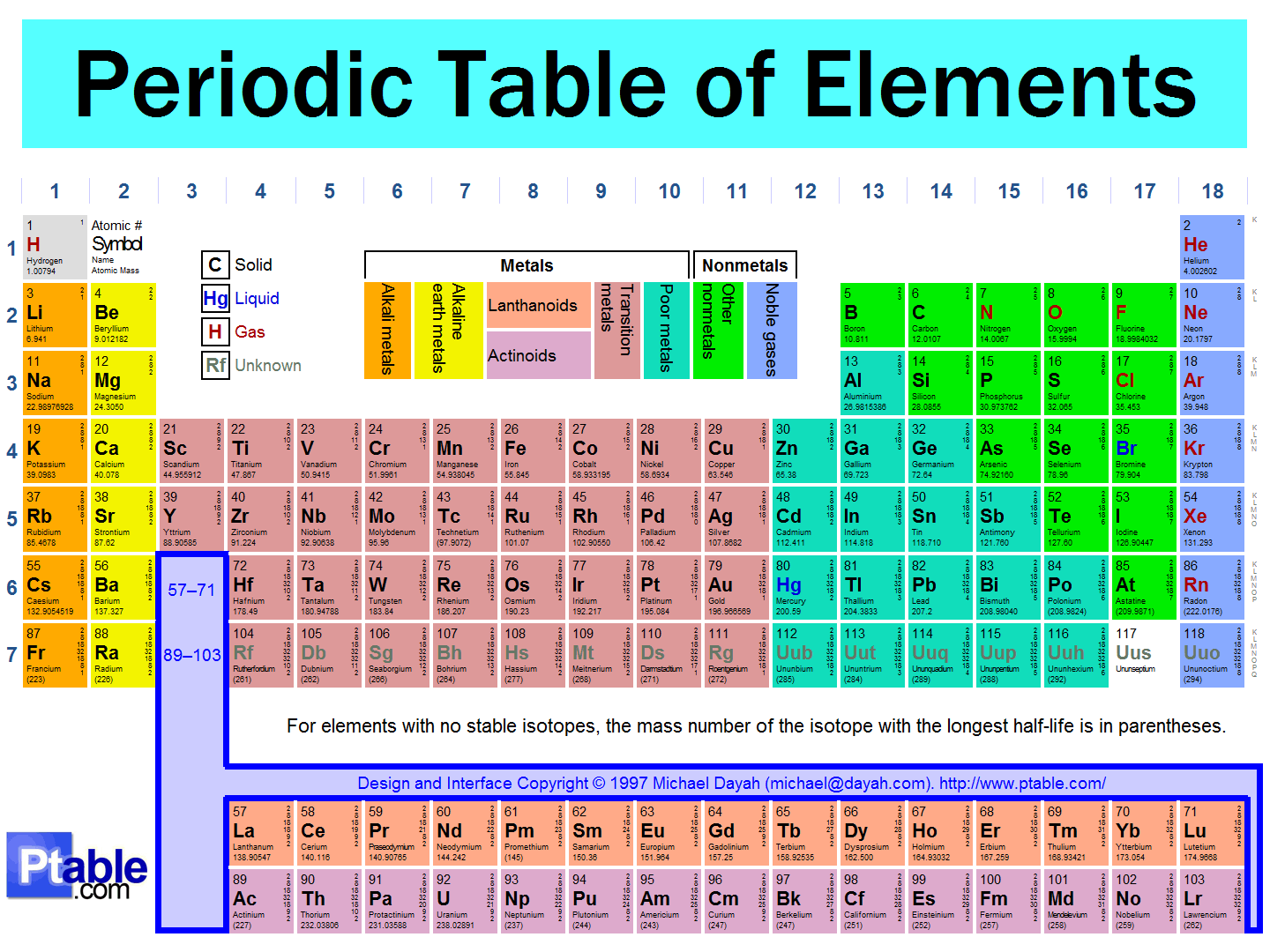
A vertical column is called...
a)
group
b)
tower
c)
period
d)
crew
49.
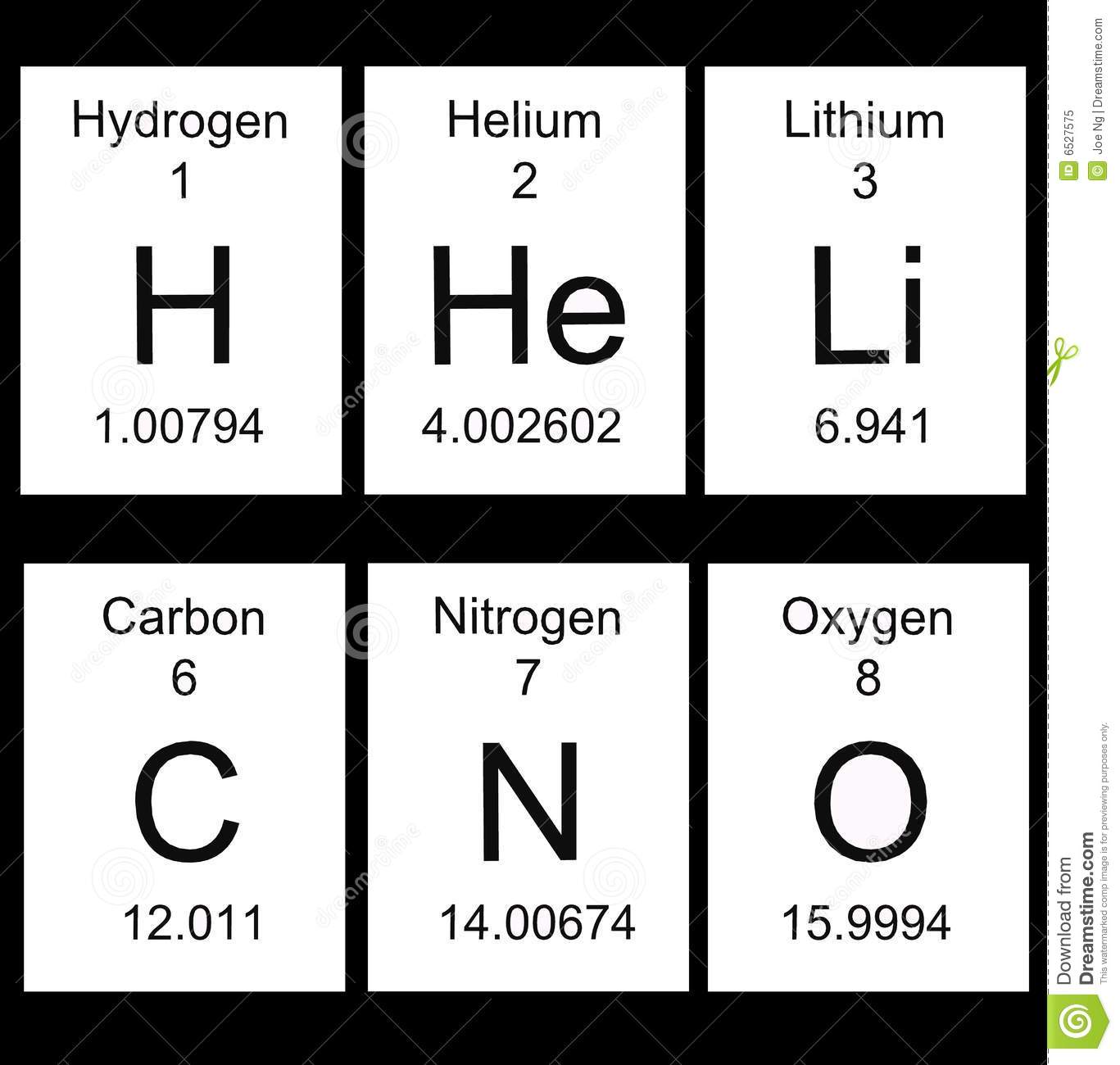
The number at the bottom of each square on the periodic table is the ...
a)
atomic number
b)
atomic mass
c)
chemical symbol
d)
element name
50.
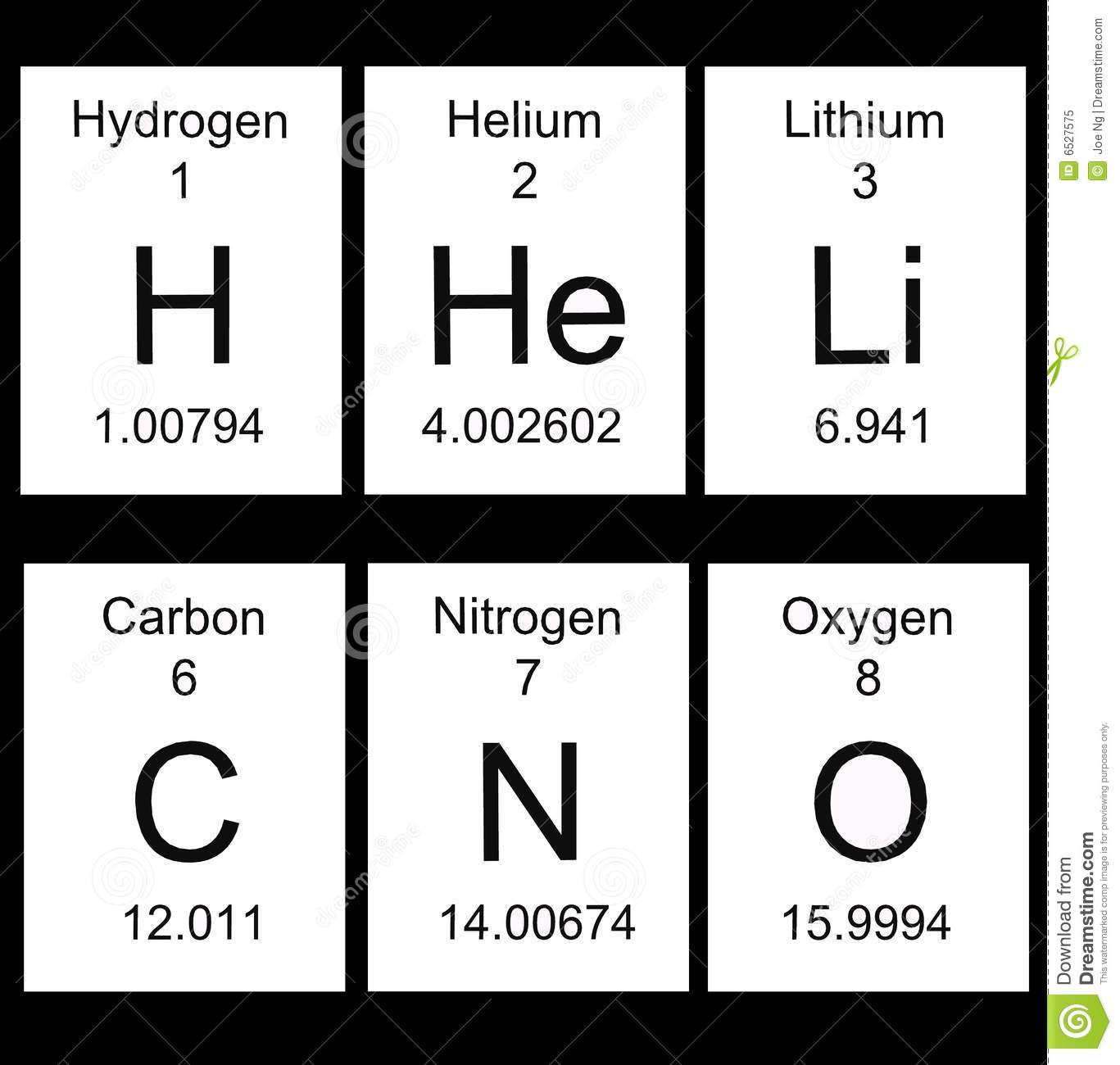
What is the chemical symbol for Lithium?
a)
H
b)
He
c)
Li
d)
N
51.

Most of the elements on the periodic table are classified as _____.
a)
Metals
b)
Nonmetals
c)
Metalloids
d)
Periods
52.
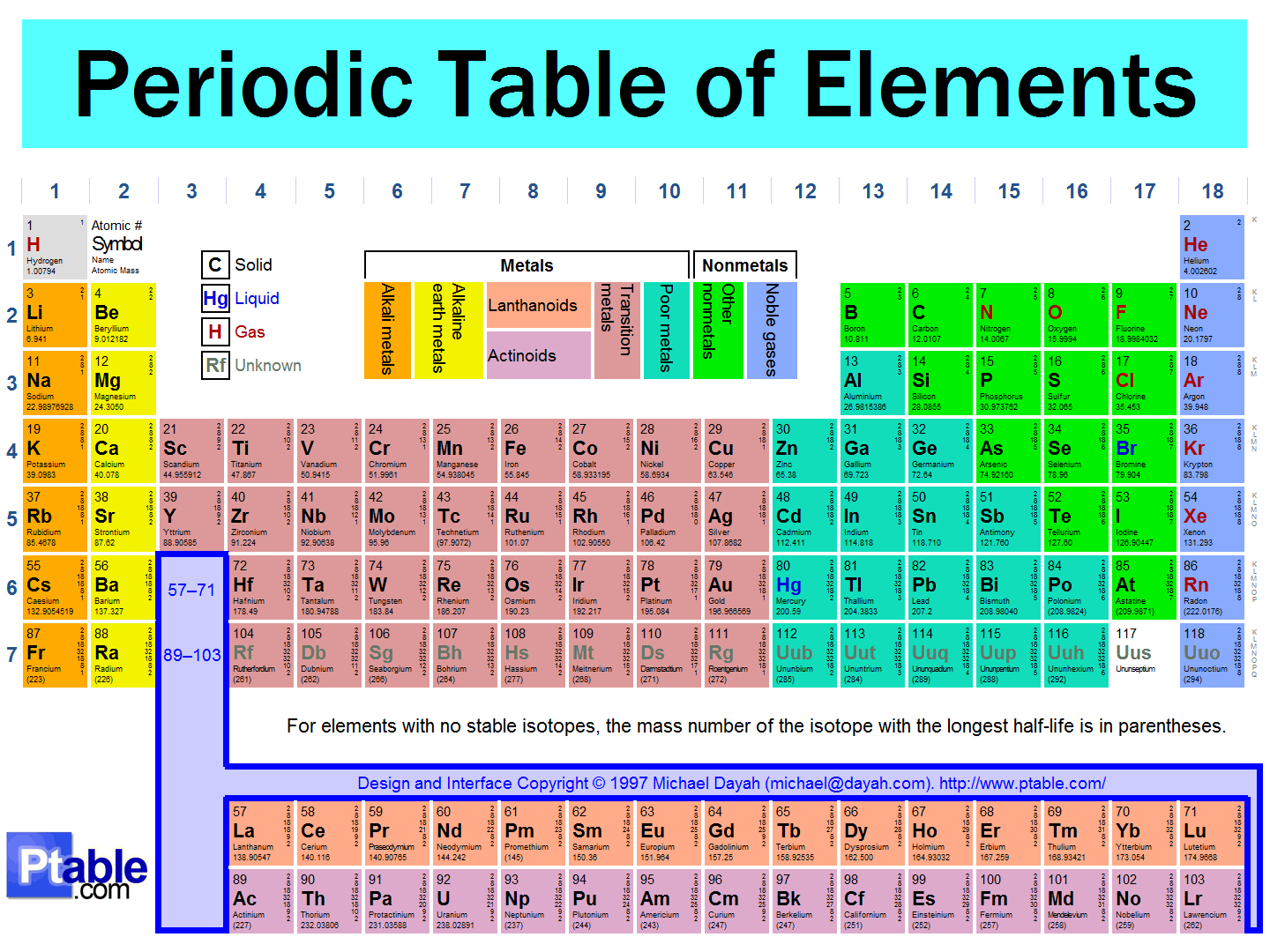
This class of elements are sometimes called "semiconductors."
a)
Metals
b)
Nonmetals
c)
Metalloids
d)
Groups
53.

What section is the least reactive?
a)
yellow
b)
red
c)
dark blue
d)
orange
54.
Each column in the periodic table is called a
a)
period
b)
group
c)
cluster
d)
unit
55.

In what section would Transition Metals be found?
a)
orange
b)
light blue
c)
blue
d)
white
56.

What are the first two elements on the periodic table?
a)
hydrogen and helium
b)
hydrogen and lithium
c)
hydrogen and carbon
d)
nitrogen and helium
57.
Elements on the left side of the periodic table are
a)
metals
b)
nonmetals
c)
metalloids
d)
noble gases
58.

The atoms along the staircase are called
a)
metals
b)
nonmetals
c)
metalloids
d)
noble gases
59.

Which elements have the most similar chemical properties?
a)
K and Na
b)
K and Ca
c)
K and Cl
d)
K and S
60.

Nonmetals are located in what section of this periodic table?
a)
Blue
b)
Yellow
c)
Pink
61.
A ___________ is an arrangement of elements in columns
a)
columns
b)
rows
c)
periodic table
d)
electron shell
62.
Which element is not a metal?
a)
H
b)
Re
c)
Al
d)
B
63.
Which is a halogen?
a)
Helium
b)
Chlorine
c)
Oxygen
d)
Neptune
64.
Elements in a ..................have similar chemical properties.
a)
period
b)
group
c)
row
65.
The simplest substance is..?
a)
Carbon
b)
An element
c)
Water
d)
A simple compound
66.
How many electrons does Oxygen need to fill its outer shell?
a)
3
b)
4
c)
1
d)
2
67.
How many Valance electrons does Iodine Have?
a)
6
b)
16
c)
7
d)
17
68.
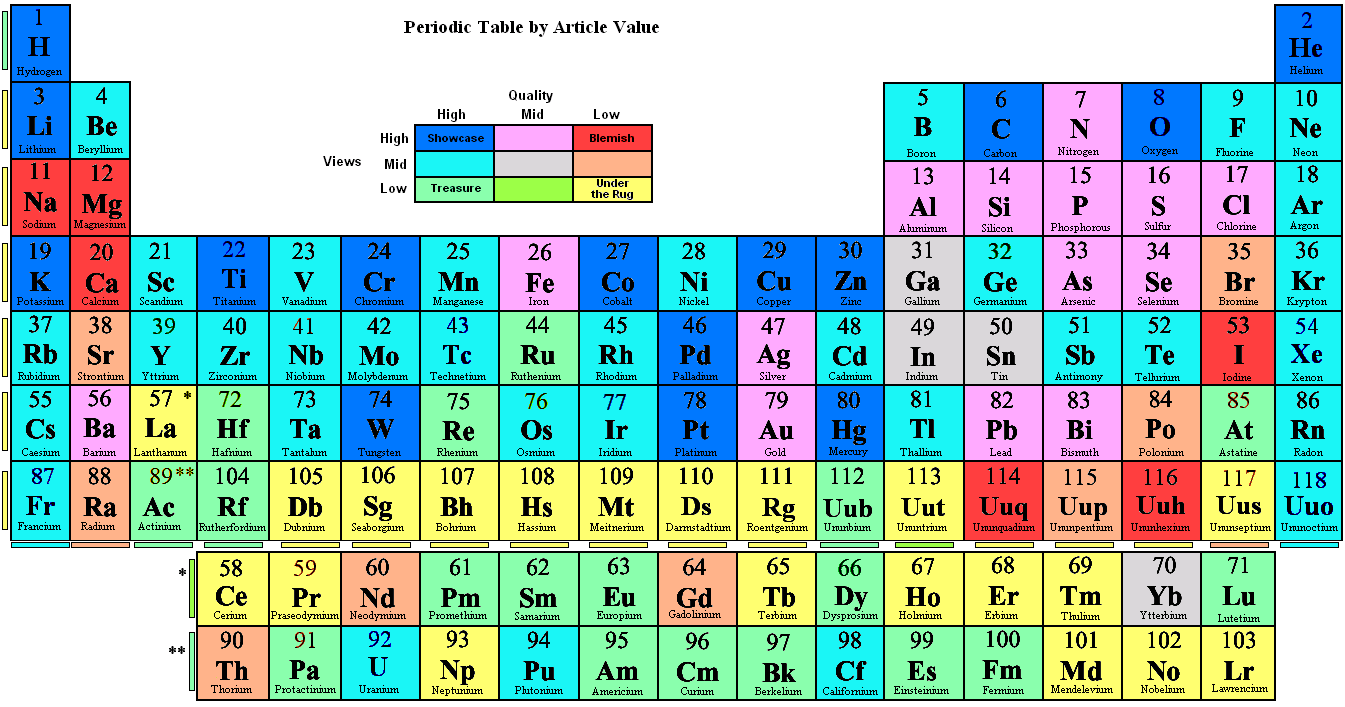
The period for Bromine is ___________.
a)
3
b)
2
c)
4
69.
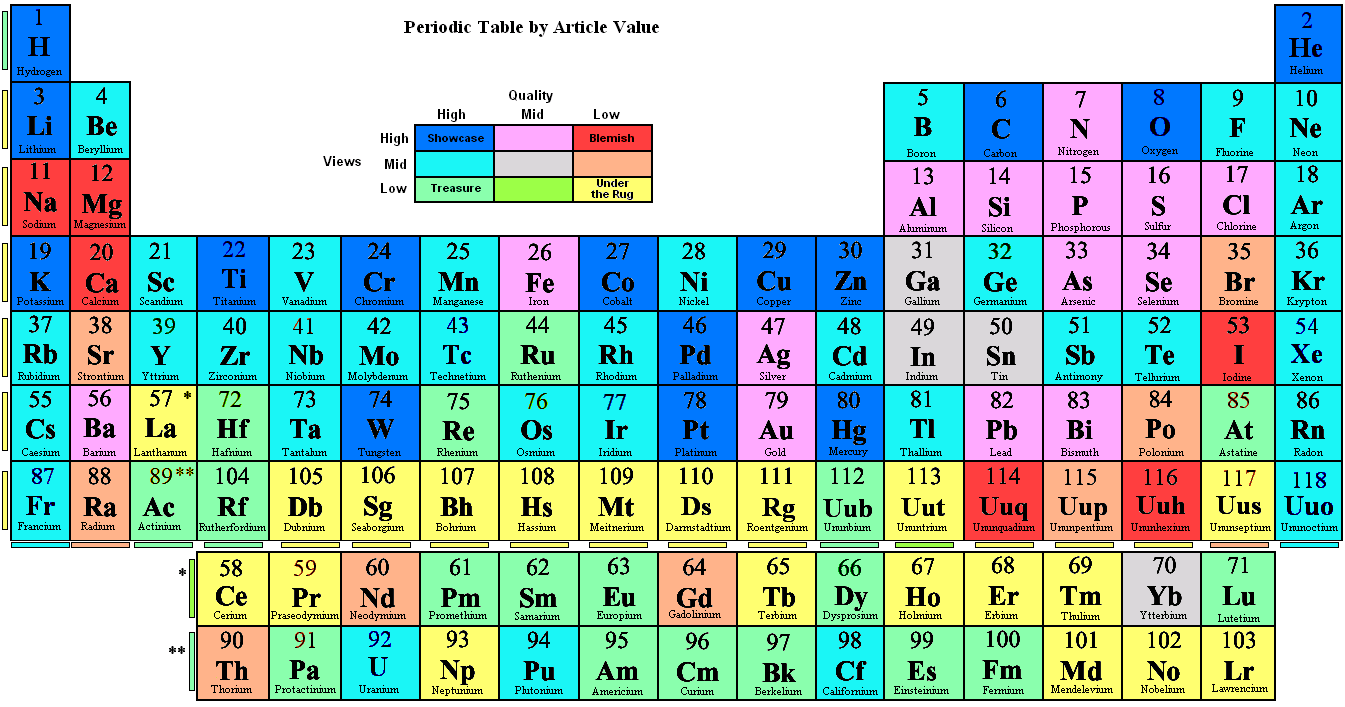
Beryllium is in group number______.
a)
Group 2
b)
Group 3
c)
Group 4
d)
Group 7
70.
The periodic table has __ periods.
a)
18
b)
8
c)
2
d)
7
71.
An element's identity is determined by the number of
a)
electrons.
b)
protons.
c)
neutrons.
d)
valence.
72.
Group 18 elements are known as the _____ _____ and have full valence shells.
a)
royal gases.
b)
supreme solids.
c)
noble gases.
d)
legit liquids.
73.
Which elements have the most similar chemical properties?
a)
K and Na
b)
K and Ca
c)
K and Cl
d)
K and S
74.
What period and group is Silver (Ag)?
a)
Period 2, Group 1
b)
Period 3, Group 16
c)
Period 5, Group 11
d)
Period 2, 14
75.
The elements in this group have 5 valence electrons and include elements N, P, and As.
a)
Group 5
b)
Group 1
c)
Group 18
d)
Group 15
76.
The elements in this group only have 1 valence electron and include Li, Na, and K.
a)
Group 11
b)
Group 1
c)
Group 3
77.
Which of the following is not a property of metals?
a)
brittle
b)
malleable
c)
lustrous
d)
conductive
78.
The periodic table has __ groups.
a)
8
b)
7
c)
18
d)
2
79.
How many electrons do atoms need to be stable?
a)
1
b)
2
c)
6
d)
8
80.
Sand and gravel may be separated from each other through using..
a)
a filter funnel
b)
a sieve
c)
an evaporating basin
d)
a distillation
81.
Which one of the following techniques would best be used to separate soil and water?
a)
Decanting
b)
distillation
c)
Filtration
d)
Chromatography
82.
Which one of the following solids is insoluble in water?
a)
sugar
b)
sand
c)
copper sulfate
d)
salt
83.
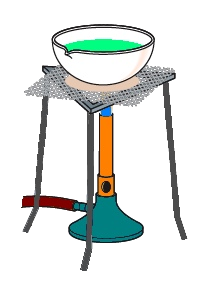
Name the separation technique shown in the diagram.
a)
evaporation
b)
distillation
c)
filtration
d)
decanting
84.
Sodium chloride can be separated from rock salt by first adding water to the mixture to dissolve the sodium chloride. The separation then takes place in two stages:
a)
evaporation followed by filtration
b)
distillation followed by decanting
c)
filtration followed by evaporation
d)
filtration followed by decanting
85.
Two or more substances mingled together, but not chemically combined are known as a
a)
residue
b)
solution
c)
distillate
d)
mixture
86.
The separation technique that involves heating a solution until the liquid changes into a gaseous state, leaving behind a solid is known as
a)
decanting
b)
evaporation
c)
loading
d)
chromatography
87.
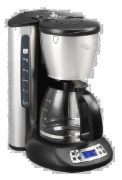
In a coffee machine, the ground coffee is separated from the coffee solution by using..
a)
sand paper
b)
filter paper
c)
toilet paper
d)
tissue paper
88.
Which one of the following would you use to separate sand from iron filings?
a)
a bar magnet
b)
filter paper
c)
chromatography paper
d)
alum
89.
Which one of the following is NOT a mixture?
a)
Sugar
b)
Paint
c)
Crude oil
d)
Air
90.
When different gases are mixed together to form air there is
a)
chemical reaction
b)
decomposition
c)
no physical reaction
d)
no chemical reaction
91.
Iron fillings can be separated from iron and Sulphur mixture by
a)
sedementation
b)
heating
c)
magnetic attraction
d)
seiving
92.
Water and Kool-Aid are mixed together. Hot water, coffee and sugar are mixed together. Which substance is the solvent in both?
a)
Water
b)
Coffee
c)
Kool-aid
d)
Sugar
93.

All are solutes except
a)
sugar
b)
pepper
c)
salt
d)
powdered chocolate
94.
What is a substance that is dissolved in another substance?
a)
solution
b)
solute
c)
solvent
d)
compound
95.
To separate a mixture of salt and water what separation tool/method is used?
a)
Filter
b)
Screen
c)
Magnet
d)
Evaporation
96.
If you spilled nails in a sandbox, what separation tool/method could you use to clean out the sandbox so it would be safe for children to play in?
a)
Filter
b)
Screen
c)
Magnet
d)
Evaporation
97.
compounds are chemically bounded together
a)
False
b)
true
c)
I don't know?
98.
Can an element be broken down into a simpler substance
a)
yes
b)
No
99.
Are there any compounds on the periodic table
a)
yes there are many
b)
no because only elements are on the periodic table
c)
I think they are?
100.
Which one has more than one type of atom in it
a)
Element
b)
Compound
101.
which one only has one type of atom In it.
a)
Element
b)
compound
102.
Is salt (NaCI) a compound or a element
a)
Compound
b)
element
103.
which one can be found on the periodic table
a)
Compound
b)
Element
104.

a)
1
b)
2
c)
3
d)
4
105.

a)
1
b)
2
c)
3
d)
4
106.
How many elements are represented in the compound?
Na2CO3
Na2CO3
a)
1
b)
2
c)
3
d)
4
107.
Which of the following an element?
a)
Carbonic Acid
b)
Copper
c)
Iron and Copper
d)
Water
108.
What is made up two or more elements that are chemically combined?
a)
Element
b)
Mixture
c)
Compound
d)
Solids
109.
How is a compound different from a mixture?
a)
Solids, liquids, and gases can form compounds
b)
Each substance in a compound loses its characteristic properties
110.
A combination of substances that are not chemically combined is called a(n)____________.
a)
mixture
b)
compound
c)
physical
111.
Mixtures are separated through ___________changes.
a)
mixture
b)
compound
c)
physical
112.

This picture represents which of the following?
a)
element
b)
compound
c)
mixture
113.

This picture represents which of the following?
a)
element
b)
compound
c)
mixture
114.

This picture represents which of the following?
a)
element
b)
compound
c)
mixture
Reset

