
Font size
 Worksheets
Final science revision grade 8 2022
Total questions: 116
Worksheet time: 1hrs 24mins
Matter is anything that occupy space and has mass. It can be classify into two(2), what are those classification?
Homogeneous and Heterogeneous
Elements and Compounds
Pure substances and Mixtures
Solute and Solvent
Nitrogen (N), Oxygen (O), Carbon (C) and Hydrogen are the most common example of ?
Molecules
Elements
Compounds
Substances
It is a form of matter which mean it has a one
type of atom or molecule.
Substance
Element
Compound
Mixtures
It is a combination of two or more substances.
Substances
Mixtures
Elements
Compound
It is a mixture with a non-uniform composition.
Homogeneous mixture
Solvation process
Heterogeneous mixture
Solubility
In a solution this is the dissolving substance.
Powder
Solute
Liquid
Gas
This is a mixture of two or more substances in which one or more of these substances (solutes) is dissolved in another substance.
Compound
Element
Heterogeneous mixture
Homogeneous mixture
Why is water known as universal solvent?
It is found anywhere.
It gives life to living things.
It covers the greater part of the earth.
It dissolves almost all the substances on Earth.
Is water a element or compound?
Element
Compound
A compound consists of two or more elements chemically combined.
True
False
It is a combination of two or more substances in
which the composition is uniform throughout the
mixture.
Heterogeneous mixture
Homogeneous mixture
Solvation
Solution
A process by which solvent molecules surround
and interact with solute molecules
Salvation
Solvation
Solution
Solubility
What are two types of solutions?
Saturated and Unsaturated
Solubility and Solvation
Solute and Solvent
Unsaturated and Saturated
The process of separating components
of a liquid through selective evaporation or
condensation
Distillation
Evaporation
Filtration
Chromatography
A process of separating
components of a mixture.
Distillation
Evaporation
Filtration
Chromatography

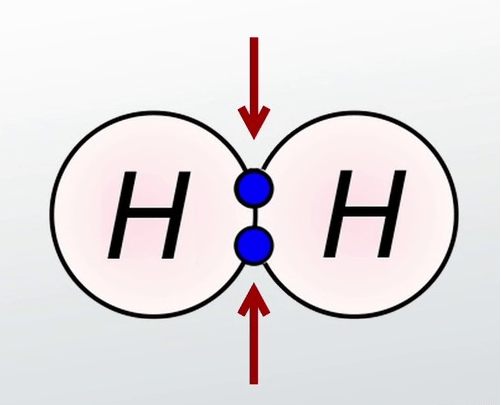
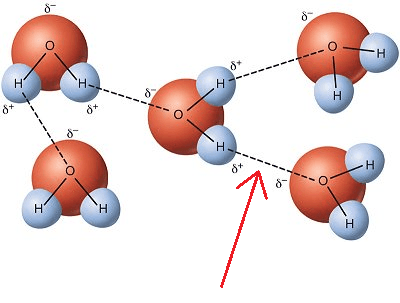
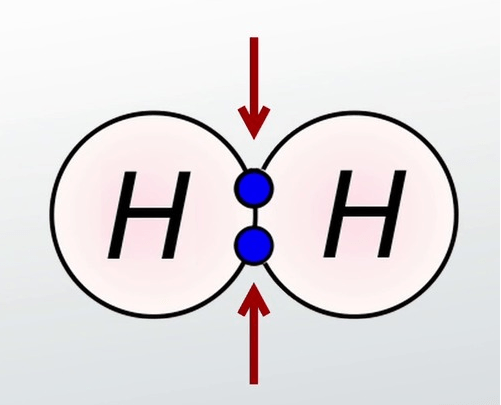
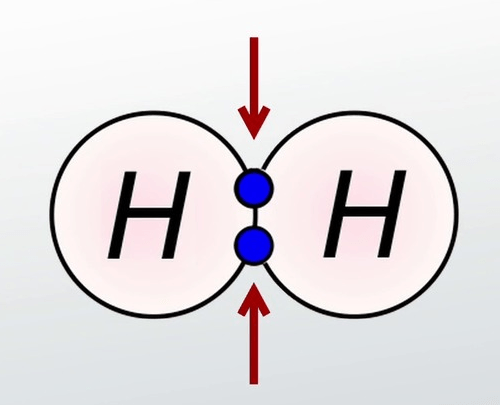
Why do all bonds form?
to fill the outermost energy level
so an atom can be unstable
so the number of protons and electrons can equal.
so they can gain neutrons.
Valence electrons are found
outermost energy level
innermost energy level
some where in the electron cloud
An atom with 1 valence electron 'needs' a full shell, so it can either gain 7 electrons or lose 1. Which is more likely to occur?
nothing
gain 7
lose 1
How do covalent bonds form?
by sharing electrons between atoms
by donating or receiving electrons
What two types of atoms make a covalent bond?
2 nonmetals
2 metals
1 metal and 1 nonmetal`
Ionic bonds are between
metals and nonmetals
2 metals
2 nonmetals
How are ionic bonds formed?
transfer of electrons
sharing of electrons
A combination of two or more substances that can be separated is a
potion
mixture
solute
compound
A solution is made when one substance _________ in another.
settles at the bottom
moves
dissolves
is suspended
A ____________ solution contains the maximum amount of solute.
diluted
mixed
concentrated
saturated
A ________ solution has a low amount of solute
saturated
concentrated
diluted
mixed
In a saltwater solution, the salt is the __________.
solvent
molecule
part
solute
In a saltwater solution, the water is the _________
solvent
mixture
combination
solute
The amount a solute can dissolve in a liquid is its ___________
ability
mixing
solubility
dilution
Mixtures CANNOT be separated.
True
False
A heterogeneous mixture can separate on its own and often needs to be shaken to be recombined.
True
False
Lowering the temperature of a liquid can increase its solubilty
True
False
Some solutions need to be separated by distillation
True
False
Cereal is a homogenous mixture
True
False
Milk is a homogenous mixture.
True
False
Italian salad dressing is a heterogenous mixture.
True
False
Ketchup is a homogenous mixture.
True
False
A filter can be used to separate a mixture.
True
False
What are TWO tools you can use to separate a mixture?
magnet
scale
saw
heat
weights
When a mixture is created it creates a __________ change.
emotional
chemical
good
physical
When a chemical change happens you know because ____________.
CHOOSE 2 Answers
it foams and bubbles
it looks the same
it gives off heat
it doesn't give off smoke.
You know a creating a mixture is NOT a chemical change because _____________.
it cannot be separated.
it will bubble and give off heat
it smokes when mixed.
it can be separated by hand or with tools
What is a mixture?
A chemical combination of two or more different substances
A physical combination of two or more different substances
A chemically pure substance
Which of the following is NOT an example of a mixture?
Air
Blood
Gasoline
Pure Water
(fresh water)
What type of mixture is uniform in composition?
A chemical mixture
A homogeneous mixture
a heterogenous mixture
A compound
What is a solution?
A type of homogenous mixture
A type of heterogeneous mixture
A type of suspension
The substance that “does the dissolving” in a solution is called:
the solvent
the solute
the salt
the suspension
Solubility is a measure of:
The concentration of a homogeneous mixture
The concentration of a heterogenous mixture
How easily a substance dissolves into another substance
What substance is often called the "Universal solvent"?
Water
Ethanol
Salt
Blood
An Alloy is:
a heterogenous mixture of a metal and non-metal
a heterogenous mixture of two or more metals
a homogenous mixture of tow or more nonmetals
A homogenous mixture of two metals or a metal and nonmetals
What type of mixture can you separate back into its original components?
A solution
A heterogenous mixture
A Suspension
All answers are correct
Which separation technique involves the physical separation of a mixture of solid particles, usually by size
Mechanical Separation
Magnetism
Filtration
Which Separation Technique is best for removing dust in the air or impurities in water?
Mechanical Separation
Magnetism
Filtration
How was this test for you?
So easy! I nailed it!
Pretty good.
It was kind of hard.
I had no idea about anything!
A substance that is formed as the result of a chemical reaction is a __________________
Product
Reactant
Starters
Enders
A substance that is formed as the result of a chemical reaction is a __________________
Product
Reactant
Starters
Enders
A substance that is formed as the result of a chemical reaction is a __________________
Product
Reactant
Starters
Enders
A change in the shape of an object is an example of _________________.
a chemical change
energy
an endothermic change
a physical change
Which one shows that a chemical reaction has occurred?
dissolving
melting
formation of a gas
bending
What is the BEST definition of a chemical reaction?
A change in matter that produces one or more NEW substances
When two things combine and EXPLODE.
In the equation 2Mg+O2 → 2MgO which are the reactants?
A substance that cannot be broken down into any other substance by ordinary chemical means is called
NaHCO3 is an example of

What are the products of the chemical reaction pictured?
CH4 and CO2
CH4 and O2
CO2 and 2 H2O
O2 and H2O

CH4 + 2O2 → CO2 + 2H2O
What reaction has the following general formula:
A + CD --> C + AD
Combination
Decomposition
Single Replacement
Double Replacement
Combustion
What reaction has the following general formula:
AB --> A + B
Combination
Decomposition
Single Replacement
Double Replacement
Combustion
What reaction has the following general formula:
A + B --> AB
Combination
Decomposition
Single Replacement
Double Replacement
Combustion
What reaction has the following general formula:
CxHy + O2 −>CO2 + H2O
Combination
Decomposition
Single Replacement
Double Replacement
Combustion
What is the general reaction scheme for a single replacement reaction?
A + B --> AB
AB --> A + B
A + CD --> C + AD
AB + CD --> CB + AD
CxHy+O2 −> CO2+H2O
What is the general reaction scheme for a combustion reaction?
A + B --> AB
AB --> A + B
A + CD --> C + AD
AB + CD --> CB + AD
CxHy+O2 −> CO2+H2O
What is the general reaction scheme for a combination reaction?
A + B --> AB
AB --> A + B
A + CD --> C + AD
AB + CD --> CB + AD
CxHy+O2 −> CO2+H2O
What is the general reaction scheme for a double replacement reaction?
A + B --> AB
AB --> A + B
A + CD --> C + AD
AB + CD --> CB + AD
CxHy+O2 −> CO2+H2O
What type of reaction is the following:
BaCl2+2KI −> 2KCl + BaI2
Combination
Decomposition
Single Replacement
Double Replacement
Combustion
What type of reaction is the following:
2KI −> 2K + I2
Combination
Decomposition
Single Replacement
Double Replacement
Combustion
What type of reaction is the following:
C11H24+17O2−> 11CO2 + 12H2O
Combination
Decomposition
Single Replacement
Double Replacement
Combustion
What type of reaction is the following:
2NaHCO3−> Na2CO3+CO2+H2O
Combination
Decomposition
Single Replacement
Double Replacement
Combustion
What type of reaction is the following:
Zn + 2HCl −> ZnCl2+H2
Combination
Decomposition
Single Replacement
Double Replacement
Combustion

