
 Worksheets
Metals, Non-metals, Metalloids
Total questions: 25
Worksheet time: 3580secs
Name
Class
Date
1.
Which of these is a property of metals?
a)
It's malleable
b)
It can't conduct electricity
c)
They are used in food
d)
It's very brittle
2.
Which of the following is NOT a characteristic of most metals?
a)
Brittle
b)
Good conductor
c)
Ductile
d)
Malleable
3.
Where are the non-metallic elements found in the periodic table?
a)
In the middle
b)
In the top rows
c)
On the left-hand side
d)
On the right-hand side
4.
Which of these grouping of elements could have the characteristic of luster (shiny)?
a)
Metal
b)
Nonmetal
c)
metalloids
d)
Both metals and metalloids
5.

Which element is a metalloid?
a)
Titanium
b)
Selenium
c)
Potassium
d)
Polonium
6.
All of the following would classify an element as a metal except?
a)
Dull
b)
Luster
c)
Malleable
d)
Hard
7.
Which elements are found on the left to middle of The Periodic Table?
a)
Metals
b)
Nonmetals
c)
Metalloids
d)
Candles
8.

Describe what luster means
a)
How an object reflects light
b)
How soft an object is
c)
If an object floats
d)
If an object can be dug out of the earth.
9.

When an object shatters when struck by a hammer.
a)
luster
b)
malleable
c)
brittleness
d)
ductile
10.
When an object changes shape when struck by a hammer.
a)
luster
b)
malleable
c)
brittleness
d)
ductile
11.
If you have a material that can conduct electricity well it is probably a...
a)
Metalloid
b)
Matter
c)
Non-metal
d)
Metal
12.
The elements argon, krypton, and xenon are all non-metals. What property would these elements have in common?
a)
Good conductor of thermal energy
b)
Poor conductor of electricity
c)
Shiny, lustrous surface
d)
Soft and malleable
13.
Which elements are found on the right side of The Periodic Table?
a)
Metals
b)
Nonmetals
c)
Metalloids
d)
Water
14.
Iron is a good conductor, malleable and magnetic. What type of element is Iron?
a)
Metal
b)
Nonmetal
c)
Metalloid
15.
Metals are ductile, meaning they can be drawn into wire
a)
True
b)
False
c)
Never
16.
If a substance is magnetic it is most likely a
a)
metal
b)
non-metal
17.
John was observing the physical properties of elements in order to classify them as either a metal, nonmetal, or metalloid. The first element was dull, brittle, and did not conduct heat. What would its classification be?
a)
metal
b)
nonmetal
c)
metalloid
18.
Silicon is a semiconductor and has properties of both metals and nonmetals. What type of element is Silicon?
a)
Metal
b)
Nonmetal
c)
Metalloid
d)
Pretty
19.
Non Metals have LUSTER
a)
True
b)
False
20.
Metalloids are malleable and ductile
a)
False
b)
True
21.
A student is given a sample of an unknown substance. He is asked to determine if it is classified as a metal, a metalloid, or a nonmetal. He discovered that the unknown element conducted some heat and electricity, had a shiny luster, and broke easily. This element is most likely a
a)
metal
b)
nonmetal
c)
metalloid
d)
cannot be determined
22.
Which of the following elements is a metal?
a)
calcium
b)
chlorine
c)
iodine
d)
oxygen
23.
Rows on the period table are called _____ while columns are called _____.
a)
groups, families
b)
groups, periods
c)
periods, groups
d)
families, groups
24.

Is oxygen metal or nonmetal?
a)
metal
b)
nonmetal
25.
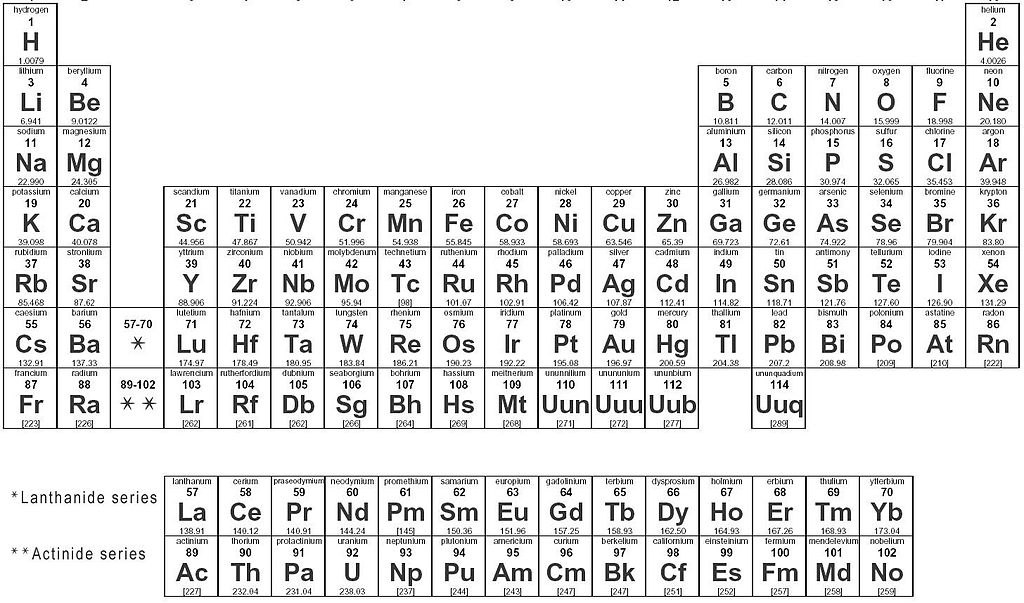
Is gold metal or nonmetal?
a)
metal
b)
nonmetal
100 %

