
 Worksheets
DNA and the Cell Cycle Review
Total questions: 33
Worksheet time: 3600secs
ATG TGA CAG
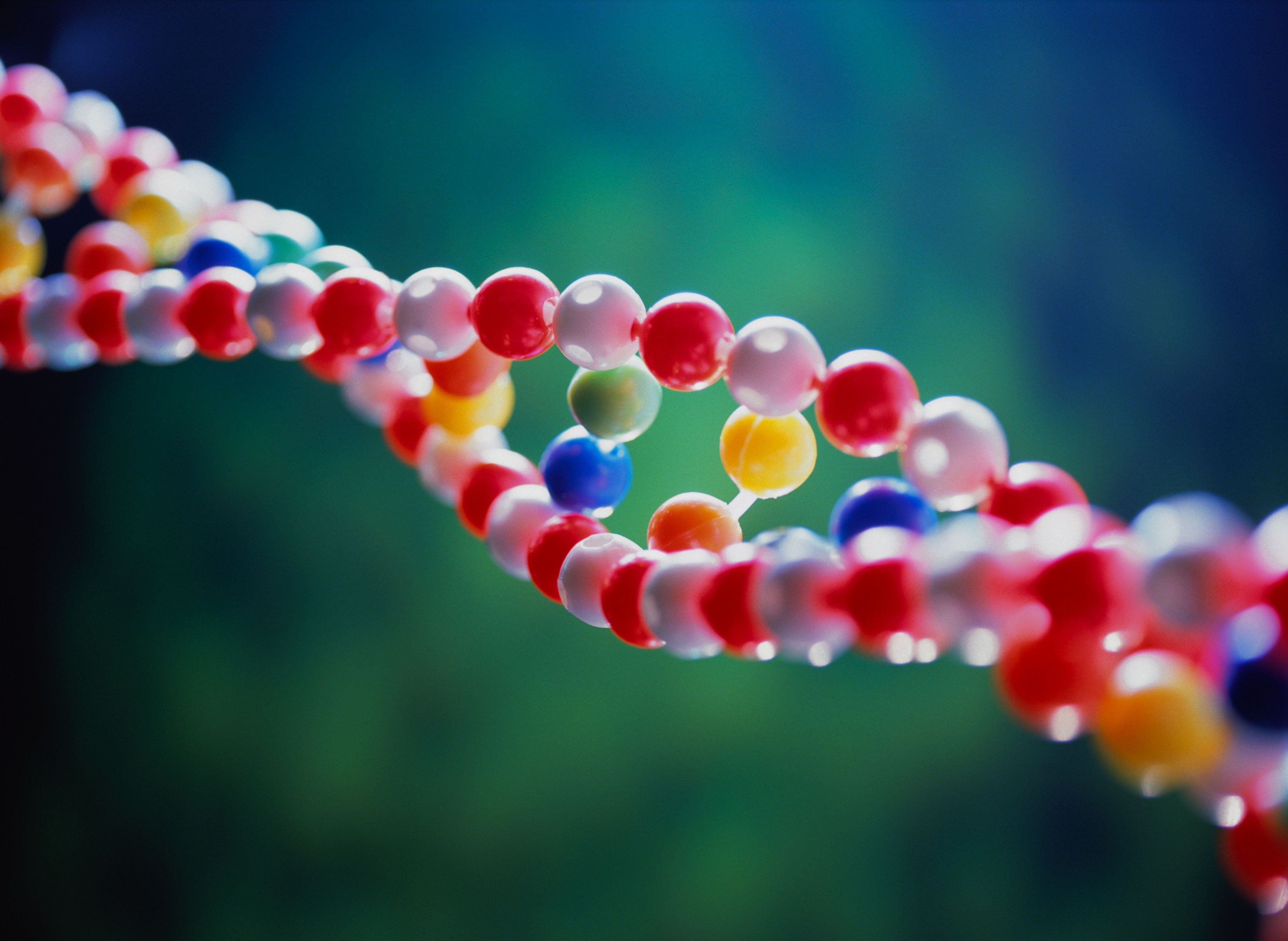
Why is the sequence of DNA important?
it is very small and very complicated
it's in every living thing
it determines the type of traits and characteristics an organism has
the sequence is exactly the same for every living thing
Which 2 molecules form the sides (backbone) of the DNA ladder?
deoxyribose sugars and nitrogen bases
deoxyribose sugars and hydrogen bonds
deoxyribose sugars and nucleotides
deoxyribose sugars and phosphates
This enzyme breaks apart the two strands of DNA to prepare for replication
Helicase
Ligase
DNA polymerase
DNA synthase
DNA replication results in two DNA molecules,
each one with two original strands
each one with two new strands
each one with one new strand and one original strand
one with two new strands and the other with two original strands


Name this structure
double helix
nucelotide
amino acid
hydrogen bond
Which bases pair together?
Adenine binds to Thymine, Guanine binds to Cytosine
Cytosine binds to Adenine, Thymine binds to Guanine
Guanine binds to Guanine, Adenine binds to Cytosine
Adenine binds to Guanine, Thymine binds to Cytosine
The enzyme that attaches the complimentary base pairs to the original strand of DNA during replication is called
Helicase
DNA polymerase
DNA replicase
Ligase
A mutation that replaces one nitrogen base-pair with a different nitrogen base-pair is a ________________ mutation.
substitution
insertion
deletion
inversion

Because DNA is made of two strands running in opposite directions, this characteristic is called being
antiparallel
a Helix
condensed
a chromosome

A specific section of DNA along a chromosome shown in the image is called a
genome
chromatin
gene
nucleotide
When DNA tightly winds up around histone proteins, this forms
gene
chromosome
chromatin
genome

What process is being shown in the image?
cell division
DNA mutation
binary fission
DNA replication

A chromosome is made up of many
genes
genomes
cells
DNA polymers
The sequence of DNA provides chemical instructions for making __________________.
proteins
DNA
genes
carbohydrates

Fruit fly body cells have 8 chromosomes. One of the fly's wing cells goes through mitosis. After mitosis, the wing cells that form from the original cell would have
16 chromosomes.
46 chromosomes.
8 chromosomes.
4 chromosomes.
In the G1 stage of the cell cycle, the cell
Grows
Takes in nutrients and gets rid of waste
Carries on normal activities
All of the above
Human body cells (somatic cells) each contain 46 chromosomes. If any of these cells divide by mitosis, how many chromosomes will be in the cells that form?
12
23
46
92

Why would it be important to replicate DNA before a cell divides?
In order for the correct amount DNA to be transferred into daughter cells so each cell ends up with the same DNA
In order for the cells to all be the same size.
In order for the DNA to be contained in the nucleus.
In order for the DNA to transferred into daughter cells in a way that they each get different amounts of DNA.


Which of the following is NOT a reason multicellular eukaryotes need mitosis?
Growth
Recovering from injuries
Replacement of dead cells
Reproducing
After fertilization of an egg and sperm, the first cell forms. This first cell (a zygote) begins to divide and develop into the embryo and then the fetus. What type of cell division is occurring here?
mitosis
meiosis
binary fission
budding

When a single-celled eukaryote goes through mitosis, what is happening?
It is forming new types of cells
It is reproducing, forming more single-celled eukaryotes
To replace dead cells
To repair damage to a tissue
Meiosis in humans produces
cells identical to the original cell dividing
egg cells and sperm cells
somatic cells
Why do they cells at the end of meiosis have half the number of chromosomes as the starting cell
During meiosis some of the chromosomes break down
Not all of the DNA is copied before meiosis
There are two divisions during meiosis instead of one

