
NEW
Font size
S
M
L
XL
 Worksheets
Chapter 7 cells
Total questions: 43
Worksheet time: 21mins
Name
Class
Date
1.
Which organelle is found only in plant cells?
a)
nucleus
b)
mitochondria
mitochondria
mitochondria
c)
chloroplast
d)
cell membrane
2.
Which organelle directs all cell activities, using the DNA stored inside of it?
a)
lysosomes
b)
ribosomes
c)
nucleus
d)
mitochondria
3.
Which of the following is directly involved in the transportation of materials inside the cells?
a)
endoplasmic reticulum
b)
lysosome
c)
vacuole
d)
mitochondria
4.

I am a protein packaging and shipping machine! Who am I?
a)
vacuole
b)
ribosome
c)
mitochondrion
d)
golgi apparatus
5.
You might think of me as the trash collector, but recycler is maybe more accurate. What am I?
a)
mitochondria
b)
lysosome
c)
vacuole
d)
ribosome
6.
What is the name of the genetic material that is inside the nucleus?
a)
ER
b)
SER
c)
DNA
d)
ATP
7.
What is found in both plant and animal cells but is much larger in plant cells?
a)
nucleus
b)
chloroplast
c)
mitochondria
d)
vacuole
8.
Where are proteins made?
a)
ribosomes
b)
chromosomes
c)
golgi apparatus
d)
mitochondria
9.
This organelle takes sunlight and turns it into energy for plant cells.
a)
lysosome
b)
chloroplast
c)
mitochondria
d)
nucleus
10.
I am the outer most layer of an animal cell.
a)
cell wall
b)
nucleus
c)
cell membrane
d)
cell skin
11.
What are tiny organelles that convert glucose to ATP?
a)
ribosomes
b)
vesicles
c)
cytoskeletons
d)
mitochondria
12.
A rigid layer that lies outside the cell's membrane is...
a)
cytoskeleton
b)
cilia
c)
cell wall
d)
cytoplasm
13.
What organelle is called the powerhouse of the cell?
a)
endoplasmic reticulum
b)
nucleus
c)
golgi apparatus
d)
mitochondria
14.
What organelle uses enzymes to help with digestion?
a)
lysosomes
b)
ribosomes
c)
endoplasmic reticulum
d)
vacuoles
15.
What is the gel like substance called inside cells?
a)
cytoskeleton
b)
cytoplasm
c)
smooth ER
d)
cilia
16.
mRNA goes back and forth between the nucleus and which cell part?
a)
mitochondria
b)
ribosomes
c)
cell membrane
d)
chloroplasts
17.
which cell part controls what enters and leaves a cell?
a)
mitochondria
b)
ribosomes
c)
cell membrane
d)
chloroplasts
18.

the small "dots" in this image of a plat cell (not labeled) are:
a)
cytoplasm
b)
ribosomes
c)
vacuoles
d)
chloroplasts
19.
A is
a)
cytoplasm
b)
the nucleus
c)
a vacuole
d)
a chloroplast
20.
B is
a)
cell membrane
b)
cell wall
c)
a vacuole
d)
a chloroplast
21.
C is
a)
cell membrane
b)
cell wall
c)
a vacuole
d)
a chloroplast
22.
Something we can see here (may or may not be labeled) that would be lacking in an animal cell is
a)
cell membrane
b)
cell wall
c)
mitochondria
d)
ribosome
23.
Through which cell part do substances such as water, digested nutrients, gases, and wastes pass through?
a)
a
b)
b
c)
c
d)
d
24.
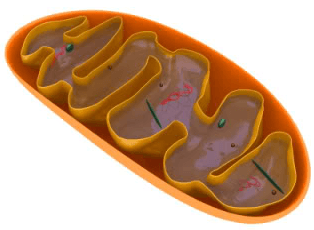
What are tiny organelles that convert glucose into ATP?
a)
Ribosomes
b)
Vesicles
c)
Cytoskeleton
d)
Mitochondria
25.
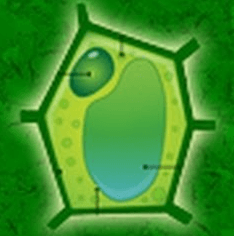
A rigid layer that lies outside the cell's membrane is...
a)
Cytoskeleton
b)
Cilia
c)
Cell Wall
d)
Flagella
26.
A group of tissues that work together to perform a similar function is called_____. (Examples include the heart, lungs or stomach)
a)
cells
b)
tissues
c)
organs
d)
organ system
27.
A group of cells that have similar functions? Examples are nervous, epithelial, muscle and connective
a)
cells
b)
tissues
c)
organs
d)
atoms
28.
Organs that work together to perform a related function is called _____________?
a)
cells
b)
tissues
c)
organ system
d)
organs
29.

a)
produces energy a cell needs
b)
where ribosomes are made
c)
packages amino acids and moves them out of the cell
30.

a)
site of protein synthesis by ribosomes
b)
filled with gel-like fluid
c)
used to break food down
31.

a)
makes ribosomes
b)
storage for water
c)
breaks down worn out cell parts
32.

a)
produces ribosomes
b)
contains genetic information
c)
stores food, water, wastes and other materials
33.

a)
where ribosomes are made
b)
receives proteins from ER and distributes them
c)
assembles amino acids into proteins
34.
packages proteins for delivery
a)
Endoplasmic reticulum
b)
ribosomes
c)
golgi apparatus
d)
lysosomes
35.

What am I?
a)
mitochondria
b)
lysosomes
c)
chloroplast
d)
endoplasmic reticulum
36.

What am I?
a)
cell wall
b)
mitochondria
c)
cytoplasm
d)
chloroplast
37.
Cell theory states that...
a)
all living things are made of cells
b)
cells are the basic unit of life
c)
living things come from other living cells
d)
All of the above
38.
The ____________________ are structures in the nucleus that contain genetic information.
a)
chromosomes
b)
nucleolus
c)
lysosomes
d)
golgi body
39.
The parts of the cell are also called
a)
matter
b)
blocks
c)
proteins
d)
organelles
40.
Who was the scientists who concluded that all plants are made of cells?
a)
Robert Hooke
b)
Anton van Leewenhoek
c)
Rudolf Virchow
d)
Matthias Schleiden
41.
Who was the scientists who concluded that all plants are made of cells?
a)
Robert Hooke
b)
Anton van Leewenhoek
c)
Rudolf Virchow
d)
Matthias Schleiden
42.
Who was the scientist that was the first person to see unicellular organisms from the pond water, and he called them "animalcules"
a)
Anton van Leeuwenhoek
b)
Matthias Schleiden
c)
Robert Hooke
d)
Rudolf Virchow
43.
Which of the following are functions of both cells and living organisms?
a)
converting food to usable energy
b)
using water
c)
getting rid of waste
d)
all the answers are correct
Reset

