
 Worksheets
Final Exam Review
Total questions: 111
Worksheet time: 2hrs 45mins
Name
Class
Date
1.
Where does most of earth`s energy come from?
a)
The sun
b)
Mars
c)
Wind
d)
Water
2.
what is a non renewable resource?
a)
water
b)
wind
c)
coal
d)
biomass
3.
Non-Renewable resources are also known as what?
a)
Fossil Fuels
b)
Renewable
c)
Solar Energy
d)
Hydroelectric Energy
4.
Which renewable resource gets its direct energy from the sun?
a)
Geothermal
b)
Solar
c)
Wind
d)
Hydrogen
5.
Energy we get from burning living things
a)
Hydroelectricity
b)
Wind Energy
c)
Biomass Fuel
d)
Hydrogen Power
6.
Energy we get from earth's interior heat
a)
Geothermal
b)
Solar Energy
c)
Wind Energy
d)
Hydroelectricity
7.
Oil and Natural gas are both known as types of what?
a)
Coal
b)
Geothermal Energy
c)
Renewable Resources
d)
Petroleum
8.
Which fossil fuel is created from the decayed remains of plants?
a)
Oil
b)
Coal
c)
Natural Gas
9.
This energy resource can cause deforestation.
a)
geothermal
b)
hydro
c)
biomass
10.
This resource can NOT be used in the night or in bad weather.
a)
geothermal
b)
hydro
c)
biomass
d)
solar
11.
Fossil fuels include coal, oil and natural gas. Fossil fuels are classified as nonrenewable because they —
a)
Take many, many years to be replaced
b)
require expensive equipment
c)
Can be found all over Earth's surface
d)
Provide much of the energy we use
12.

What percentage of our energy use comes from fossil fuels?
a)
25%
b)
45%
c)
61%
d)
86%
13.

Based on the data collected, which source of alternative energy is most efficient?
a)
Coal
b)
Wind
c)
Natural gas
d)
Solar
14.
Which of the following is an example of REDUCING?
a)
taking glass bottles to the recycling center
b)
turning off the lights when you leave a room
c)
using a soup can for a pencil cup
d)
throwing your garbage in the trash can
15.
What do scientists think the effect will be of having more greenhouse gases in our atmosphere?
a)
More warming of the atmosphere
b)
More cooling of the atmosphere
c)
More air in the atmosphere
d)
Less air in the atmosphere
16.
What do humans do that releases greenhouse gases into the atmosphere?
a)
Burn fossil fuels (like gas and coal)
b)
Build cement buildings
c)
Ride bikes and use solar energy
d)
Compete in the Olympics
17.
What do greenhouse gases do in our atmosphere?
a)
They absorb radiation given off by the Earth
b)
They block harmful radiation from reaching the Earth
c)
They keep all the air within the Earth
d)
They make the Earth cooler
18.
Which of the following gases, released by animals as a waste product of digestion, can add to global warming?
a)
Carbon Dioxide
b)
Methane
c)
Chlorofluorocarbon
d)
Nitrogen
19.
Why is the increase of Greenhouse gasses a big issue?
a)
It causes climate change and increase in the global temerature
b)
It can lead to a major increase in Greenhouses
c)
It leads to more factories
d)
It causes a major decrease in people
20.
What is something that you can do to decrease the carbon dioxide in the environment?
a)
Tear down trees
b)
Recycle
c)
Carpool
d)
Start forest fires
21.
A mineral is
a)
a naturally occurring, inorganic, solid, that has a crystal structure and a definite chemical composition.
b)
an inorganic, solid, that has a crystal structure and a definite chemical composition.
c)
a naturally occurring, inorganic, solid, that has a definite chemical composition.
d)
a naturally occurring, inorganic, solid, that has a crystal structure.
22.
When you find mass per unit volume of a mineral, you are testing its
a)
Luster
b)
Streak
c)
Density
d)
Crystal structure
23.
The color of a mineral in powder form is called?
a)
hardness
b)
specific gravity
c)
luster
d)
streak
24.
How light reflects off of a mineral is called?
a)
luster
b)
streak
c)
cleavage
d)
fracture
25.
Why is coal not a mineral?
a)
It's not a solid
b)
It is man-made
c)
It is not inorganic
d)
It is made of carbon
26.

The following image shows what mineral property?
a)
Hardness
b)
Streak
c)
Cleavage
d)
None of the above
27.
What does it mean if a mineral has a hardness of one?
a)
it is very hard
b)
it is very soft
28.
What does inorganic mean?
a)
Something that is living
b)
Something that is dead, but was once living
c)
Something that was never living
29.

Can a penny scratch fluorite?
a)
Yes
b)
No
30.

Using this scale, which mineral can scratch a Drill bit?
a)
Talc
b)
Topaz
c)
Corundrum
d)
Quartz
31.
What can scratch Talc?
a)
Gypsum
b)
Diamond
c)
Quartz
d)
All of them
32.
Where is magma?
a)
inside
b)
outside
33.
What does Ignis mean?
a)
hot
b)
fire
c)
steam
d)
flame
34.

Coarse or Fine?
a)
coarse
b)
fine
35.
How do Intrusive Igneous rocks cool?
a)
quickly
b)
slowly
c)
really fast
36.
Where can we find Basalt?
a)
mountains
b)
valleys
c)
deserts
d)
ocean floor
37.
What is one use of Granite?
a)
gravel
b)
weapons
c)
building materials
d)
skin abrasives
38.
A type of rock that forms from the cooling of molten rock at or below the surface of the earth
a)
Igneous Rock
b)
Metamorphic Rock
c)
Sedimentary Rock
d)
chemical Rock
39.
Igneous rock that forms from lava on Earth's surface
a)
Organic Rock
b)
Intrusive Rock
c)
Clastic Rock
d)
Extrusive Rock
40.

This rock cools so quickly that crystals have no time to form.
a)
Basalt
b)
Obsidian
c)
Gabbro
d)
Pumice
41.
Type of sedimentary rock formed from once-living remains of life are called _?_ sedimentary rock.
a)
clastic
b)
strata
c)
organic
d)
chemical
42.
The process where rock is made by bits being glued together is called _?_.
a)
cementation
b)
compaction
c)
fossil
d)
sedimentary
43.
The process where broken bits of rock are shoved together by weight of other rock bits above is called _?_.
a)
cementation
b)
compaction
c)
fossil
d)
sedimentary
44.
This keeps sedimentary rock stuck together
a)
fossils
b)
gorilla glue
c)
minerals
d)
sand
45.
Weathering, Erosion, Deposition, ___________, ____________
a)
cementation, compaction
b)
compaction, cementation
c)
layers, compaction
d)
water, heat
46.
Which of the following is a metamorphic rock?
a)
conglomerate
b)
pumice
c)
obsidian
d)
marble
47.
When metamorphic rocks are formed, the extreme heat is usually caused by the _______.
a)
gravity in the atmosphere
b)
collision of tectonic plates
c)
the fiery hot magma in the Earth's mantle
d)
weight of the mountains
48.
Metamorphic rocks form from ___.
a)
igneous rocks
b)
other metamorphic rocks
c)
sedimentary rocks
d)
all types of rocks
49.
What are the two main types of metamorphic rocks and how are they different?
a)
intrusive and extrusive; intrusive rocks are formed inside the earth and extrusive rocks are formed on the surface
b)
foliated and nonfoliated; foliated rocks do not have visible bands/layers and nonfoliated rocks do have visible bands/layers
c)
intrusive and extrusive; intrusive rocks are formed on the earth's surface and extrusive rocks are formed in the Earth
d)
foliated and nonfoliated; foliated rocks have visible bands/layers and nonfoliated rocks do not have visible bands/layers
50.

What is the name of this Metamorphic Rock?
a)
Schist
b)
Slate
c)
Gneiss
d)
Marble
51.
Which of the following best describes the type of environment a metamorphic rock forms in
a)
High heat, low pressure
b)
Low heat, high pressure
c)
High heat, high pressure
d)
Low heat, low pressure
52.
What is the MAIN way rocks are classified?
a)
Their color and shapes
b)
How they form
c)
Mineral bands
d)
Where they form
53.
How are rock and minerals related?
a)
they are the same
b)
rocks are in minerals
c)
minerals are in rocks
d)
they are not related
54.
How does freezing water cause the weathering of rocks? The freezing water—
a)
keeps the rocks in place
b)
makes the rocks last longer
c)
expands cracks and breaks rocks
d)
causes rocks to fall in landslides
55.
The process that breaks down rocks and other materials on Earth's surface is called
a)
weathering
b)
erosion
c)
soil conservation
d)
decomposition
56.

What is mechanical weathering?
a)
Process through which rocks are physically broken into smaller pieces.
b)
Rocks are broken down through chemical changes.
c)
Rocks are worn away from acid in plant roots.
d)
Rocks broken down by machinery.
57.
Which type of climate will have faster chemical weathering?
a)
Hot and Wet
b)
Cold and Dry
c)
Hot and Cold
d)
Cold and Wet
58.
A marble statue is left exposed to the weather. Within a few years, the details on the statue have begun to weather away. This weathering probably is caused by...
a)
oxygen in the air
b)
carbonic acid in rainwater
c)
lichens
d)
abrasion
59.

Large amounts of soil have eroded from steep hill. What is most likely to happen?
a)
an avalanche
b)
sinkhole
c)
landslide
d)
earthquake
60.

What sequence of events will cause a large boulder to move down stream
a)
weathering-erosion-deposition
b)
erosion-deposition -weathering
c)
weathering-deposition-erosion
61.
Rust that forms on rocks or metal because of extended exposure to oxygen is what example of chemical weathering?
a)
carbon dioxide (carbonic acid)
b)
acid rain
c)
oxidation
d)
lichens
62.
What is the relationship between surface area and the rate of weathering?
a)
As surface area increases, the rate of weathering decreases
b)
As surface area increases, the rate of weathering increases
c)
As surface area decreases, the rate of weathering increases
d)
There is no relationship
63.
What does it mean when a rock's surface area increases?
a)
There are more surfaces available to be weathered on the rock
b)
There are less surfaces available to be weathered on the rock
c)
The rock has weathered completely
d)
Surface area has nothing to do with rocks
64.
Lichens (small green plants) growing on a large boulder release enzymes and other acids that slowly break the rock apart. This is an example of:
a)
mechanical weathering
b)
chemical weathering
65.
Caves are most likely to form from the chemical weathering of which kind of rock?
a)
Granite
b)
Limestone
c)
Basalt
d)
Sandstone
66.
How might a weathered mountain appear different than an unweathered mountain?
a)
Weathered mountain would be taller.
b)
Weathered mountain would be rounder and less jagged.
c)
Weathered mountain would be more jagged and less rounded.
d)
Weathered mountain would have no trees.
67.
You are designing an experiment to test the resistance to weathering of various types of materials. What weathering process could be modeled using sandpaper?
a)
Freezing and thawing
b)
Abrasion
c)
Oxidation
d)
Acid Rain
68.
Which change in the climate of Georgia would most likely cause the greatest increase in chemical weathering of local bedrock?
a)
lower humidity in winter
b)
greater precipitation in summer
c)
lower temperature in winter
d)
higher atmospheric pressure in summer
69.
What is the movement of soil from one place to another?
a)
weathering
b)
deposition
c)
discharge
d)
erosion
70.
What would be expected to remove the most sand from a barrier island during a storm?
a)
waves depositing debris on a island
b)
currents moving sand along the island
c)
large waves crashing across the island
d)
strong winds blowing across the island
71.
What is a type of mass movement by gravity?
a)
dune
b)
loess
c)
glacier
d)
mudslide
72.
What forms as wind slows?
a)
mudflows
b)
rockfalls
c)
dunes
d)
glaciers
73.
Deltas forming at the mouths of rivers
a)
Weathering
b)
Erosion
c)
Deposition
74.
If the same type of rock were placed in a rainforest, desert, a forest in Tennessee, and the North Pole, in which area would the rock weather the fastest?
a)
rainforest
b)
desert
c)
North Pole
d)
forest in Tennessee
75.
Your teacher filled a box with sand. She put a fan at one end and turned the fan on. The sand was blown to the opposite side of the box and collected at that side. What processes was the teacher demonstrating?
a)
Weathering and erosion
b)
Weathering and deposition
c)
Erosion and deposition
d)
Chemical and mechanical weathering
76.
Deposited material at the end of a river is called?
a)
landform
b)
delta
c)
canyon
77.

A cliff formed near the ocean. Which statement best describes how this cliff formed?
a)
Warm air melted the rock.
b)
Sun rays evaporated the rock.
c)
Ocean waves washed away rock.
d)
Plant roots pushed away the rock.
78.
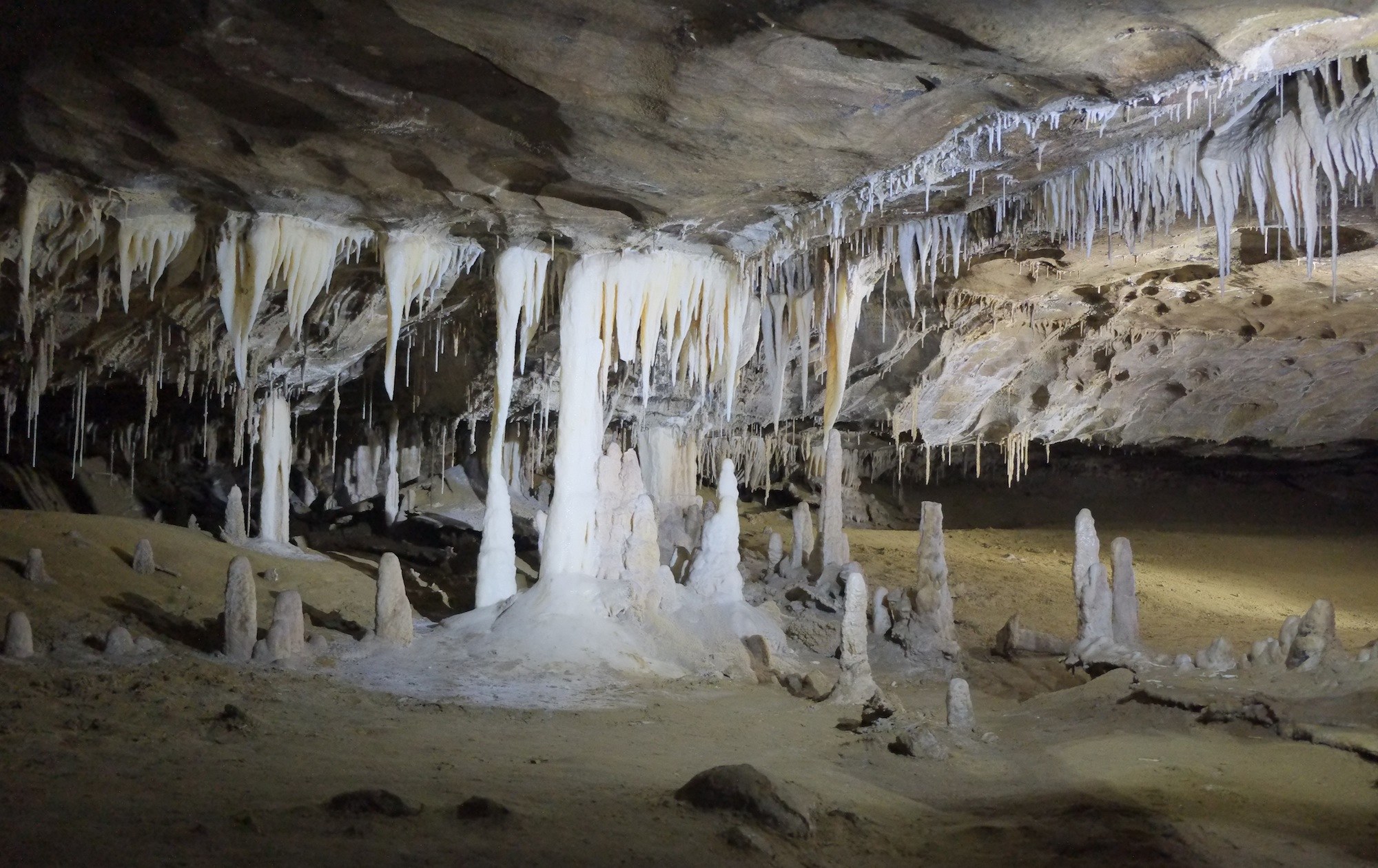
Deposition changes the Earth’s surface because bits of broken rock and soil _____.
a)
stop rivers from flowing.
b)
make rich farmlands.
c)
are dropped in new places.
d)
move very slowly.
79.
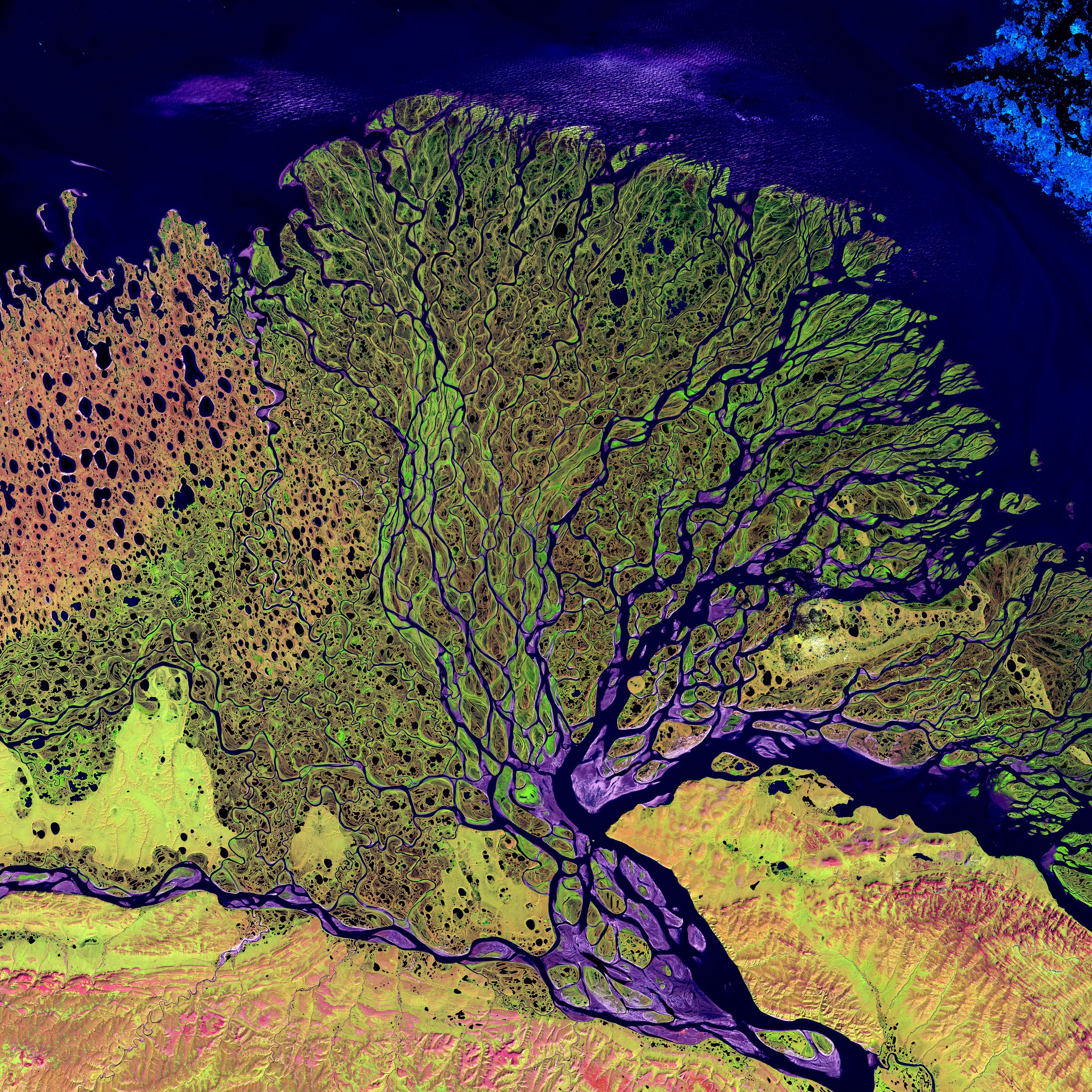
Deltas are mainly created by the process of -
a)
deposition
b)
weathering
c)
waves
d)
erosion
80.
The agent of mechanical weathering in which rock is worn away by the grinding action of other rock particles is called -
a)
erosion
b)
cracking and peeling
c)
abrasion
d)
ice wedging
81.

What is the main cause of weathering and erosion to make a canyons?
a)
wind
b)
ice
c)
glaciers
d)
moving water
82.
Decayed organic material in soil is called______.
a)
Litter
b)
Silt
c)
Humus
d)
Clay
83.
Soil conservation includes all of the following EXCEPT_______.
a)
Desertification
b)
Contour plowing
c)
Terracing
d)
Crop rotation
84.
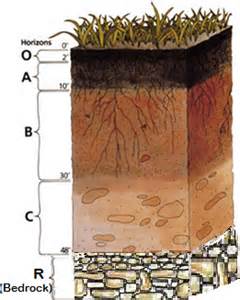
Which horizon is made up of partially weathered rocks?
a)
Horizon A
b)
Horizon B
c)
Horizon C
d)
Horizon D or R
85.
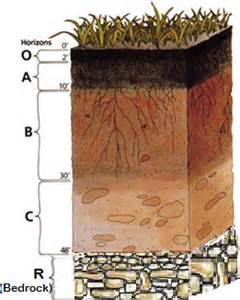
In which horizon is most of the HUMUS?
a)
Horizon A
b)
Horizon B
c)
Horizon C
d)
Horizon D or R
86.

Soil is made of
a)
weathered rocks and minerals
b)
dead plants and animals
c)
air and water
d)
all of the above
87.

_______ is the type of soil used most often with plants and on farms. It is a mixture of clay, sand, and silt.
a)
loam
b)
humus
c)
soil
d)
dirt
88.
Place the following layers in order from top to bottom: bedrock, topsoil, subsoil, organic, parent material.
a)
Organic, Topsoil, Subsoil, Parent Material, Bedrock
b)
Organic, Topsoil, Parent Material, Subsoil, Bedrock
c)
Topsoil, Organic, Subsoil, Parent Material, Bedrock
d)
Topsoil, Organic, Parent Material, Subsoil, Bedrock
89.

In which layer of the soil profile contains a solid layer of rock?
a)
Layer 1
b)
Layer 2
c)
Layer 3
d)
Layer 4
90.

What soil conservation is this?
a)
Cover Crops
b)
Soil Conservation
c)
Crop Rotation
91.

What soil conservation technique is this?
a)
Crop Rotation
b)
Wind Breaks
c)
Contour Plowing
d)
No-Till Farming
92.

Which type of soil conservation strategy is being used in this picture?
a)
windbreakers
b)
contour farming
c)
planting of vegetation
d)
terracing
93.

What is plowing in curved rows that follow the shape of the land?
a)
contour plowing
b)
soil
c)
subsoil
d)
terrace farming
94.

Scientists think that convection currents that move the plates flow in Earth's
a)
Continental crust
b)
oceanic crust
c)
Asthenosphere
d)
Lithosphere
95.
What is the name of the layer that contains the uppermost mantle and crust
a)
Asthenosphere
b)
Mesosphere
c)
Lithosphere
d)
Transosphere
96.
What is the driving force to plate tectonics occurring when warm magma rises and cooler magma sinks?
a)
An oceanic current
b)
A conventional current
c)
A convection current
d)
A magnetic current
97.
Which layer of the Earth is the only liquid layer?
a)
Outer Core
b)
Inner Core
c)
Mantle
d)
Lithosphere
98.
What happens to pressure as we move from the crust to the inner core?
a)
Pressure Decreases
b)
Pressure Increases
c)
Nothing
99.
What happens to temperature as we move from the crust to the inner core?
a)
Decreases
b)
Increases
c)
Nothing
100.
Why is the inner core solid?
a)
because of extreme heat
b)
because of extreme pressure
c)
because I said so
d)
because it's a magnet
101.

What kind of plate boundary is shown here?
a)
divergent
b)
convergent
c)
transform
d)
strike slip
102.
What geologic feature/event you be most likely to find at a transform boundary?
a)
Earthquakes
b)
Volcanoes
c)
Mountains
d)
Rift Valleys
103.
What geologic feature/event would you most likely to find at a divergent boundary between two pieces of oceanic crust?
a)
Rift Valley
b)
Mid-Ocean Ridge
c)
Island Arc
d)
Flat land
104.
What geologic feature/event would you most likely to find at a convergent boundary between two pieces of continental crust?
a)
Volcano
b)
Mountain
c)
Rift
d)
Island Arc
105.
Plate movement is caused by ______________.
a)
the rotation of the Earth
b)
ocean tides
c)
convection currents in the mantle
d)
the moon's gravity
106.
A subduction zone is formed...
a)
when one tectonic plate sinks below another
b)
at every type of convergent plate boundary
c)
at every type of divergent plate boundary
d)
at transform boundaries
107.
Which of the following statements is false?
a)
Oceanic crust is made of basalt
b)
Oceanic crust is thinner than continental crust
c)
Oceanic crust is less dense than continental crust
d)
Oceanic crust is younger than continental crust
108.

This is a picture of glacier scars found in Africa. What are these evidence for?
a)
Africa has always been near the equator
b)
Africa was once in an area of the Earth that had a very cold climate
c)
The continents have not moved
d)
sea floor spreading
109.
What does the theory of continental drift state?
a)
The continents were once joined in a super-continent and have moved over time
b)
Continents are stationary and do not move
c)
The Earth is broken into lithospheric plates that move due to convection currents
d)
none of the above
110.
What evidence did Wegener use to develop his theory of continental drift?
a)
Continents and fossils fitting together/matching-up like puzzle pieces
b)
glacier scars and other climate evidence from temperature
c)
mountain ranges and rocks line up across continents
d)
all of the above
111.
Why did other scientists have a hard time believing Wegeners theory of continental drift?
a)
He could not explain HOW the continents moved
b)
He didn't have enough evidence
c)
His evidence was wrong
d)
He didn't use the right technology to gather data
100 %

