
 Worksheets
HUMAN BODY SYSTEMS 2
Total questions: 120
Worksheet time: 1hrs 16mins
Name
Class
Date
1.
What hormone is responsible for the "fight or flight" response?
a)
Testosterone
b)
Cortisol
c)
Adrenaline
d)
Parathyroid Hormone
2.

Name the system
a)
muscular
b)
endocrine
c)
integumentary
d)
nervous
3.
Which system sends messages to and from the brain?
a)
integumentary
b)
nervous
c)
skeletal
4.
Which of the following gland does NOT belong to the endocrine system?
a)
pituitary
b)
testes
c)
salivary
d)
thyroid
5.
Which system regulates your body temperature?
a)
endocrine
b)
muscular
c)
skeletal
6.
Which system regulates your body temperature?
a)
endocrine
b)
muscular
c)
skeletal
7.
IN which system are the organs called glands?
a)
integumentary
b)
muscular
c)
endocrine
8.
What most likely will cause you to vomit?
a)
spoiled food
b)
cold temperatures
c)
lack of water
d)
too much sunlight
9.
When the body is in fight or flight response due to a stressful stimulus the following may happen.
a)
less blood goes to the brain
b)
sweating increases
c)
heart rate decreases
d)
muscles relax
10.
Where does an internal stimulus occur?
a)
within an organism
b)
from outside the organism
c)
in the blood
d)
in the air
11.
Where does an internal stimulus occur?
a)
within an organism
b)
from outside the organism
c)
in the blood
d)
in the air
12.
In order to maintain balance within their environment, organisms must:
a)
constantly respond to internal and external stimuli
b)
eat every day
c)
avoid competition with other organisms
d)
move around as little as possible
13.

The spinal cord is part of the nervous system.
a)
True
b)
False
14.

What is the function of the nervous system.
a)
provide nutrients for the body.
b)
send and recieve messages
c)
circulate oxygen to sells
d)
remove carbon dioxide from blood
15.
inside the body
a)
internal
b)
external
16.
When a person exercises, temperature changes occur on the body’s surface. Which of the following would be the correct way for the body to maintain homeostasis during intense exercise?
a)
run fast
b)
increased oxygen intake for energy
c)
sweating
d)
sweating and increased oxygen intake for energy
17.
What is the circulatory system made up of?
a)
Food, water
b)
Hands, Feet
c)
Heart, Blood Vessels, Veins, Blood
d)
Sunlight, Plants
18.
What does the circulatory system use to carry nutrients and oxygen?
a)
Blood
b)
Water
c)
Pepsi
d)
Blood Vessels
19.
What is a major organ used in the circulatory system?
a)
Lungs
b)
Kidneys
c)
Liver
d)
Heart
20.
__________ Very small tubes that connect arteries to veins; the smallest blood vessels.
a)
Veins
b)
Capillaries
c)
Arteries
21.
What do the arteries do?
a)
pumps blood to the heart
b)
pumps blood to and from the heart
c)
carry's blood away from the heart
d)
a muscle
22.
What is the main organ in the circulatory system?
a)
vein
b)
lung
c)
heart
d)
aorta
23.
What is the function of the heart?
a)
To pump blood around the body
b)
To remove oxygen from the blood
c)
To allow blood to flow through it
d)
To breath
24.
Veins carry oxygen poor blood back to the heart.
a)
False
b)
True
25.
______________ are the smallest blood vessels.
a)
Arteries
b)
Veins
c)
Capillaries
26.
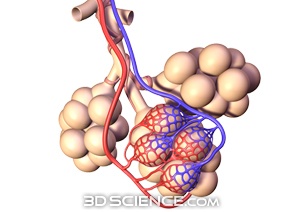
When you breathe, your lungs take in ___ and remove ___.
a)
air/oxygen
b)
oxygen/carbon dioxide
c)
carbon dioxide/waste
d)
waste/air
27.
The circulatory system works with the ___________ system to provide our body with oxygen.
a)
respiratory
b)
digestive
c)
muscular
d)
skeletal
28.
Red blood cells transport __________ around our body.
a)
oxygen
b)
plasma
c)
bones
d)
cardiac muscles
29.
What is the purpose of white blood cells?
a)
carry oxygen
b)
fight pathogens
c)
help the kidneys
d)
identifies blood type
30.
What is a pacemaker?
a)
Electronic device used to help the heart beat regularly
b)
To help kidneys filtrate blood
c)
To measure your blood pressure
31.
What are the main parts of the cardiovascular system?
a)
heart and lungs
b)
blood, blood vessels, and heart
c)
blood, heart, and brain
d)
veins, arteries, lungs, and heart
32.
What do red blood cells do?
a)
Carry oxygen
b)
Fight infection and disease
c)
Produce carbon dioxide
33.
What type of muscle do you find in the heart?
a)
smooth muscle
b)
Skeletal muscle
c)
cardiac muscle
34.
What is the main function of the heart ?
a)
The heart circulates blood and oxygen throughout the body.
b)
The heart is the control centers for all body activities.
c)
The heart gets rid of the wastes in your body.
35.
What function do the kidneys perform?
a)
eliminate carbon dioxide
b)
supply oxygen to body cells
c)
remove urea and excess water
d)
play a role in gas exchange
36.
Which excretory organ eliminates water and some chemical wastes in perspiration?
a)
lungs
b)
skin
c)
liver
d)
kidneys
37.

Using the picture, what is the structure of A?
a)
ureter
b)
kidney
c)
urinary bladder
d)
urethra
38.

What is #3?
a)
Kidney
b)
Ureters
c)
Bladder
d)
Urethra
39.

These organs are responsible for what?
a)
storing urine
b)
storing water
c)
filtering blood
d)
they don't have a particular job
40.
How many kidneys do you have?
a)
1
b)
3
c)
5
d)
2
41.
Which excretory organ eliminates feces?
a)
lungs
b)
large intestine
c)
small intestine
d)
stomach
42.
Which excretory organ eliminates water and some chemical wastes in perspiration?
a)
lungs
b)
skin
c)
liver
d)
kidneys
43.
What systems work with the excretory system that remove waste?
a)
respiratory, endocrine, digestive, & integumentary
b)
respiratory, urinary, digestive, & integumentary
c)
respiratory, circulatory, digestive, & integumentary
d)
respiratory, endocrine, digestive, & circulatory
44.
What is the main function of the urinary system?
a)
Keep your body hydrated
b)
Expelling water from your body
c)
Removing poisons from your body
d)
Removing solid wastes from your body
45.
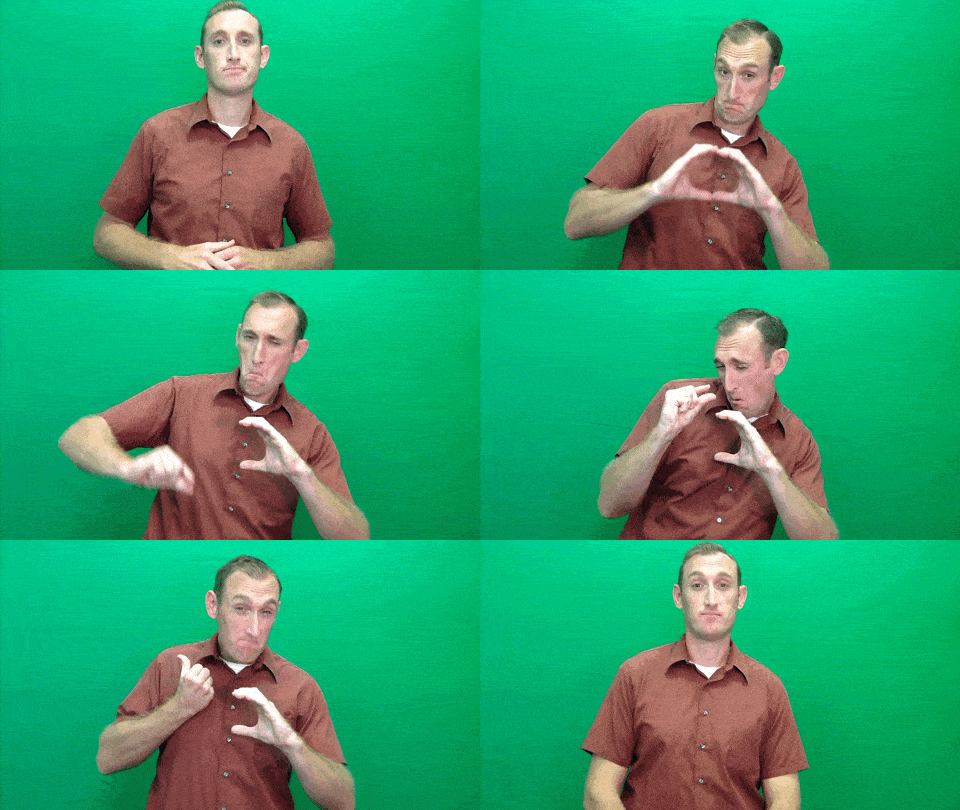
The ___________ is the basic unit of life
a)
organ
b)
cell
c)
atom
d)
tissue
46.
When many organ systems work together it can form...
a)
organ
b)
cells
c)
organ system
d)
organism
47.

This is a example of........
a)
organ system
b)
cells
c)
organ
d)
tissue
48.

This is a example of ........
a)
cell
b)
organ system
c)
organ
d)
tissue
49.
The brain is a part of which organ system?
a)
nervous
b)
skeletal
c)
muscular
d)
digestive
50.
The lungs and the kidneys are examples of
a)
cells
b)
organs
c)
tissues
d)
organ systmes
51.
Which organelle is only found in a plant cell?
a)
nucleus
b)
chloroplast
c)
mitochondria
d)
cell membrane
52.

Directs all cell activities through the DNA located there.
a)
Lysosomes
b)
Nucleus
c)
ribosomes
d)
Mitochondria
53.
What is found in both plant and animal cells but is much larger in plant cells?
a)
Nucleus
b)
Mitochondria
c)
Chloroplast
d)
Vacuole
54.
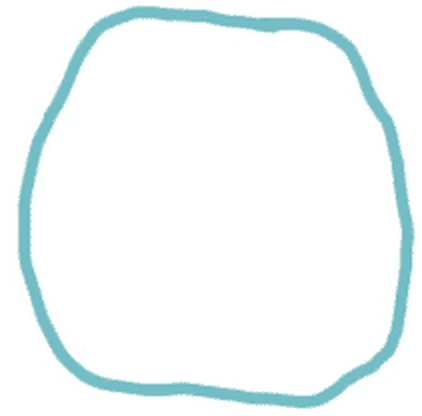
I am the outer most layer of an animal cell. What am I?
a)
cell wall
b)
nucleus
c)
cell membrane
d)
cell skin
55.
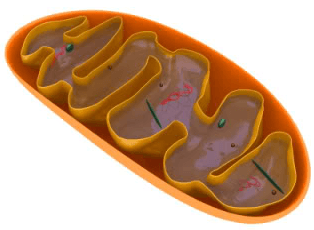
What are tiny organelles that convert glucose into ATP?
a)
Ribosomes
b)
Vesicles
c)
Cytoskeleton
d)
Mitochondria
56.
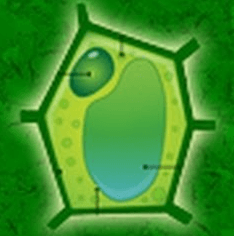
A rigid layer that lies outside the cell's membrane is...
a)
Cytoskeleton
b)
Cilia
c)
Cell Wall
d)
Flagella
57.
What organelle is called the "powerhouse" of a cell?
a)
Endoplasmic Reticulum
b)
Nucleus
c)
Mitochondria
d)
Nucleolus
58.
A group of tissues that work together to perform a similar function is called_____. (Examples include the heart, lungs or stomach)
a)
cells
b)
tissues
c)
organs
d)
organ system
59.
A group of cells that have similar functions? Examples are nervous, epithelial, muscle and connective
a)
cells
b)
tissues
c)
organs
d)
atoms
60.
Organs that work together to perform a related function is called _____________?
a)
cells
b)
tissues
c)
organ system
d)
organs
61.
Cells with a nucleus and membrane-bound organelles are called ____________________.
a)
prokaryotes
b)
eukaryotes
c)
bacteria
d)
protists
62.
This thin layer protects the cell and regulates what substances enter and leave the cell.
a)
cell membrane
b)
cell
c)
cell wall
d)
golgi body
63.
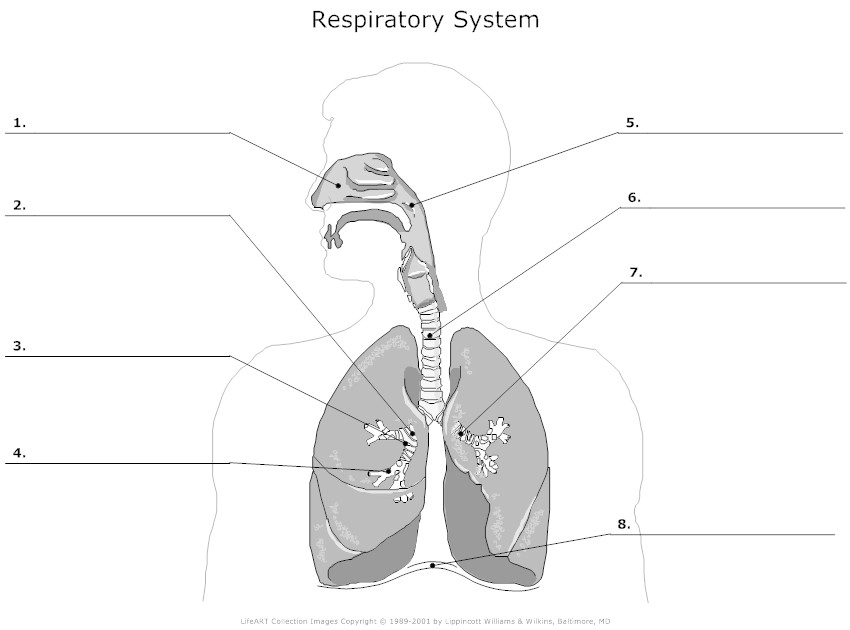
Name the organ label # 6.
a)
alveoli
b)
bronchi
c)
trachea
d)
lungs
64.

Identify this structure.
a)
cell wall
b)
cell membrane
c)
sap vacuole
d)
cytoplasm
65.
Which organelle converts the energy in food into energy for the cell (cellular respiration)?
a)
Ribosomes
b)
Nucleolus
c)
Mitochondria
d)
Golgi Body
66.
What is a sac-like structure used to store water and nutrients? These are much larger in plant cells?
a)
Lysosomes
b)
Mitochondria
c)
Vacuoles
d)
Golgi Body
67.
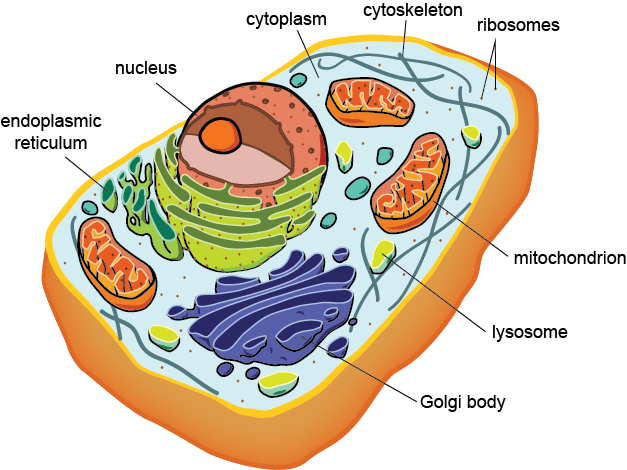
Which of the following statements is not part of the cell theory?
a)
Cells are the basic unit of structure and function in all living things.
b)
All cells are produced from other cells.
c)
Only animal cells are composed of cells.
d)
All living things are composed of cells.
68.

Which statement reflects one of the major components of the cell theory?
a)
All living things are multi-cellular.
b)
Organs are the basic unit of structure and function for all living things.
c)
All cells come from previously existing cells.
d)
Every organism has a reproductive system to ensure survival of the species.
69.

Which organism is made up of cells that have both a cell membrane and a cell wall?
a)
desert mouse
b)
human
c)
maple tree
d)
zebra
70.
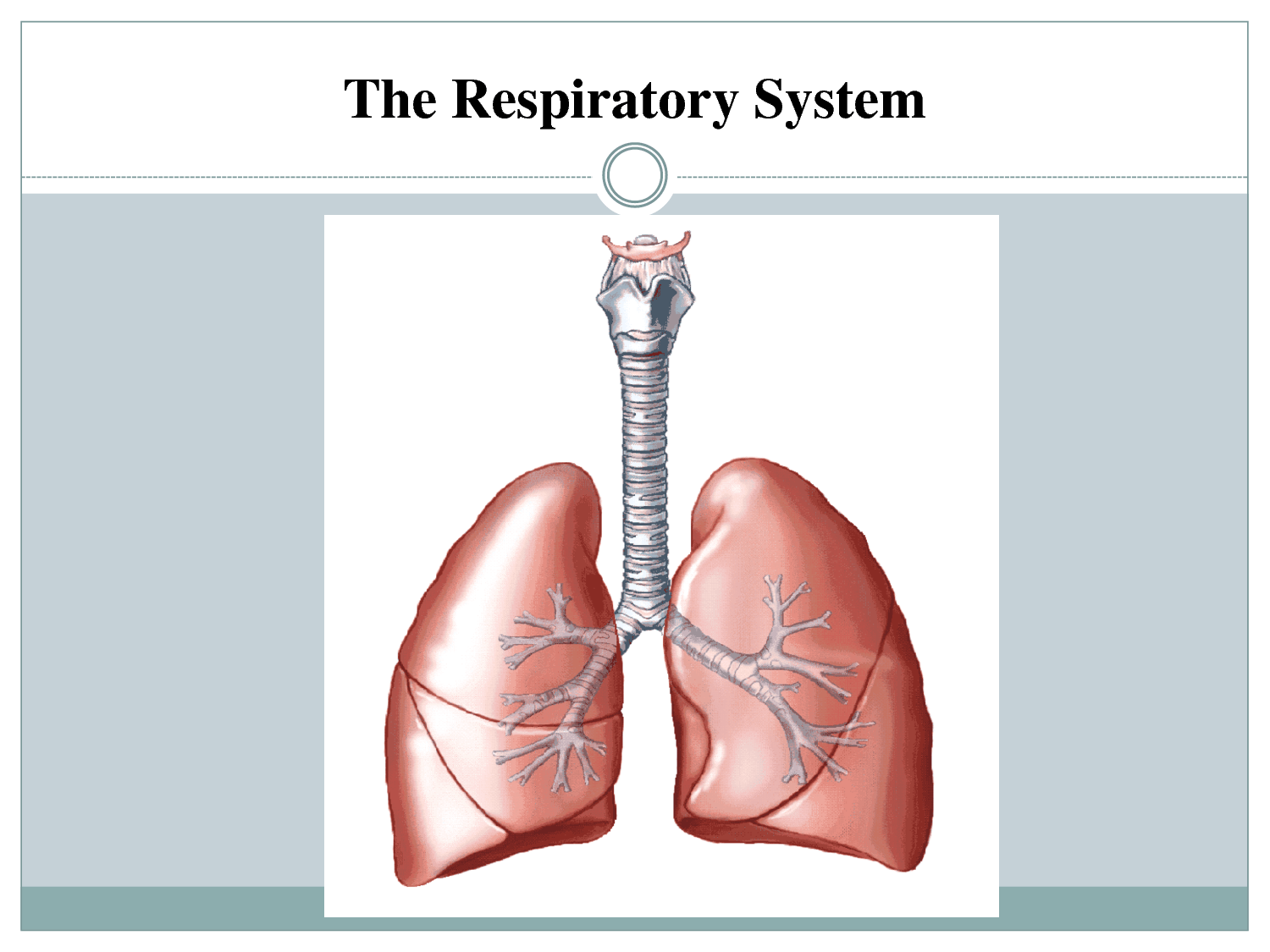
What is the main function of the respiratory system?
a)
to provide oxygen and remove carbon dioxide from the body
b)
to bring oxygen to the body
c)
to break down food and absorb nutrients
d)
to remove oxygen from the body and deliver carbon dioxide
71.
EXHALE!!!
My lungs are __________________ air.
My lungs are __________________ air.
a)
taking in
b)
letting out
72.
Inhale!!!!
Your lungs are ___________ air
Your lungs are ___________ air
a)
taking in
b)
letting out
73.
What are the main organs of gas exchange in the respiratory system?
a)
diapragm
b)
lungs
c)
trachea
d)
bronchi
74.
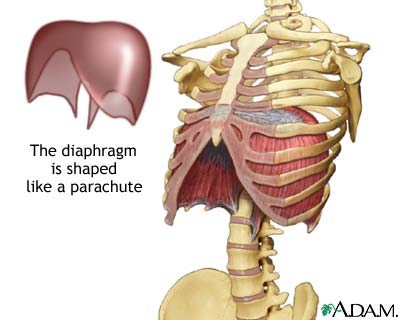
What is function of the dome-shaped diaphragm?
a)
This is where gas exchange happens.
b)
Air passes through the diaphragm on the way to the lungs.
c)
It attaches to the lungs to help in breathing.
d)
It is under the lungs and keeps them from falling down to your stomach.
75.
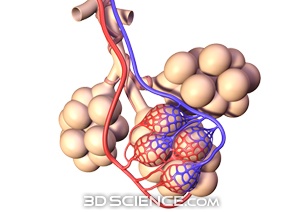
The air sacs that are covered with capillaries where gas exchange takes place
a)
bronchi
b)
lungs
c)
oxygen
d)
alveoli
76.

The highlighted organ is the
a)
liver
b)
large intestine
c)
small intestine
d)
stomach
77.

The red organ is
a)
stomach
b)
small intestine
c)
large intestine
d)
liver
78.
First part of the small instestine
a)
jejunum
b)
duodenum
c)
cecum
79.

This is an image of the
a)
stomach
b)
small intestine
c)
esophagus
d)
large intestine
80.

Number Seven on the illustration shows the . . .
a)
Large intestine
b)
Anus
c)
Small Intestine
d)
Anus
81.

The villi is where the digestive system connects with the __________________ system.
a)
circulatory
b)
respiratory
c)
muscular
d)
skeletal
82.
Chewing food is an example of _____________.
a)
chemical digestion
b)
physical digestion
83.
Food being broken down by enzymes found in saliva is an example of
a)
chemical digestion
b)
physical digestion
84.
Where does absorption of nutrients occur?
a)
Stomach
b)
Large intestines
c)
Cecum
d)
Small intestines
85.
In order to maintain balance within their environment, organisms must:
a)
constantly respond to internal and external stimuli
b)
eat every day
c)
avoid competition with other organisms
d)
move around as little as possible
86.
When on a beach vacation, Consuela relaxed and laid out in the sun for hours. As a result, she received a sunburn that covered most of her skin. Would this response come from an internal or external stimulus?
a)
Internal- her skin was burned at a cellular level
b)
Internal- her skin is a part of her body
c)
External- the stimulus was caused by the beach which is outside
d)
External- the stimulus was caused by the sun which is outside
87.
Where does an internal stimulus occur?
a)
within an organism
b)
from outside the organism
c)
in the blood
d)
in the air
88.
Which of the following is a stimulus?
a)
a red light
b)
a fire alarm
c)
a change in air pressure
d)
all of the above
89.
The female sex cell is the ______.
a)
egg
b)
sperm
c)
white blood cell
d)
red blood cell
90.
The male sex cells is the _______.
a)
egg
b)
sperm
c)
neuron
d)
white blood cell
91.
What is the function of the reproductive system?
a)
To make clones
b)
To make a new organism
92.
The chemical product of an endocrine gland is called a(n)
a)
chromosome
b)
horomone
c)
target cell
d)
hypothalamus
93.
What is the role of the nervous system?
a)
to transport oxygen
b)
to protect organs
c)
to send and receive chemical messages
d)
to gather and respond to information
94.
Which gland secretes insulin?
a)
Pancreas
b)
Ovaries
c)
Parathyroid
d)
Thymus
95.
Chemical product of an Endocrine Gland.
a)
Homeostasis
b)
Hormone
c)
mitosis
d)
meiosis
96.
Which of the following is a part of the nervous system?
a)
lungs
b)
the heart
c)
the spinal cord
d)
skin
97.
What is the function of the nervous system.
a)
provide nutrients for the body.
b)
send and recieve messages
c)
circulate oxygen to sells
d)
remove carbon dioxide from blood
98.
The spinal cord is part of the nervous system.
a)
True
b)
False
99.
The _________ __________ forms the outside border of the cell.
a)
cell membrane
b)
epithelial tissue
c)
organ system
d)
connective tissue
100.
The ____________ directs the cell's activities and holds information that controls a cell's function.
a)
nucleus
b)
tissue
c)
organ
d)
cell
101.
The _______________________ consists of blood, blood vessels, and the heart.
a)
respiratory system
b)
circulatory system
c)
urinary system
102.
_______________ cells carry oxygen to body cells and carbon dioxide away from body cells.
a)
Red blood
b)
White blood
103.
________________ cells fight germs that cause infection and illness.
a)
Red blood
b)
White blood
104.
The ____________ is a muscular organ that pumps blood to the body through blood vessels.
a)
vein
b)
artery
c)
heart
105.
The bone marrow makes
_______________________ cells.
_______________________ cells.
a)
blood
b)
cancer
c)
large
d)
normal
106.

This is a picture of what? (choose the answer that is most complete)
a)
robot
b)
skeleton
c)
ulna
d)
vertebrate
107.
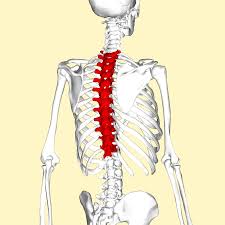
The bones in your back are made up of what?
a)
fingers
b)
phalanges
c)
vertebrate
d)
toes
108.

What is the place where two bones meet?
a)
hinge
b)
bone
c)
spot
d)
joint
109.

What is the name for the connector that attaches muscle to bone?
a)
ligament
b)
tendon
c)
patella
d)
string
110.

What is the name for the connector that attaches bone to bone?
a)
ligament
b)
tendon
c)
patella
d)
string
111.
Ligaments connect:
a)
Bone to bone
b)
Muscle to bone
c)
Joint to joint
d)
Bone to joint
112.
Which of the following is not a function of bones?
a)
Protection
b)
Blood cell formation
c)
Storage
d)
Absorption
113.

What do the bones create?
a)
white blood cells
b)
platlets
c)
red blood cells
d)
flying turkeys
114.
How many types of Muscles are there in the body?
a)
2
b)
4
c)
3
d)
1
115.

Which type of Muscles are under are conscious control? This means we instruct them to perform
a)
Skeletal/Voluntary Muscle
b)
Smooth/Involentary
c)
Cardiac Muscle
d)
Rough Muscle
116.

These muscles work automatically without us doing any work.
a)
Skeletal/ Voluntary
b)
Smooth/Involuntary
c)
Cardiac
d)
Rough
117.
Cardiac muscle is only found where?
a)
Lungs
b)
Heart
c)
Kidney's
d)
Liver
118.
This muscle is an involuntary muscle and moves on it's own.
a)
Heart
b)
Bicep
c)
Hamstring
d)
Lats
119.
Muscles give us shape and help us maintain good posture?
a)
True
b)
False
120.
Name a pair of muscles that work together.
a)
Quads and Gastronomics
b)
Glutes and Hamstrings
c)
Abs and Lats
d)
Triceps and Biceps
100 %

