
 Worksheets
7th First Semester Final-Master
Total questions: 62
Worksheet time: 47mins
Name
Class
Date
1.
1. Any sample of matter has mass and takes up space. The main reason for this is because:
a)
All matter is heavy
b)
Matter can be a gas
c)
All matter is made up of tiny particles that have mass and take up space
d)
The Earth is made of matter
2.
2. Water drops stay together on wax paper and they don’t break apart easily. This is mainly because...
a)
Water molecules are really small.
b)
Water molecules are in constant motion.
c)
Water molecules are polar and are thus, attracted to one another.
d)
Water molecules are wet.
3.
When you bring two drops of water near each other and allow them to touch, they combine immediately and become one drop. This is mainly because:
a)
Water molecules are made of atoms
b)
Water molecules are attracted to each other.
c)
Water is a liquid
d)
Water is magnetic
4.
If you put food coloring in room temperature water, the coloring spreads throughout the water. The water causes the color to spread mainly because:
a)
Water molecules are warm
b)
Water molecules are in constant motion
c)
Water is more dense than food coloring
d)
Food coloring molecules are smaller than water molecules
5.
Food coloring spreads out faster in hot water than in cold water. This is mainly because:
a)
The molecules in hot water move quicker than those in cold water
b)
Molecules in hot water are larger than those in cold water
c)
Food coloring molecules are larger than water molecules
d)
Hot water is more dense than cold water
6.
When a thermometer is heated, the red liquid inside the thermometer moves up. This is mainly because:
a)
The red liquid inside is very thin
b)
The molecules of the liquid move faster and get a little further apart
c)
Hot liquids are more dense than cold liquids
d)
The glass of a thermometer is a conductor of heat
7.
When a thermometer is cooled, the red liquid inside the thermometer moves down. This is mainly because:
a)
Cold liquids rise because they are less dense
b)
The molecules are cold.
c)
The molecules that make up the liquid move slower and get closer together
d)
The liquid inside the thermometer is viscous
8.
When you heat a sample of a solid, the particles that make up the solid:
a)
They get bigger
b)
They lose mass
c)
Move faster
d)
Slow down
9.
Fill in the blank:
The three common states of matter are ______________, ________________, and ________________.
The three common states of matter are ______________, ________________, and ________________.
a)
Super fluid, gas, and liquid
b)
Plasma, Solid, and gas
c)
Gas, super fluid, and plasma
d)
Solid, Liquid, and Gas
10.
True or false:
Even when measuring the same temperature, the liquids inside a thermometer can rise to different heights depending on the liquid inside them.
For example, a thermometer filled with alcohol might rise to a different height than one filled with mercury.
Even when measuring the same temperature, the liquids inside a thermometer can rise to different heights depending on the liquid inside them.
For example, a thermometer filled with alcohol might rise to a different height than one filled with mercury.
a)
True
b)
False
11.
The molecules inside a thermometer increase speed when the thermometer is _____________.
a)
Heated
b)
Cooled
12.
The density of an object can be calculated by...
a)
Mass divided by volume, D = m/v
b)
The volume divided by the mass, D = v/m
c)
Finding the weight of the object
d)
Determining the size of the object
13.
If two objects have the same volume but one has a greater mass, the one with greater mass
a)
Will have a lower density
b)
Will have a higher density
c)
Will float
d)
Will sink
14.
If two objects have the same volume but one is made up of smaller and heavier atoms, the one with small heavy atoms will
a)
Be larger than the other
b)
Be less dense than the other
c)
Be more dense than the other
d)
Float in water
15.
If you cut a wooden block in half, each half would have
a)
Half the density of the original piece
b)
Twice the density of the original piece
c)
The same density as the original piece
d)
No density at all
16.
Which of the following do you do in the water displacement method for finding volume
a)
You subtract the final volume from the initial volume
b)
You subtract final volume from the initial volume
c)
You add the initial and final volumes
d)
You divide the volume by 2
17.
If two objects have the same mass but different volumes
a)
The one with the larger volume has a lower density
b)
They must have the same density
c)
The one with the larger volume has the higher density
d)
The one with the larger volume is twice as dense
18.
If the density of water is 1 gram/cm3, this means that the mass of 100 cm3 of water should be
a)
100g
b)
50g
c)
1,000g
d)
1g
19.
If the density of water is 1 gram/cm3, this means that the mass of 100 cm3 of water should be
a)
100 g
b)
50g
c)
1,000g
d)
1g
20.
Density is a characteristic property of a substance. This means that the density of water
a)
Changes based on the volume
b)
Stays the same regardless of the volume
c)
Is greater for greater masses of water
d)
Is less for a smaller mass of water
21.
To find the mass of water in a graduated cylinder you could...
a)
Take the total mass of the water and graduated cylinder and subtract the mass of the water
b)
Take the total mass of the water and graduated cylinder and subtract the mass of the graduated cylinder
c)
Add the mass of the water to the mass of the graduated cylinder
d)
Take the total mass of the water and graduated cylinder and divide the mass by two
22.
Jack has a rock. The rock has a mass of 14g and a volume of 2cm3. What is the density of the rock?
a)
7 mL
b)
7 g/cm3
c)
28 g/cm3
d)
1/7 g/cm3
23.

What is the volume of Object X?
a)
10.0 cm3
b)
15.0 cm3
c)
20.0 cm3
d)
25.0 cm3
24.
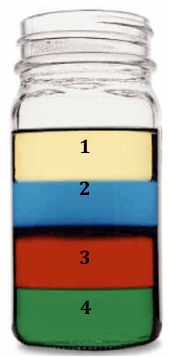
Put the liquids in order from most dense to least dense?
a)
4, 3, 2, 1
b)
1, 2, 3, 4
c)
3, 4, 2, 1,
d)
4, 3, 1, 2
25.

Which box has a higher density?
a)
Box A
b)
Box B
c)
cannot be determined
d)
they are the same
26.
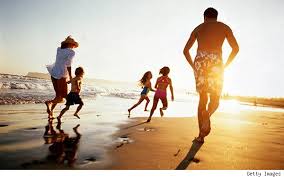
The sun shines down on this family as the play on the beach.
a)
conduction
b)
convection
c)
radiation
27.

A group of friends gather around a fire to stay warm.
a)
conduction
b)
convection
c)
radiation
28.

Walking on the warm sand sand with your bare feet.
a)
conduction
b)
convection
c)
radiation
29.

Which direction will the heat flow while this person holds a hot cup of tea?
a)
from the cup to her hand
b)
from her hand to the cup
c)
no heat is transferred
30.
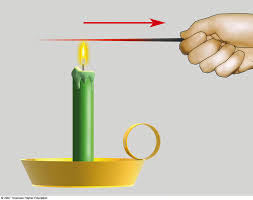
The candle will slowly heat the metal and transfer the heat directly to the mans hand.
a)
conduction
b)
convection
c)
radiation
31.

The warm air from this heater creates a current when the warm air rises and the cold air sinks.
a)
conduction
b)
convection
c)
radiation
32.

In this demonstration, what causes the balloon to expand?
a)
The heat from the room causes the balloon to expand.
b)
The heat from the hot plate heats the glass and the air inside it expands.
c)
The balloon spontaneously blows up to try to escape the bottle.
d)
I don't know.
33.

An atom becomes _________ when it gains electrons.
a)
Positive
b)
Negative
c)
Neutral
d)
Invinsible
34.

An atom becomes _______ when it loses electrons.
a)
Positive
b)
Negative
c)
Neutral
d)
Invinsible
35.

Make sure you get enough Potassium in your diet!
a)
Huh?
b)
K
c)
I <3 bananas
d)
Sure
36.

Two like charges:
a)
neutralize each other.
b)
repel each other.
c)
must be neutrons.
d)
attract each other.
37.

Which of these is the electron?
a)
A
b)
B
c)
C
38.

What type of charge do these balloons have?
a)
like charges
b)
opposite charges
39.

Which type of charges do these balloons have?
a)
like charges
b)
opposite charges
40.

This photo shows water molecules in which state of matter?
a)
Gas
b)
Liquid
c)
Solid
41.

This photos shows water molecules in which state of matter...
a)
Solid
b)
Liquid
c)
Gas
42.

This photo shows water molecules in which state of matter?
a)
Liquid
b)
Solid
c)
Gas
43.
Water is polar because...
a)
The unequal sharing of electrons gives the water molecule a slight negative charge near its oxygen atom and a slight positive charge near its hydrogen atoms.
b)
The molecule has two poles, at which the it is colder than other regions of the molecule.
c)
The unequal sharing of electrons gives the water molecule a slight negative charge near its hydrogen atoms and a slight positive charge near its oxygen atom.
d)
The water molecule is neutral.
44.
What does the principle of conservation of mass mean?
a)
The total mass of the reactants is more than the products
b)
Matter is not created or destroyed
c)
The total mass of the reactants is less than the products
45.
The total amount of matter (atoms) before and after a chemical reaction (change), remains the same.
a)
True
b)
False
46.

Is burning wood a chemical or physical change?
a)
chemical
b)
physical
47.
Which is a physical change?
a)
burning match
b)
vinegar in baking soda
c)
melting butter
d)
cooking an egg
48.

a copper penny turning greenish after a few years.
a)
Chemical Change
b)
Physical Change
49.

Green bananas turning yellow on their own as they ripen.
a)
Chemical Change
b)
Physical Change
50.

The smell your dog makes after eating to much people food.
a)
Chemical Change
b)
Physical Change
51.

Baking a cake by mixing flour, sugar, chocolate powder, eggs, and milk, and then heating them in the oven.
a)
Chemical Change
b)
Physical Change
52.

What is the evidence of the chemical change seen here?
a)
Color change
b)
Light produced
c)
state change
d)
mixture
53.

glass breaking
a)
physical change
b)
chemical change
54.

a rusting bicycle
a)
physical change
b)
chemical change
55.

mowing the lawn
a)
physical change
b)
chemical change
56.

fireworks exploding
a)
physical change
b)
chemical change
57.

frying an egg
a)
physical change
b)
chemical change
58.

a)
physical change
b)
chemical change
59.

freezing chocolate covered bananas
a)
physical change
b)
chemical change
60.

corroding metal
a)
physical change
b)
chemical change
61.

separating sand and gravel
a)
physical change
b)
chemical change
62.

melting ice cream
a)
physical change
b)
chemical change
100 %

