
 Worksheets
Solar System Class Review
Total questions: 85
Worksheet time: 39mins
Name
Class
Date
1.
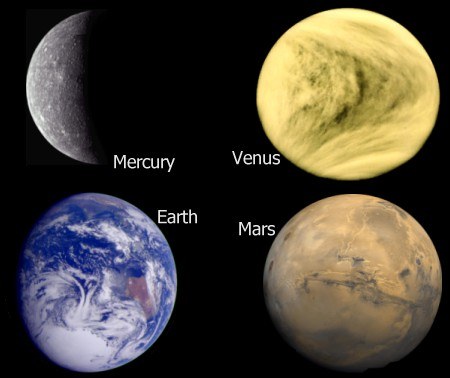
Earth and the other planets closest to the Sun are made mostly of _______
a)
gas
b)
metal
c)
water
d)
rock
2.

The moon is a natural ______ of Earth.
a)
comet
b)
axis
c)
satellite
d)
space probe
3.

Earth's ________ on its axis causes day and night.
a)
rotation
b)
revolution
c)
phase
d)
comet
4.

The __________ has planets, moons, comets, and asteroids.
a)
solar system
b)
earth
c)
rotation
d)
United States
5.
One of the main differences between the outer and inner planets is __________.
a)
The inner planets all have water
b)
the inner planets are much bigger than the outer planets
c)
the outer planets are gas planets
d)
the outer planets have rings, and the inner planets don't
6.
Which outer planets have rings?
a)
Just Saturn
b)
Saturn and Jupiter
c)
Jupiter, Neptune, and Saturn
d)
all 4 of them
7.
Which is the largest object in our solar system?
a)
Sun
b)
Jupiter
c)
Earth
d)
Pluto
8.
Which planet is closest to the sun?
a)
Uranus
b)
Mercury
c)
Neptune
d)
Earth
9.
Which planet is third from the sun?
a)
Mars
b)
Pluto
c)
Venus
d)
Earth
10.
Which planet is fifth from the sun?
a)
Saturn
b)
Jupiter
c)
Mars
d)
Earth
11.
Which planet is seventh from the sun?
a)
Saturn
b)
Earth
c)
Venus
d)
Uranus
12.
Which planet is farthest from the sun?
a)
Neptune
b)
Pluto
c)
Earth
d)
Uranus
13.
Which planet is the largest in the solar
system?
system?
a)
Earth
b)
Venus
c)
Saturn
d)
Jupiter
14.
Which planet is known as the Red Planet?
a)
Jupiter
b)
Mars
c)
Earth
d)
Neptune
15.
What are Saturn's rings made of?
a)
light
b)
slime
c)
crystals
d)
ice and rocks
16.
How many days does it take the Earth to revolve around the Sun?
a)
30 days
b)
365 days
c)
100 days
d)
40 days
17.
A ball of ice and dust with a tail of gas and dust pointing away from the sun.
a)
Asteroid
b)
Comet
c)
Moon
d)
Meteor
18.
Which planet is the hottest?
a)
Mercury
b)
Uranus
c)
Venus
d)
Saturn
19.
Which planet is the windiest?
a)
Uranus
b)
Saturn
c)
Venus
d)
Neptune
20.
Which planet is the coldest?
a)
Neptune
b)
Saturn
c)
Uranus
d)
Earth
21.
Asteroids are composed of _____.
a)
Rocky metallic objects
b)
Ice
c)
Garbage
d)
Dust
22.

Where is the asteroid belt located?
a)
Between the Earth and Moon
b)
Between the orbits of Mars and Jupiter
c)
Between Earth and Mars
d)
Between the Sun and Mercury
23.

What shape are the orbits of most comets?
a)
Circle
b)
Square
c)
Ellipse
d)
Triangle
24.

Which term describes a bright streak of light that results when a meteoroid burns up in the Earth's atmosphere?
a)
Asteroid
b)
Meteoroid
c)
Meteorite
d)
Meteor
25.

Which term describes a meteoroid that reaches the Earth's surface without burning up completely?
a)
Asteroid
b)
Meteoroid
c)
Meteorite
d)
Meteor
26.

What term describes a small body of ice, rock, and comic dust loosely packed together?
a)
Meteorite
b)
Asteroid
c)
Comet
d)
Meteoroid
27.
What forms when a meteoroid hits Earth's atmosphere?
a)
comet
b)
meteors
c)
meteorites
d)
sun
28.
Is Pluto a planet?
a)
Yes
b)
No
c)
Probably not
29.
A small object that appears as a streak of light as it enters earth's atmosphere.
a)
Asteroid
b)
Comet
c)
Moon
d)
Meteor
30.

What type of galaxy is this?
a)
Spiral
b)
Elliptical
c)
Irregular
d)
Irrational
31.
A light year is...
a)
The speed light travels
b)
How long it takes light to get to you from the sun
c)
The distance light can travel in a year
d)
How many years it takes light to be emitted
32.
What planet is closest to the sun?
a)
Saturn
b)
Mercury
c)
Mars
d)
Neptune
33.
The color of a star is determined most by its
a)
temperature
b)
distance from Earth
c)
size
d)
mass
34.
Stars are categorized by their variety in size. Which category does the sun belong?
a)
Supergiant stars
b)
Giant stars
c)
dwarf stars
d)
main sequence stars
35.
The light from the Sun reaches the Earth in Approximately eight minutes. Which best explains why light from other stars takes years to reach Earth?
a)
They are smaller than the Sun
b)
They are much farther away than the Sun
c)
they produce more heat than the Sun
d)
They give off less light than the Sun
36.
All of the inner planets
a)
are gas giants
b)
are large with many moons
c)
have an atmosphere and liquid water
d)
are rocky and dense
37.
Earth is located between which two planets?
a)
mars and venus
b)
saturn and mars
c)
venus and mercury
d)
mercury and mars
38.
Which planet is considered a sister planet to Earth because of its size?
a)
neptune
b)
mercury
c)
uranus
d)
venus
39.

According to this Hertzsprung-Russell Diagram which stars are brightest?
a)
Purple
b)
Red
c)
Blue
d)
Yellow
40.
Black Holes are thought to be remnants of ______________ explosion.
a)
Death Star
b)
The Big Bang Theory
c)
Supernova
d)
Planetary Nebula
41.

Hertzsprung-Russell Diagram shows the correct order of decreasing surface temp for stars is?
a)
Red, Yellow, White, Blue
b)
Red, Yellow, Red, Yellow
c)
Blue, White, Yellow, Red
d)
Blue, Red, White, Yellow
42.
The shape of our Milky Way galaxy can be classified as ____________.
a)
Spiral
b)
Elliptical
c)
Irregular
d)
French
43.
Huge clouds of dust and gas are called
a)
Star
b)
Nebulae
c)
Neutron Star
d)
Comets
44.

Which stars have the highest surface temperature?
a)
Yellow
b)
Red
c)
Blue
d)
Orange
45.
The stars with the lowest temperature are ________________.
a)
Orange
b)
Red
c)
Blue
d)
White
46.
Luminosity measures a star's _____________________.
a)
Color
b)
Temperature
c)
Brightness
47.
Space and all the matter and energy in it.
a)
Space
b)
Solar System
c)
Universe
d)
Sun
48.
The sun, all the planets and other bodies that travel around it.
a)
Universe
b)
Galaxy
c)
Star
d)
Solar System
49.
A large celestial body that is composed of gas and that emits light.
a)
star
b)
black hole
c)
element
d)
big bang
50.
What is the correct way to write the scientific name correctly?
a)
Genus species
b)
genus Species
c)
Genus Species
d)
genus species
51.
Are living things biotic or abiotic?
a)
Biotic
b)
Abiotic
52.
Difference that occur among the offspring of a particular species.
a)
Variation
b)
Genetics
c)
Population
d)
Classification
53.
The science of the classification of organisms.
a)
Taxonomic System
b)
Taxonomy
c)
Classification
d)
Variations
54.
Which 2 organisms would be able to reproduce and produce fertile offspring?
a)
2 organisms in the same class
b)
2 organisms in the same family
c)
2 organisms in the same genus
d)
2 organisms in the same species
55.
Which 2 organisms have the fewest characteristics in common?
a)
2 organisms in the same kingdom
b)
2 organisms in the same genus
c)
2 organisms in the same species
d)
2 organisms in the same family
56.
Tool used by a taxonomist to identify an unknown organism is a:
a)
dichotomous key
b)
binomial nomenclature
c)
scientific name
d)
binomial key
57.

The 8 levels of classification, most broad to most specific.
a)
Domain, Genus, Family, Order, Class, Phylum, Kingdom, Species
b)
Domain, Species, Kingdom, Genus, Phylum, Family, Class, Order
c)
Domain, Kingdom, Phylum, Class, Order, Family, Genus, Species
d)
Order, Kingdom, Species, Domain, Phylum, Family, Class, Genus
58.

A dichotomous key for trees is provided. Hikers found a tree that has large brown cones and single sharp needles. What species of tree have the hikers found?
a)
Juniper
b)
Pine
c)
Spruce
d)
Fir
59.

A student discovers an arachnid with a segmented abdomen, long legs, and a tail with no stinger. The student uses the dichotomous key below to identify it. Which arachnid has the student found?
a)
Whip Scorpion
b)
Wind Scorpion
c)
Daddy long legs
d)
Scorpion
60.
Which of the following is not true when comparing scientific and common names?
a)
Scientific names vary from place to place.
b)
Common names can vary from place to place.
c)
Scientific names are written in Latin.
d)
Common names can inaccurately describe the organism and be confusing.
61.
Who first proposed binomial nomenclature as a way of classifying organisms?
a)
Carolus Linnaeus
b)
Aristotle
c)
Charles Darwin
d)
Louis Pasteur
62.

An illustration and a dichotomous key are given. What is the correct classification for this organism?
a)
Class Insecta
b)
Order Amblygygi
c)
Order Araneae
d)
Order Scorpiones
63.
The taxon with the largest amount of organisms grouped together...
a)
Species
b)
Phylum
c)
Kingdom
d)
Domain
64.

What color is the hottest color of star?
a)
Blue
b)
red
c)
purple
d)
Black
65.

What is the color of the coolest stars?
a)
blue
b)
Yellow
c)
Red
d)
Orange
66.
Our galaxy is called the
a)
Earth Nebula
b)
The Hubble Galaxy
c)
The Milky Way
d)
The Snickers
67.

As a whole, Giants are considered hotter than White Dwarfs.
a)
True
b)
False
68.
H-R diagrams measure both a star's ______ and _______.
a)
mass and color
b)
luminosity and surface tempurature
c)
brightness and composition
d)
location and type
69.
A huge ball of very hot gas is a
a)
galaxy
b)
comet
c)
planet
d)
star
70.

Put the stars in order from hottest to coolest.
a)
Blue, Red, White, Yellow, Orange,
b)
Red, White, Yellow, Orange, Blue
c)
Blue, White, Yellow, Red, Orange
d)
Blue, White, Yellow, Orange, Red
71.
Nuclear fusion is...
a)
When two or more elements join together to make a heavier element.
b)
When two elements separate and form heavier elements.
c)
When two elements disappear
d)
that thing that happened to the Hulk
72.
The process that all stars perform is called?
a)
nuclear fission
b)
nuclear fusion
c)
mass expulsion
d)
star tectonic motion
73.
After the Nebula stage is the
a)
Protostar stage
b)
Pickle Star Stage
c)
Prototransformer stage
d)
Blackhole stage
74.
The Main Sequence
a)
is the longest stage of a star's life cycle
b)
is the shortest stage of a star's life cycle
c)
is not a part of the star's life cycle
d)
is only part of the sun's life cycle
75.
Our sun is currently in this star stage
a)
Protostar
b)
Nebula
c)
Main Sequence
d)
I have literally no idea
76.

The life cycle of a star begins with which stage?
a)
Nebula
b)
Protostar
c)
Blackhole
d)
Main Sequence
77.
Which is NOT a type of galaxy?
a)
spiral
b)
irregular
c)
spherical
d)
elliptical
78.

What type of galaxy is shown here?
a)
spiral
b)
elliptical
c)
barred spiral
d)
irregular
79.

What type of galaxy is shown here?
a)
sprial
b)
elliptical
c)
barred spiral
d)
irregular
80.
What is the MOST IMPORTANT factor that determines a star's life cycle path?
a)
density
b)
mass
c)
temperature
d)
color
81.

What is a Nebula?
a)
star cemetery
b)
star explosion
c)
star hospital
d)
star birthplace
82.

What is the first stage in the life cycle of a star?
a)
protostar
b)
white dwarf
c)
neutron star
d)
main sequence
83.
Which is the next phase for our sun?
a)
supergiant
b)
neutron star
c)
giant
d)
white dwarf
84.
All cells are produced ____________.
a)
from nothing
b)
from other cells
85.
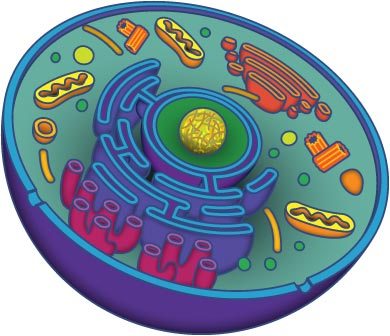
All living things are made up of...
a)
cells
b)
cell tissues
c)
organ
d)
organ systems
100 %

