
 Worksheets
Unit 4: Rocks & Minerals Review
Total questions: 46
Worksheet time: 43mins
Name
Class
Date
1.
Why is coal not a mineral?
a)
It's not a solid
b)
It is man-made
c)
It is not inorganic
d)
It is made of carbon
2.
Diamond has a hardness of ___ on Mohs Hardness Scale.
a)
1
b)
5
c)
8
d)
10
3.
Dull, silky, waxy, pearly, and earthy are terms that best describe which property of minerals?
a)
luster
b)
color
c)
streak
d)
cleavage
4.

By definition, a mineral has which of the following characteristic(s)?
a)
definite chemical composition
b)
crystal structure
c)
naturally occuring
d)
all of the above
5.
How do you test the hardness of a mineral?
a)
Throw it against a wall
b)
Step on it
c)
Scratch Test
d)
Kick it until it breaks
6.
A naturally occurring, inorganic solid with a crystal structure and a definite chemical composition is referring to
a)
density
b)
streak
c)
mineral
d)
non silicate mineral
7.

Which mineral property is being shown here?
a)
luster
b)
hardness
c)
cleavage
d)
streak
8.
Fluorescence is
a)
an uneven, jagged, or irregular break of a mineral
b)
a special property of minerals that causes some of them to glow
c)
color of the powder of a mineral
d)
a mineral that contains oxygen
9.
Which of the following is NOT true of minerals?
a)
They are liquids
b)
They are formed in nature
c)
They are inorganic
d)
They have crystalline structure
10.
The definition of a mineral does NOT include:
a)
crystalline structure
b)
solid
c)
organic
d)
natural
11.

A mineral breaks into pieces like are shown in the picture. How would you describe its breakage?
a)
Fracture
b)
Cleavage
c)
Glassy
d)
Waxy
12.

Which indicator would not be good as the only indicator when identifying a mineral?
a)
Color
b)
Breaking Pattern
c)
Specific Gravity
d)
Hardness
13.

Which mineral would scratch calcite but not scratch apatite?
a)
fluorite
b)
gypsum
c)
talc
d)
topaz
14.

Which minerals would all scratch apatite?
a)
diamond, topaz, quartz
b)
quartz, calcite, gypsum
c)
fluorite, talc, calcite
d)
diamond, fluorite, corundum
15.
A scientist made an object in a lab that has a crystal structure and was solid. Why is the object not considered a mineral?
a)
It is a solid
b)
It is man-made
c)
It is inorganic
d)
It has a crystalline structure
16.
What is the relationship between a rock and a mineral?
a)
Rocks are made up of minerals.
b)
Minerals are made up of rocks.
c)
Rocks are on the Earth's surface. Minerals are found underground.
d)
Rocks and minerals are different names for the same thing.
17.

Which mineral is number 6 on the hardness scale?
a)
Conrundum
b)
Topaz
c)
Quartz
d)
Orthoclase
18.
Which type of rock results from melting and cooling of magma?
a)
Igneous
b)
Metamorphic
c)
Sedimentary
d)
Extrusive
19.
Which type of rock forms from extreme heat and pressure?
a)
Igneous
b)
Sedimentary
c)
Organic
d)
Metamorphic
20.
Wind, water, and ice breaking down rock is called
a)
Erosion
b)
Deposition
c)
Compaction
d)
Weathering
21.
True/False: Igneous rocks can only turn into metamorphic rocks.
a)
True
b)
False
22.
The process in which dissolved minerals crystallize and glue sediment together.
a)
compaction
b)
deposition
c)
organic rock
d)
cementation
23.

When sediments are pressed together tightly, this is called ____________.
a)
Compaction
b)
Cementation
c)
Weathering
d)
Erosion
24.
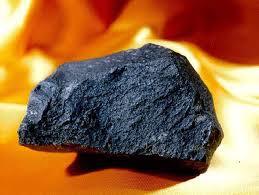
This rock was found near the mouth of a volcano. What type of rock is this?
a)
Sedimentary
b)
Igneous
c)
Metamorphic
25.
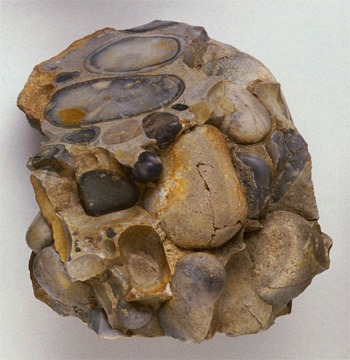
This rock was formed by smaller pieces of rock that settled at the bottom of a lake millions of years ago. What type of rock is this?
a)
Sedimentary
b)
Igneous
c)
Metamorphic
26.
What are the 3 major types of rocks?
a)
Igneous, Metamorphic, Sedimentary
b)
Metamorphic, Igneous, Cementation
c)
Brown, Red, Gray
d)
Streak, Hardness, Breakage
27.

This rock started as lava that cooled and then was heated and put under pressure over time. What type of rock is this?
a)
Sedimentar
b)
Igneous
c)
Metamorphic
28.

This rock started as molten magma. What type of rock is this?
a)
Sedimentary
b)
Igneous
c)
Metamorphic
29.

This rock is made from tiny pieces of other rocks that settled to the bottom of a valley millions of years ago. What type of rock is this?
a)
Sedimentary
b)
Igneous
c)
Metamorphic
30.
Fossils are often found in ____________ because it is formed from the remains of once living things.
a)
metamorphic
b)
magma
c)
igneous
d)
sedimentary
31.
Sediment being dropped off and laid to rest
a)
Deposition
b)
Erosion
c)
Weathering
d)
Lithification
32.
When you watch a volcano erupt molten rock, you are seeing _____
a)
Lava
b)
Magma
c)
Mineral Crystals
d)
Pierce Breakdancing
33.

Cooling & crystallization produce
a)
igneous rocks
b)
metamorphic rocks
c)
sedimentary rocks
34.

Slow cooling hot magma leads to the formation of ...crystals.
a)
small
b)
medium
c)
large
d)
tiny
35.

Which rock forms from heat and pressure?
a)
igneous
b)
metamorphic
c)
sedimentary
d)
all rocks
36.
An igneous rock can become ______.
a)
metamorphic
b)
sedimentary
c)
igneous
d)
all of these
37.
How does extrusive igneous rocks differ from intrusive igneous rocks?
a)
extrusive rocks are larger in size
b)
extrusive rocks are smaller in size
c)
intrusive rocks have smaller crystals
d)
intrusive rocks are formed below earth's surface
38.
Where are metamorphic rocks usually located?
a)
earth's surface, near volcanoes
b)
at the edge of rivers and beaches
c)
at the bottom of the oceans
d)
deep inside the earth
39.
which type of rock is formed when lava cools and hardens quickly?
a)
Intrusive sedimentary rock
b)
extrusive sedimentary rock
c)
intrusive igneous rock
d)
extrusive igneous rock
40.
If an Igneous rock is dark-colored, what is the amount of silica?
a)
high
b)
low
c)
doesn't matter
41.

Describe this rock
a)
Intrusive , High Silica
b)
Intrusive , Low Silica
c)
Extrusive , High Silica
d)
Intrusive , Low Silica
42.
What has to increase for metamorphism to occur?
a)
weathering and erosion
b)
temperature and pressure
c)
melting and cooling
d)
compaction ad cementation
43.
What kind of metamorphic rock has its minerals grains arranged in planes or bands?
a)
extrustive
b)
foliated
c)
non-foliated
d)
intrusive
44.
Small pieces of rock are also called
a)
sediment
b)
coal
c)
organic matter
d)
erosion
45.

Classify each sedimentary rock as either Clastic, Organic, or Chemical.
Coal
Coal
a)
Clastic
b)
Organic
c)
Chemical
46.

Classify each sedimentary rock as either Clastic, Organic, or Chemical.
Conglomerate
Conglomerate
a)
Clastic
b)
Organic
c)
Chemical
100 %

