
 Worksheets
Fall Semester Review
Total questions: 154
Worksheet time: 2hrs 26mins
Name
Class
Date
1.
The first permanent English settlement in North America was
a)
Werowocomoco
b)
Yorktown
c)
Richmond
d)
Jamestown
2.
The most profitable agricultural product in the Virginia colony was
a)
lumber
b)
peanuts
c)
corn
d)
tobacco
3.
What was one of the reasons England wanted to start colonies in North America?
a)
to gain wealth
b)
to stop slavery
c)
to gain indentured servants
d)
to gain independence
4.
Mercantilism is when
a)
Raw materials were bought cheaply by the colony and sold as refined materials to the 'Mother Country'
b)
Raw materials were bought cheaply by the 'Mother Country' and sold as refined materials to the colony
c)
When merchants sold their goods for high prices to working class citizens
d)
When working class citizens were forced to sell their products to make profits
5.
What year was Jamestown discovered?
a)
1603
b)
1604
c)
1606
d)
1607
6.
Because farmers grew so much wheat,the Middle Colonies were known as the _________of the Colonies.
a)
wheat-basket
b)
bread-basket
c)
bread-capital
d)
farm-basket
7.
Who came for religious freedom and wished to worship in a more "pure" way?
a)
Quakers
b)
Separatists
c)
Puritans
d)
Pilgrims
8.
What religious group founded the Maryland Colony with Lord Baltimore?
a)
Catholics
b)
Quakers
c)
Puritans
d)
Christians
9.
Who founded the colony of Pennsylvania?
a)
William Penn
b)
Peter Stuyvesant
c)
King Charles II
d)
Tamanend
10.
What agreement did the pilgrims sign on their way to North America?
a)
The Declaration of Independence
b)
The Constitution
c)
The Mayflower Compact
d)
The Girl Scouts' Oath
11.
Who founded Connecticut?
a)
William Bradford
b)
Thomas Hooker
c)
James Ogelthorpe
d)
John Winthrop
12.
James Oglethorpe founded what colony for debtors?
a)
Georgia
b)
Carolina
c)
Virginia
d)
Maryland
13.
Where was Jamestown located (today)?
a)
Missouri
b)
Mississippi
c)
Virginia
d)
North Carolina
14.
Which colonies have large plantations?
a)
Middle
b)
Southern
c)
New England
d)
Northeast
15.

Which document established the first form of self-government in the colonies?
a)
The Declaration of Independence
b)
The Constitution
c)
The Mayflower Compact
d)
The Girl Scouts' Oath
16.
Which of the following was authored by Thomas Hooker?
a)
Fundamental Orders of Connecticut
b)
Mayflower Compact
c)
Pennsylvania's 1st constitution
d)
Peace treaty between Pilgrims and Native Americans
17.
The most significant thing about the Virginia House of Burgesses was that it was the first what of The New World?
a)
Established home in Jamestown
b)
English parliament established by the King
c)
Representative assembly elected by the people
d)
Safe haven for escaped slaves
18.

The trade route that delivered slaves to the Americas was called?
a)
The Triangular Trade
b)
The Atlantic Trade
c)
The Square Trade
d)
The Pacific Trade
19.

Anne Hutchinson founded which colony?
a)
Virginia
b)
North Carolina
c)
Rhode Island
d)
Mexico
20.

The French and Indian was fought over ________________________.
a)
Land
b)
Slavery
c)
Taxes
d)
state' rights
21.
James Oglethorpe founded what colony for debtors?
a)
Georgia
b)
Carolina
c)
Virginia
d)
Maryland
22.

The French Explorers were interested in the Mississippi River and the Great Lakes-
a)
they wanted to trade Furs
b)
gold
c)
land
d)
plantations
23.

What mainly caused an economic differences between the thirteen colonies?
a)
Religion
b)
Geography
c)
economy
d)
political
24.

Many religious denominations grew in numbers during what era?
a)
Enlightenment
b)
First Great Awakening
c)
Buddhism
d)
Hinduism
25.

Why did the PILGRIMS and PURITANS come to America?
a)
gold
b)
slaves
c)
tobacco
d)
escape religious persecution
26.
Which statement describes the GEOGRAPHY of the New England region?
a)
Rich soil, mild winter, flowing rivers
b)
Eskimos and polar bears
c)
Very rich soil, long growing season
d)
Rocky soil, very short growing season
27.
Which colony was established as a debtors colony?
a)
North Carolina
b)
New York
c)
Georgia
d)
Texas
28.
What is a characteristic of a Quaker?
a)
Strict religious practices
b)
Puritans and Pilgrams
c)
No religious practices
d)
Religious Tolerance
29.
Which region was know for its strict religious groups?
a)
Southern
b)
Middle
c)
New England
d)
United States
30.

This person is credited with the idea of dividing the government into three different branches; with its own duties.
a)
Charles de Montesquieu
b)
Charles Schultz
c)
Thomas Paine
d)
Thomas Jefferson
31.
What is the introduction to the Constitution called?
a)
Articles of Confederation
b)
Declaration of Independence
c)
Bill of Rights
d)
Preamble
32.
According to the Preamble, where does the authority of the federal government come from?
a)
Electoral College
b)
the states
c)
the people
d)
the President
33.
Which of the following phrases from the Preamble is best described by saying: "We should have a military to protect us!"
a)
common defense
b)
domestic tranquility
c)
perfect union
d)
liberty
34.
To establish justice means?
a)
Improve the court system
b)
Improve the police
c)
Improve the laws
35.
"For us and our future generations" would describe which part of the Preamble?
a)
We the People
b)
do ordain and establish
c)
to ourselves and our posterity
d)
in order to form a more perfect union
36.
In the Preamble, the words promote the general Welfare mean...
a)
provide money for every citizen
b)
encourage health, happiness, and well being of the citizens
c)
power is given to each state
d)
that the generals of George Washington's army would be promoted to a higher rank
37.
In the Preamble, the words secure the Blessings of Liberty mean...
a)
make sure freedom and fairness continues for generations
b)
lock up the Constitution to protect it from thieves
c)
happiness and wellnes
d)
promise that everything will be peaceful
38.
In the Preamble, the words domestic Tranquility mean...
a)
a calm and peaceful homeland
b)
foreign peace
c)
you have the right to defend yourself
d)
fair for everyone
39.
A plan of government is:
a)
A Bill of Rights
b)
A Declaration of Independence
c)
A Constitution
40.
The principle that we choose people to vote and make laws for us
a)
Separation of Powers
b)
Checks and Balances
c)
Republicanism
41.
The principle that the government should spread out power
a)
Separation of Powers
b)
Checks and Balances
c)
Republicanism
42.
The principle that the state and federal government have shared and separate powers
a)
Popular Sovereignty
b)
Limited Power of Government
c)
Federalism
43.
The principle that the government should not have too much power
a)
Popular Sovereignty
b)
Limited Power of Government
c)
Federalism
44.
The principle that "people rule"
a)
Popular Sovereignty
b)
Limited Power of Government
c)
Federalism
45.
Both the federal and state governments can impose taxes. This is an example of:
a)
Federalism
b)
Limited Government
c)
Separation of Powers
d)
Checks and Balances
46.
The three branches of government are an example of:
a)
Separation of Power
b)
Checks and Balances
c)
Popular Sovereignty
47.
Congress can override a presidential veto by 2/3 vote in each house. Which principle is being displayed?
a)
Checks and Balances
b)
Federalism
c)
Separation of Powers
d)
Republicanism
48.
Congress may impeach judges and the president.
a)
Federalism
b)
Popular Sovereignty
c)
Checks and Balances
d)
Separation of Powers
49.
The Constitution outlines our plan of government and restricts its powers.
a)
Federalism
b)
Limited Government
c)
Checks and Balances
d)
Separation of Powers
50.
What branch of government enforces the law?
a)
Executive
b)
Legislative
c)
Judicial
d)
police
51.
What does the Judicial Branch of Government do?
a)
Make Laws
b)
Enforce Laws
c)
Interpret Laws
d)
Veto Laws
52.
What does the word "veto" mean?
a)
to agree
b)
to reject
c)
to impeach
d)
to liberate
53.
The president appoints federal judges.
a)
Checks and Balances
b)
Federalism
c)
Popular Sovereignty
d)
Individual Rights
54.
What branch is having its power checked when...
Congress overrides a President's veto?
Congress overrides a President's veto?
a)
Legislative Branch
b)
Executive Branch
c)
Judicial Branch
d)
none
55.
What branch is having its power checked when...
Congress impeaches a president?
Congress impeaches a president?
a)
Legislative Branch
b)
Executive Branch
c)
Judicial Branch
d)
none
56.
What branch is having its power checked when...
Congress impeaches a judge?
Congress impeaches a judge?
a)
Legislative Branch
b)
Executive Branch
c)
Judicial Branch
d)
none
57.
What branch is having its power checked when...
Congress impeaches a judge?
Congress impeaches a judge?
a)
Legislative Branch
b)
Executive Branch
c)
Judicial Branch
d)
none
58.
What branch is having its power checked when...
Congress impeaches a judge?
Congress impeaches a judge?
a)
Legislative Branch
b)
Executive Branch
c)
Judicial Branch
d)
none
59.
A government in which the people rule, the authority of the government comes from the people
a)
Popular Sovereignty
b)
Checks and Balances
c)
Federalism
60.

Under the Articles of Confederation, how many votes did each state get when voting on a new law?
a)
Zero
b)
One
c)
Two
d)
Three
61.

Which of the following was NOT a power of Congress under the Articles of Confederation?
a)
Create a plan for the Northwest Territory
b)
Negotiate treaties
c)
Levy taxes
d)
Declare war and peace
62.
Anti-Federalists preferred a strong ____________ government.
a)
National
b)
State
c)
Central
d)
Republican
63.
What was the position of the group known as the Federalists?
a)
they supported a new Constitution
b)
they questioned the justice of slavery
c)
the feared the power of the national government
d)
the believed that states should have equal representation
64.
What was the position of the group known as the Federalists?
a)
they supported a new Constitution
b)
they questioned the justice of slavery
c)
the feared the power of the national government
d)
the believed that states should have equal representation
65.

Which is a weakness of the Articles of Confederation?
a)
Congress couldn't collect taxes
b)
Weak central government
c)
Provided for no common currency
d)
All of the these
66.
What is the name of the first government of the United States?
a)
U.S. Constitution
b)
Articles of Confederation
c)
Northwest Ordinance
d)
Declaration of Independence
67.

Under the Articles of Confederation, most of the power was where?
a)
Legislative branch
b)
the president
c)
the states
d)
national government
68.
What is the name of the first government of the United States?
a)
U.S. Constitution
b)
Articles of Confederation
c)
Northwest Ordinance
d)
Declaration of Independence
69.
What is the name of the first written plan of government in America?
a)
Constitution
b)
Treaty of Paris
c)
Declaration of Independence
d)
Articles of Confederation
70.
Why was it hard to get laws passed under the Articles of Confederation?
a)
To pass a law, 9 of 13 states needed to agree.
b)
The President could veto a law before it was passed.
c)
To pass a law, all states needed to agree.
d)
The Supreme Court could rule any law unconstitutional.
71.
Why was it hard to get laws passed under the Articles of Confederation?
a)
To pass a law, 9 of 13 states needed to agree.
b)
The President could veto a law before it was passed.
c)
To pass a law, all states needed to agree.
d)
The Supreme Court could rule any law unconstitutional.
72.
In 1787, delegates from the 13 states attended a convention in Philadelphia. What was the original purpose of this convention?
a)
to resolve the controversial issue of slavery
b)
to select a president for the United States
c)
to declare independence from Great Britain
d)
to amend the Articles of Confederation
73.
In 1787 Farmers in western Massachusetts, led by Daniel Shays, rebelled and the state struggled to end the rebellion, this led to the decision to -
a)
Create a stronger state government
b)
Keep the government the same
c)
Revise the Articles of Confederation
74.
Why did the Anti-Federalists demand that a bill of rights be added to the U.S. Constitution?
a)
To take away individuals freedom
b)
To protect individual freedoms from the federal government
c)
They did not support a state rights
75.
Patrick Henry opposed ratifying the U.S. Constitution because he believed that under it -
a)
The national government would surrender too much power to the states
b)
The national government would not have enough power
c)
The states would surrender too much power to the federal government
76.
The word bicameral means?
a)
one house legislative branch
b)
there is no legislative branch
c)
3 house legislative branch
d)
two house legislative branch
77.
The Virginia Plan wanted what?
a)
equal representation
b)
representation based on population
78.
The New Jersey Plan wanted?
a)
equal representation
b)
representation based on population
79.
Under the rules of the Northwest Ordinance, how many people were required to live in a territory before it could elect a legislature?
a)
5,000
b)
60,000
c)
10,000
d)
500
80.
The Northwest Ordinance said that slavery was illegal in the Northwest Territory
a)
True
b)
False
81.
The Northwest Ordinance provided a pathway for territories to apply for
a)
statehood
b)
federal funding
c)
infrastructure grants
82.
The Northwest Ordinance of 1787 provided a plan for
a)
A. abolition of slavery throughout the nation.
b)
B. recognition of American Indian nations.
c)
C. statehood for territories.
d)
D. distributing the public lands.
83.
Which is a weakness of the Articles of Confederation?
a)
Congress couldn't collect taxes
b)
Weak central government
c)
Provided for no common currency
d)
All of the these
84.
In order to change (amend) the Articles of Confederation, __________ out of 13 states had to agree.
a)
9
b)
10
c)
13
d)
15
85.
The Great Compromise accomplished which of the following?
a)
Created a one house legislature
b)
Postponed the conversation about slavery
c)
Added the Bill of Rights
d)
Created a two house legislature
86.
In what house of our national legislature, called Congress, does each state have equal representation?
a)
Senate
b)
House of Representatives
c)
General Assembly
d)
House of Commons
87.

The image represents what resolution that happened at the Convention-
a)
Three Fifths Compromise
b)
One Quarter Compromise
c)
Slave Compromise
d)
Great Compromise
88.

The image represents-
a)
Three-Fifths Compromise
b)
Great Compromise
c)
A line at McDonalds
d)
People without an Iphone
89.

The Great Compromise called for a house of representatives and a Senate which is called-
a)
bicameral
b)
unicameral
c)
one camel
d)
Three camels
90.
During the Constitutional Convention the 3/5's Compromise was reached. What was decided?
a)
3/5's of each acre of land would be taxed
b)
3/5's of all slaves would be taxed and counted for representation
c)
3/5's of the colonies would be taxed and counted for representation in Parliament
d)
3/5's of all Loyalists would be taxed
91.
Who is considered the "Father of the Constitution?
a)
James Madison
b)
Benjamin Franklin
c)
Thomas Jefferson
d)
Patrick Henry
92.
Who proposed The Great Compromise?
a)
James Madison
b)
Rufus King
c)
George Washington
d)
Roger Sherman
93.
Under the Three-Fifths compromise, which individuals counted as 3/5 of a free person when a census was taken?
a)
women
b)
Native Americans
c)
slaves
d)
children
94.
What year did the Constitutional Convention take place?
a)
1781
b)
1776
c)
1787
d)
1607
95.
What was NOT a weakness of the Articles of Confederation?
a)
No President
b)
Northwest Ordinance
c)
States had too much power
d)
No power to levy taxes
96.
Who was elected president of the Constitutional Convention?
a)
Thomas Jefferson
b)
George Washington
c)
James Madison
d)
Benjamin Franklin
97.
Which of these American leaders warned the colonist in Massachusetts that the British Army was coming?
a)
Paul Revere
b)
Thomas Jefferson
c)
Thurgood Marshall
d)
George Washington
98.
What was the first battles of the American Revolution?
a)
Battle of Lexington and Concord
b)
Battle of Trenton
c)
Battle of Yorktown
d)
Valley Forge
99.
What was the first battles of the American Revolution?
a)
Battle of Lexington and Concord
b)
Battle of Trenton
c)
Battle of Yorktown
d)
Valley Forge
100.
Who led the American troops during the American Revolution?
a)
George Washington
b)
Paul Revere
c)
Samuel Prescott
d)
William Dawes
101.

When war broke out in 1775, leaders from the colonies met and wrote a famous statement. The statement they wrote was called the
a)
Boycott Declaration
b)
Declaration of Independence
c)
Independence Declaration
d)
Constitution
102.
Who was the main author of the Declaration of Independence?
a)
Paul Revere
b)
George Washington
c)
Benjamin Franklin
d)
Thomas Jefferson
103.
Paul Revere wanted to warn the Massachusetts militia that the British Army was coming. What is a militia?
a)
a form of local government
b)
a group of patriots
c)
a group of factory workers
d)
a group of ordinary citizens who train for Battle
104.
Who said "give me Liberty or give me death"?
a)
Patrick Henry
b)
Ben Franklin
c)
Thomas Jefferson
d)
George Washington
105.
How did the Second Continental Congress respond to British policies?
a)
They started the French and Indian War.
b)
They chose a committee to write the Declaration of Independence.
c)
They passed the Tea Act, allowing Britain to export tea.
d)
They hired Thomas Paine to write "Common Sense".
106.
In his pamphlet, Common Sense, Thomas Paine . . .
a)
begged the colonists to show common respect to King George.
b)
called for a religious movement called the Great Awakening.
c)
made a case for independence by drawing on the ideas of John Locke.
d)
told colonists to rebel against those who wanted to split from Britain.
107.
According to the Declaration of Independence, where does government get its power?
a)
From the King
b)
From the Supreme Court
c)
From God
d)
From the people
108.
The List of Grievances were the part of the Declaration that
a)
detailed the colonists' complaints with King George and Parliament.
b)
listed a man's natural rights.
c)
introduced the Declaration.
d)
concluded the Declaration, declaring America a free country.
109.
What are our natural rights according to Jefferson? (He got the idea from John Locke, but he changed the last right.)
a)
Freedom of speech, religion, and press
b)
Life, liberty, and property
c)
Life, liberty, and the pursuit of happiness
d)
Voting, rebelling, and health
110.
Which of the following is a truth that the Declaration holds to be self-evident?
a)
The only god is the Judeo-Christian god.
b)
All men are endowed by their creator with certain inalienable rights.
c)
The government grants unalienable rights to the people.
d)
God and nature should be merged as one.
111.
Which of the following is a truth that the Declaration holds to be self-evident?
a)
That Friday's are the best day of the week.
b)
All men are endowed by their creator with certain inalienable rights.
c)
The government grants unalienable rights to the people.
d)
God and nature should be merged as one.
112.
Thomas Paine published_________________ to gain more people to join the independence movement.
a)
Common Core
b)
Common Independence
c)
Common Sense
d)
Common Knowledge
113.
Thomas Paine published_________________ to gain more people to join the independence movement.
a)
Common Core
b)
Common Independence
c)
Common Sense
d)
Common Knowledge
114.
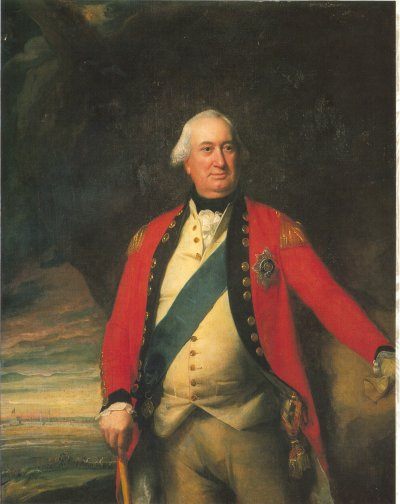
General Cornwallis surrenders to General Washington during this battle
a)
Yorktown
b)
Lexington and Concord
c)
Saratoga
d)
Bunker Hill
115.
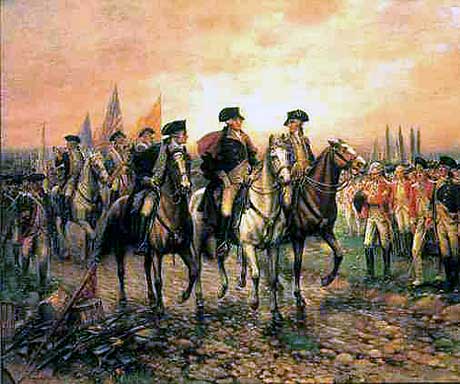
Which battle ended the American revolution?
a)
Battle of Lexington and Concord
b)
Battle of Saratoga
c)
Battle of Yorktown
d)
Battle of Trenton
116.
Why is the Battle of Saratoga called the turning point of the Revolutionary War?
a)
The Spanish decide to become American allies
b)
British General Cornwallis surrender at this battle
c)
the French decide to become American allies
117.
I made a midnight ride warning the colonist that the British were going to invade very soon.
a)
General Prescott
b)
Haym Solomom
c)
Samuel Adams
d)
Paul Revere
118.
This group of people were loyal to the King of Britain. They did not want to be free from the King's rule or to have independence.
a)
Patriots
b)
Loyalists
c)
Women
d)
African Americans
119.
This group of people wanted freedom from the King's rule. They wanted independence and were willing to fight for it.
a)
Loyalists
b)
Patriots
c)
Women
d)
Children
120.
This group of people wanted freedom from the King's rule. They wanted independence and were willing to fight for it.
a)
Loyalists
b)
Patriots
c)
Women
d)
Children
121.
Knowledge of area
Motivation
Foreign Allies
This is a list of advantages for:
Motivation
Foreign Allies
This is a list of advantages for:
a)
The Continental Army
b)
The British Army
122.
Strong Military Leaders
Wealth
Strong Navy
This list of advantages most likely belongs to:
Wealth
Strong Navy
This list of advantages most likely belongs to:
a)
The Continental Army
b)
The British Army
123.
Statements that begin "He has..." or "For..." can be found in which section of the Declaration?
a)
The Grievances
b)
The Preamble
c)
The Signatures
124.
Which country helped the Americans trap Cornwallis on the Yorktown Peninsula, blocking their escape route?
a)
Britain
b)
Italy
c)
France
d)
Spain
125.
This is one of the terms of the Treaty of Paris 1783
a)
America is Independent
b)
America has fishing rights off the coast of Canada
c)
Britain will return all enslaved persons captured during the war
d)
All of the above
126.
I was the first African American elected to public office.
a)
James Armistead
b)
Crispus Attucks
c)
Wentworth Chesswell
d)
James Adams
127.
Pennsylvania location where the Continental Army endured the harsh winter of 1777-1778
a)
Valley Forge
b)
Saratoga
c)
Yorktown
d)
Boston
128.
What is a boycott?
a)
Boycott is the name for Britain's law-making assembly.
b)
A boycott is a refusal to buy goods.
c)
A boycott is a tax on imported goods.
d)
A boycott is a volunteer army.
129.
What was the Boston Tea Party?
a)
It was a party held to celebrate the Tea Act.
b)
It was Boston's response to the Intolerable Acts.
c)
It was when colonists dumped 342 chests of tea into Boston Harbor to protest the Tea Act.
d)
It was when riders on fast horses delivered tea around Boston.
130.
What was the Boston Tea Party?
a)
It was a party held to celebrate the Tea Act.
b)
It was Boston's response to the Intolerable Acts.
c)
It was an act of civil disobediance
d)
It was when riders on fast horses delivered tea around Boston.
131.
Which Act allowed one company to sell tea to the colonies?
a)
Stamp Act
b)
Townshend Acts
c)
Tea Act
d)
Intolerable Acts
132.
What Act placed a tax lead, glass, paper, paint, and tea
a)
Stamp Act
b)
Townshend Acts
c)
Tea Act
d)
Intolerable Acts
133.
What Act placed a tax on printed materials in the colonies?
a)
Stamp Act
b)
Townshend Acts
c)
Tea Act
d)
Intolerable Acts
134.
What is a militia?
a)
Militia is the name of Britain's law-making assembly.
b)
A militia is a tax on imported goods.
c)
A militia is a refusal to buy goods.
d)
A militia is a volunteer army.
135.
Which Act punished Boston for the Boston Tea Party, and forced people to take sides?
a)
Stamp Act
b)
Townshend Acts
c)
Tea Act
d)
Intolerable Acts
136.
The French and Indian war was between?
a)
France and Native Americans
b)
France and England
c)
England and American Colonies
d)
France and England with Native Americans fighting on both sides
137.

the law that required colonists to house & feed British soldiers?
a)
Quartering Act
b)
Sugar Act
c)
Tea Act
d)
Intolerable Acts
138.

the African American that was shot at the Boston Massacre
He is considered to be the 1st person to die in the American Revolution
He is considered to be the 1st person to die in the American Revolution
a)
Crispus Attucks
b)
Charles Townshend
c)
James Armistead
d)
William Dawes
139.

the law that said the American colonists could not settle west of the Appalachian Mountains due to conflict with the Native Americans
a)
Proclamation of 2016
b)
Proclamation of Mrs. Soileau
c)
Indian Lands Proclamation
d)
Proclamation of 1763
140.
Why did England impose taxes on the colonies?
a)
Pay for the cost of a new navy.
b)
Build roads to the Ohio River Valley.
c)
Show colonists who was in charge.
d)
Pay off debts owed from the French and Indian War.
141.
What Act was passed after the Boston Tea Party?
a)
Stamp Act
b)
Tea Act
c)
Sugar Act
d)
Intolerable Act
142.
Parliament is another name for _________________.
a)
British hair style
b)
British tea time
c)
British government
d)
Washington's government
143.
What is the term that means refusal to buy goods?
a)
militia
b)
intolerable
c)
boycott
d)
repeal
144.

What was one effect of the Treaty of Paris?
a)
The French gained a huge amount of land in North American had had been claimed by the British.
b)
The British gained a huge amount of land in North American had had been claimed by the French.
c)
The Native American Indians were able to take control of their land.
d)
The Treaty formally ended the American Revolution.
145.
What 13th century English document limited the powers of the monarch?
a)
The English Bill of Rights
b)
The Proclamation of 1763
c)
The Quartering Act
d)
The Magna Carta
146.
A religious movement in the mid 18th century that promoted the idea of spiritual equality for all men.
a)
The Enlightenment
b)
The Great Awakening
c)
The Scientific Revolution
d)
Liberalism
147.
The Enlightenment stressed the importance of _________________ over religion.
a)
Logic, facts, proof, and evidence
b)
education, philosophy, and politics
c)
liberalism and republicanism
d)
all of these answers
148.
What is the best explanation of "taxation without representation"?
a)
A governing body creating taxes without input or consent of the people they intend to tax
b)
The government passing taxes before all representatives have voted
149.

Which BEST describes the beginning of the French and Indian War?
a)
Spanish and French fight over Florida
b)
British and Spanish fight over New Mexico
c)
French and British fight over the Ohio River Valley
d)
French and Native Americans fight over the Great Lakes region.
150.
Search warrants that allowed someone to search for smuggled goods without evidence
a)
rude
b)
treason
c)
writs of assistance
d)
treaty
151.
What was the primary purpose of the Declaration of Independence?
a)
to persuade England to end slavery in America
b)
to list reasons the colonies should be free from England
c)
to provide a plan for financing the American Revolution
d)
to convince the king to grant colonists more land
152.

The engraving, by Paul Revere, is an example of:
a)
Boycott
b)
Writs of Assistance
c)
Propaganda
d)
Salutary Neglect
153.
What was the biggest reason colonists protested increased taxes?
a)
They hated to waste money on the King's wars
b)
They were taxed without their own representation
c)
They were cheap and wanted to save money
d)
They had to spend more money on food and housing
154.
What was a militia?
a)
A military force of British redcoats
b)
A secret military force of French spies
c)
A military force of armed civilians
d)
A military force of loyalists
100 %

