
 Worksheets
US History 1 Full Year Quizizz
Total questions: 150
Worksheet time: 2hrs 40mins
How many continents are on Earth?
4
5
6
7
How many oceans are on Earth?
7
6
5
4
Which region is known to be flat with a lot of grassland?
Basin and Range
Great Plains
Canadian Shield
Appalachian Highlands
Which area helped archaeologists learn more about the past? (hint: it is in Virginia)
Cactus Hill
Flower Rock
Snowflake Plain
Rocky Mountains
Which one of these resources did the first people NOT depend on?
natural
human
technology
capital
Which tribe lived in the Arctic?
Iroquois
Kwakiutl
Inuit
Lakota
Which tribe lived in the Pacific Northwest?
Inuit
Kwakiutl
Lakota
Pueblo
Which tribe lived in the Great Plains?
Inuit
Kwakiutl
Lakota
Pueblo
Which tribe lived in the Southwest?
Iroquois
Lakota
Inuit
Pueblo
Which tribe lived in the Eastern Woodlands?
Lakota
Iroquois
Kwakiutl
Pueblo
The Kwakiutl wore Moccasins. What were they made of?
cotton
animal hides
paper
ice

What were Iroquois homes like?
Aparments
longhouses
underground
teepees
The Spanish were motivated to explore and colonize by three factors
Christmas, Easter, and Summer Vaca
God, Gold, and Glory
Rice, Ropes, and Rhinestones
Friends, Furs, and Fish
Economic Reasons - Gold and Natural Resources are...
Motivating Forces to European Exploration
Obstacles to European Exploration
Accomplishments of European Exploration
Poor maps and navigational tools are...
Motivating Forces to European Exploration
Obstacles to European Exploration
Accomplishments of European Exploration
Claimed territories are...
Motivating Forces to European Exploration
Obstacles to European Exploration
Accomplishments of European Exploration
Lack of adequate supplies are...
Motivating Forces to European Exploration
Obstacles to European Exploration
Accomplishments of European Exploration
What was Coronado Searching for?
The Northwest Passage
The Silk Road
The Southwest Desert
The Seven Cities of Gold
What is Cabot credited for finding on his first trip to the new world?
Gold and Wealth
Spices and Silks
The Northwest Passage
Rich fishing grounds
True of False. Coronado found the riches he was searching for.
True
False
What was Cabot searching for?
The Seven Cities of Gold
The Silk Road
The Southwest Desert
The Northwest Passage
The Jamestown settlement was in _________________
England
Potomac
Virginia
Newport was an explorer from ____________________.
England
Spain
France
Why did the colonists leave their homes and families?
Some people decided they were tired of the scenery.
Some of them got really sick & it was their only option.
Some folks packed up & left for economic reasons.
Some cried wee, wee, wee all the way home.
Why was Roanoke called the Lost Colony?
The settlers got hopelessly lost on their way and never made it there.
The settlers lost the documents sent by England to tell them the name of the colony.
The settlers lost half of their crew on the journey over from England.
The settlers vanished and were never seen or heard from again.
Which of the following statements is true about Jamestown?
First permanent English settlement in North America
A religious venture started by the Virginia Company
An economic venture started by the Virginia Company
First permanent settlement in North America
What were the two colonies founded in Massachusetts?
Plymouth Bay Colony, Massachusetts Colony
Pilgrim Colony, Puritan Colony
Plymouth Colony, Massachusetts Bay Colony
What group settled Pennsylvania for the freedom to practice their faith?
Puritans
Pilgrims
Quakers
Separatists
Which of the following statements are true about the colony of Georgia?
Settled by people from debtor's prisons
Settled by people from religious prisons
Hoped to find religious freedom and a better life
Hoped to find economic freedom and a better life
Virginia Dare was the first
English child born in North America
female burgess
wife of John Rolfe
female colonist at Jamestown
Why was slavery more widely used in the South?
Warmer weather
More cattle farms
More Puritans in the South
Slave labor needed for plantations
Which Colonial region had thin rocky soil, therefore few farms?
New England colonies
Middle colonies
Southern colonies
Which colonial region had a diverse population and offered religious freedom?
New England colonies
Middle colonies
Southern colonies
In the 1600s, why didn’t the King of England always know what was happening in the American colonies?
The king was not very interested in the American colonies.
The colonies governed themselves, so he did not need to know.
The colonies were far away, and it took a long time for news to reach him.
The king did not appoint the colonial governors, so no one reported to him.


What land did Great Britain own after the French and Indian War?
Land east of the Mississippi River
Land south of the Rio Grande River
All of Canada
the Hawaiian Islands
The French and Indian War was very _______________ for the British.
cheap
expensive
long
Who did the King feel should pay for the war?
British
colonists
Spain
What famous phrase did the colonists come up with?
Ain't nobody got time for that
No Taxation without Representation
Free the people
British people SMELL
The Colonists were happy about paying taxes.
TRUE
FALSE
Before the Revolutionary War, colonists organized boycotts against Great Britain. What group used violence and threats to enforce these boycotts?
Imperial Policy
Sons of Liberty
Massachusetts Militia
Second Continental Congress

This image is most likely depicting
the Boston Tea Party
a ride to Valley Forge
George Washington crossing the Delaware.
Paul Revere's midnight ride.

This person was a great inventor, scientist, and writer. He also helped to convince France to support America during the revolution. Who was he?
George Washington
John Adams
Thomas Jefferson
Benjamin Franklin
Who was king of England during the American Revolution?
King Henry VIII
George Washington
King George III
King Edward III
Who wrote most of the Declaration of Independence?
Patrick Henry
Benjamin Franklin
Thomas Jefferson
John Adams
During the Boston Tea Party,
colonists raided British ships and threw crates overboard.
Native Americans threw tea at British troops.
Americans celebrated their victory at Trenton.
the cost of tea was very expensive.
The Declaration of Independence states that all people have a natural right to
free speech.
a trial by jury.
the pursuit of happiness.
worship as they choose.
Most African Americans who lived in the British colonies were
indentured servants.
Puritans.
Quakers.
slaves.
Which battle convinced the French to become America's ally during the revolution?
Lexington and Concord
Yorktown
Saratoga
Bunker Hill
The last major battle of the American Revolution was _
Saratoga.
Yorktown.
Trenton.
Princeton.
The Sugar Act was a tax on sugar and _______
molasses
tea
clothes
The Sugar Act was a tax on sugar and _______
molasses
tea
clothes
Our first plan of government was called
Articles of Constitution
Amendments of Confederation
Articles of Confederation
The Constitution
All of these were considered Founding Fathers EXCEPT
Abraham Lincoln
George Washington
Benjamin Franklin
James Madison
All of these things were wrong with the "Articles of Confederation" EXCEPT
they had no way to raise money to run the government
there were no courts to settle disputes
each state acted separately instead of as one nation
The "Articles of Confederation" brought us together during The Revolutionary War
Who was "President" of the Second Constitutional Convention?
Thomas Paine
George Washington
Benjamin Franklin
James Madison
The document that describes our highest laws of our country and the way our government is organized is called
The Articles of Confederation
The Bill of Rights
The Amendments
The Constitution
The GREAT COMPROMISE divided Congress into two houses called the
Senate and House of Representatives
President and Courts
Happy and Sad
Greedy and Generous
In the Senate each state has...
One Representative
Two Representatives
A Lot of Represenatives
Depends on their Population
In the House of Representatives, each state has
One Representative
Two Representatives
Depends on their Population
What's a representative?
The word "ratify" means to
to stop
to abolish
to approve
to veto
Abolish means
to approve
to end
to pass
none of the above
The first ten amendments to The Constitution are known as the
Bill of Rights
Ten Rules
Ten Principles
Preamble
Federalists supported the Constitution and a strong national government.
True
False
Anti-Federalists supported a strong national government.
True
False

What did Shays' Rebellion make clear?
That farmers were better soldiers than everyone else
That the government under the Article of Confederation was inadequate
That the British could be beaten with an uprising
That the Constitution should be eliminated

What did Anti-Federalists want added to the Constitution?
a strong presidential position
Guarantee of no federal military
more power for the Federal Government
Bill of Rights

What was the only mention of slavery in the original Constitution?
There was no mention of slaves in the Constition
That slaves would become citizens
That slaves would be counted as 3/5 of the population
It was outlawed by the Bill of Rights
The Founding Fathers separated the federal government's powers by creating what 3 branches?
New England, Middle, Southern
Federal, State, Local
Legislative, Executive, Judicial
Patriotic, Loyalist, Moderate
In 1803, President Jefferson bought a huge piece of land west of the Mississippi River from France. How much did the United States pay for it?
One hundred dollars
15 thousand dollars
15 million dollars
No money was exchanged instead they traded gold for the land
The Homestead Act was when the United States gave away ___________ to settlers.
lumber to build houses
plots of land
seeds to grow crops
wagons to travel out west
Why did the United States need more land?
To test new farming methods out west
To gain control over the land to the west
To force the French to leave North America
To make room for their growing population
How did the invention of the steam locomotive change life for Americans living all around the nation?
It transported people and good across the nation much quicker than ever before.
It paved the ways for the development of the first cars.
It created jobs as workers were needed to lay tracks across the United States
All of the above
What was the main goal of the Lewis and Clark Expedition?
To meet and trade with the Native Americans
To explore and map out the land west of the Mississippi River
To pan for gold in the rivers
To map out a trail through the Appalachian Mountains
Lewis and Clark were the first to reach the ____________________ by land?
Atlantic Ocean
Gulf of Mexico
Hudson River
Pacific Ocean
The most popular route people traveled along to move west was?
The Trail of Tears
The Oregon Trail
The Mississippi Expedition
The Rocky Mountain Trail
What happened during the Gold Rush?
People from all over the world moved to California
Prospectors stayed in mining camps to explore an area and hunt for gold
Thousands of people panned for gold hoping to become rich
All of the above
The United States government forced many Native American tribes to relocate to different areas called Indian Reservations so that…
white settlers could move on that land
they to turn the land into National Parks
they could build cabins as rest stops in the mountains
they could sell the land to Mexico
During the Westward Expansion the United States more than doubled in size.
True
False
The Louisiana Purchase was when the United States bought a huge piece of land from France in 1803
True
False
Whose invention caused an increase in the demand for cotton and slave labor?
Robert Fulton
Jo Anderson
Cyrus McCormick
Eli Whitney
Suffrage means......
the right to vote
the right for women to vote
the women who fought for women’s rights
the fight for women’s rights
The first Women’s Rights Convention was held in:
Niagara Falls, NY
Seneca Falls, NY
Sonoma Falls, NY
Seleca Falls, NY
Who was an abolitionist writer and editor of the "North Star" newspaper?
James Polk
Andrew Jackson
Frederick Douglas
Joshua Barnett
What is an Abolitionist?
A person who wants to abolish slavery forever
A immigrant to the USA from Poland
A person of high breeding and class
A person born into a political family
Why was William Lloyd Garrison important to the Abolition movement?
He was outspoken and wealthy
He was White and owned the newspaper "The Liberator."
He was from the North and spoke against the South.
He had freed all of his slaves and hated slavery.
Which women's rights advocate was placed on the United States $1 coin?
Elizabeth Blackwell
Jane Austin
Jane Goodall
Susan B. Anthony
Southerners were upset when Lincoln was elected president because:
they believed he might one day end slavery.
they wanted a president who would end slavery.
he wanted northern states to secede from the Union.
he had a plan to raise taxes.


Abraham Lincoln's Emancipation Proclamation said _____.
the U.S. was free from Great Britain
the Civil War would end
the slaves in the Confederacy would be freed if the North won the war
Reconstruction would start

Why was the Battle of Gettysburg important to the Civil War?
It led to the Emancipation Proclamation
It brought an end to the Civil War
It resulted in the passing of the 15th Amendment
It was a turning point because the North started winning more and more battles
More factories, more railroads, more soldiers, and a better navy were all ______________.
Confederate advantages
Union advantages
reasons for a Confederate victory
causes of the Battle of Gettysburg


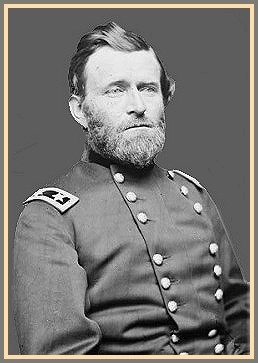


Where did Robert E. Lee surrender to the Union Army and end the Civil War?
Bull Run
Appomattox
Gettysburg
Antietam
What battle was the deadliest battle of the Civil War, as well as in American History?
Antietam
Bull Run
Gettysburg
Appomattox
What was considered the Capital of the Confederate States of America?
Richmond, VA
New York City, NY
Washington DC
St. Louis, MO
This woman, a nurse, encouraged other women to join and help during the Civil War. She was the founder of the American Red Cross.
Harriet Beecher Stowe
Clara Barton
Harriet Tubman
Clarice Greenburg
Which battle had no winner, it was inconclusive?
Gettysburg
Bull Run
Appomattox
Antietam

