
NEW
Font size
S
M
L
XL
 Worksheets
Physical Science Review
Total questions: 50
Worksheet time: 1hrs 29mins
Name
Class
Date
1.
What is happening when my ice cream changes from a solid to a liquid?
a)
freezing
b)
melting
c)
burning
d)
evaporation
2.

The steam coming off the pot of boiling water is an example of....
a)
a solid becoming a liquid
b)
a liquid becoming a solid
c)
a liquid becoming a gas
d)
a gas becoming a liquid
3.
True or False: Matter can changes states by adding or removing heat.
a)
True
b)
False
4.
In which state of matter do the particles spread apart and fill all the space available to them?
a)
crystal
b)
liquid
c)
gas
d)
solid
5.
True or false: melting and freezing occur at the same temperature.
a)
True
b)
False
c)
I don't know
6.

What state(s) of matter are present at D-E?
a)
Solid-liquid
b)
Liquid
c)
Liquid-gas
d)
Gas-Solid
7.
Jack has a rock. The rock has a mass of 14g and a volume of 2cm3. What is the density of the rock?
a)
7 mL
b)
7 g/cm3
c)
28 g/cm3
d)
1/7 g/cm3
8.

What is the volume of Object X?
a)
10.0 cm3
b)
15.0 cm3
c)
20.0 cm3
d)
25.0 cm3
9.
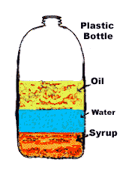
Which liquid is the least dense?
a)
oil
b)
water
c)
syrup
d)
plastic bottle
10.

Which box has a higher density?
a)
Box A
b)
Box B
c)
cannot be determined
d)
they are the same
11.
Particles in an atom that are neutral and have no charge are
a)
negatrons
b)
electrons
c)
neutrons
d)
protons
12.
Which of the following is a negatively charged subatomic particle?
a)
Electron
b)
Proton
c)
Neutron
d)
Quark
13.
What is the atomic symbol for sodium?
a)
Na
b)
So
c)
NaCl
d)
S
14.
What does the nucleus consist of?
a)
Protons + Electrons
b)
Neutrons + Electrons
c)
Atoms
d)
Protons + Neutrons
15.
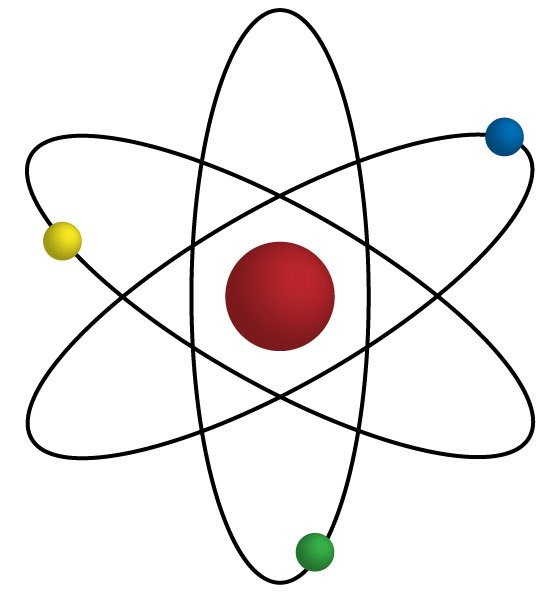
What are the 3 particles that make-up the atom?
a)
protons, neutrons, and isotopes
b)
neutrons, isotopes, and electrons
c)
positives, negatives, and electrons
d)
protons, neutrons, and electrons
16.

The period for Bromine is ___________.
a)
3
b)
2
c)
4
17.

Beryllium is in group number______.
a)
Group 2
b)
Group 3
c)
Group 4
d)
Group 7
18.
Elements in the same ________ are more chemically similar.
a)
group
b)
period
c)
club
d)
table
19.
What period and group is Silver (Ag)?
a)
Period 2, Group 1
b)
Period 3, Group 16
c)
Period 5, Group 11
d)
Period 2, 14
20.
Which element is not a metal?
a)
Ni
b)
B
c)
Hg
d)
Al
21.
Metalloids can be described as...
a)
same as nonmetals
b)
bad conductors
c)
characteristics of metals and nonmetals
d)
same as metals
22.

Which section are the metals in?
a)
dark blue
b)
light blue
c)
purple
d)
pink
23.
The atomic number tells you what?
a)
number of electrons
b)
number of protons
c)
number of neutrons
d)
both electrons and protons in an atom.
24.
All atoms of the same element have the same
a)
atomic mass
b)
mass number
c)
number of neutrons
d)
atomic number
25.

Look at the picture. What is atomic number of Silicon?
a)
28
b)
14
c)
28.09
d)
12
26.

What is matter?
a)
anything that has mass and takes up space
b)
positively charged particles
c)
negatively charged particles
d)
only has mass
27.
What is the chemical formula for dinitrogen trioxide?
a)
N2O3
b)
NO2
c)
N3O
d)
N2O4
28.

Which of these is covalent?
a)
NaCl
b)
Pb(NO3)2
c)
CO2
d)
AlCl3
29.
Which of the following has a full valence shell?
a)
Oxygen
b)
Neon
c)
Barium
d)
Carbon
30.
What is the most common ion for Calcium?
a)
Ca+2
b)
Ca+
c)
Ca-2
d)
Ca-
31.
Nitrogen will ____ valence electrons when forming an ionic bond.
a)
gain 1
b)
lose 1
c)
gain 3
d)
lose 3
32.
What is the kind of bond between two non metals called?
a)
Ionic
b)
Covalent
c)
Lattice
d)
Metallic
33.

How many valence electrons in this structure?
a)
6
b)
5
c)
4
d)
7
34.
An elements in group 2 has how many valence electrons?
a)
1
b)
2
c)
3
d)
4
35.
Write the formula for phosphorus trichloride.
a)
KCl3
b)
PCl3
c)
K3Cl
d)
P3Cl
36.
Write the formula for calcium iodide.
a)
CaI
b)
Ca2I
c)
CaI2
d)
Ca2I3
37.
Write the formula for sodium nitride.
a)
NaNO3
b)
NaN
c)
NaN3
d)
Na3N
38.
Name AlBr3.
a)
aluminum bromide
b)
aluminum tribromide
c)
aluminum bromine
d)
monoaluminum tribromide
39.
Name SiCl4.
a)
silicon tetrachloride
b)
silicon quadchloride
c)
monosilicon tetrachloride
d)
silicon chloride
40.

What do you call the substances on the left side of a chemical equation?
a)
yield
b)
products
c)
reactants
d)
compounds
41.

A coefficient tells you...
a)
the # of atoms in the entire equation
b)
the # of elements in the equation
c)
the # atoms of the element it sits behind
d)
the # of molecules of that substance
42.
How many elements are in C6H12O6?
a)
1
b)
2
c)
3
d)
4
43.
How many atoms of carbon (C) are in C6H12O6?
a)
3
b)
6
c)
12
d)
24
44.

The red numbers in the image below represent ________
a)
subscripts
b)
coefficients
c)
I don't know, and don't want to try
d)
None of the answers are correct
45.

The blue numbers in the image below represent ________
a)
I don't know, and don't want to try
b)
coefficients
c)
subscripts
d)
none of the answers are correct
46.
In the equation, 2Mg + O2 ---> 2MgO, which are the reactants?
a)
Mg and O
b)
MgO
c)
Mg and MgO
d)
O and MgO
47.
What type of reaction is this? 2 NO2 --> 2 O2 + N2
a)
single replacement
b)
double replacement
c)
decomposition
d)
synthesis
48.
What type of reaction is this? 2 C5H5 + Fe --> Fe(C5H5)2
a)
single replacement
b)
double replacement
c)
decomposition
d)
synthesis
49.
Type of reaction? Pb + FeSO4 --> PbSO4 + Fe
a)
single replacement
b)
double replacement
c)
combustion
d)
synthesis
50.
Type of reaction? KOH + H3PO4 → K3PO4 + H2O
a)
Synthesis
b)
Decomposition
c)
Single replacement
d)
Double replacement
Reset

