
 Worksheets
Reading Semester Exam
Total questions: 169
Worksheet time: 3hrs 33mins
Name
Class
Date
1.
Rising Action ________________________.
a)
Sets the stage for the climax
b)
Includes all the action and events that occur before the climax
c)
Both A and B
d)
None of the above
2.
The climax of a story________________________.
a)
Presents essential background information
b)
Is a turning point or point of greatest intensity
c)
Does not determine the outcome of the conflict
d)
Is the plan or groundwork of the story
3.
________________________ = A series of events that happen after the climax.
a)
Conflict
b)
Exposition
c)
Resolution
d)
Falling Action
4.
Resolution occurs after the ________________________ and establishes a new norm.
a)
Climax
b)
Falling Action
c)
Exposition
d)
Essential background information
5.
Which of the following is NOT part of the setting of a story?
a)
Environment
b)
Intensity
c)
Location
d)
Time
6.
The emotional atmosphere of a story and the voice of the narrator are the ________________.
a)
Feelings/Thoughts
b)
Beginning/End
c)
Mood/Tone
d)
Action/Reaction
7.
Conflict is the ________________________ between opposing forces.
a)
Struggle
b)
Friendship
c)
Relationship
d)
Story
8.
________________________ conflict takes place in a character’s head/mind.
a)
Internal
b)
External
9.
________________________ conflict takes place between a character and an outside force.
a)
Internal
b)
External
10.
Which of the following is NOT a type of conflict?
a)
Person vs. nature
b)
Person vs. self
c)
Person vs. space
d)
Person vs. society
11.
The central idea or universal truth that a story examines is ________________________.
a)
Conflict
b)
Theme
c)
Point of view
d)
Resolution
12.
What is point of view?
a)
The way a story expresses the view about life and how people behave
b)
The way a story makes you feel or think
c)
The turning point in the story
d)
The perspective from which the story is being presented
13.
Which point of view uses pronouns like “I”, “we”, “my”?
a)
First Person
b)
Third Person Limited
c)
Third Person Omniscient
d)
None of the above
14.
Which point of view uses a narrator that tells the story from only one character’s perspective?
a)
First Person
b)
Third Person Limited
c)
Third Person Omniscient
d)
None of the above
15.
Which point of view allows the reader to find out what all of the characters do, know, think, and witness?
a)
First Person
b)
Third Person Limited
c)
Third Person Omniscient
d)
None of the above
16.
What literary device can include memories, dreams, or stories of the past?
a)
Symbolism
b)
Foreshadowing
c)
Flashback
d)
Irony
17.
What literary device uses hints or clues to suggest what will happen next?
a)
Irony
b)
Suspense
c)
Flashback
d)
Foreshadowing
18.
What literary device is when the opposite of what is expected happens?
a)
Suspense
b)
Irony
c)
Flashback
d)
Symbolism
19.
What is the definition of plot?
a)
Sequence of events
b)
The plan or groundwork of the story
c)
A series of events
d)
All of the above
20.
A comparison between two unlike things that uses like or as
a)
simile
b)
personification
c)
metaphor
d)
alliteration
e)
hyperbole
21.
the relationship in which one condition brings about another condition as a result. This result is called the effect
a)
compare and contrast
b)
cause and effect
c)
alliteration
d)
metaphor
22.
a piece of information that can be proven
a)
fact
b)
opinion
c)
climax
d)
narrative
23.
the type of writing that tells a story and can be actual (non-fiction) or fictional. May be expressed orally or in writing.
a)
narrative
b)
climax
c)
alliteration
d)
fact
24.
the arrangements of events in a story
a)
climax
b)
point of view
c)
plot
d)
narrative
25.
a personal point of view or belief, it cannot be proven
a)
fact
b)
opinion
c)
narrative
d)
plot
26.
writing that compares to unlike things but does not use like or as
a)
metaphor
b)
alliteration
c)
resolution
d)
character development
27.
writing in which an inanimate object or an abstract idea is given human characteristics
a)
personification
b)
metaphor
c)
setting
d)
theme
e)
None of the above
28.
The way an author shows us how a character changes as the story proceeds
a)
character development
b)
resolution
c)
conflict
d)
metaphor
29.
the time and place in which the story occurs
a)
setting
b)
theme
c)
figurative language
d)
conflict
30.
people, animals, etc. in a story
a)
rising action
b)
resolution
c)
characters
d)
context clues
31.
part of the story that introduces characters, setting, and the story problem
a)
falling action
b)
theme
c)
meter
d)
rising action
32.
A Protagonist is the...
a)
Good Character
b)
Bad Character
c)
Stuck-up Character
d)
Not in a Story
33.
The Antagonist is the...
a)
Good Character
b)
Bad Character
c)
Funny Character
d)
Snotty Character
34.
What is a problem?
a)
the most exciting part of the book
b)
a math equation to solve
c)
a solution to a conflict the characters experience
d)
a conflict felt or experienced by the characters
35.
The use of an image or an object to stand for something else
a)
Imagery
b)
Symbolism
c)
Theme
d)
Denotation
36.
Why does an author use symbolism in their literary piece?
a)
To convey deeper meanings about a topic or subject
b)
To show the importance of symbols
37.

What does this symbolize?
a)
America
b)
Canada
38.
an event occurs that contradicts the expectations of the characters, of the reader, or of the audience
a)
universal theme
b)
sensory imagery
c)
situational irony
d)
tone
39.
a line of action secondary to the main story
a)
setting
b)
theme
c)
stage directions
d)
subplot
40.
Stereotypes can affect how people treat each other ?
a)
True
b)
False
41.
What is a stereotype ?
a)
A way of thinking of anything
b)
How people react
c)
An image , ideal or model associated with a group
d)
A feeling that causes you to be different
42.
statements are most commonly found in the hard sciences
a)
objective
b)
subjective
c)
none
d)
both
43.
Statement that is completely unbiased is...
a)
Subjective
b)
Objective
c)
Personal
d)
Nonobjective
44.
Facts. Unbiased. Does not not include opinion.
a)
objective
b)
subjective
c)
none
45.
Can be based on facts, but includes people's opinions.
a)
objective
b)
subjective
c)
none
46.
statements may or may not be entirely true
a)
objective
b)
subjective
c)
none
47.
Which of statements are generally used to describe the arts.
a)
objective
b)
subjective
c)
both
d)
none
48.
any events in the plot that occur after the falling action and just sort of tie up any loose ends
a)
expositing
b)
falling action
c)
denouement
d)
rising action
49.
there's a contradiction between what a character thinks or says and what the reader or audience knows
a)
dramatic monologue
b)
external text structures
c)
dramatic irony
d)
figurative language
50.
A _____________________ is a story device that leaves the reader wondering what will happen next.
a)
foreshadowing
b)
flashback
c)
cliffhanger
d)
suspense
51.
Lee approached the teacher's desk. He held his forged note in his hand. If she believed his mother had writtin it, he would get another day to finish his book report. If she didn't believe it, he would probably end up in detention. The teacher studied the note and finally looked up. She sighed and began to speak.
a)
foreshadowing
b)
flashback
c)
suspense
d)
cliffhanger
52.
As the old men watched the boys playing baseball in the vacant lot, he thought back to his own boyhood and the friends he's had in his home town. They'd cleared debris and stray bushes from a lot and built their own baseball diamond, complete with an elevated pitcher's mound. The old man remembered the feeling of standing on that mound, exchanging signals with the catchers, and winding up to throw a pitch.
a)
foreshadowing
b)
flashback
c)
suspense
d)
cliffhanger
53.
Shelly felt relieved. She had finally finished her homework, completed her chores, and written a long-overdue thank you note to her grandmother. Her relief wouldn't last for long, though. Her mother knocked on the bedroom door and walked in.
a)
foreshadowing
b)
flashback
c)
suspense
d)
cliffhanger
54.
Kenny makes fun of his brother on the way to Aunt Cydnee's house
a)
Denouement
b)
Rising Action
c)
Falling Action
d)
Exposition
55.
The flute sang out beautifully during the concert.
a)
simile
b)
metaphor
c)
personification
d)
Adele
56.
My tennis shoes stuck out their tongues at my stinky feet after running the mile.
a)
simile
b)
metaphor
c)
personfication
d)
smelly
57.
What is personification?
a)
The same beginning sound repeated
b)
Giving human characteristics to non-human things
c)
A word that is a sound
d)
An exaggeration
58.
Exclaiming “Oh great!” after failing an exam
a)
verbal irony
b)
dramatic irony
c)
situational irony
d)
none of the above
59.
In the movie, "Toy Story", human characters are not aware that the toys speak and move but the audience is.
a)
verbal irony
b)
dramatic irony
c)
situational irony
d)
none of the above
60.
A pilot with a fear of heights
a)
verbal irony
b)
dramatic irony
c)
situational irony
d)
none of the above
61.
What is verbal irony?
a)
When what is said is different than what is meant
b)
When what happens is the opposite of what is expected
c)
When the audience knows something a character doesn't know.
62.
What is situational irony?
a)
When what is said is the opposite of what is meant
b)
When what happens is the opposite of what is expected
c)
When the audience knows something the character doesn't
63.
What is dramatic Irony?
a)
When what is said is different than what is meant
b)
When what happens is the opposite of what is expected
c)
When the audience knows something the character doesn't
64.
An inference is...
a)
Text evidence + what you know
b)
Retelling a text
c)
Making a guess without evidence
d)
Information written directly into the text.
65.
When making an inference, the most important thing is...
a)
What you know about the topic
b)
The topic of the text
c)
The characters in the text
d)
Being able to prove your inference using evidence from the text.
66.

What is an idiom?
a)
A bird?
b)
A device used to confuse the reader.
c)
A word or phrase that does not mean what it says.
d)
A group of words that begin with the same sound.
67.
Stories that come from the author's imagination
a)
nonfiction
b)
fiction
c)
poetry
d)
folklore
68.
writing that is true or factual
a)
fiction
b)
nonfiction
c)
drama
d)
folklore
69.
Star Wars is an example of what genre?
a)
historical fiction
b)
realistic fiction
c)
science fiction
d)
informational
70.

Allusion is defined as______
a)
Two lines working as a unit
b)
A reference to a famous person, place, or event
c)
A form of wordplay with similar sounding sounds
d)
Words that involve one of the five senses
71.

Which of the following is not an example of an allusion?
a)
She transformed her backyard to look like the Garden of Eden.
b)
His wife was his Achilles' heel.
c)
He lies so much, I'm surprised his nose doesn't grow like Pinnochio's.
d)
We'll miss him so much because he was the best dog ever.
72.

Which of the following is true about allusions
a)
Allusions are indirect references that may sometimes be obvious and sometimes obscure
b)
Allusions are written in quotation marks.
c)
Allusions are always stated as a comparison, as in 'He was as strong as Hercules.'
d)
All of the above
73.
Define "purpose"
a)
The effect that a piece of work has on the reader
b)
The effect a piece of work has on the author
c)
The reason a piece of work is written
d)
The person or group of people addressed
74.
Define "Audience"
a)
The effect a piece of work has on the reader
b)
The effect a piece of work has on the author
c)
The person or group of people addressed
d)
The reason why a piece of work is written/created
75.
The following is NOT an example of Expository Text:
a)
biography
b)
poem
c)
news article
d)
campaign speech
76.
This text shows how one event or action creates a result or a following situation... something else to happen
a)
Sequence
b)
Chronological
c)
Problem/Solution
d)
Cause and Effect
77.
This text shows order of steps or process
a)
Sequence
b)
Description
c)
Chronological
d)
Compare and Contrast
78.

The Venn Diagram is helpful to use with this text feature...
a)
Problem/Solution
b)
Compare and Contrast
Compare and Contrast
Compare and Contrast
c)
Description
d)
Chronological
79.
Dr. Miller doesn’t want the tigers to vanish. These majestic beasts are disappearing at an alarming rate. Dr. Miller thinks that we should write to our congress people. If we let them know that we demand the preservation of this species, maybe we can make a difference. Dr. Miller also thinks that we should donate to Save the Tigers. Our donations will help to support and empower those who are fighting the hardest to preserve the tigers. We owe it to our grandchildren to do something. What is an example of what text feature?
a)
Compare and Contrast
b)
Chronological
c)
Problem/Solution
d)
Description
80.
The twist is a dance inspired by rock and roll music. To do the Twist, first stand with your feet approximately shoulder width apart. The torso may be squared to the knees and hips, or turned at an angle so one foot is farther forward than the other. Then, hold your arms out from your body, bent at your elbow. Next, rotate your hips, torso, and legs as a single unit with your arms staying more or less stationary. Every so often lift one leg off of the floor for styling. Now you're doing the twist!
This is an example of what text feature?
This is an example of what text feature?
a)
Description
b)
Cause and Effect
c)
Compare and Contrast
d)
Sequence
81.
Expository Text Features is the way a text is organized and refers to the different forms the author uses to organize the text.
a)
True
b)
False
82.
Where would you find a caption?
a)
Close to a picture
b)
At the top of a section
c)
On the table of contents
d)
In the glossary
83.

Ice-cream is a delicious frozen treat that comes in a many different colors and flavors. Two of my favorite flavors are strawberry and chocolate. Though both of these flavors are delicious, strawberry may contain pieces of fruit while chocolate usually will not. Even though more chocolate ice-cream is sold across the country annually than strawberry, each flavor tastes great inside of a milk shake.
a)
cause/effect
b)
descriptive
c)
compare/contrast
d)
sequence/process
84.

The ice-cream shop around the corner from my house has the best ice-cream in the city. When you first walk inside, there is a long chrome counter with matching stools extending to alongside the far wall. Right where the counter stops, the booth seating begins. There are lots of old-timey knickknacks on the walls and chrome napkin holders on all the tables. My favorite part of the shop is behind the counter glass, where they keep all of the ice-cream flavors. A rainbow of delicious sugary flavors is kept cool and delicious behind the counter glass.
a)
problem/solution
b)
compare/contrast
c)
descriptive
d)
chronological
85.

Have you ever had an ice-cream headache? That’s when a painful sensation resonates in your head after eating something cold (usually ice-cream) on a hot day. This pain is produced by the dilation of a nerve center in the roof of your mouth. The nerve center is overreacting to the cold by trying to heat your brain. Ice-cream headaches have turned many smiles to frowns.
a)
problem/solution
b)
chronological
c)
descriptive
d)
cause/effect
86.
This structure uses time, numerical or spatial order as the organizing structure
a)
Chronological Order
b)
Cause and Effect
c)
Compare and Contrast
d)
Problem and Solution
87.
Requires readers to state a conflict and come up with a way to resolve it
a)
Chronological Order
b)
Cause and Effect
c)
Compare and Contrast
d)
Problem and Solution
88.
This structure is used to explain how two or more objects, events or positions in an argument are similar or different.
a)
Chronological Order
b)
Compare and Contrast
c)
Problem and Solution
d)
Cause and Effect
89.
This structure is used to show causal relationships between events.
a)
Cause and Effect
b)
Problem and Solution
c)
Compare and Contrast
d)
Chronological Order
90.
Used to show how two things are similar or different.
a)
Chronological Order
b)
Cause and Effect
c)
Compare and Contrast
d)
Sequence
91.
Uses subtitles to list specific aspects of a general topic.
a)
Description
b)
Cause and Effect
c)
Chronological Order or Sequence
d)
Problem and Solution
92.
This structure uses time as a measuring tool to keep the reader aware of where the story is taking place.
a)
Sequence
b)
Chronological Order
c)
Compare and Contrast
d)
Chronological Order, also known as Sequence
93.

This is an example of a ___________?
a)
Index
b)
Table of contents
c)
Graph
d)
Caption
94.

What graphic feature is shown in this example?
a)
photograph
b)
table
c)
map
d)
diagram
95.

The purpose of graphics (such as graphs, tables, pictures, or maps) is to ____________
a)
Help the reader visualize important information
b)
Describe what is found in a photo or illustration
c)
Separate text into sections based on main ideas
d)
Show information that occurs in a certain order
96.

What is it called when you use symbols to represent ideas or qualities?
a)
Symbolism
b)
Exaggeration
c)
Irony
d)
Labeling
97.

What political cartoon category would this fall under?
a)
Labeling
b)
Exaggeration
c)
Symbolism
d)
Irony
98.

This is an example of?
a)
Labeling
b)
Exaggeration
c)
Irony
99.
Analogies are when you compare 2 things that are the same.
a)
True
b)
False
100.

This is?
a)
Irony
b)
Exaggeration
c)
Symbolism
d)
labeling
101.
Dogs are much better than cats.
a)
Fact
b)
Opinion
c)
Common Place Assertion
102.
Schools spend too much time on standardized testing.
a)
Fact
b)
Opinion
c)
Commonplace Assertion
103.
A 20 ounce bottle of Dr. Pepper contains 240 calories.
a)
Fact
b)
Opinion
c)
Commonplace Assertion
104.
Taking vitamins everyday will keep you healthy.
a)
Fact
b)
Opinion
c)
Commonplace Assertion
105.
Dark chocolate is better for you than milk chocolate.
a)
Fact
b)
Opinion
c)
Commonplace Assertion
106.
Milk chocolate tastes better than dark chocolate.
a)
Fact
b)
Opinion
c)
Commonplace Assertion
107.
All kids love recess.
a)
Fact
b)
Opinion
c)
Commonplace Assertion
108.
Teens should not be allowed to date until they are 15.
a)
Fact
b)
Opinion
c)
Commonplace Assersion
109.
Which statement below is an opinion?
a)
...their sensory systems detect movement, sound...
b)
Divers will fly halfway around the world to see white sharks
c)
...appreciate sharks for what they are: beautiful...
110.
Which statement is a commonplace assertion?
a)
Back then, we believed that great whites attacked boats.
b)
...those [sharks] they are seeing are younger and smaller...
c)
...they [sharks] have few natural enemies.
111.
A small bag of Doritos is 140 calories.
a)
Factual Claim
b)
Commonplace Assertion
c)
Opinion
112.
A factual claim is...
a)
statement that can be proven from evidence
b)
a statement of personal belief, feeling or thought
c)
a statement that many people assume to be true
113.
An opinion is ...
a)
a statement that many people assume to be true
b)
a statement of personal belief, feeling or thought
c)
statement that can be proven from evidence
114.
Which statement is a commonplace assertion?
a)
Back then, we believed that great whites attacked boats.
b)
...those [sharks] they are seeing are younger and smaller...
c)
...they [sharks] have few natural enemies.
115.
You will get cramps if you swim right after you eat.
a)
Factual Claim
b)
Commonplace Assertion
c)
Opinion
116.
Dyson vacuums are sold at Best Buy and Target.
a)
Factual Claim
b)
Commonplace Assertion
c)
Opinion
117.
The American faces the challenge of -
a)
Making sure the hostess doesn't stay quiet longer than he does
b)
Keeping the guests quiet until the cobra leaves the room
c)
calming his fear of snakes in order to capture the cobra
d)
Learning Indian social etiquette so that he wil be respected by the other guests
118.

The colonel believed that, in a crisis, a woman would –
a)
always panic
b)
remain quite calm
c)
show more control than a man
119.

The cobra came out because it was–
a)
frightened by the guests
b)
attracted by the milk
c)
awakened by the sound of the American counting
120.

Mrs. Wynnes knew that a cobra was in the room because she –
a)
saw it in the rafters
b)
noticed it crawl under the table
c)
felt it on her foot
121.
Who is Algernon?
a)
the scientis
b)
a mouse
c)
Charlie's boss
d)
Charlie's friend at work
122.
What does Charlie keep in his pocket for good luck?
a)
a rabbit's foot
b)
a pebble
c)
a picture
d)
a coin
123.
Who is Miss Kinnian?
a)
Charlie's neighbor
b)
Charlie's landlady
c)
a scientist
d)
Charlie's teacher
124.
Algernon beats Charlie at ______.
a)
crossword puzzles
b)
mazes
c)
jigsaw puzzles
d)
volleyball
125.
Where does Charlie work?
a)
a factory
b)
a school
c)
a grocery store
d)
Charlie doesn't work
126.
What do Charlie's "friends" mean when they say someone "really pulled a Charlie Gordon"?
a)
they did a cool trick
b)
they did something kind
c)
they did something smart
d)
they did something dumb
127.
How old is Charlie Gordon?
a)
8
b)
45
c)
37
d)
22
128.
What is the relationship between Dr. Nemur and Dr. Strauss like?
a)
They get along well.
b)
They fight all the time.
c)
They don't ever talk to one another.
d)
How would I know?
129.
Why does Charlie get a raise at the factory?
a)
He was on time to work for an entire year.
b)
The boss learned about his surgery.
c)
Everyone is afraid of him.
d)
Charlie figured out a new way to line up the machines in the factory.
130.
How does Charlie feel about Miss Kinnian in the middle of the story?
a)
He thinks she is an old boring lady.
b)
He says he is in love with her.
c)
He just thinks of her as his teacher.
d)
He doesn't care about her at all.
131.

What is the point of view of "Flowers for Algernon"?
a)
first person, from Charlie's point of view
b)
first-person, Doctor Strauss' point of view
c)
third person, includes thoughts of all characters
d)
third person, telling the thoughts of Charlie and Miss Kinnian
132.

What writing format does the story take or use?
a)
medical reports by the doctors
b)
progress reports by Charlie
c)
diary entries by Miss Kinnian
d)
job reports by Charlie's boss
133.

What happens during Charlie's first inkblot test?
a)
He shows that he has a strong imagination.
b)
He shows that he has a violent temper
c)
He loses to Algernon
d)
He fails to see things in the ink
134.

Why do the doctors use Charlie in their experiment?
a)
They feel he is motivated to try to learn
b)
He is the only person willing to try it.
c)
They see that he has bonded with Algernon
d)
They know he needs a better job.
135.

What can you infer from the details about Charlie at the start of "Flowers for Algernon"?
a)
He has below-normal intelligence.
b)
He sees and hears things that are not there.
c)
He cannot control his temper.
d)
He cannot hold down a job and support himself
136.

Why do Charlie's fellow co-workers want Charlie fired?
a)
They think he is evil.
b)
They have become frightened by his bad temper.
c)
They think he is damaging the factory.
d)
They become jealous and wary of Charlie as he becomes smart.
137.

Which of the following can we infer is the reason for Dr. Strauss requiring Charlie to keep a journal?
a)
To monitor if Charlie was being dishonest about his work hours.
b)
To monitor Charlie's progress through his words and thoughts.
c)
To closely watch his communication with people outside the hospital, including his mother and father.
d)
To secure Algernon's place in medical history.
138.

Choose the details that show that Charlie's experiment is starting to take effect.
a)
Challenging the Doctors' knowledge, falling for Miss Kinnian, performing his experiments.
b)
quitting his job, becoming more quiet, looking into piano and painting
c)
losing to Algernon, visiting Muggy's Saloon, "pulling a Charlie Gordon"
139.
Which of the following does Charlie begin to recognize as he progresses?
a)
He realizes he loves the girl with whom he works but sees her as inferior to him.
b)
He realizes he is now more intelligent than both of the doctors who performed the experiment.
c)
He realizes he will one day achieve his dream: space travel and the scientific advancements.
d)
He realizes that he will only be intelligent enough to get a high school diploma.
140.
What event changes the relationship Charlie has with Algernon?
a)
Algernon beats Charlie in the maze.
b)
Dr. Nemur lets Charlie take Algernon home as a pet.
c)
Algernon only eats gluten free food now.
d)
Charlie finally beats Algernon in the maze.
141.
Ponyboy's lighthearted older brother
a)
Sodapop
b)
Rootbeer
c)
Randy
142.
Ponyboy's smart, demanding oldest brother
a)
Two-Bit
b)
Tim
c)
Darry
143.
violent greaser with a long police record
a)
Two-Bit Matthews
b)
Randy
c)
Dally
144.
wise-cracker of the greasers, makes everyone laugh
a)
Tim Shepard
b)
Two Bit Matthews
c)
Johnny Cade
145.
"pet" of the greasers; has abusive father
a)
Johnny Cade
b)
Randy
c)
Sandy
146.
Pretty, redheaded Soc; Bob's girlfriend
a)
Sandy
b)
Marcia
c)
Cherry Valance
147.
Cherry's best friend, Randy's girlfriend
a)
Abby
b)
Sandy
c)
Marcia
148.
In what decade does this novel take place?
a)
1960s
b)
1950s
c)
1980s
149.
The Outsiders is told through which point of view?
a)
third person
b)
second person
c)
first person
150.
The Outsiders is told through which point of view?
a)
third person
b)
second person
c)
first person
151.
How did the Curtis brothers lose their parents?
a)
they died in a fire
b)
they died of cancer
c)
they died in a car accident
152.
What was the name of the book that Johnny and Ponyboy read while hiding out?
a)
Great Expectations
b)
Elmo's World, Volume I
c)
Gone With the Wind
153.
What is the main reason that the Greasers and the Socs fight?
a)
they like different music
b)
they like different football teams
c)
they are from different social classes
154.
Darry didn't go to college because he had to take care of his brothers.
a)
True
b)
False
155.
Pony doesn't want to cut off his hair because it is part of his identity as a greaser.
a)
True
b)
False
156.
The author shows the reader that
a)
all teens have problems in their lives
b)
violence is a part of many teens' lives
c)
both answers are correct
157.
narrator of the story
a)
Sandy
b)
Sodapop
c)
Ponyboy
158.
Who says "Stay gold, Ponyboy. Stay gold..."?
a)
Dally
b)
Cherry
c)
Johnny
d)
Sodapop
159.
Where was the 'hideout'?
a)
empty lot
b)
abandoned church
c)
Dally's house
d)
drive-in
160.
What does Johnny leave for Pony at the hospital?
a)
knife
b)
cigarettes
c)
a book
d)
hair grease
161.
Why did Pony & Johnny run away?
a)
they robbed a store
b)
they trespassed
c)
someone was killed
d)
they stayed out past curfew
162.
What is the main reason Pony tried to stay out of trouble?
a)
to avoid a beating
b)
to stay in the Boy Scouts
c)
to stay with his brothers
d)
to stay on the Honor Roll
163.
Why were the fellas called 'heroes'?
a)
they killed the bad guy
b)
they saved kids in a fire
c)
they helped the elderly
d)
they joined the Army
165.
Who is the author of The Outsiders?
a)
C.S. Lewis
b)
J.R Mack
c)
S.E. Hinton
d)
E.L Fudge
165.
Who is the author of The Outsiders?
a)
C.S. Lewis
b)
J.R Mack
c)
S.E. Hinton
d)
E.L Fudge
166.
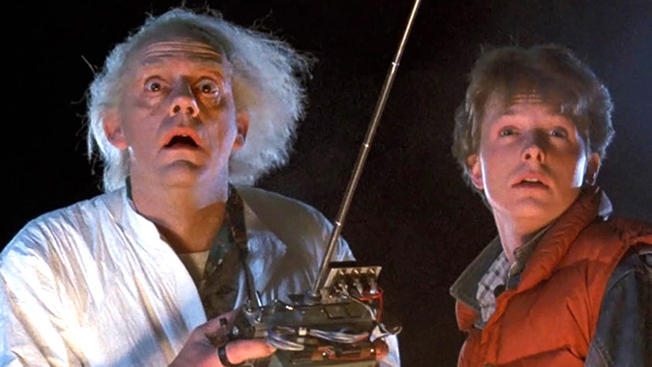
Sci-Fi films contain science and technology that already exists. True or False?
a)
True
b)
False
167.

A futuristic setting is a common, but not a necessary, hallmark of science fiction.
a)
True
b)
False
168.
What is characterisation?
a)
Character traits
b)
What a character says and thinks
c)
The process in which the author tells us about the personality of a character.
d)
What a character looks like and what are his actions
169.

Science fiction is a genre that deals with imaginative concepts such as futuristic settings, futuristic science and technology, space travel, time travel, faster than light travel, parallel universes and extraterrestrial life.
a)
True
b)
False
100 %

