
 Worksheets
Enviromental Review
Total questions: 102
Worksheet time: 2hrs 55mins
Name
Class
Date
1.
A place in an ecosystem where a population lives is called a _________.
a)
community
b)
habitat
c)
evolution
d)
limiting factor
2.
_____________ refers to all of the living species in the world.
a)
genetic diversity
b)
species diversity
c)
biological diversity
d)
environmental diversity
3.
What is species diversity?
a)
the variety of different organisms in an environment
b)
the number of individuals in a population
c)
the number of habitats on a continent
d)
how much food is available in a habitat
4.
Which of these describes genetic diversity?
a)
number of different species in an ecosystem
b)
the number of species on the planet
c)
variety in genotypes across a population
d)
number of populations in an ecosystem
5.
What has happened to biological diversity on Earth over time?
a)
it has increased
b)
it has decreased
c)
it has stayed the same
6.
What happens to diversity as limiting factors increase?
a)
diversity decreases
b)
diversity increases
c)
there is no change to diversity
7.
Which of these describe limiting factors?
a)
a factor that increases the size of a population
b)
a factor that causes habitats to be more livable
c)
a factor that limits the size of a population
8.
Populations with high diversity have _________.
a)
very few traits
b)
high number of different traits
c)
difficulty surviving
d)
very few living individuals
9.
What causes populations to change over time?
a)
extinction
b)
solution
c)
natural selection
d)
election
10.
The theory of evolution says that living things ___________.
a)
grow and develop
b)
change over time
c)
stay the same throughout history
d)
change very quickly
11.
Who came up with the theory of evolution?
a)
Charles Darwin
b)
Albert Einstein
c)
Steven Hawking
d)
Mr. Fletcher
12.
What causes living things to change over time?
a)
cloning
b)
fossil evidence
c)
natural disasters
d)
changes in the environment
13.
Scientists can tell that ____________ by studying fossils.
a)
living things have not changed over time
b)
living things have changed over time
c)
what living things will look like in the future
d)
what living things will eat in the future
14.
Living things change over time due to ___________.
a)
asexual reproduction
b)
cloning
c)
a change in the future
d)
a change in their environment
15.
Living things who posses favorable traits will most likely _____________.
a)
die young
b)
go extinct
c)
pass those traits to offspring
d)
remove the trait from the gene pool
16.
Populations with low genetic diversity are more likely to ______________.
a)
go extinct
b)
adapt to their environment
c)
posses a wide variety in traits
d)
have an advantage over living things with high genetic diversity
17.
A population whose members all look very similar would have _____________.
a)
high genetic diversity
b)
low genetic diversity
c)
high biological diversity
d)
low species diversity
18.
An ecosystem that contains many different species would have a ____________.
a)
high genetic diversity
b)
low genetic diversity
c)
high biological diversity
d)
high species diversity
19.
Which of these is a cause for genetic diversity?
a)
a variety in genotypes
b)
phenotypes
c)
changes occurring during an organisms life
d)
cloning
20.
Species that have ____________ are more able to adapt to their environment.
a)
high species diversity
b)
high biological diversity
c)
high genetic diversity
d)
low genetic diversity
21.
When individuals leave a population, genetic diversity ______________.
a)
increases
b)
decreases
c)
remains the same
d)
creates new species
22.
What do humans and animals typically compete for?
a)
food
b)
water
c)
living space
d)
political office
23.
When all the members of a species are no longer living, that species is considered _______________.
a)
extinct
b)
hybernating
c)
returning soon
d)
genetically diverse
24.
Which biome is characterized by low temperatures and low amounts of rainfall?
a)
tundra
b)
desert
c)
temperate deciduous forest
d)
tropical rain forest
25.
Which biome covers most of the land mass near the Earth's equator?
a)
tundra
b)
desert
c)
grassland
d)
tropical rainforest
26.
Which biome is found on the mountain above the tree line?
a)
grassland
b)
deciduous forest
c)
tundra
d)
tropical forest
27.
Which biome, because of its climate, has the largest number of species of plants and animals?
a)
tundra
b)
desert
c)
tropical rainforest
d)
pine forest
28.
One characteristic feature of tundra is that only the surface thaws in the summer and refreezes in the winter, leaving a layer of permanently frozen subsoil. This characteristic is known as
a)
glaciation
b)
permafrost
c)
crystallization
d)
soilfrost
29.
Which type of trees is found in a temperate forest?
a)
deciduous
b)
evergreen
c)
ginko
d)
palm
30.
Which major biome is home to cacti, mesquite, white thorn, pack rats, small reptiles, and coyotes?
a)
desert
b)
taiga
c)
tundra
d)
grassland
31.
Which biome receives between 0 and 25 centimeters of precipitation each year, has a temperature range from -27 to 5 degrees Celsius, has frozen soil, and is home to hares, caribou, and wolves?
a)
desert
b)
mountain
c)
savannah
d)
tundra
32.
Which of the following habitats probably has the greatest number of plant and animal species?
a)
the African savannah
b)
a rainforest in Brazil
c)
a temperate forest in China
d)
a temperate grassland in Kansas
33.
Which biome contains large populations of grazing herbivores, few species of birds, and deep, rich soil?
a)
taiga
b)
tundra
c)
deciduous forest
d)
grassland
34.
This biome contains mostly spruce trees and Douglas firs, which are both evergreen. The winters are long and cold and the summers are short and rainy. The soil is very rich. Moose and elk live here. This biome is classified as a
a)
taiga
b)
tundra
c)
deciduous forest
d)
temperate forest
35.
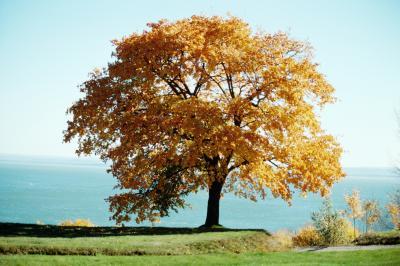
The biome known for trees with broad leaves that fall off the trees in the winter.
a)
Coniferous Forests
b)
Deciduous Forests
c)
Deserts
d)
Tropical Rain Forests
36.
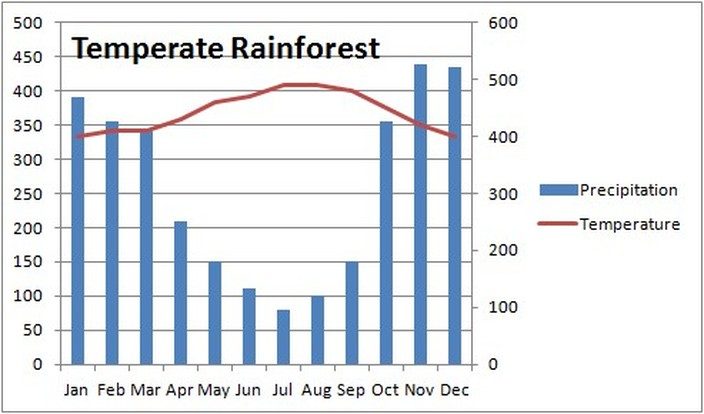
The most important abiotic factors when studying biomes are...
a)
Food and Water
b)
Water and Sunlight
c)
Temperature and Oxygen
d)
Water and Temperature
37.
The greatest biodiversity on earth is found in the __________ biome.
a)
taiga
b)
grassland
c)
temperate deciduous forest
d)
tropical rainforest
38.
This biome is found around the equator and is home to a large amount of biodiversity.
a)
Deserts
b)
Tropical Rain Forests
c)
Savannas
d)
Chaparral
39.
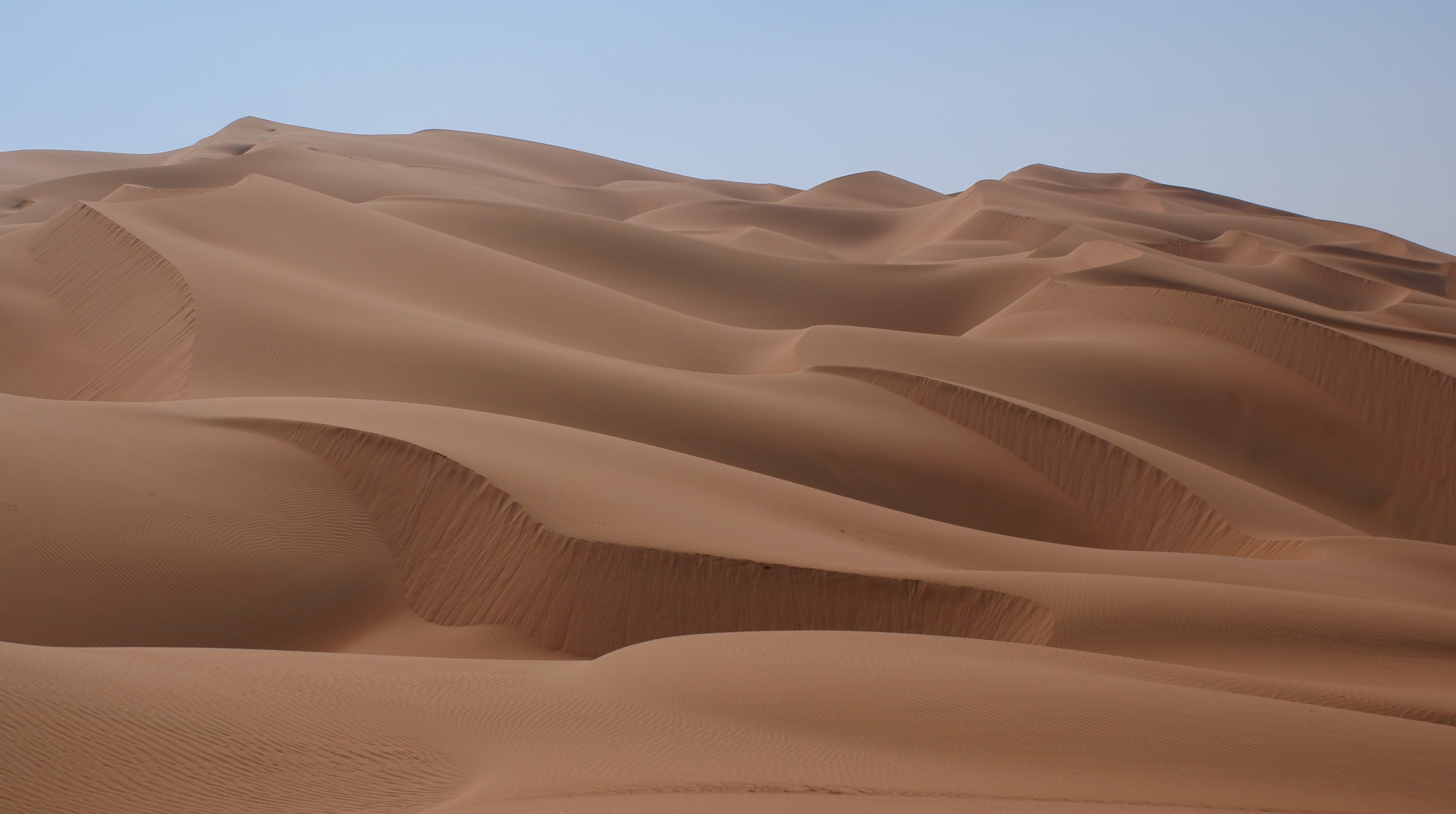
Which biome is MOST LIKE the "desert" in terms of precipitation?
a)
tropical rainforest
b)
temperate deciduous forest
c)
tundra
d)
coniferous forest
40.

Which biome is represented by the rainfall amounts in letter C?
a)
desert
b)
prairie
c)
deciduous forest
d)
tropical rain forest
41.
Areas defined by their geographical location and ecological similarity are called?
a)
ecozones
b)
biotopes
c)
biomes
d)
biodomes
42.
What are the key features of the Tundra?
a)
cold winter, thin acidic soil, evergreen trees
b)
treeless, permafrost, cold dark winters
c)
ong cool summers, short dark winters, migrating animals
d)
many evergreen trees, short moist summers, long snowy winters
43.
Which is not a factor that affects climate?
a)
altitude
b)
latitude
c)
lakes and oceans
d)
living organisms
44.

The numbers in this image refer to_____.
a)
latitude
b)
longitude
c)
temperature
d)
angle of the Sun's rays hitting Earth
45.

The numbers in this image refer to_____.
a)
latitude
b)
longitude
c)
temperature
d)
angle of the Sun's rays hitting Earth
46.

As these numbers increase, _____
a)
temperatures increase
b)
temperatures decrease
47.
As these numbers increase, _____
a)
temperatures increase
b)
temperatures decrease
48.

As these numbers increase, _____
a)
temperatures increase
b)
temperatures decrease
49.

The rain shadow is shown at ____
a)
A
b)
B
c)
C
d)
D
50.
A continental climate is ____.
a)
warm summers, cold winters, moderate precipitation
b)
hot summers, mild winters, heavy precipitation
c)
hot summers, mild winters, very little precipitation
d)
cool summers, cold winters, moderate precipitation
51.

Which season is shown in the northern hemisphere?
a)
winter
b)
spring
c)
summer
d)
fall
52.

Which season is shown in the southern hemisphere?
a)
winter
b)
spring
c)
summer
d)
fall
53.
Which is an influence on long term climate cycles?
a)
ocean currents
b)
trade winds
c)
shape of Earth's orbit
d)
shape of winter jet stream
54.
Which is a period of dryer weather than normal?
a)
drought
b)
equinox
c)
monsoon
d)
upswelling
55.
What do seasons, El Nino, and Ice Ages have in common?
a)
they all alternate between northern and southern hemispheres
b)
they all occur on the same time scales
c)
they are all climate cycles
d)
they all depend on Earth's distance from the Sun
56.
When do equinoxes occur?
a)
mid summer and winter
b)
mid spring and fall
c)
the beginning of summer and winter
d)
the beginning of spring and fall
57.
How does Earth's past climates compare to today's?
a)
the same
b)
the past has been warmer
c)
the past has been colder
d)
climates have been warmer at some times and colder at other times
58.
Which provides clues to the climate of the distant past
a)
rocks along ocean coastlines
b)
air in caves and deep holes
c)
water samples from the ocean holes
d)
air pockets in ice caps
59.

By what amount did carbon dioxide in Earth's atmosphere increase between 1960 and 2000?
a)
40 -50 ppm
b)
60 -70 ppm
c)
110 -120 ppm
d)
360 -370 ppm
60.

In what year was the average global temperature lowest between 1880 and 2000?
a)
1880
b)
1900
c)
1940
d)
2000
61.
Which is a natural source of greenhouse gases?
a)
aerosols
b)
deforestation
c)
volcanic eruptions
d)
burning fossil fuels
62.
What do greenhouse gases do?
a)
absorb Earth's outgoing infrared radiation
b)
reflect Earth's incoming infrared radiation
c)
magnify ultraviolet radiation in the atmosphere
d)
block the Sun's infrared radiation
63.
Which is not a source of carbon dioxide?
a)
forest fires
b)
volcanoes
c)
glaciers
d)
use of fossil fuel
64.
Which of these negative effects is most likely to occur because of global warming?
a)
rising sea levels
b)
shorter growing seasons
c)
increased volcanic eruptions
d)
falling sea levels
65.
Why is the predicted change in human population a concern for climate change
a)
fewer resources will be needed as this change occurs
b)
Earth cools as resources are used
c)
greenhouse gases will be depleted as resources are used more
d)
more greenhouse gases will be added to atmosphere as more resources are used
66.
Compared with weather patterns, climate patterns are more _____.
a)
severe
b)
long term
c)
local
d)
unusual
67.
Climates are classified by ____
a)
plants and animals
b)
altitude and latitude
c)
bodies of water and ocean currents
d)
temperature and precipitation
68.
Several different climates can exist within a small area in _____ climates
a)
marine
b)
continental
c)
polar
d)
highland
69.
Volcanoes can cool the climate by_____
a)
increasing wind speeds
b)
using up Earth's energy
c)
releasing gas and particles
d)
increasing air pressure.
70.
Where you will find the ozone layer.
a)
stratosphere
b)
thermosphere
c)
exosphere
d)
mesosphere
71.
Where weather occurs.
a)
stratosphere
b)
thermosphere
c)
troposphere
d)
mesosphere
72.
The only layer that contains water vapor and carbon dioxide.
a)
stratosphere
b)
thermosphere
c)
troposphere
d)
mesosphere
73.
Where we live.
a)
stratosphere
b)
thermosphere
c)
troposphere
d)
mesosphere
74.
Considered to be a part of the thermosphere.
a)
ionosphere
b)
thermosphere
c)
troposphere
d)
mesosphere
75.
The coldest layer.
a)
troposphere
b)
thermosphere
c)
exosphere
d)
mesosphere
76.
The hottest layer.
a)
troposphere
b)
thermosphere
c)
exosphere
d)
mesosphere
77.
What two gases are found throughout all layers of the atmosphere?
a)
Nitrogen and carbon dioxide
b)
Nitrogen and oxygen
c)
Oxygen and carbon dioxide
d)
Trace gases and water vapor
78.
What does the earth's atmosphere do?
a)
help to regulate the temperature on Earth
b)
Help UV rays to reach the Earth's surface
c)
Creates meteors in the sky
d)
Keep ocean waters cold
79.
What happens to the air pressure the higher up in space you go?
a)
the air pressure increases
b)
the air pressure decreases
c)
the air pressure stays the same
d)
there is no air pressure
80.
Which statement is true?
a)
The troposphere has the highest temperature because of the distance from the Sun
b)
The troposphere has the highest pressure because gravity keeps the air down.
c)
The exosphere has the highest temperature because of the distance from the Sun
d)
The exosphere has the highest pressure because gravity keeps the air down.
81.
As you go higher in the troposphere, the temperature _______________.
a)
decreases
b)
increases
c)
stays the same
82.
As you go higher in the stratosphere, the temperature _______________.
a)
decreases
b)
increases
c)
stays the same
83.
As you go higher in the mesosphere, the temperature _______________.
a)
decreases
b)
increases
c)
stays the same
84.
As you go higher in the thermosphere, the temperature _______________.
a)
decreases
b)
increases
c)
stays the same
85.
What is the function of the ozone layer?
a)
to allow UV rays to get to Earth
b)
to block UV rays from getting to Earth
c)
To keep oxygen in
d)
to allow meteors to get to Earth
86.
Which phenomenon can be seen only in the ionosphere?
a)
ozone layer
b)
Aurora Borealis
c)
Highlands
d)
water vapor
87.
Highways allow people to travel between towns and cities. These highways also divide ecosystems into smaller pieces. Animals can become separated from lakes they use for breeding. For example, tiger salamanders travel long distances to breed at lakes. How could highway systems affect animals such as tiger salamanders?
a)
Tiger salamanders may be cut off from important resources
b)
Tiger salamander could improve their ability to remember roads
c)
Tiger salamander's habitat within ecosystems could become larger
d)
Tiger salamanders habitat may be exposed to less pollution
88.
Guppies are small fish that live in fresh water. Most guppy species reproduce sexually, but some reproduce asexually. There are two lakes in a particular region. One lake contains a species of guppy that reproduces asexually. The other lake contains a species of guppy that reproduces sexually. A scientist studying these lakes predicts that the sexually reproducing guppies would survive better than the asexually reproducing guppies if a fungus was introduced to both lakes. Which statement supports this hypothesis?
a)
The sexually reproducing guppies are carriers of harmful characteristics
b)
The sexually reproducing guppies require only one individual for reproduction
c)
The sexually reproducing guppies have a variation of inherited characteristics
d)
The sexually reproducing guppies are identical to one another
89.

The reproductive success of an organism depends in part on the ability of the organism to survive. How does the physical appearance of these organisms help them survive?
a)
Their physical appearance helps them find a habitat
b)
Their physical appearance helps them resist parasites.
c)
Their physical appearance helps them avoid predators.
d)
Their physical appearance helps them defend a territory.
90.

The difference in beak shape and size of the Galapagos Island finches was because...........
a)
birds immigrating from different locations
b)
introduction of non-native bird species to the island
c)
variation within the species which allowed them to adapt to different food sources
d)
cross-breeding of finches with other bird species
91.
The process by which individuals that are better adapted to their environment are more likely to survive and reproduce than other members of the same species is called................
a)
Natural selection.
b)
Evolution
c)
Competition
d)
Overpopulation
92.
How diversity within a species benefit that species if there is an environmental change?
a)
Diversity does not affect a species if there is an environmental change.
b)
Sexual reproduction within a species allows for diversity which benefits the species if there is an environmental change.
c)
Asexual reproduction within a species allows for diversity which benefits the species if there is an environmental change.
d)
None of the choices are correct
93.

Select the 3 statements that may explain the changes in the population of the peppered moths during this time:
a)
Options 1, 2, and 3
b)
Options 2, 3, and 4
c)
Options 1, 5, and 6
d)
Options 2, 4 and 5
94.

Which statement correctly explains why one of the species is more likely to survive an environmental change?
a)
Species 1 because it has fewer genes
b)
Species 2 because it has more genes
c)
Species 1 because it has less genetic diversity
d)
Species 2 because it has greater genetic diversity
95.

What is going to happen to the population of finch that has a BB Genotype?
a)
Increase
b)
Decrease
c)
Stay the same
96.

What is going to happen to the population of finch that has a Bb genotype?
a)
Increase
b)
Decrease
c)
Stay the same
97.
In the Western Hemisphere, crocodiles can be found only as far north as southern Florida. Crocodiles require warm temperatures to survive. The average annual temperature for southern Florida is 76 degrees F. However, crocodile fossils and fossilized subtropical plants have been found in parts of western Colorado, where the average annual temperature is 53 degrees F.
Which statement explains why crocodile fossils are found in western regions of the United States but living crocodiles are not?
Which statement explains why crocodile fossils are found in western regions of the United States but living crocodiles are not?
a)
Crocodiles used to live in cold climates but adapted to warm climates
b)
The climate changed, and crocodiles could not survive in this region
c)
Crocodiles migrated from Florida to Colorado, where they died
d)
A glacier carried crocodile bones from Mexico to Colorado
98.

Which graph shows a population that would have the greatest chance of surviving a significant change in climate?
a)
A
b)
B
c)
C
d)
D
99.

Select the 4 possible explanations for the results shown in the graph.
a)
A, B, C, D
b)
B, C, D, E
c)
D, E, F, A
d)
C, D, E, F
100.
A park is home to a large number of robins, squirrels and rabbits. The robins and squirrels live in the park's trees. The robins feed on earthworms and insects that live on the ground. The squirrels eat the acorns produced by the park's oak trees. The rabbits hide in the bushed and feed on the grass. Which factor would directly limit the number of rabbits that could live in this park.
a)
Number of acorns
b)
Number of squirrels
c)
Number of bushes
d)
Number of robins
101.
A desert lake has evaporated to half its original size over the past 50 years. This caused a large increase in the lake's salt concentration. Over these 50 years, scientists have observed a decrease in the population of one fish species and an increase in the population of a shrimp species. Which hypothesis about the organisms ability to live with the salt concentration does the evidence suport
a)
The fish are better able to live in areas of high salt concentration
b)
Neither the shrimp nor the fish are able to live in areas of high salt concentration
c)
Both the shrimp and the fish are equally able to live in areas of high salt concentration
d)
The shrimp are better able to live in areas of high salt concentration
102.
Aphids are a common plant-pest insect. They alternate between asexual and sexual reproduction. During the summer, aphid populations grow quickly by asexual reproduction. As winter approaches, aphids switch to sexual reproduction. What advantage does the switch to sexual reproduction give the aphids?
a)
Sexual reproduction maintains a constant level of variation in the population and requires less energy
b)
Sexual reproduction increases variation in the population and provides for adaptability in a changing environment
c)
Sexual reproduction decreases variation in the population and prevents the spread of harmful mutations
d)
Sexual reproduction produces individuals that are clones and allows rapid population growth under stable environmental conditions
100 %

