
 Worksheets
Semester 1 review
Total questions: 74
Worksheet time: 51mins
Name
Class
Date
1.
What is the density of an object that has a mass of 10kg and a volume of 25cc?
a)
.25 g/cc
b)
2.5 g/cc
c)
0.4 g/cc
d)
0.4 cc/g
2.
1 Calorie =
a)
1000 joules
b)
4.18 joules
c)
1000 calories
d)
4.184 calories
3.
23 Celsius =
a)
8 F
b)
80 F
c)
800 F
d)
58 F
4.
100 F =
a)
38 C
b)
138C
c)
212 C
d)
-5 C
5.
A chemical change would be
a)
Tearing paper
b)
cutting wood
c)
painting a door
d)
rusting metal
6.
A physical change would be
a)
cutting wood
b)
rusting metal
c)
decaying leaves
d)
burning a cheeto
7.
Physical Change
a)
Changes what the substance is
b)
Changes the way it looks, but not what it is composed of
8.
An element would be
a)
HCl
b)
Cl
c)
Sand
d)
NaCl
9.
A compound is
a)
a simple element
b)
more then one type of element bonded together
c)
two or more elements that are in the same place at the same time.
10.
Heat energy is calculated in
a)
degrees Celsius
b)
Kelvin
c)
Joules
d)
grams
11.
Matter is
a)
created and destroyed
b)
not created or destroyed
12.
Energy is
a)
mass
b)
ability to do work
c)
stored
d)
volume
13.
A homogeneous mixture
a)
milk
b)
mixed veggies
c)
sand and water
d)
oil and water
14.
Pure substances are
a)
milk
b)
mixed fruit
c)
oil and water
d)
sand and water
15.
energy stored for later use is
a)
potential energy
b)
kinetic energy
c)
nuclear energy
d)
mechanical energy
16.
To calculate the volume of a cube you will
a)
density x mass
b)
Mass/ density
c)
mass x density / 2
17.
What is Pure Science?
a)
applying your knowledge
b)
what you know
c)
only biology
d)
brown
18.
Which is an example of applied science?
a)
The sky is blue
b)
Reading a tape measure
c)
Painting a door
d)
I know what an element is
19.

What is the dependent variable
a)
Velocity
b)
time
c)
speed
d)
velocity
20.
Calculations ΔQ = (m)(ΔT)(c)
Q is energy measured in Joules or calories
m is mass measured in grams
ΔT is change in temperature in degrees Celsius
c is specific heat, for water specific heat is measured in 4.184
How much heat is added to 100 grams of water to raise the temperature from 20 degrees Celsius to 80 degrees Celsius? (Hint, look at c for the specific heat of water.)
Q is energy measured in Joules or calories
m is mass measured in grams
ΔT is change in temperature in degrees Celsius
c is specific heat, for water specific heat is measured in 4.184
How much heat is added to 100 grams of water to raise the temperature from 20 degrees Celsius to 80 degrees Celsius? (Hint, look at c for the specific heat of water.)
a)
60
b)
6000
c)
25,104
d)
12,000
21.
A kind of energy stored in an object for later use is
a)
kinetic energy
b)
potential energy
c)
mechanical energy
d)
nuclear energy
22.
The SI unit (metric) for measuring energy is the
a)
joule
b)
calorie
c)
newton
d)
pascal
23.
The majority of elements are _________ and are found on the left side of the periodic table.
a)
metals
b)
nonmetals
c)
semi-metals
24.
Magnesium is a
a)
metal
b)
nonmetal
c)
metalloid
d)
noble gas
25.
Which of the following is NOT a property of metals
a)
lustrous
b)
good conductors of electricity
c)
gasous at room temperature
d)
malleable
26.
How many electrons would a Lithium ATOM have?
a)
6
b)
3
c)
9
d)
2
27.
How many neutrons does Sodium (Na) have?
a)
11
b)
23
c)
12
d)
10
28.
What is the last part of the electron configuration of Calcium
a)
2s2
b)
3s2
c)
4s2
d)
4s1
29.
Why do elements in the same group have similar properties?
a)
they have the same atomic radii
b)
they have the same electronegativity
c)
they have the same number of valence electrons
d)
they have the same number of protons
30.
How are elements arranged in the periodic table.
a)
by increasing atomic mass
b)
by increasing atomic number
c)
alphabetically
d)
by popularity
31.
In the periodic table what are the groups?
a)
columns
b)
rows
c)
transition metals
d)
diagonal lines
32.
when reading the periodic table the most reactive metals are also known as
a)
alkali metals
b)
halogens
c)
nonmetals
d)
noble gases
33.
Which of the following is a semimetal or metalloid?
a)
calcium
b)
nitrogen
c)
aluminum
d)
copper
34.
What element has the electron configuration of 1s22s22p63s23p2
a)
Carbon
b)
Silicon
c)
Germanium
d)
Magnesium
35.
Matter is
a)
created and destroyed
b)
not created or destroyed
36.
Electrons are found in _ energy levels
a)
7
b)
2
c)
6
d)
1
37.
An electron has what kind of charge?
a)
no charge
b)
positive
c)
negative
d)
it depends
38.
a proton has what charge?
a)
positive
b)
negative
c)
no charge
d)
it depends
39.
If an aluminum atom has 13 protons (+) and 10 electrons (-), what is it's charge?
a)
Al3+
b)
Al13+
c)
Al10+
d)
Al10-
40.

What is the formula to determine wavelength
a)
f / v
b)
v / f
c)
v times f
d)
v minus f
41.

Which type of wave has the highest frequency?
a)
gamma ray
b)
x ray
c)
infrared
d)
radio waves
42.

What is the frequency of a wave traveling at 30 m/s with the wavelength of 6 meters?
a)
180 Hz
b)
36 Hz
c)
.2 Hz
d)
5 Hz
43.

Which color has the longest wavelength?
a)
red
b)
orange
c)
blue
d)
violet
44.
Magnesium is a
a)
metal
b)
nonmetal
c)
semi-metal
d)
noble gass
45.
An atom with 28 protons and 32 neutrons has the atomic number of
a)
28
b)
32
c)
4
d)
60
46.
A possible explanation to a problem that has not yet been tested.
a)
data
b)
theory
c)
hypothesis
d)
fact
47.
The summary at the end of an experiment that explains the results.
a)
conclusion
b)
procedures
c)
materials
d)
responding variable
48.

Which statement is an inference about this picture?
a)
The van is tan.
b)
The van ran into KFC.
c)
The driver was hungry.
d)
Red and white are part of the KFC building.
49.
A student is planning an experiment to find out how the height from which he drops a ball affects how high the ball bounces. The dependent variable is the _____.
a)
Diameter of the ball
b)
Force acting on the ball
c)
Height that the ball bounces
d)
Height from which the ball is dropped
50.
How would you write 4.3756 x 10⁴ in standard form?
a)
437,560,000
b)
0.00043756
c)
43,756
d)
4,3756
51.
How would you write 0.0005 in scientific notation?
a)
50 x 105
b)
5 x 10⁴
c)
5 x 10³
d)
.5 x 103
52.
How would you write -5.6 x 10⁻³ in standard form?
a)
0.0056
b)
-5,600
c)
0.00056
d)
-0.0056
53.
How do you write
1001
in scientific notation?
1001
in scientific notation?
a)
1.0001 x 10⁴
b)
1.01 x 10⁵
c)
1.001 x 10³
d)
10.1 x 10³
54.
Who first had evidence of the atom?
a)
Democritus
b)
Dalton
c)
Rutherford
d)
Thompson
55.
Who discovered the electron?
a)
Bohr
b)
Dalton
c)
Rutherford
d)
Thompson
56.
Who discovered the positive nucleus?
a)
Bohr
b)
Dalton
c)
Rutherford
d)
Thompson
57.
In Bohr's model electrons are....
a)
...dispersed in a positive soup
b)
...evenly spaced around the nucleus
c)
...found at different energy levels
d)
...found in clouds surrounding the nucleus
58.
Thought atoms were indestructible
a)
Dalton
b)
Rutherford
c)
Thompson
d)
Bohr
59.
Plum Pudding
a)
Dalton
b)
Rutherford
c)
Thompson
d)
Bohr
60.
Gold Foil
a)
Dalton
b)
Rutherford
c)
Thompson
d)
Bohr
61.
Cathode Ray Tube
a)
Dalton
b)
Rutherford
c)
Thompson
d)
Bohr
62.

This model added on to previous models by showing electrons existed at certain "energy levels". However it does not accurately show what those levels look like.
a)
The "Bohr Model" of the atom
b)
The "Rutherford Model" of the atom
c)
The "Plumb Pudding Model" of the atom
d)
The "Quantum Mechanical Model" of the atom
63.
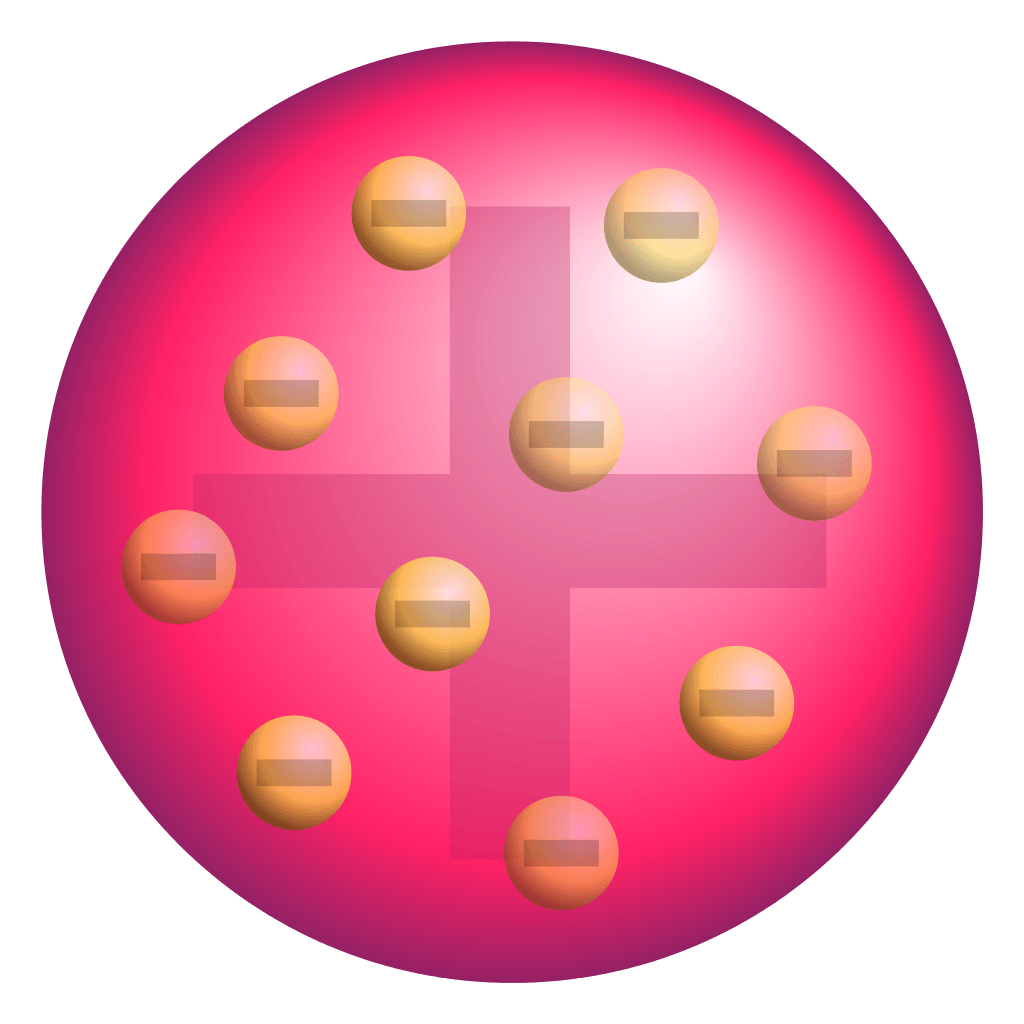
This model was developed after J.J. Thompson discovered electrons, a particle smaller than an atom. Is shows electrons floating freely in a positive space.
a)
The "Plum Pudding Model" of the atom
b)
The "Rutherford Model" of the atom
c)
Democritus's model of the atom
d)
The "Quantum Mechanical Model" of the atom
64.

What does the nucleus of an atom contain?
a)
Electrons & Neutrons
b)
Protons & Neutrons
c)
Neutrinos & Positrons
65.
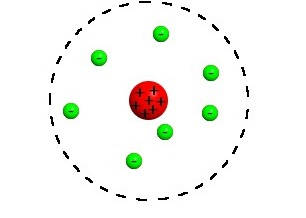
Who came up with this model?
a)
Dalton
b)
Thomson
c)
Rutherford
d)
Bohr
66.

How many electrons does an atom with 8 protons have?
a)
8
b)
16
c)
15.99
d)
24
67.

The first orbital can hold a maximum of how many electrons?
a)
2
b)
3
c)
8
d)
6
68.

How many electrons can the d sublevel hold?
a)
8
b)
10
c)
2
d)
4
69.

Which orbital has the least amount of energy?
a)
p orbital
b)
d orbital
c)
s orbital
d)
What is an orbital?
70.

What is the shape of a p orbital?
a)
sphere
b)
it's just too complex to thing about it
c)
dumbbell
d)
I don't know this stuff.
71.

1. What is the shape of an s orbital?
a)
sphere
b)
dumbbell
c)
double dumbbell
d)
TOO COMPLEX TO KNOW IT.
72.

Which orbital shows a violation of Hund's Rule?
a)
A
b)
B
c)
C
d)
D
73.

Which orbital shows a violation of the Aufbau Principle?
a)
A
b)
B
c)
C
d)
D
74.

Which orbital shows a violation of the Pauli Exclusion Principle?
a)
A
b)
B
c)
C
d)
D
100 %

