
 Worksheets
Energy and Matter in Organisms
Total questions: 53
Worksheet time: 41mins
Name
Class
Date
1.
The role that a plant or animal plays in its habitat is called
a)
population
b)
niche
c)
predator
d)
ecosystem
2.
__________ is all the organisms of the same kind that live together in a given area.
a)
population
b)
niche
c)
predator
d)
ecosystem
3.
A _________ is a community of organisms and the environment in which they live.
a)
population
b)
niche
c)
predator
d)
ecosystem
4.
A _________ is an animal that hunts, catches, and eats other animals.
a)
population
b)
niche
c)
predator
d)
ecosystem
5.
A living thing, such as a plant, that can make its own food is called a ________.
a)
prey
b)
consumer
c)
producer
d)
habitat
6.
A living thing, such as a plant, that can make its own food is called a ________.
a)
prey
b)
consumer
c)
producer
d)
habitat
7.
A ______ is place where an organism lives and can find everything it needs survive.
a)
prey
b)
consumer
c)
producer
d)
habitat
8.
A _______ is a group of organisms that live in the same area and interact with one another.
a)
photosynthesis
b)
community
c)
environment
9.
The ________ is all of the living and nonliving things that surround and affect an organism.
a)
photosynthesis
b)
community
c)
environment
10.
________ is the process that plants use to make sugar.
a)
photosynthesis
b)
community
c)
environment
11.
Which of the following are produced by photosynthesis?
a)
hydrogen and water
b)
carbon dioxide and sunlight
c)
oxygen and carbon dioxide
d)
oxygen and sugar
12.
Plants need all of the following things except what in order for photosynthesis to occur?
a)
sugar
b)
carbon dioxide
c)
sunlight
d)
water
13.
A student set up an investigation with four plants of the same kind. Plant 1 gets light and water. Plant 2 gets light but no water. Plant 3 gets water but no light. Plant 4 gets no water and no light. What will happen to the plants?
a)
Plants 1 and 3 will grow well.
b)
All plants will grow well.
c)
Plants 2 and 4 will grow well.
d)
Plant 1 will grow well.
14.
What is the process that plants use to produce food?
a)
chloroplast
b)
carbon dioxide
c)
sunlight
d)
photosynthesis
15.
If a plant is in a vacuum-sealed container, it means that there is no ________ in the container.
a)
water
b)
air
c)
soil
16.
Some plants, such as the Venus Fly Trap, grow in soil that does not have a lot of nutrients. The Venus Fly Trap gets its nutrients by eating other insects.
a)
True
b)
False
17.
In a grassland food chain, grasshoppers eat grass. Then meerkats eat grasshoppers. What is the main role of the grasshopper in this food chain?
a)
make a new habitat
b)
clear grass for space to live
c)
be a source of energy
d)
lay eggs to make more grasshoppers
18.
What is the original source of energy used to make the food this horse is eating?
a)
grass
b)
water
c)
air
d)
sun
19.
Food provides an organism with the matter and ________ needed for the growth and _______ of body parts.
a)
repair and damage
b)
damage and energy
c)
repair and energy
d)
repair and oxygen
20.

How does the small fish get energy?
a)
by eating the seaweed
b)
by eating the shark
c)
by eating the consumer
d)
by eating the large fish
21.
Grass is a ________.
a)
producer
b)
consumer
22.
Chicken is a ________.
a)
producer
b)
consumer
23.
Lettuce is a ________.
a)
producer
b)
consumer
24.
A tree is a ________.
a)
producer
b)
consumer
25.
A dog is a ________.
a)
producer
b)
consumer
26.
A bird is a ________.
a)
producer
b)
consumer
27.
Animals are ________ that get materials necessary for body growth and repair by eating other organisms.
a)
producers
b)
consumers
28.

The arrows in a food chain like the one pictured represents what is most important in a food chain.
a)
True
b)
False
29.
Atley and Ryker do an experiment with two plants. They give plant 1 fresh water. They give plant 2 salt water. Plant 1 grows to be 4 feet tall, and Plant 2 grows to be 2 feet tall. What can you infer?
a)
These plants grow better with salt water than with fresh water.
b)
These plants cannot grow with either freshwater or saltwater.
c)
These plants grow better with fresh water than with salt water.
d)
These plants grow the same with either freshwater or saltwater.
30.
All of the following are nonliving things found in nature except
a)
sharks
b)
sand
c)
air
d)
water
31.
What is the difference between predators and prey?
a)
Prey hunt their food, but predators just get eaten.
b)
Predators hunt their food, but prey just gets eaten.
c)
They are both similar.
32.
Is a predator more likely to be a producer or a consumer?
a)
producer
b)
consumer
33.
Temperature, light, air, water, and soil are all _____ parts of the environment
a)
alive
b)
biotic
c)
abiotic
d)
living
34.
Is a deer an abiotic or biotic factor?
a)
abiotic
b)
biotic
35.

This picture depicts (shows) which level of organization in an ecosystem?
a)
Population
b)
Organism
c)
Ecosystem
d)
Community
36.

This picture depicts (shows) which level of organization in an ecosystem?
a)
Community
b)
Population
c)
Ecosystem
d)
Organism
37.

This picture depicts (shows) which level of organization in an ecosystem?
a)
Ecosystem
b)
Organism
c)
Population
d)
Community
38.
Roots absorb ____ and ____ for plants?
a)
Water and Nutrients
b)
Soil and Sun
c)
Warmth and Water
d)
Tap and Fibrous
39.
In which part of the plant does photosynthesis occur?
a)
leaf
b)
stem
c)
root
d)
flower
40.
Part of a plant that holds and protects seeds
a)
roots
b)
stem
c)
fruit
d)
leaves
41.
What are the products of photosynthesis?
a)
water and carbon dioxide
b)
oxygen and glucose
c)
oxygen and carbon dioxide
d)
oxygen and water
42.
Plants need ________from the air for photosynthesis
a)
oxygen
b)
soil
c)
carbon dioxide
d)
sugar
43.

Which plant part transports water and nutrients to different parts of the plant?
a)
Leaf
b)
Stem
c)
Roots
d)
Flower
44.
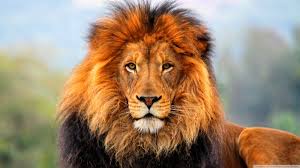
Lions only eat buffalo, antelopes, zebras and crocodiles. They are called __________.
a)
Omnivore
b)
Herbivore
c)
Carnivore
d)
Delivore
45.

Elephants only eat leaves, fruit, nuts and grass. They are called __________.
a)
Omnivore
b)
Fortivore
c)
Herbivore
d)
Carnivore
46.

__________ is an organism that eats plants and animals for energy.
a)
Omnivore
b)
Borivore
c)
Herbivore
d)
Carnivore
47.
An organism that breaks down wastes and plant and animal remains and returns their nutrients to the soil is a/an
a)
consumer
b)
scavanger
c)
decomposer
d)
prey
48.

Which of the following is a herbivore?
a)
cricket
b)
frog
c)
hawk
d)
shrew
49.

Use the diagram to answer the question.
What is a fitting description for this diagram?
What is a fitting description for this diagram?
a)
A Food Chain
b)
An Ecosystem
c)
A Food Web
d)
Biotic and Abiotic Factors
50.

Use the diagram to answer the question.
The Mayfly is a food source for which 3 organisms?
The Mayfly is a food source for which 3 organisms?
a)
Frog, Dragon Fly and snake
b)
Frog, trout and dragon fly
c)
Frog, salamander and trout
d)
Frog and phytoplankton
51.

The shrew provides energy for the _______.
a)
cricket
b)
grasshopper
c)
frog
d)
snake
52.

What role do animals play in the carbon cycle?
a)
absorb carbon dioxide from the atmosphere
b)
give off carbon dioxide through respiration
c)
combustion
d)
decomposing matter
53.
Complete the flow of nutrients. Soil --> Producer --> Consumer --> _________ --> Soil
a)
Herbivore
b)
Decomposer
c)
Carnivore
d)
Omnivore
100 %

