wayground logo

Free Printable Worksheets

Font size

S
M
L
XL
Worksheets

Moon and Stars Test

Total questions: 50

Worksheet time: 47mins

Name
Class
Date
1.

At 10,000 degrees Celsius, hydrogen begins to change into helium and energy is released in a process called

a)

supernova

b)

pulsar

c)

nuclear fusion

d)

nuclear fishin

2.
A small, hot star near the end of its life is a star called a
a)
white dwarf
b)
red dwarf
c)
supergiant
d)
protostar
3.

A gigantic explosion that causes the death of a large star

a)

pulsar

b)

red giant

c)

supernova

d)

black hole

4.
What color are the hottest stars?
a)
red
b)
yellow
c)
orange
d)
blue
5.

The HR Diagram shows a relationship of a star's surface temperature and its

a)

color

b)

size

c)

brightness

d)

magnitude

6.
The only force acting on the nebulae is ________.
a)
thermal
b)
singular
c)
gravity
d)
microscopic
7.

A star is born when ________________ begins to happen.

a)

nuclear fusion

b)

nuclear abrasion

8.
When our Sun becomes a Red Giant, it will engulf _______.
a)
just Mercury
b)
all the inner planets.
c)
the entire solar system
d)
just Mercury and Venus
9.
When the core of a Red Supergiant collapses, a bright event known as a ___________ occurs.
a)
superdupernova
b)
supernova
c)
big bang
d)
black hole
10.

After a supernova, the core can collapse into a neutron star, or if massive enough a ___________ will occur,from which not even light can escape.

a)

Black Hole

b)

White Dwarf

c)

Brown Dwarf

d)

Black Dwarf

11.
Everything you see around you was made inside ________.
a)
the earth
b)
factories
c)
stars
d)
an oven
12.

A large, fixed point in the night sky that emits light as a result of being heated by hydrogen fusion.

a)

moon

b)

asteroid

c)

star

d)

comet

13.

the lightest and most abundant element in the universe.

a)

oxygen

b)

iron

c)

helium

d)

hydrogen

14.

_________________________________occurs in stars as gravity pulls particles closer, hydrogen atoms collide causing energy to be released that heats other hydrogen atoms and causes them to collide. Helium results when hydrogen atoms collide making the star grow larger.

a)

Hydrogen Fusion

b)

Helium Fusion

c)

Iron Fusion

d)

oxygen fusion

15.

____________________________results when hydrogen atoms collide making the star grow larger.

a)

hydrogen

b)

helium

c)

oxygen

d)

lead

16.

_____________always wins and stars die.

a)

fusion

b)

helium

c)

gravity

d)

Mrs Olson

17.

A very large dying star that is the last stages of star evolution

a)

protostar

b)

red giant

c)

brown dwarf

d)

white dwarf

18.

_____________________ is the term for largest stars in the Universe

a)

Wicked Biggie

b)

Super Giant

c)

Wow that's Big

d)

Super Duper Big

19.

___________________________________ is ring shaped, expanding gases (hydrogen+helium) that form around an aging star.

a)

protostar

b)

red giant

c)

planetary nebula

d)

white dwarf

20.

______________________________a very small dense star that is at the end of the star life cycle

a)

protostar

b)

Red giant

c)

planetary nebula

d)

white dwarf

21.

____________________A large system of stars held together by gravity

a)

Super nova

b)

galaxy

c)

neutron star

d)

vortex

22.

_____________a celestial object/body of very small radius (typically 18 miles) and very high density, composed predominantly of very closely packed neutrons.

a)

galaxy

b)

super nova

c)

neutron star

d)

vorex

23.
Our Sun is average-sized, average temperature, and middle aged.
a)
False
b)
True
24.

Which star has the lowest luminosity and the highest temperature?

a)

A

b)

B

c)

C

d)

D

25.
The coldest stars are
a)
red
b)
yellow
c)
white
d)
blue
26.

The star that appears brightest to us on Earth is

a)

the Sun

b)

Sirius

c)

Polaris

27.

This element spells death for a star. Its very heavy and very dense

a)

Helium

b)

Lead

c)

Hydrogen

d)

Sodium

28.
The distance that light travels in one year...
a)
Light year
b)
Quantumyear
c)
Stellar-year
d)
1 million kilometers
29.

What are the three things that can be left behind after a stars dies?

a)

Planetary nebula, black hole, sleepy dwarf

b)

blue circle, white dwarf, black hole

c)

White dwarf, black hole, neutron star

d)

White hole, brown dwarf, asteroid.

30.
what stage of the life cycle of a star is this? 
a)
Planetary Nebula
b)
Black Hole
c)
Neutron Star
d)
Giant/Supergiant
31.
What stage of the life cycle of a star is this? 
a)
Main Sequence
b)
Red Giant
c)
Black Hole
d)
Neutron star
32.

This is an image of the formation of a star, also known as a ....

a)

Main Sequence

b)

solar system

c)

Supernova

d)

Nebula /Protostar

33.

A star enters its first stage of its life cycle as...

a)

Gas.

b)

A ball of gas and dust.

c)

smoke

d)

Air.

34.
What is found on the x axis of an H-R diagram?
a)
Luminosity
(or brightness)
b)
Temperature
c)
Star Size
d)
Distance
35.
A group of stars that form a pattern in the sky are called...
a)
constellations
b)
dot drawings
c)
art
d)
Zenith
36.
Nebulae are considered "Stellar Nurseries" because...
a)
Planets are created from the gases
b)
Stars form from them
c)
Asteroids are formed from them
37.

Why do we NOT see the same constellation of stars in the night sky all year long?

a)

The stars move

b)

The Earth rotates on its axis

c)

The Earth revolves around the sun

d)

the stars move and the earth rotates

e)

The Earth rotates on its axis and revolves around the sun
38.
About how long does it take the moon to make one complete cycle around the earth?
a)
65 days
b)
8 days
c)
365 days
d)
28 days
39.
Which moon phase is when you can't see the moon at all?
a)
Waning crescent
b)
Full moon
c)
Waxing gibbous
d)
New moon
40.
Phases of the moon in which the moon appears to be getting larger are referred to as _.
a)
waxing
b)
waning
c)
new
d)
eclipse
41.
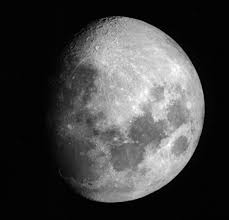
Name the moon phase
a)
waning crescent
b)
waxing crescent
c)
waning gibbous
d)
waxing gibbous
42.
Name the moon phase
a)
waning crescent
b)
waxing crescent
c)
waning gibbous
d)
waxing gibbous
43.
Name the moon phase
a)
First Quarter
b)
Last Quarter or (third quarter)
c)
New Moon
d)
Full Moon
44.
Name the moon phase
a)
First Quarter
b)
Last Quarter
c)
New Moon
d)
Full Moon
45.
What moon phase came right BEFORE this one?
a)
First Quarter
b)
Last Quarter
c)
New Moon
d)
Full Moon
46.
What type of galaxy is this?
a)
Spiral
b)
Elliptical
c)
Irregular 
d)
Irrational
47.
What type of galaxy is this?
a)
Spiral
b)
Elliptical
c)
Irregular
d)
Irrational
48.
What type of galaxy is this?
a)
Spiral
b)
Elliptical
c)
Irregular
d)
Irrational
49.
All existing matter and space considered as a whole is called what?
a)
Galaxy
b)
Planet
c)
Universe
d)
Milky Way
50.
Place these objects in order from smallest to largest.
a)
Planets, solar system, universe, galaxy
b)
Solar system, planets, galaxy, universe
c)
Planets, solar system, galaxy, universe
d)
Galaxy, solar system, planets, universe