
NEW
Font size
S
M
L
XL
 Worksheets
Integrated Physics Semester Review Part 1
Total questions: 45
Worksheet time: 40mins
Name
Class
Date
1.
A possible explanation to a problem that has not yet been tested.
a)
data
b)
theory
c)
hypothesis
d)
fact
2.
This variable in an experiment is the one being deliberately changed by the scientist.
a)
dependent variable
b)
independent variable
c)
data
d)
control group
3.
There are two types of data. Which type of data involves numbers that are obtained by counting or measuring?
a)
quantitative
b)
qualitative
4.
The summary at the end of an experiment that explains the results.
a)
conclusion
b)
procedures
c)
materials
d)
responding variable
5.
There are two types of data. Which type of data involves descriptions/photographs/illustrations that cannot be counted or measured?
a)
qualitative
b)
quantitative
6.
A series of steps used by scientists to solve a problem or answer a question.
a)
scientific method
b)
recipe
c)
data collection
d)
metric system
7.
In a controlled experiment, how many independent variables can be worked with at a time?
a)
one
b)
none
c)
two or more
d)
how ever many makes sense.
8.
A list of the steps anyone could follow to conduct an experiment.
a)
obervations
b)
question/problem
c)
materials
d)
procedures
9.
A student is planning an experiment to find out how the height from which he drops a ball affects how high the ball bounces. The dependent variable is the _____.
a)
Diameter of the ball
b)
Force acting on the ball
c)
Height that the ball bounces
d)
Height from which the ball is dropped
10.
When experimenting with the growth of a plant, a scientist uses three (of the same type of) plants, two different fertilizers, equal light, and equal water. What type of variable is the fertilizer?
a)
Dependent
b)
Independent
c)
Control
d)
Compound
11.
Which of these contains steps in the right order?
a)
Ask a question, state your hypothesis, research, experiment, analyze, make a conclusion
b)
State your hypothesis, ask a question, research, experiment, analyze, make a conclusion
c)
Ask a question, research, state your hypothesis, experiment, analyze, make a conclusion
d)
State your hypothesis, ask a question, research, make a conclusion, experiment, analyze
12.
The base unit of metric length.
a)
Meter
b)
Liter
c)
Kilogram
d)
milligram
13.
The basic unit of metric volume is called a_____.
a)
Kilogram
b)
milligram
c)
Liter
d)
milliliter
14.
The appropriate abbreviation of centimeter is..
a)
cm
b)
Cm
c)
cM
d)
CM
15.

What is the volume?
a)
50.0 mL
b)
53.0 mL
c)
54.0 mL
16.
m stands for....
a)
millimeter
b)
meter
c)
centimeter
d)
Liter
17.

What is the length of the eraser?
a)
3 cm
b)
2 cm
c)
5 cm
d)
7 cm
18.
Which metric unit would be used to measure the weight of a peanut?
a)
kilogram
b)
gram
c)
ounce
d)
millilter
19.

What is this scientific tool?
a)
beaker
b)
tube
c)
graduated cylinder
d)
balance
20.
Energy of motion is which type of energy?
a)
Potential
b)
Kinetic
c)
Sound
d)
Gravitational
21.
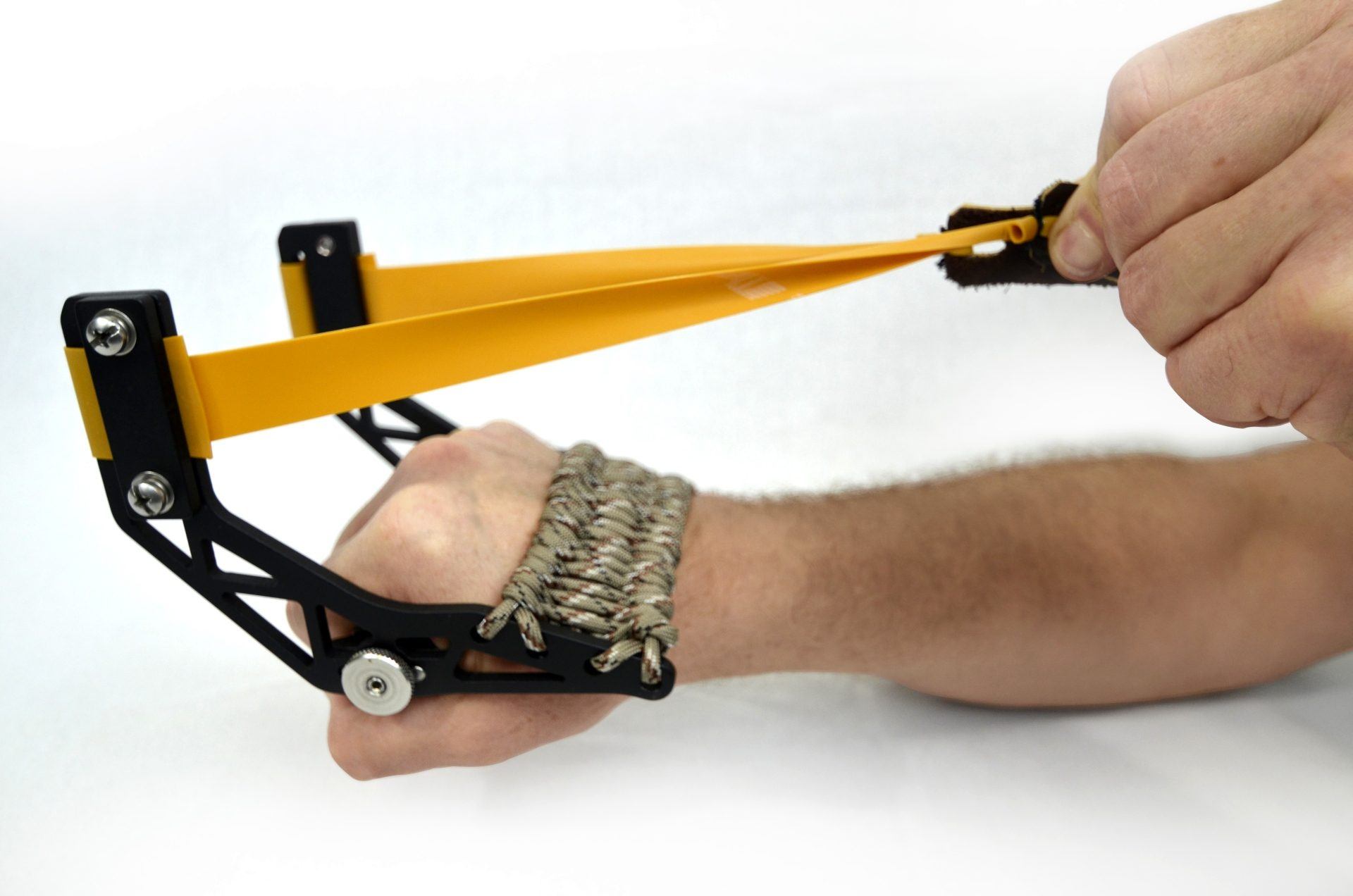
What type of energy is in this picture?
a)
Kinetic
b)
Potential
c)
Chemical
d)
Sound
22.
When plants convert the sun's energy into food, which type of energy is it?
a)
kinetic
b)
chemical
c)
thermal
d)
radiant
23.

What kind of energy is represented in this picture?
a)
Thermal
b)
Potential
c)
Nuclear
d)
Mechanical
24.

What kind of energy does this device use?
a)
Chemical
b)
Electrical
c)
Thermal
d)
Chemical
25.
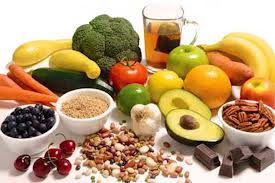
What kind of energy is represented in the picture?
a)
Thermal
b)
Chemical
c)
Sound
d)
Nuclear
26.
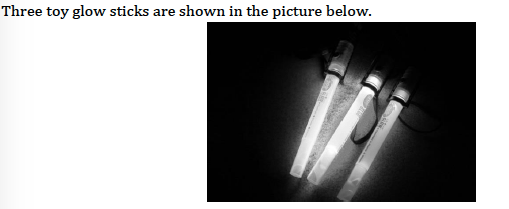
The glow sticks produce light for a short amount of time. The light from the glow stick is a conversion from what to what?
a)
thermal to light
b)
gravitational to potential
c)
radiant to electrical
d)
chemical to light
27.
Work is:
a)
A transfer of energy by a force to move and object
b)
Something you get paid for
c)
Something you take home
d)
Makes you sweat
28.
On a roller coaster, where is maximum potential energy?
a)
At the bottom of a big hill
b)
When going around a corner
c)
When going upside down
d)
At the top of a big hill
29.
The formula for work is:
a)
d = r x t
b)
p = m x v
c)
f = m x a
d)
w = d x f
30.

Identify this simple machine
a)
Lever
b)
Wheel & Axle
c)
Inclined Plane
d)
Screw
31.
Which of the following does a simple machine do?
a)
allows the users to apply less force over a longer distance
b)
reduce the amount of force needed to do work
c)
change the direction of the applied force
d)
all of the above
32.
Which is an example of someone using a simple machine to do work?
a)
a boy runs across a football field
b)
a banker counts money
c)
a mother pushes a stroller up a ramp
d)
a girl eats a sandwich
33.
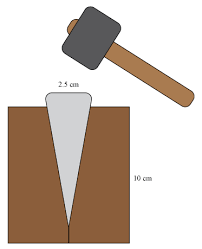
This device
a)
wedge
b)
lever
c)
incline plane
d)
wheel and axle
34.
The fixed point on the lever is called
a)
load
b)
resistance
c)
bar
d)
fulcrum
35.
A particle that moves around the nucleus is a(n)...
a)
Proton
b)
Neutron
c)
Electron
d)
Quark
36.
Particles in an atom that are neutral and have no charge are
a)
negatrons
b)
electrons
c)
neutrons
d)
protons
37.
the central region of an atom where its neutrons and protons are is its
a)
nucleus
b)
electron cloud
c)
core
d)
center
38.
The positive particles of an atom are
a)
electrons
b)
positrons
c)
neutrons
d)
protons
39.

What does the nucleus of an atom contain?
a)
Electrons and neutrons
b)
Protons and neutrons
c)
Neutrinos and positrons
d)
DNA and RN
40.
An atom has 5 protons and 7 neutrons. What is the mass number of the atom?
a)
5
b)
7
c)
2
d)
12
41.
An atom has an atomic number of 19 and a mass number of 29. How many neutrons are in the atom?
a)
30
b)
19
c)
10
d)
38
42.

What is the Atomic Mass?
a)
6.941
b)
7
c)
3
d)
6
43.

How many Protons are in one atom of Lithium?
a)
3
b)
6
c)
7
d)
6.941
44.

What number indicates an electron?
a)
1
b)
2
c)
3
d)
4
45.

What is the mass number of this element?
a)
5
b)
27
c)
32
d)
59
Reset

