
 Worksheets
Semester 1 Chemistry Review Part 1
Total questions: 70
Worksheet time: 1hrs 23mins
Name
Class
Date
1.

Beakers are used
a)
to measure volume with high accuracy and precision
b)
to hold small amounts of dry chemicals
c)
to recover dissolved solids
d)
to measure approx. volumes and observe reactions
2.

Which of the following is the most accurate and precise for measuring the volume of a liquid?
a)
Beaker
b)
Erlenmeyer flask
c)
Graduated Cylinder
d)
Round bottomed flask
3.

What kind of glassware is pictured here?
a)
Flask
b)
Graduated Cylinder
c)
Beaker
d)
Pipette
4.
In ANY safety related incident, what is the FIRST thing you need to do?
a)
Decide if you're going to be in trouble or not before doing anything
b)
Point to the person responsible and shout "He/she did it!"
c)
Tell your teacher
d)
Sit quietly until everything calms down
5.
The basic unit of measurement for mass is...
a)
Liters
b)
Grams/liter
c)
Meters
d)
Grams
6.

Exploding Fireworks is an example of a...?
a)
Physical Change
b)
Chemical Change
7.

In a solid, the particles
a)
vibrate in place
b)
slide past one another
8.
A change where one or more new substances are created.
a)
Physical Change
b)
Chemical Change
9.

What state of matter is represented here?
a)
solid
b)
liquid
c)
gas
10.

Cutting your hair is an example of a...?
a)
Physical Change
b)
Chemical Change
11.

Which tool would be used to measure the mass of an object?
a)
electronic balance
b)
beaker
c)
meter stick
d)
iPad
12.

A copper penny turning greenish after a few years is an example of a...
a)
Chemical Change
b)
Physical Change
13.
During lab activities that involve, glassware, heat or chemicals you should wear..
a)
Eyeglasses
b)
A protective suit
c)
Goggles and an apron
d)
Just normal clothing
14.

What state of matter is represented here?
a)
solid
b)
liquid
c)
gas
15.
When should you use the safety shower?
a)
After P.E.
b)
After spilling chemicals onto your body
c)
Before going out on a date
d)
Never
16.
What should you do if you break glass in the lab?
a)
Tell the teacher, sweep up the glass, and put it in the broken glass container
b)
Tell the teacher, sweep up the glass, and dump it into the garbage
c)
Pick up the glass with your hands
d)
Ignore it; the teacher will clean it up
17.

When should safety goggles be worn?
a)
at all times in the lab
b)
when you feel like it
c)
when chemicals could splash into your eyes OR when using glassware
d)
when you don't have regular glasses or contacts to wear
18.
Are made from a combination of 2 or more elements...
a)
Molecules
b)
Pure Substances
c)
Compounds
d)
Elements
19.
A combination that can be separated by physical processes is a .....
a)
Pure Substance
b)
Glucose
c)
Element
d)
Mixture
20.
A mixture that is NOT evenly distributed is called ....
a)
Compounded
b)
Homogenous
c)
Heterogenous
d)
Salty
21.
Which is NOT a chemical change?
a)
Leaves changing colors in the fall
b)
Iron rusting
c)
Digesting Lunch
d)
Ice Melting
22.
Substance with atoms that are all alike.
a)
element
b)
compound
c)
homogeneous mixture
d)
heterogeneous mixture
23.

This picture represents:
a)
Element
b)
Compound
c)
Mixture of Elements
d)
Mixture of Compounds
24.
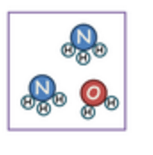
This picture represents:
a)
Element
b)
Compound
c)
Mixture of Elements
d)
Mixture of Compounds
25.
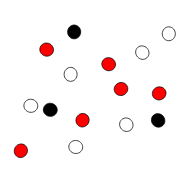
This picture represents:
a)
Element
b)
Compound
c)
Mixture of Elements
d)
Mixture of Compounds
26.
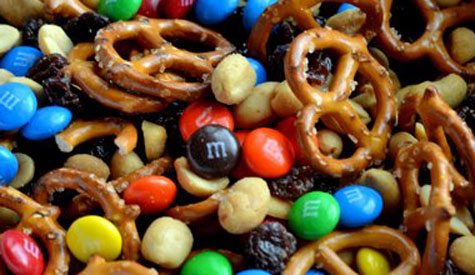
What type of mixture is this?
a)
homogenous mixture
b)
chemical
c)
heterogeneous mixture
d)
solid mix
27.
All matter is made up of .....
a)
Compounds
b)
Atoms
c)
Molecules
d)
Sunshine
28.
Which of the following is an element?
a)
Sugar
b)
Salt
c)
Water
d)
Oxygen
29.

Which one of these pictures represents a pure substance?
a)
1 and 2
b)
1 and 3
c)
2 and 3
d)
1, 2 and 3
30.
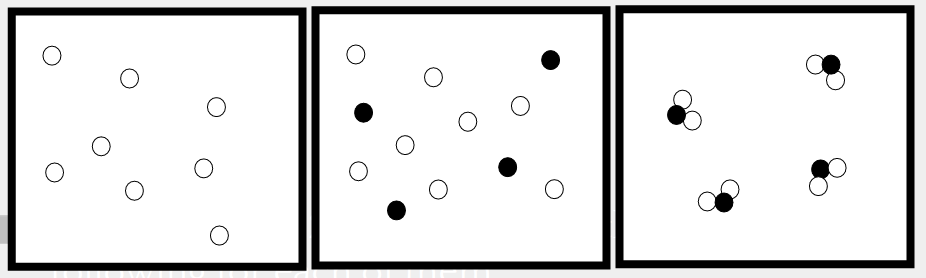
Which one of these pictures represents a mixture?
a)
1
b)
2
c)
3
d)
1, 2 and 3
31.

Is burning wood a chemical or physical change?
a)
chemical
b)
physical
32.
A gold bar is an example of a.....
a)
pure element
b)
pure compound
c)
heterogeneous mixture
d)
homogeneous mixture
33.

A mixture that is so evenly mixed you can't see the parts. Such as Kool-Aid
a)
Homogeneous Mixture
b)
Heterogeneous Mixture
c)
Pure Substance
34.
The atomic number is the number of....
a)
neutrons
b)
protons
c)
electrons
d)
mass number
35.
The mass number is equal to the sum of
a)
protons and neutrons
b)
neutrons and electrons
c)
protons and electrons
d)
neutrons only
36.
Protons carry what charge?
a)
neutral
b)
negative
c)
positive
37.
Electrons carry what charge?
a)
neutral
b)
negative
c)
positive
38.
Neutrons carry what charge?
a)
neutral
b)
negative
c)
positive
39.

In a neutral atom, the protons are always equal to the number of...
a)
electrons
b)
neutrons
40.
Locate Carbon on the periodic table, how many protons does Carbon have?
a)
12
b)
6
c)
18
d)
0
41.
Locate Potassium on the periodic table, how many protons does Potassium have?
a)
19
b)
39
c)
20
d)
58
42.
Locate Bromine on the periodic table, how many neutrons does Bromine have? Mass= protons + neutrons
a)
80
b)
45
c)
35
d)
0
43.

Which element has 10 protons, 10 electrons, and 10 neutrons
a)
Neon
b)
Zinc
c)
Calcium
d)
Hydrogen
44.
Which element has 26 protons, 26 electrons, and 30 neutrons
a)
Barium
b)
Zinc
c)
Helium
d)
Iron
45.
In Fe2+, the number of protons is ___ and the number of electrons is ___. (electrons are negative so when you have a positive charge, you lose or take away electrons)
a)
26, 26
b)
26, 24
c)
26, 28
d)
24, 24
46.
How many electrons are in a Li+ ion?
a)
1
b)
2
c)
3
d)
4
47.
How many electrons are in an S2- ion?
a)
10
b)
14
c)
16
d)
18
48.
How does a Br atom form a Br- ion?
a)
A bromine atom loses an electron.
b)
A bromine atom gains and electron.
c)
A bromine atom loses a proton.
d)
A bromine atom gains a proton.
49.
Which is the correct symbol for the element with 8 protons and 10 electrons?
a)
N3-
b)
O2-
c)
O3-
d)
F-
50.
Potassium ion
a)
Na⁺
b)
K⁺
c)
K²⁺
d)
K⁻
51.
Aluminium ion
a)
Al²⁺
b)
Al³⁺
c)
Al⁺
d)
Al⁴⁺
52.
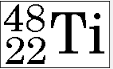
How many protons does this isotope of titanium have?
a)
48
b)
22
c)
26
d)
70
53.
How many neutrons in C-14?
a)
6
b)
7
c)
14
d)
8
54.

What do these isotopes of carbon all have in common?
a)
neutrons & mass number
b)
atomic number and neutrons
c)
atomic number and electrons
d)
protons, atomic number, and mass number
55.
What quantities vary between isotopes of an element?
a)
protons, electrons, and atomic mass
b)
protons, electrons, and atomic number
c)
neutrons and electrons
d)
neutrons and atomic mass
56.

which explanation of this notation is correct?
a)
12 is proton #
b)
6 tells you there are 6 neutrons
c)
6 tells you there are 6 protons
d)
12 is not a mass # here
57.
A ___________ is an arrangement of elements in columns
a)
columns
b)
rows
c)
periodic table
d)
electron shell
58.
Each column in the periodic table is called a
a)
period
b)
group
c)
cluster
d)
unit
59.
Which is an alkali metal?
a)
Magnesium
b)
Iron
c)
Sodium
d)
Europium
60.
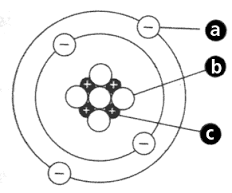
B and C are found in the ______ of an atom.
a)
Energy levels
b)
Space
c)
Nucleus
d)
Outside
61.
What is an alpha particle?
a)
2 protons
b)
2 neutrons
c)
2 protons & 2 neutrons
d)
hydrogen
62.
What is a beta particle?
a)
proton
b)
positron
c)
electron
d)
neutrino
63.
Where does a beta particle come from?
a)
a proton turning into a neutron
b)
a neutron turning into a proton
c)
the release of a neutron
d)
the release of a proton
64.

Arrange in order of increasing ability to penetrate matter.
a)
Beta, gamma, alpha
b)
Alpha, gamma, beta
c)
Gamma, beta, alpha
d)
Alpha, beta, gamma
65.
The nuclear process occurring at a nuclear power plant.
a)
Nuclear fusion
b)
Nuclear fission
c)
Combustion
d)
Multiplication
66.
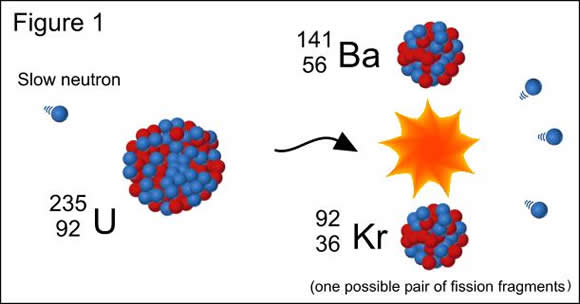
Which nuclear process is shown in the picture?
a)
fission
b)
fusion
c)
alpha decay
d)
beta decay
67.
Balance the following equation:
146C --> 0-1e + ________
146C --> 0-1e + ________
a)
145B
b)
146C
c)
147N
d)
42He
68.
In the symbol 167N what the 7 stand for?
a)
Mass number
b)
Atomic number
c)
Atomic mass
d)
Number of neutrons
69.
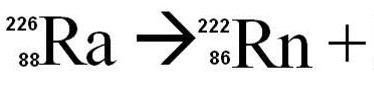
Complete the nuclear equation and determine the type of decay that is occurring in this reaction.
a)
alpha
b)
beta
c)
gamma
d)
none
70.

This is an example of...
a)
Fission reaction
b)
Fusion reaction
c)
Decomposition reaction
d)
Combustion
100 %

