
 Worksheets
Science So Far
Total questions: 44
Worksheet time: 39mins
Name
Class
Date
1.
When can you eat food in the science lab?
a)
On days there is not an experiment
b)
During snack time
c)
When a teacher says it is okay
2.
It is OK to start a lab before you read all the directions.
a)
True
b)
False
3.
You have been injured in the lab (cut, burned, etc.) First you should -
a)
apply first aid yourself
b)
tell the teacher at once
c)
see a doctor after school
d)
visit the school nurse after class
4.
Cleaning up the science classroom is the job of -
a)
each student
b)
new students
c)
the teacher
d)
old students
5.
The most important thing during lab experiments is
a)
neatness
b)
finishing first
c)
safety
d)
getting the correct answer
6.

Which organism do the owl and the weasel compete for in the food web?
a)
Hawk
b)
Spider
c)
Grasshopper
d)
Shrew
7.

Which of the following is a herbivore?
a)
cricket
b)
frog
c)
hawk
d)
shrew
8.

How many carnivores are shown in this food web?
a)
6
b)
4
c)
5
d)
3
9.
A consumer that hunts is called:
a)
a producer.
b)
an omnivore.
c)
a predator.
d)
a herbivore.
10.
A frog eats a fly. The frog and fly are demonstrating ________.
a)
mutualism
b)
competition
c)
predator/prey
d)
parasitism
11.
All of the living AND non-living things in an particular area is called a(n):
a)
ecosystem
b)
house
c)
community
d)
mountain
12.

Which of the following best describes the deer's role in the ecosystem?
a)
herbivore
b)
omnivore
c)
carnivore
d)
decomposer
13.
Bacteria and fungi typically serve what role in an ecosystem?
a)
herbivore
b)
carnivore
c)
omnivore
d)
decomposer
14.

A connection of food chains with many food energy paths in an ecosystem is a ____________.
a)
ecosystem
b)
food web
c)
environment
d)
population
15.

What does a food chain represent?
a)
How all living organisms within a habitat are connected.
b)
All of the things that a particular animal eats.
c)
How plants create their own food.
d)
A single path of energy transfer within a habitat.
16.
How does a bird "change its environment" to meet its NEEDS?
a)
builds a nest
b)
flies around
c)
catches bugs
d)
looks for something to eat
17.
When a certain population becomes so dense that it harms or changes the quality of life in that environment, we have...
a)
a population
b)
overpopulation
c)
pollution
18.
What the non-living factor that is the most important to an ecosystem to work?
a)
Water
b)
The sun's energy
c)
Plants
d)
animals
19.

Nonliving things found in an ecosystem.
a)
factories
b)
factor trees
c)
biotic factors
d)
abiotic factors
20.
Organisms that make up the living part of an ecosystem.
a)
abiotic
b)
biotic factors
c)
ecology
d)
ecosystems
21.
All of the populations that live in one area together
a)
limiting factors
b)
populations
c)
community
d)
speed limit
22.

A species that is in danger of becoming extinct.
a)
Threatened species
b)
out of luck
c)
do do birds
d)
endangered species
23.

Something that limits the size of a population.
a)
maxfactor
b)
factor tree
c)
the x factor
d)
limiting factor
24.

The role of an organism in its ecosystem is called the organism's __________.
a)
hot roll
b)
niche
c)
leading role
d)
role of a lifetime
25.
How do producers obtain energy?
a)
They conduct photosynthesis.
b)
They consume plants.
c)
They consume primary consumers.
d)
They consume secondary consumers.
26.

Consumers are found on which levels?
a)
1,2, & 3
b)
1, 3, 4, & 5
c)
2,3,4,& 5
d)
3,4,& 5
27.
A remora attaches to a shark and feeds on the scraps. The shark is not helped or harmed. Which symbiotic relationship is this an example of?
a)
Mutualism
b)
Commensalism
c)
Parasitism
d)
Competition
28.
A relationship between two organisms in which one organism benefits and the other is unharmed...
a)
Mutualism
b)
Competition
c)
Parasitsm
d)
Commensalism
29.
A relationship between two organisms in which both organisms benefit.
a)
Mutualism
b)
Competition
c)
Parasitsm
d)
Commensalism
30.
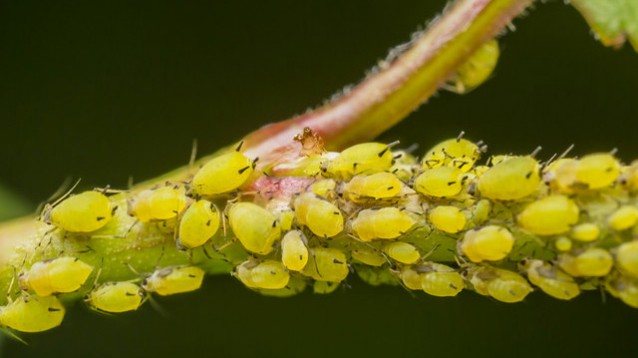
Aphids are tiny insects that live on and eat the leaves of plants, removing vital nutrients from the plants.
a)
Predation
b)
Parasitism
c)
Commensalism
d)
Mutualism
31.
What best describes the relationship between bees and flowering plants.
a)
mutualism
b)
parasitism
c)
neutralism
d)
commensalism
32.
Sound does not travel in space because
a)
Space is too far away.
b)
There is no matter in space.
c)
Space is the final frontier
d)
Space has planets.
33.
Sound is caused by....
a)
molecules
b)
vibrations
c)
people
d)
space
34.
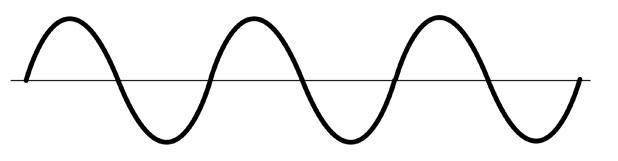
What is frequency?
a)
the number of vibrations per second
b)
how high or low a sound is
c)
the loudness or softness of a sound
d)
the back and forth movement of matter
35.

Measure of how high or low a sound is
a)
amplitude
b)
compression
c)
speed of sound
d)
pitch
36.
A longer string makes a _______ pitch than a short string.
a)
louder
b)
softer
c)
higher
d)
lower
37.
What is volume?
a)
how high or low a sound is
b)
the loudness or softness of a sound
c)
the number of vibrations per second
d)
vibrations
38.
What medium (solid, liquid, gas) does sound travel fastest through?
a)
solid
b)
liquid
c)
gas
39.

Why is the school library covered with carpet?
a)
So everyone can make a lot of noise
b)
to help absorb sounds to keep it quiet
c)
because it looks good
d)
to help absorb sounds so it can stay noisy
40.

Which string would produce the lowest pitch and slowest vibrations?
a)
String 1
b)
String 2
c)
String 3
d)
String 4
41.

Which string would produce the highest pitch?
a)
String 1
b)
String 2
c)
String 3
d)
String 4
42.

When a car moves towards you, the sound of its horn seems relatively...
a)
Low pitched
b)
High pitched
c)
Normal
43.

When the car moves away from you, its horn seems...
a)
Low pitched
b)
High pitched
c)
Normal
44.

Bats use ________ TO LOCATE MOSQUITOES IN THE AIR.
a)
solar
b)
ecology
c)
echolocation
d)
evolution
100 %

