
 Worksheets
8th Grade Science 1st Semester Review
Total questions: 123
Worksheet time: 2hrs 33mins
Name
Class
Date
1.
What is another word for hypothesis?
a)
evidence
b)
graph
c)
investigation
d)
prediction
2.
The container is filled to the 350 mL mark with water.
a)
observation
b)
inference
c)
problem
d)
hypothesis
3.
Why should an experiment be repeated?
a)
to form a hypothesis
b)
to reduce the chance of error
c)
to change controls
d)
to identify the problem
4.
How many independent variables should be tested at a time in a scientific investigation?
a)
none
b)
one
c)
two
d)
three
5.
factors in an experiment that you change, measure, or keep constant
a)
variables
b)
constants
c)
hypothesis
d)
analyze
6.
group that does not receive the variable you are changing or gets the "normal condition"
a)
experiment
b)
control group
c)
conclusion
d)
experimental group
7.
the factor in an experiment that you measure or observe
a)
dependent variable
b)
control group
c)
controlled variable
d)
independent variable
8.
There are two types of data. Which type of data involves numbers that are obtained by counting or measuring?
a)
quantitative
b)
qualitative
9.
What are the three main branches of science?
a)
Botany, Zoology, Medicine?
b)
Earth sciences, Life sciences and Physical sciences
c)
Physics, Chemistry, Astronomy?
10.
What is a theory?
a)
Describes what happens
b)
Explains a process
11.
Which of the following is true about theories and opinions?
a)
It is about right and wrong
b)
theories explain observations clearly and consistently
c)
A theory doesn't have to be repeatable
12.
A scientific ____________ is a statement that describes what always happens under certain conditions in nature.
a)
law
b)
theory
c)
method
d)
variable
13.
Can an element be broken down into a simpler substance
a)
yes
b)
No
14.
Which one has more than one type of atom in it
a)
Element
b)
Compound
15.
which one only has one type of atom In it.
a)
Element
b)
compound
16.
Is salt (NaCI) a compound or a element
a)
Compound
b)
element
17.
which one can be found on the periodic table
a)
Compound
b)
Element
18.
How many elements are represented in the compound?
Na2CO3
Na2CO3
a)
1
b)
2
c)
3
d)
4
19.
What cannot be broken down into other substances?
a)
Compound
b)
Mixture
c)
Solids
d)
Element
20.
A combination of substances that are not chemically combined is called a(n)____________.
a)
mixture
b)
compound
c)
physical
21.
Mixtures are separated through ___________changes.
a)
mixture
b)
compound
c)
physical
22.

This picture represents which of the following?
a)
element
b)
compound
c)
mixture
23.

This picture represents which of the following?
a)
element
b)
compound
c)
mixture
24.
What is a substance that is dissolved in another substance?
a)
solution
b)
solute
c)
solvent
d)
compound
25.
Cookie Dough Ice Cream
a)
Heterogeneous
b)
Homogeneous
c)
A compound
26.
Sausage and Mushroom Pizza
a)
Heterogeneous
b)
Homogeneous
c)
A compound
27.
Lucky Charms
a)
Heterogeneous
b)
Homogeneous
c)
A compound
28.
Coffee
a)
Heterogeneous
b)
Homogeneous
c)
A compound
29.
Air
a)
Heterogeneous
b)
Homogeneous
c)
A compound
30.
Blue Color: Chemical or Physical Property
a)
Chemical Property
b)
Physical Property
31.
Density: Chemical or Physical Property
a)
Chemical Property
b)
Physical Property
32.
Flammability (burns): Chemical or Physical Property
a)
Chemical Property
b)
Physical Property
33.
Melting Point: Chemical or Physical Property
a)
Chemical Property
b)
Physical Property
34.
Reacts with Water: Chemical or Physical Property
a)
Chemical Property
b)
Physical Property
35.
Luster: Chemical or Physical Property
a)
Chemical Property
b)
Physical Property
36.
Odor: Chemical or Physical Property
a)
Chemical Property
b)
Physical Property
37.
all matter is made of what
a)
energy
b)
atoms
c)
electrons
d)
compounds
38.
The positive particles of an atom are
a)
electrons
b)
positrons
c)
neutrons
d)
protons
39.
the central region of an atom where its neutrons and protons are is its
a)
nucleus
b)
electron cloud
c)
core
d)
center
40.
an atom with atomic number 6 would have how many protons
a)
6
b)
12
c)
3
d)
cannot be determined
41.
Particles in an atom that are neutral and have no charge are
a)
negatrons
b)
electrons
c)
neutrons
d)
protons
42.

How many protons does this atom have?
a)
2.5
b)
6
c)
5
d)
10.811
43.
If the number of protons equal the number of _____, the atom will have no charge
a)
protons
b)
neutrons
c)
electrons
d)
nucleus
44.
An atom is made up mostly of
a)
protons
b)
gravity
c)
empty space
d)
electricity
45.
If an atom temporarily gains or loses one or more electrons, it is considered a/an ___.
a)
ion
b)
isotope
c)
new element
d)
metalloid
46.
If an atom temporarily gains or loses one or more neutrons, it is considered a/an ___.
a)
ion
b)
isotope
c)
new element
d)
metalloid
47.
In modern atomic models, where are electrons found?
a)
In an electron cloud
b)
In the nucleus
c)
Between protons and neutrons
d)
Floating freely between atoms
48.

The mass of one proton is equal to the mass of one...
a)
neutron
b)
electron
49.
Where does radioactivity have application in our lives?
a)
Medicine
b)
Energy (electricity)
c)
Agriculture
d)
All of the above
50.
The rate at which a radioactive element decays is its ____.
a)
quarter life
b)
whole life
c)
wonderful life
d)
half life
51.
Name the type of radioactive particle that can be stopped by a sheet of paper.
a)
alpha
b)
beta
c)
gamma
d)
lambda
52.
Name the most penetrating type of radiation.
a)
alpha
b)
beta
c)
gamma
d)
lambda
53.
What makes something radioactive?
a)
elements with an atomic number above 81
b)
an unstable nucleus
c)
contaminated sewage
d)
It decays over time
54.
If the half life of a radioactive element is 100yrs, how long would it take for the radioactivity to reduce by one half?
a)
200yrs
b)
100yrs
c)
50yrs
d)
300yrs
55.
_______________ is the process by which unstable atoms emit radiation until they become stable.
a)
Radiation
b)
Chemical Reaction
c)
Radioactive Decay
d)
Isotopes
56.
When nuclei decay, massive amounts of __________ is released.
a)
energy
b)
electrons
c)
protons
d)
neutrons
57.
This radioactive particle is also known as an electron and has a charge of -1
a)
alpha
b)
beta
c)
gamma
d)
kryptonite
58.
What type of radioactive decay increases the atomic number of a radioactive atom?
a)
gamma emission
b)
beta emission
c)
alpha emission
d)
fusion
59.

He unknowingly discovered the electron as a result of cathode ray tube experiments.
a)
Thomson
b)
Chadwick
c)
Democritus
d)
Rutherford
60.

The name of the scientist that came up with the plum pudding (or chocolate chip cookie) model is
a)
Thomson
b)
Rutherford
c)
Bhor
d)
Dalton
61.

Who is credited with developing the atomic theory? (Sometimes called the father of atomic theory)
a)
John Dalton
b)
J. J. Thomson
c)
Earnest Rutherford
d)
Niels Bohr
62.

How did Rutherford discover the proton?
a)
Cathode tube ray experiment
b)
Gold Foil Experiment
c)
Planetary Model
d)
Plum Pudding Model
63.

Which scientist used his love of playing cards to create the periodic table?
a)
Demitri Mendeleev
b)
John Dalton
c)
JJ Thomson
d)
Schrodinger
64.

He proposed the particle theory of matter and called nature’s most basic particle the “atomos”
a)
Aristotle
b)
Democritus
c)
Chadwick
d)
Dalton
65.
The first person to ever talk about an atom was
a)
Democritus
b)
Rutherford
c)
Dalton
66.
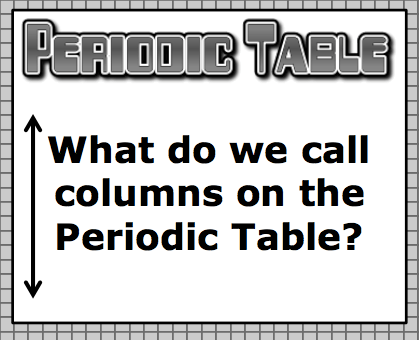
a)
Periods
b)
Groups
67.
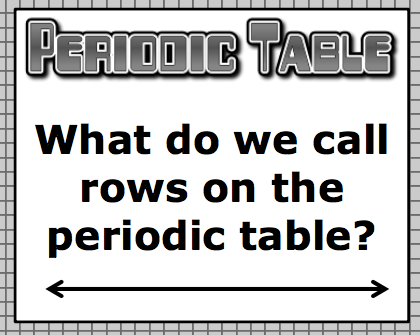
a)
Periods
b)
Groups
68.

a)
energy levels
b)
valence electrons
c)
protons
d)
neutrons
69.
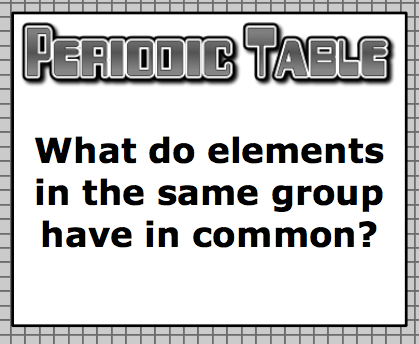
a)
energy levels
b)
valence electrons
c)
protons
d)
neutrons
70.
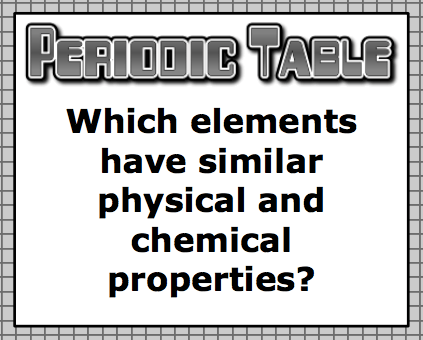
a)
Same group
b)
Same period
71.
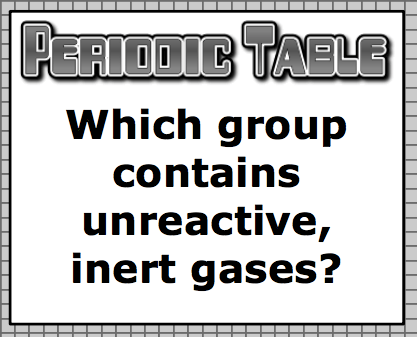
a)
Group 1
b)
Group 17
c)
Group 2
d)
Group 18
72.

a)
Metals
b)
Nonmetals
73.

a)
Metals
b)
Nonmetals
74.
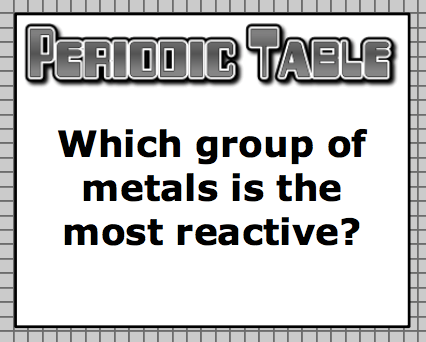
a)
Group 1
b)
Group 17
c)
Group 18
d)
Group 2
75.
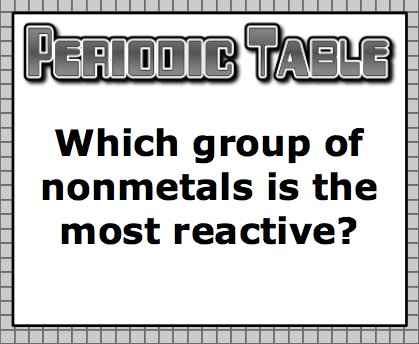
a)
Group 1
b)
Group 17
c)
Group 18
d)
Group 2
76.
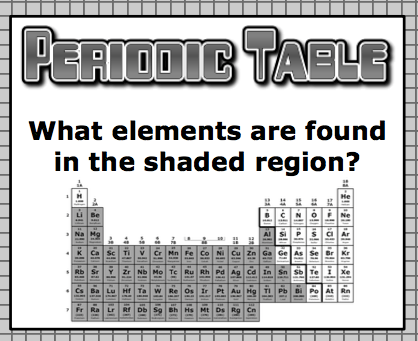
a)
Metals
b)
Nonmetals
c)
Metalloids
77.
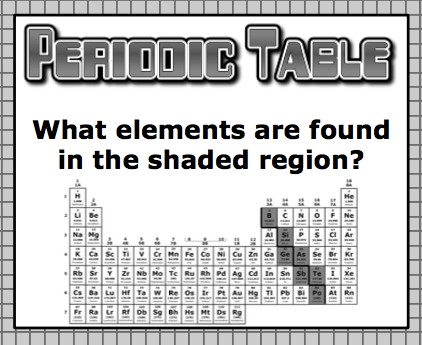
a)
Metals
b)
Nonmetals
c)
Metalloids
78.
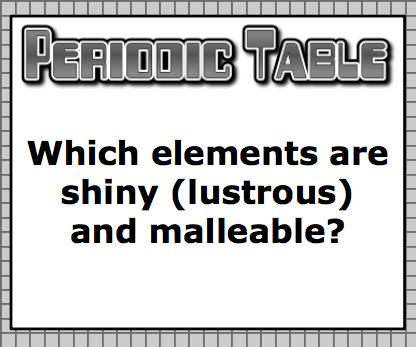
a)
Metals
b)
Nonmetals
c)
Metalloids
79.
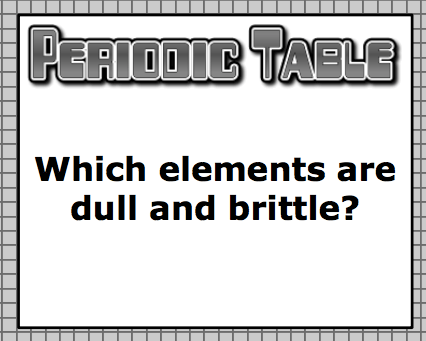
a)
Metals
b)
Nonmetals
c)
Metalloids
80.
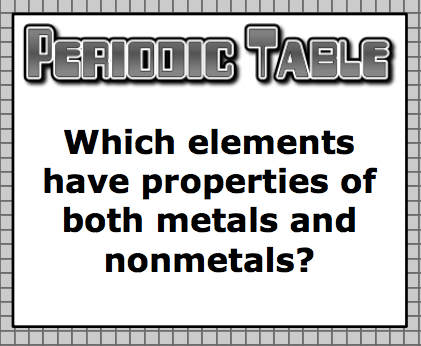
a)
Metals
b)
Nonmetals
c)
Metalloids
81.
a)
Metals
b)
Nonmetals
c)
Metalloids
82.
Ionic Bonding involves...
a)
The transfer of protons
b)
The transfer of nuetrons
c)
The transfer of electrons
d)
None Of the above
83.
What do atoms that form positive ions tend to do?
a)
Tend to lose electrons
b)
Tend to lose protons
c)
Tend to gain electrons
d)
Tend to gain protons
84.
Covalent compounds
a)
Share electrons
b)
transfer electrons
c)
contain a sea of electrons
d)
conduct electricity
85.
What two types of atoms make a covalent bond?
a)
2 Nonmetals
b)
1 Nonmetal and 1 Metal
c)
2 Metals
d)
2 Noble Gases
86.
What happens when an atom loses an electron?
a)
Neutral (no charge)
b)
Positive charge
c)
Negative charge
87.
What happens when an atom gain an electron?
a)
Neutral(no charge)
b)
Positive charge
c)
Negative charge
88.
What charges attract?
a)
Opposite
b)
Same
89.
What charges repel?
a)
Same
b)
Opposite
90.

What elements generally make an ionic bond?
a)
metal and nonmetal
b)
2 or more nonmetals
c)
metal
d)
none of the above
91.

What elements generally make a covalent bond?
a)
metal and nonmetal
b)
2 or more nonmetals
c)
metal
d)
none of the above
92.

How many valence electrons in this structure?
a)
6
b)
5
c)
4
d)
7
93.
What is the number of valence electrons for Neon?
a)
6
b)
7
c)
8
d)
9
94.
N2
a)
Polar
b)
Nonpolar
c)
Ionic
95.
F2
a)
Polar
b)
Nonpolar
c)
Ionic
96.
H2O
a)
Polar
b)
Nonpolar
c)
Ionic
97.
NH3
a)
Polar
b)
Nonpolar
c)
Ionic
98.
What type of bond? In water, the electrons spend more time orbiting oxygen than hydrogen.
a)
Ionic Bond
b)
Polar Covalent Bond
c)
Nonpolar Covalent Bond
99.
A fat molecule has no partial charges. Therefore, fats are a ______ molecule.
a)
Polar
b)
Nonpolar
100.

What term describes the illustration?
a)
Cohesion
b)
Adhesion
101.

Which term describes the illustration?
a)
Cohesion
b)
Adhesion
102.
How many atoms of carbon (C) are in C6H12O6?
a)
3
b)
6
c)
12
d)
24
103.
Element or compound?
H2O
H2O
a)
element
b)
compound
104.

The blue numbers in the image below represent ________
a)
I don't know, and don't want to try
b)
coefficients
c)
subscripts
d)
none of the answers are correct
105.
How many atoms are there TOTAL in:
H2SO4
H2SO4
a)
6
b)
5
c)
7
d)
3
106.

Black = Carbon (C)
White = Hydrogen (H)
What would be the formula for ethane?
White = Hydrogen (H)
What would be the formula for ethane?
a)
CH4
b)
CH6
c)
C2H2
d)
C2H6
107.
The arrow symbol used in a chemical equation
a)
Yield sign
b)
Subscript
c)
Coefficient
d)
Chemical formula
108.
The large number written in front of a chemical formula. It shows the number of molecules.
a)
Molecule
b)
Compound
c)
Coeffiecient
d)
Subscript
109.
Is this balanced?
2HgO → 2Hg + O2
2HgO → 2Hg + O2
a)
Yes
b)
No
c)
Not enough information
110.
Is this balanced?
Al + O2 → 2Al2O3
Al + O2 → 2Al2O3
a)
Yes
b)
No
c)
Not enough information
111.
The law of conservation of mass states that
a)
matter is created
b)
matter is destroyed
c)
matter is neither created nor destroyed
d)
matter does not change
112.
A + B --> AB
a)
synthesis
b)
decomposition
c)
single
d)
double
113.
AB --> A + B
a)
synthesis
b)
decomposition
c)
single
d)
double
114.
AB + C --> CB + A
a)
synthesis
b)
decomposition
c)
single
d)
double
115.
AB + CD --> CB + AD
a)
synthesis
b)
decomposition
c)
single
d)
double
116.

What type of reaction is this?
a)
synthesis
b)
decomposition
c)
single
d)
double
117.

What type of reaction is this?
a)
synthesis
b)
decomposition
c)
single
d)
double
118.
What type of reaction is this?
HCl + KOH --> HOH + KCl
HCl + KOH --> HOH + KCl
a)
synthesis
b)
decomposition
c)
single
d)
double
119.
When carbon dioxide and water are in a reaction's product, what type of reaction has occurred?
a)
combustion
b)
single
c)
double
d)
decomposition
120.
In an exothermic reaction, heat is ...
a)
taken in
b)
given out
121.
In an endothermic reaction, heat is ,,,
a)
taken in
b)
given out
122.
What type of reaction occurs in a hand warmer
a)
exothermic
b)
endothermic
123.
what is an example of exothermic?
a)
firework
b)
ice pack
c)
coal
d)
wood
100 %

