wayground logo

Free Printable Worksheets

Font size

S
M
L
XL
Worksheets

Revision Grade 8 Tri 1

Total questions: 125

Worksheet time: 3hrs 12mins

Name
Class
Date
1.

Observations: Gold Foil Experiment

a)

Neils Bohr

b)

Democritus

c)

John Dalton

d)

Ernest Rutherford

e)

JJ Thomson

2.

Change to Atomic Theory: atoms are indivisible; first atomic theory; atoms of the same element are the same; atoms of different elements are different

a)

Neils Bohr

b)

Democritus

c)

John Dalton

d)

Ernest Rutherford

e)

JJ Thomson

3.

Which is a smaller part than an atom?

a)

Element

b)

Molecule

c)

Nucleus

4.

Most of the elements on the periodic table are:

a)

solids/metals

b)

liquids/metals

c)

solids/non-metals

d)

gases/metalloids

5.

Protons have what kind of charge?

a)

neutral or no charge

b)

negative

c)

positive

6.

Electrons have what kind of charge?

a)

neutral or no charge

b)

negative

c)

positive

7.

Neutrons have what kind of charge?

a)

neutral or no charge

b)

negative

c)

positive

8.

What is the smallest particle of an element that retains the chemical properties of that element?

a)

ion

b)

isotope

c)

atom

d)

element

9.

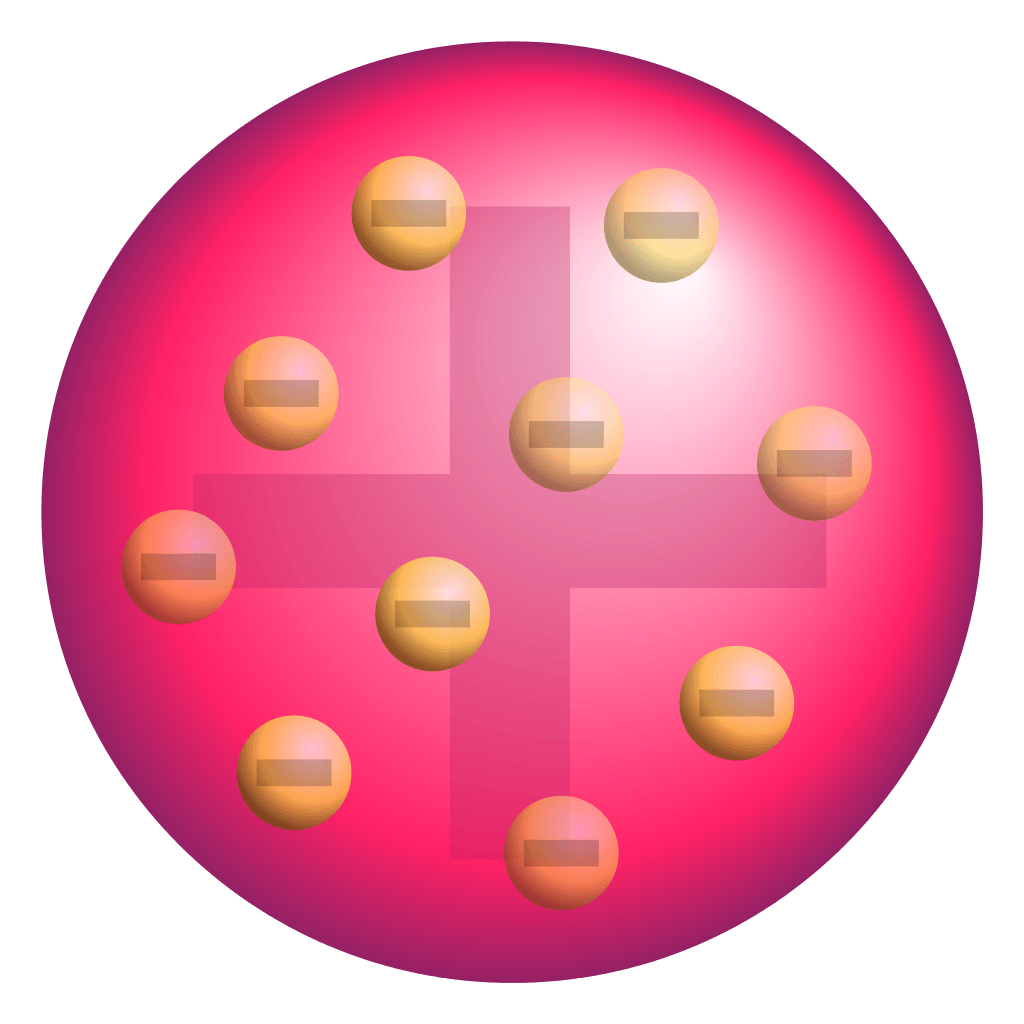
Who's atomic model is this?

a)

Thomson

b)

Rutherford

c)

Democritus

d)

Bohr

10.

What subatomic particles did James Chadwick discover?

a)

protons. 

b)

neutrons

c)

electrons

d)

quarks

11.

Which Scientist said, matter made of atoms that can not be created or destroyed

a)

Democritus

b)

Aristotle

c)

John Dalton

d)

JJ. Thompson

12.

What did Rutherford discover in his experiment?

a)

nucleus

b)

electrons

c)

neutrons

d)

protons

13.

What does atom mean?

a)

small

b)

visible

c)

indivisible

d)

particle

14.

Who discover the electron?

a)

Dalton

b)

Rutherford

c)

Thomson

d)

Bohr

15.
Atoms are made up of three basic parts, which are -
a)
Protons, neutrons, electrons
b)
neutrinos, protons, neutrons
c)
quarks, protons, electrons
d)
electrons, neutrons, and quarks
16.
Electrons have this charge - 
a)
positive
b)
negative
c)
neutral
d)
no charge
17.
Neutrons have this charge -
a)
positive
b)
negative
c)
neutral
d)
They don't exist
18.
J.J. Thomson provided evidence that an atom...
a)
is the smallest particle of matter
b)
contains negatively charged particles
c)
has an overall negative charge
d)
has an overall positive charge
19.
Rutherford's gold foil experiment provided evidence that...
a)
negative and positive charges are spread evenly throughout the atom.
b)
alpha particles have a positive charge.
c)
gold is not a dense as previously thought.
d)
there is a dense positively charged nucleus at the center of an atom.
20.
How did Rutherford discover the proton?
a)
Cathode tube ray experiment
b)
Gold Foil Experiment
c)
Planetary Model
d)
Plum Pudding Model
21.
Developed the “chocolate chip cookie” model of the atom
a)
James Chadwick
b)
Niels Bohr
c)
Schrodinger & Heisenberg
d)
J.J. Thomson
22.

Who discovered the Neutron?

a)

James Chadwick

b)

Niels Bohr

c)

John Dalton

d)

Ernest Rutherford

23.

How was the electron discovered?

a)

Gold Foil Experiment

b)

Double-Slit experiment

c)

Cathode Ray Tube

d)

Newton's prism experiment

24.

Which of the following electromagnetic waves has the highest frequency?

a)

Gamma rays

b)

UV rays

c)

Visible light

d)

Radio waves

25.

What is the range of wavelength for the visible light?

a)

400 - 750 cm

b)

400 - 750 mm

c)

400 - 750 nm

d)

400 - 750 km

26.

All scientists below proposed classical theory of light except...

a)

Isaac Newton

b)

Thomas Young

c)

Albert Einstein

d)

J.J. Thomson

27.

Which of the following electromagnetics waves has the longest wavelength?

a)

Gamma rays

b)

UV rays

c)

Microwaves

d)

Radio waves

28.

A microwave will have a ______ frequency and _____ energy

a)
high, low
b)
high, high
c)
low, high
d)
low, low
29.

Which of the following has the shortest wavelength?

a)

X-Rays

b)
Radio Waves
c)

Blue

d)
Infrared rays
30.
What does the letter 'h' represent in the formula E = hv?
a)
Planck's constant
b)
Hydrogen
c)
Energy
d)

Speed of Light

31.

What is the frequency of a photon of light with an energy of 5.78 x 10⁻¹⁴ J?

a)

5.19 x 10²¹ Hz

b)

8.72 x 10¹⁹ Hz

c)

1.15 x 10⁻²⁰ Hz

d)

1.15

32.

The speed of electromagnetic radiation:

a)

depends on the frequency of radiation

b)

is 3.00 x 10⁸ m/s, regardless of the type

c)

decreases as wavelength increases

d)

is 6.626 x 10⁻³⁴ J x s

33.

How is a photon different from matter?

a)

A photon has no mass and travels at the speed of light.

b)

A photon has mass and travels at the speed of light.

c)

A proton has no mass and travels at the speed of light.

d)

A proton has mass and travels at the speed of light.

34.

A ____ is a discrete, quantized bundle of energy.


a)

Photoelectric effect

b)

Photon

c)

Quantized

d)

Proton

35.

In the equation E  =  nhf, which of the following is not a possible value of n?

a)

a. 1

b)

b. 3

c)

c. 5/4

d)

d. 6

36.

Photons travel at the speed of ____.

a)

a. waves

b)

b. sound

c)

c. displacement

d)

d. light

37.

Max Planck's great discovery was that radiation energy is emitted in packets that he called

a)

quanta

b)

wave functions

c)

photons

d)

electrons

38.

True or False? The wavelength and frequency of all waves are inversely proportional to each other.

a)

True

b)

False

39.
As the frequency of an electromagnetic wave increases, the amount of energy in that wave...
a)
increases.
b)
decreases.
c)
stays the same.
40.
The height of the wave is known as the _____________.
a)
amplitude
b)
crest
c)
trough
d)
wavelength
41.
The blue section of the wave is measuring _________________.
a)
wavelength
b)
crest
c)
trough
d)
amplitude 
42.
Which electromagnetic waves are used in ovens and cell phone communications?
a)
Infrared rays
b)
ultraviolet rays
c)
microwaves
43.
Which electromagnetic waves help doctors detect broken bones inside your body?
a)
gamma rays
b)
x-rays
c)
ultraviolet rays
44.
Which electromagnetic waves are used in devices such as heat lamps & TV remote controls?
a)
ultraviolet rays
b)
microwaves
c)
infrared rays
45.
The distance between two crests or two troughs of a wave is called:
a)
frequency
b)
amplitud
c)
wavelength
d)
hertz
46.
Electromagnetic waves that help your body produce vitamin D are called?
a)
ultraviolet rays
b)
x-rays
c)
gamma rays
47.
Which section of the spectrum is the ONLY one we can see?
a)
X-rays
b)
Visible Light
c)
Gamma Rays
d)
Ultraviolet Rays
48.

Which of the following is not in the electromagnetic spectrum?

a)

Light waves

b)

Sound waves

c)

Radio Waves

d)

X-rays

49.

Which of the following has the most energy?

a)

Red

b)

Blue

c)

Green

d)

Violet

50.


Which of the following has the lowest energy?

a)

The color yellow

b)

The color blue

c)

The color indigo

d)

The color orange

51.


The red section of the wave is measuring _________________.

a)

wavelength

b)

crest


c)

trough

d)

amplitude

52.

Which section of the spectrum is the ONLY one we can see?

a)

X-rays

b)

Visible Light

c)

Gamma Rays

d)

Ultraviolet Rays

53.
What is the frequency of UV light that has an energy of 2.39 × 10 -18 J? 
a)
2.32 x 10Hz
b)
3.60 x 10¹⁵ Hz
c)
1.58 x 10-51 Hz
d)
3 x 10⁸  m/s
54.
What is the energy of an X-ray with a frequency of 1.0 x 10¹⁷ Hz?
a)
6.63 x 10⁻³⁴ J
b)
6.63 x 10⁻¹⁷ J
c)
1.51 x 10¹⁶ J
d)
1.51 x 10⁻¹⁶ J
55.
What is the typical units of measurement for the "E" in the following equation: 
Ephoton= h x f
a)
joules
b)
meters
c)
meters/seconds
d)
hertz
56.
The equation that shows the relationship between the energy of light and frequency is: 
a)
c= λ⋅f
b)
E=h⋅f
57.
Light has characteristics of both a wave and a ____________.
a)
amplitude
b)
freqency
c)
joule
d)
photon
58.

The SI unit of frequency is the __________.

a)

meter

b)

second

c)

hertz

d)

meter per second

59.
What elements generally make an ionic bond?
a)
metal and nonmetal
b)
2 or more nonmetals
c)
metal
d)
none of the above
60.
What elements generally make a covalent bond?
a)
metal and nonmetal
b)
2 or more nonmetals
c)
metal
d)
none of the above
61.
In chemical compounds, covalent bonds form when
a)
the electronegativity difference between two atoms is very large.
b)
electrons are completely transferred between two metals.
c)
pairs of electrons are shared between two nonmetal atoms.
d)
two nonmetal atoms are attracted to each other by opposite charges.
62.
An ionic bond forms when 
a)
Valence electrons are shared
b)
a sea of mobile electrons surround the cations
c)
valence electrons are transferred between atoms
d)
none of the above
63.
What is a valence electron?
a)
an electron that is found in the outermost shell of an atom. 
b)
an electron found in the innermost shell of an atom.
c)
an electron found in the middle shell.
64.
How many valence electrons in this structure?
a)
6
b)
5
c)
4
d)
7
65.
Why do elements bond?
a)
To be friends
b)
To create a new element
c)
To become stable
66.
How are covalent bonds formed?
a)
Sharing of electrons
b)
Transfer of electrons
67.
How are ionic bonds formed?
a)
Transfer of electrons
b)
Sharing of electrons
68.
Atoms are most stable when their outer shell is complete.
a)
true
b)
false
69.
Noble gases will form chemical bonds with other elements
a)
True
b)
False
c)
Sometimes
70.

Why do elements bond?

a)

To be friends

b)

To create a new element

c)

To become stable

d)

To get bigger

71.
What is a valence electron?
a)
The sum of neutrons and protons.
b)
The # of electrons in the last shell.
c)
A type of bond.
d)
A popular compound.
72.

The octet rules states that most elements want to have _____ valence electrons.

a)

2

b)

4

c)

6

d)

8

73.

Force of attraction between atoms or ions.

a)

Mixture

b)

Compound

c)

Chemical Bond

d)

Formula

74.

What two types of atoms make a covalent bond?

a)

2 nonmetals

b)

2 metals

c)

1 metal and 1 nonmetal`

75.

What happens to electrons in a covalent bond?

a)

they are shared

b)

they are transferred

c)

they are negative

76.

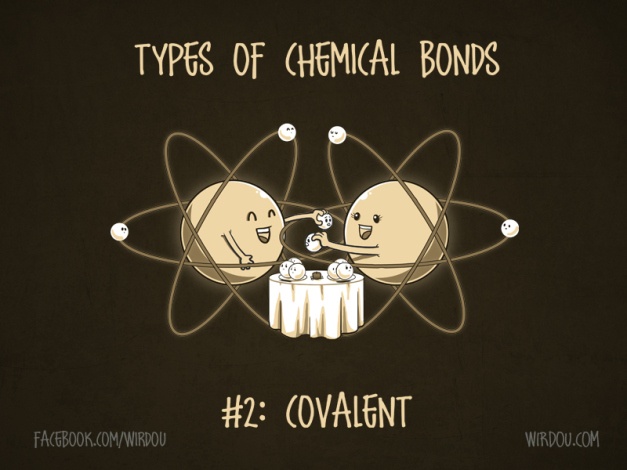
What type of bonding does this picture show?

a)

Ionic

b)

Covalent

77.

Carbon and Oxygen will make a ___________ bond.

a)

ionic

b)

covalent

c)

metallic

78.

Sodium and Bromine will make a _____ bond.

a)

ionic

b)

covalent

c)

metallic

79.

When electrons are lost by one atom and gained by another, so that they both get full outer shells.

a)

Covalent bond

b)

Ionic bond

c)

Pairing

d)

Compound

80.
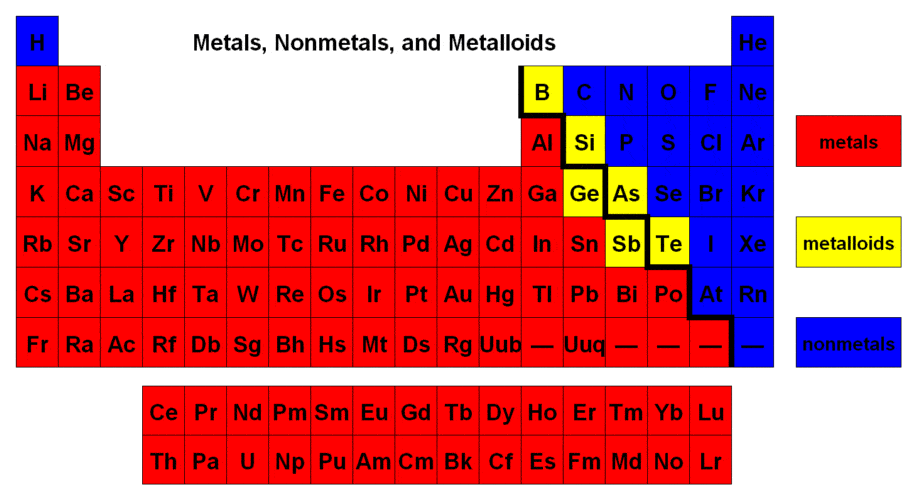
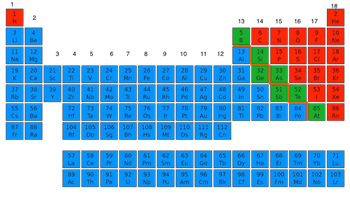
Where are the nonmetals located on the periodic table? 
a)
Blue
b)
Red
c)
Green
81.

Why don't noble gases form bonds?

a)

They all have a full octet

b)

Noble gases do form bonds

c)

They only bond when with eachother

d)

none of these answers are correct

82.

During a chemical reaction, atoms can

a)

be destroyed to form a new substance

b)

be created to form a new substance

c)

be rearranged to form a new substance

83.

An ionic bond is formed when

a)

Valence electrons are shared.

b)

Valence electrons surround the cations.

c)

Valence electrons are transferred between atoms.

d)

Valence electrons are completely transferred between two metals.

84.

What is a valence electron?

a)

an electron that is found in the outermost shell of an atom

b)

an electron found in the innermost shell of an atom

c)

an electron found in the middle shell

d)

an electon found in the nucleus

85.

How many electrons are being shared between the two carbon atoms in the compound ethyne?

a)

1

b)

2

c)

3

d)

6

86.

Predict the bond that will form between Se and Cl

a)

Ionic-bond

b)

Covalent-bond

c)

Metallic-bond

d)

Hydrogen-bond

87.

Predict the bond formed between Be and F

a)

Covalent-bond

b)

Ionic-bond

c)

Metallic-bond

d)

Hydrogen-bond

88.

Atoms in molecules share pairs of electrons when they form

a)

covalent bonds.

b)

ionic bonds.

c)

hydrogen bonds.

d)

polymers.

89.
Attractions between the negative Oxygen atom of one water molecule and the positive Hydrogen atom of another water molecule are called
a)
Covalent bonds
b)
Ionic bonds
c)
Polar bonds
d)
Hydrogen bonds
90.
Atoms can form double or triple ______depending on whether they share two or three pairs of electrons.
a)
Molecules
b)
Bonds
c)
Compounds
d)
Elements
91.
A ________is the force of attraction between atoms sharing electrons.
a)
Synthetic Bond
b)
Ionic Bond
c)
Molecular Bond
d)
Covalent Bond
92.
Atoms gain lose, gain, or ______electrons to get a stable outer energy level.
a)
share
b)
split
c)
create
d)
destroy
93.

What is a valence electron?

a)

an electron that is found in the outermost shell of an atom

b)

an electron found in the innermost shell of an atom

c)

an electron found in the middle shell

d)

an electon found in the nucleus

94.
What is the frequency of UV light that has an energy of 2.39 × 10 -18 J? 
a)
2.32 x 10Hz
b)
3.60 x 10¹⁵ Hz
c)
1.58 x 10-51 Hz
d)
3 x 10⁸  m/s
95.

What subatomic particles did James Chadwick discover?

a)

protons. 

b)

neutrons

c)

electrons

d)

quarks

96.

What is the basis of a metallic bond?

a)

the attraction of neutral metal atoms.

b)

the attraction between protons and neutrons.

c)

the attraction between positive metal ions and interlocking electrons.

d)

the attraction between positive metal ions and free moving electrons.

97.
At room temperature, most metals are
a)
liquid
b)
solid
c)
gas
d)
an alloy
98.

Which type of chemical bond is formed in Aluminum wire?

a)

Metallic

b)

Ionic

c)

Covalent

d)

Dative

99.
I can hit a metal with a hammer without the metal shattering because of its __________.
a)
Ductility
b)
Malleability
c)
Conductivity
d)
Lustrousness
100.

What type of bonding holds metal atoms together in a solid metal?

a)

Ionic bonding

b)

Covalent bonding

c)

Metallic bonding

d)

Hydrogen bonding

101.

Which property is explained by layers of atoms in metals being able to slide over each other?

a)

High melting point

b)

Conductivity

c)

Malleability

d)

Low density

102.

What is the main difference between pure metals and alloys?

a)

Alloys contain only one type of atom

b)

Alloys contain atoms of different sizes

c)

Pure metals are always stronger than alloys

d)

Pure metals cannot conduct electricity

103.

Which of the following is an example of an alloy?

a)

Sodium chloride

b)

Steel

c)

Oxygen

d)

Graphite

104.

When metals bond, their atoms become:

a)

Negatively charged ions

b)

Neutral atoms with full outer shells

c)

Positively charged ions

d)

Molecules

105.
An attraction between a positive metal ion and surrounding electrons is a(n) ____________bond.
a)
metallic
b)
ionic
106.

Which of the following is non metal?

a)

Zinc

b)

Copper

c)

Nickel

d)

Nitrogen

107.

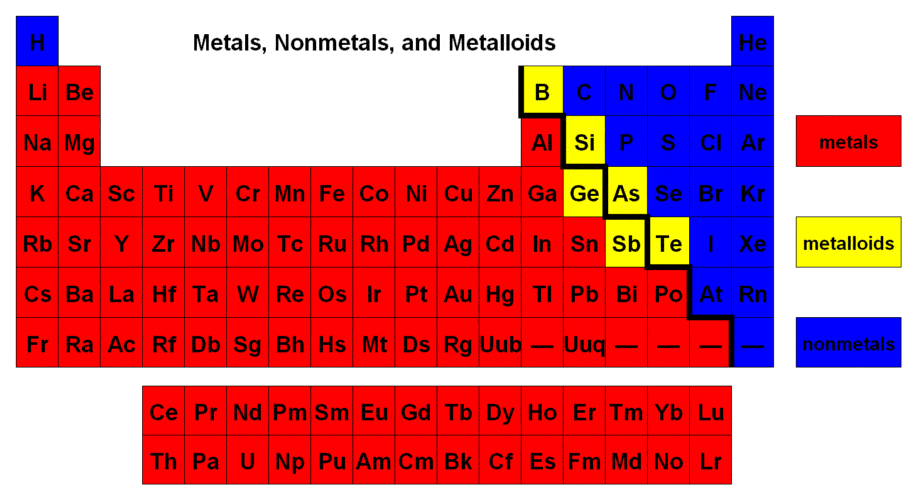
Which of the following physical properties best describe the element in this picture

a)

Dull

b)

Gray

c)

Shiny

d)

Black

108.
What is an ion?
a)
A Charged Atom
b)
A Large Atom
c)
A Small Atom
d)
A Cute Atom
109.
Why are ions formed?
a)
To make our lives difficult
b)
Because atoms want 8 valence electrons
c)
Because atoms have the same number of protons and electrons
d)
Because atoms gained neutrons
110.
An atom becomes _________ when it gains electrons.
a)
Positive
b)
Negative
c)
Neutral
d)
Invinsible
111.

What is the charge of a sodium ion?

a)

+2

b)

+1

c)

-1

d)

-2

112.
Group 17 always has ions with a charge of 
a)
+1
b)
+2
c)
-1
d)
-2
113.
What charge will an Oxygen ion have? 
a)
+1
b)
-1
c)
+2
d)
-2
114.
If an element has 3 valence electrons, what charge will likely form on its ion ?
a)
+3
b)
+5
c)
-3
d)
-5
115.
Which of the following has a -3 charge?
a)
Boron
b)
Fluorine
c)
Nitrogen
d)
Neon
116.
charge of lithium ion
a)
-2
b)
-1
c)
+1
d)
+2
117.
charge of beryllium ion
a)
-2
b)
-1
c)
+1
d)
+2
118.
Which of the following has a -1 charge? 
a)
Aluminum
b)
Bromine
c)
Calcium
d)
Potassium
119.
Elements on the LEFT side of the periodic table will most likely form:
a)
Positive ions
b)
Negative ions
c)
Neutral Ions
d)
None of these
120.
Cations are...
a)
Positive
b)
Negative
c)
Neutral
d)
Purring
121.
Anions are...
a)
Positive
b)
Negative
c)
Neutral
d)
Crying
122.
An atom becomes _______ when it loses electrons.
a)
Positive
b)
Negative
c)
Neutral
d)
Invinsible
123.
Which particles change the charge in atoms when ions are formed?
a)
Protons
b)
Electrons
c)
Neutrons
d)
Kittens
124.
What is the ionic symbol for a Caesium atom?
a)
Cs+
b)
Cs-
c)
Cs+2
d)
Cs-2
125.
Make sure you get enough Potassium in your diet!
a)
Huh?
b)
K
c)
I <3 bananas
d)
Sure