Wayground logo

Free Printable Worksheets

Font size

S
M
L
XL
Worksheets

Unit 1 Matter Summative Review

Total questions: 130

Worksheet time: 2hrs 5mins

Name
Class
Date
1.
To change a solid to a liquid, what do you add?
a)
heat
b)
water
c)
cold
d)
mass
2.
Which state of matter has a definite shape?
a)
solid
b)
liquid 
c)
gas
d)
plasma
3.
Which state of matter take up ALL the space inside a container? 
a)
solid
b)
liquid
c)
gas
d)
all of the above
4.
What is happening in the statement below?
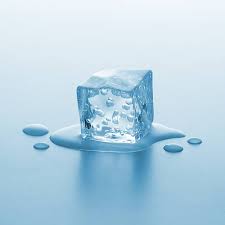
The ice cube melted.
a)
Matter is changing from a liquid to a solid.
b)
Matter is changing from a liquid to a gas.
c)
Matter is changing from a solid to a liquid.
d)
Matter is changing from a gas to a liquid.
5.
This picture is an example of a ____________.
a)
solid
b)
liquid
c)
gas
d)
plasma
6.
This is an example of a _________.
a)
solid
b)
liquid
c)
gas
d)
plasma
7.
When heat is added to a solid, it ______________.
a)
freezes
b)
evaporates
c)
melts
d)
condenses
8.
When heat is added to a liquid, it ______________.
a)
freezes
b)
evaporates
c)
melts
d)
condenses
9.
Liquids and gases are similar because __________________________.
a)
they both take the shape of their container
b)
they both have their own shape
c)
liquids pour and gases don't
d)
liquids take the shape of the container but gases have their own shape
10.
Gases can _______________
a)
be invisible
b)
have a smell
c)
fill the entire container
d)
all of the above
11.
a)
This picture is showing a liquid to solid state change.
b)
This picture is showing a gas to a liquid state change
c)
This picture is showing a solid to liquid state change.
d)
This picture is showing a liquid to a gas state change
12.
The drops of water that appear on the outside of a glass of cold juice on a warm day are an example of?
a)
Sublimation: A solid turning into a gas.
b)
Condensation: A gas changing to a liquid.
c)
Evaporation: A liquid changing to a gas.
d)
Deposition: A gas changing to a solid.
13.
Which item is not made of matter?
a)
air
b)
water
c)
a pencil
d)
a shadow
14.
The picture shows examples of:
a)
solids
b)
gases
c)
liquids
d)
plasmas
15.
Which form of matter takes the shape of a container like this juice?
a)
liquid
b)
solid
c)
plasma
d)
gas
16.
Which form of matter has a definite shape like this picture?
a)
liquid
b)
solid
c)
gas
d)
plasma
17.
The picture shows examples of...
a)
solids
b)
liquids
c)
oil
d)
gases
18.
All these are examples of ....
a)
liquids
b)
gases
c)
solids
d)
water
19.
What are 3 of the states of matter?
a)
solids, liquids, and gases
b)
solids, liquids, and solids
c)
liquids, gases, and density
d)
density, volume, and mass
20.
Freezing point and melting point are the same temperature.
a)
True
b)
False
c)
It depends on the substance
21.
A substance that has a definite shape and volume.
a)
evaporation
b)
gas
c)
liquid
d)
solid
22.
Anything that has mass and takes up space is called ______.
a)
atom
b)
compound
c)
matter
d)
molecule
23.
Electrically charged state of matter similar to a gas.
a)
temperature
b)
liquid
c)
plasma
d)
gas
24.
What Is Volume?
a)
How heavy something is.
b)
The amount of space taken up by and object.
c)
How a liquid flows.
d)
The international unit of measurement.
25.
A gas
a)
has a definite shape but no definite volume
b)
has a definite volume but no definite shape
c)
has fast-moving particles
26.
At higher temperatures
a)
particles in an object have less energy
b)
particles in an object move faster
c)
a gas contracts
27.
The opposite phase of melting is 
a)
freezing 
b)
sublimation
c)
condensation 
d)
deposition 
28.
Which state of matter has tightly packed molecules?
a)
solid
b)
liquid
c)
gas
29.
Which of these is an example of sublimation?
a)
water turning to ice
b)
ice cream dripping
c)
a puddle drying up
d)
dry ice being used to make fog
30.
How are the particles moving in liquids?
a)
Sliding past one another
b)
moving past one another with great speed
c)
vibrating in a fixed postion
31.
What would cause a decrease in particle movement?
a)
decrease atoms
b)
increase in space between atoms
c)
decrease in temperature
d)
increase in mass
32.

The picture above shows several different compound models. What is true of compounds?

a)

Compounds are made of only one chemical element.

b)

Compounds are made of two or more different chemical elements.

c)

Compounds always contain at least hydrogen.

d)

Compounds must have at least three atoms that are chemically bonded.

33.

Trish brought trail mix to a party and Tim brought Soda. Which of the following statements is true about each item.

a)

They both brought mixtures but only Tim brought a solution.

b)

They both brought solutions but only Trish brought a mixture.

c)

They both brought mixtures but only Trish brought a solution.

d)

They both brought solutions but only Tim brought a mixture.

34.

N (Nitrogen) is an example of a(n)

a)

compound

b)

element

c)

mixture

d)

photon

35.

OH is an example of a(n)

a)

compound

b)

element

c)

mixture

d)

photon

36.

Which is an example of a compound

a)

NO

b)

Fe

c)

Mg

d)

C

37.

A substance that is made of only one type of atom is called a(n)

a)

compound

b)

element

c)

mixture

d)

solution

38.

Two or more different types of atoms that are chemically combined in a fixed amount.

a)

compound

b)

element

c)

mixture

d)

photon

39.

( Ca + Cl2 --> CaCl2 ) The ______________ Calcium combines with the ______________ Chlorine to form the ______________ Calcium Chloride.

a)

compound; compound; element

b)

element; compound; compound

c)

element; compound; element

d)

element; element; compound

40.

A chemical combination of two or more different atoms is called

a)

element

b)

transmutation

c)

mixture

d)

compound

41.

Caffeine is a combination of eight carbon atoms that are bonded with ten hydrogen, four nitrogen and two oxygen. What is the best description of this combination?

a)

solution

b)

mixture

c)

compound

d)

element

42.

How do you know if a solid dissolves when you place it in water?

a)

It begins to bubble.

b)

It sinks to the bottom.

c)

It becomes cloudy

d)

It will disappear

43.

Which is true about elements in a compound?

a)

The properties of the compound and the properties of the elements are the same.

b)

The compound shares properties with only one element, but the properties of all remaining elements will differ.

c)

The elements all share the same properties but their properties differ from the compound's properties.

d)

The properties of a compound are different that the properties of its elements.

44.

Hydrogen (H) is

a)

a pure substance

b)

a mixture

c)

a compound

d)

a solution

45.

What is true about compounds and mixtures?

a)

Compounds contain different substances that are chemically combined with each other.

b)

Mixtures contain different substances that are chemically combined with each other.

c)

Compounds and mixtures are both made of two or more different substances or atoms.

d)

Compounds contain different substances that are physically combined only.

46.

Group A: Water, Table Salt, Oxygen, Carbon Dioxide

Group B: Salt Water, Air, Milk, Blood

Which of the following best describes the groups?

a)

Group A are mixtures; Group B are solutions

b)

Group A are elements; Group B are mixtures

c)

Group A are pure substances; Group B are mixtures

d)

Group A are compounds; Group B are pure substances

47.

This is a....

a)

Pure Substance of elements

b)

Mixture

c)

Pure substance of compounds

48.

This is a....

a)

Pure Substance of elements

b)

Mixture

c)

Pure substance of compounds

49.

This is a....

a)

Pure Substance of elements

b)

Mixture

c)

Pure substance of compounds

50.

This is a....

a)

Pure Substance of elements

b)

Mixture

c)

Pure substance of compounds

51.

This is a....

a)

Pure Substance of elements

b)

Mixture

c)

Pure substance of compounds

52.

This is a....

a)

Pure Substance of elements

b)

Mixture

c)

Pure substance of compounds

53.

This is a....

a)

Pure Substance of elements

b)

Mixture

c)

Pure substance of compounds

54.

This is a....

a)

Pure Substance of elements

b)

Mixture

c)

Pure substance of compounds

55.

This is a....

a)

Pure Substance of elements

b)

Mixture

c)

Pure substance of compounds

56.

This is a....

a)

Pure Substance of elements

b)

Mixture

c)

Pure substance of compounds

57.

This is a....

a)

Pure Substance of elements

b)

Mixture

c)

Pure substance of compounds

58.

Physical properties....

a)

change the matter when studied

b)

can be observed and measured without changing the matter being studied

c)

include the ability to burn and rust

d)

are useless unless studied in a lab

59.
Which one of these is a chemical property?
a)
melting point
b)
boiling point
c)
color
d)
flammability
60.
Ability to rust is this type of property:
a)
Physical property
b)
Chemical property
61.

Choose the one that is a chemical property

a)

Magnetism

b)

Size

c)

Color

d)

Reactivity with water

62.

Choose the 3 that are physical properties of aluminum foil

a)

Malleable

b)

Luster

c)

Oxidation

d)

High melting point

63.
Ice melting is an example of a
a)
physical change
b)
chemical change
c)
physical property
d)
chemical property
64.
The ability to burn is a ___ property.
a)
physical
b)
chemical
c)
conservitive
d)
reversed
65.
Dissolving a solid into a liquid is a ___.
a)
physical change
b)
chemical change
66.
A change in a substance that only affects size, shape or state of matter.
a)
chemical change
b)
physical change
c)
chemical property
d)
endothermic
67.
Which of the following properties is a physical property?
a)
magnetism
b)
reaction
c)
flammability
d)
combustion
68.
Example for physical property
a)
melting point
b)
flammability
c)
reactivity 
d)
combustion
69.

A sample is a good conductor of electricity. Burning the sample produces a gold flame. What is the identity of the sample?

a)

Zinc

b)

Tin

c)

Iron

70.
Which of the following is a sign that a chemical reaction has occurred?
a)
change in shape
b)
melting
c)
formation of a gas
d)
dissolving
71.

Which of the following is observed here?

a)

A physical change because you have the same types of atoms

b)

A physical change because you are just breaking the atoms up

c)

A chemical change because you are forming a new substance

d)

A chemical change because atoms are involved

72.
You know you a chemical reaction has occurred if 
a)
there is a precipitate.
b)
there is a color change.
c)
there is a temperature change.
d)
All of these answers are evidence.
73.
Which is NOT an indication of a chemical change?
a)
temperature change
b)
formation of a precipitate
c)
shape change
d)
production of light
74.
What physical property is pictured?
a)
Malleability
b)
Ductility
c)
Solubility
d)
Conductivity
75.

A physical change occurs when

a)

the identity of a substance changes but the appearance does not.

b)

neither the appearance of a substance nor its identity changes.

c)

both the appearance of a substance and its identity changes.

d)

the appearance of a substance changes but its identity does not.

76.

If the chemical properties of a substance remain unchanged & the appearance or shape of an substance changes it is a...

a)

Chemical Change

b)

Physical Change

c)

Both a physical and chemical change.

d)

Neither a physical or chemical change.

77.

When a new substance is formed with different properties than the original substance it is called a...

a)

Chemical change

b)

Physical change

c)

Change in State

d)

Change in appearance only.

78.
Evidence of a chemical reactions is anything that shows - 
a)
a new substance has formed
b)
a solid dissolved in a liquid
c)
interaction between 2 gases
d)
a change in the state of matter
79.

A chemical reaction occurs that involves 1 atom of Carbon, 4 atoms of Hydrogen, and 4 atoms of oxygen. After the reaction, how many atoms of each element will there be?

a)

1 carbon, 4 hydrogen, 4 oxygen

b)

4 carbon, 4 hydrogen, 4 oxygen

c)

4 carbon, 1 hydrogen, 4 oxygen

d)

4 carbon, 4 hydrogen, 1 oxygen

80.

Why does this picture demonstrate the Law of Conservation of Mass?

a)

the number of atoms of each element are the same on both sides

b)

they start out separate and end up combined

c)

the same elements are used

d)

it doesn't demonstrate the Law of Conservation of Mass

81.

Which model represents gas?

a)

A

b)

B

c)

C

82.

When a substance melts, the thermal energy _____________.

a)

decreases

b)

stays the same

c)

increases

d)

decreases then increases

83.
Which of the following is NOT an example of a physical change?
a)
crumpled paper
b)
pencil sharpening
c)
shrunken clothing
d)
rust
84.
Fizzing, foaming, and burning are all examples of
a)
Chemical change
b)
Physical change
85.
Change in density is a physical change.
a)
True
b)
False
86.

The positive particle in an atom.

a)

proton

b)

neutron

c)

electron

d)

electron cloud

87.

How many protons does Nitrogen have?

a)

7

b)

8

c)

14

d)

14.01

88.

Which of the labeled structures is a neutron?

a)

a

b)

b

c)

c

89.

The negative particle in an atom.

a)

proton

b)

neutron

c)

electron

90.

What is the mass number of this element?

a)

7

b)

8

c)

14

d)

14.01

91.

Which of the labeled structures is an electron?

a)

a

b)

b

c)

c

92.

If an element has an atomic number of 11 and a mass number of 23, how many neutrons does it have?

a)

11

b)

12

c)

23

d)

34

93.

The neutral particle in an atom.

a)

proton

b)

neutron

c)

electron

94.

Which of the following particles is NOT found in an atom's nucleus?

a)

proton

b)

neutron

c)

electron

95.

An element has 17 protons and 18 neutrons in the nucleus. What is the element's mass number?

a)

17

b)

18

c)

1

d)

35

96.

Which of the labeled structures is a proton?

a)

a

b)

b

c)

c

97.

What is the chemical symbol of this element?

a)

79

b)

Au

c)

AU

d)

gold

98.
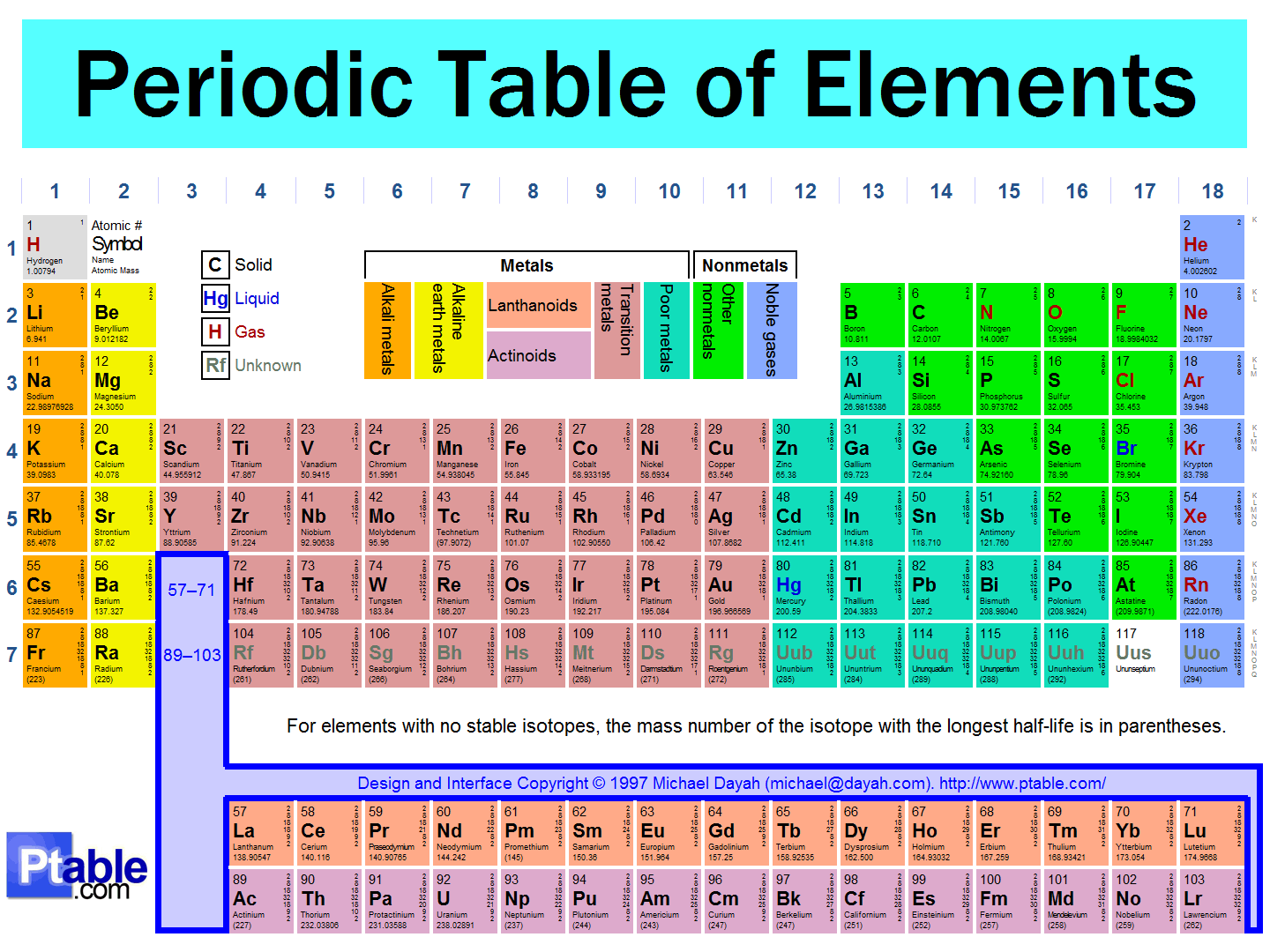
The chart that shows the arrangement of elements in order by their atomic number
a)
Electron Cloud
b)
Periodic Table
c)
amu
d)
Atomic Mass
99.
The sum of the protons and neutrons in the nucleus of an atom
a)
Atomic Number
b)
Compound
c)
Electrons
d)
Mass Number (also called Atomic Mass)
100.
The majority of elements are classified as ________ and are located on the left side/middle of the periodic table.
a)
Metals
b)
Noble Gases
c)
Nonmetals
d)
Metalloids
101.
The vertical columns on the periodic table #1-18
a)
Groups
b)
Periods
c)
Subatomic Particles
d)
Rows
102.
A "pure" substance that cannot be separated or broken down into simpler substances
a)
Compound
b)
Mixture
c)
Period
d)
Element
103.
Most of these elements are gases and are located on the right side of the periodic table
a)
Metalloids
b)
Compounds
c)
Nonmetals
d)
Metals
104.
The horizontal rows on the periodic table #1-7.
a)
Periods
b)
Element
c)
Atomic Number
d)
Group
105.
These elements are found along the zig-zag line on the periodic table.
a)
Metal
b)
Group
c)
Metalloid
d)
Nonmetal
106.
This number is  the top number in the box on the periodic table and ALWAYS equals the number of protons
a)
Neutrons
b)
Atomic Mass Number
c)
Group
d)
Atomic Number
107.
Atoms of which of the following elements have the most similar chemical properties as cadmium (Cd) atoms?
a)
Zinc (Zn)
b)
Gold (Au)
c)
Copper (Cu)
d)
Silver (Ag)
108.
Which of these groups in the Periodic Table is made up primarily of elements that are gases at room temperature?
a)
Group 1
b)
Group 2
c)
Group 12
d)
Group 18
109.
Which of the following groups in the Periodic Table is made from reactive metals?
a)
Group 1
b)
Group 6
c)
Group 17
d)
Group 18
110.
Which of the following groups in the Periodic Table is made from non-reactive elements?
a)
Group 1
b)
Group 4
c)
Group 17
d)
Group 18
111.
Using the Periodic Table, which of the following groups of elements has the smallest atomic number in Period 4?
a)
Group 1
b)
Group 4
c)
Group 7
d)
Group 18
112.

The vertical (up and down) columns in the Periodic Table are called

a)

groups

b)

towers

c)

periods

d)

atomic numbers

113.
The Modern Periodic Table of Elements is arranged by
a)
atomic mass
b)
atomic number
c)
valence electrons
d)
number of isotopes
114.
Elements in a ..................have similar chemical properties.  
a)
period
b)
group
c)
row
115.

The letter, C, is a ... of carbon.

a)

Name

b)

Nickname

c)

Chemical Symbol

d)

Pseudonym

116.

Name this group: These metals are the most reactive.

a)
b)
c)
d)
117.

I am a metal


I am in group 2


I am in period 6


I am…

a)

Mo

b)

Re

c)

S

d)

Ba

118.

I am a nonmetal


I am in period 2


I am in group 16/6A

a)

Ba

b)

Si

c)

Ba

d)

O

119.

Find an element with similar chemical properties to Barium (Ba).

a)

Ca an Ra, because they are in the same group and have similar chemical properties.

b)

Cs and La, b/c they are in the same period number.

c)

Ca and Y, b/c they are 90 degree angle and have similiar properties.

120.

A student mixes 125 grams of sugar, 250 grams of water and 5 grams of flavoring. The solution weighs...

a)

250 grams

b)

380 grams

c)

375 grams

d)

400 grams

121.
Matter can not be created nor destroyed: it can only be
a)
Destroyed a little bit
b)
Invisible
c)
Transformed, changed
d)
None of the above
122.
What will weigh more when a chemical change is complete?  The reactants before the chemical reaction, or the product after the reaction is complete?
a)
They both will weigh the same
b)
The product always weighs more than the reactant
c)
The reactant will weigh more than the product
d)
They both will loose mass after the reaction
123.

What do we call the chemicals that result from a chemical reaction?

a)

reactants

b)

products

c)

subscripts

d)

coefficients

124.

According to the Law of Conservation of Mass, what happens to the wood and oxygen when it is burned?

a)

The wood disappears.

b)

It stays the same chemically.

c)

The atoms in the wood and oxygen rearrange and form smoke and ash.

d)

Nothing.

125.

________ are the starting substances in a chemical equation.

a)

Reactants

b)

Producer

c)

Reaction

d)

Products

126.

What are the reactants in the following chemical equation?

a)

CH4 and 2O2

b)

CO2 and 2H2O

127.

What are the products in the following chemical equation?

a)

CH4 and 2O2

b)

CO2 and 2H2O

128.

How many hydrogen atoms are on both sides of the equation?

a)

2

b)

4

c)

1

129.

How many oxygen atoms are on both sides of the equation?

a)

2

b)

4

c)

1

130.

Is the following equation balanced?

Al + O2 ---> 2Al2O3

a)

YES

b)

NO