
 Worksheets
Q2 Review
Total questions: 46
Worksheet time: 1hrs 16mins
Name
Class
Date
1.

In mitosis, the two resulting cells are
a)
different from the starting cell and identical to each other.
b)
different from the starting cell and different from each other.
c)
identical to the starting cell and different from each other.
d)
identical to the starting cell and identical to each other.
2.

How many chromosomes would a pea cell have if it underwent meiosis?
a)
8
b)
7
c)
46
d)
23
3.
Which represents the correct sequence or order of the stages in the cell cycle?
a)
G 1, G 2, S, M
b)
G 1, G 2, M, S
c)
G 1, M, G 2, S
d)
G1, S, G2, M
4.
Cancer is...
a)
uncontrolled cell growth, or uncontrolled mitosis.
b)
uncontrolled meiosis
c)
uncontrolled cytokinesis
d)
uncontrolled cell homeostasis.
5.
What kind of reproduction produces the most variation within a species?
a)
Budding (mitosis in some plants)
b)
Cytokinesis
c)
sexual reproduction
d)
asexual reproduction
6.
Why is it important for the daughter cells to divide a second time in meiosis?
a)
The second division to increase genetic variation due to crossing over.
b)
The second division forms four identical cells to ensure that all offspring have the same traits.
c)
The second division forms haploid cells that can combine with other haploid cells during fertilization
d)
The second division sorts chromosomes into cells that are the same as the parent cells.
7.
a change in the nucleotide sequence of DNA
a)
is a mutation
b)
can be a mutation or an epigenetic change
c)
is an epigenetic change
d)
always leads to a permanent change in DNA
8.

This pedigree shows what pattern of inheritance?
a)
Autosomal Dominant
b)
Autosomal Recessive
c)
Sex-linked Dominant
d)
Sex-linked Recessive
9.
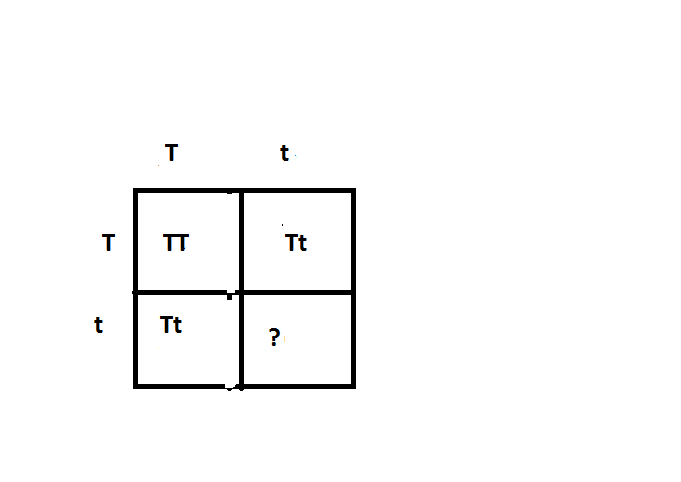
T - tall and t = short
In the punnett square below, what belongs in the missing square
In the punnett square below, what belongs in the missing square
a)
tt
b)
Tt
c)
Bb
d)
TT
10.

This is an example of what?
a)
Complete dominance
b)
Incomplete dominance
c)
Codominance
d)
None of the above
11.

A diagram representing the relationship between photosynthesis and cellular respiration is shown.
The numbered boxes in the diagram represent which of the following?
The numbered boxes in the diagram represent which of the following?
a)
1 - water; 2 - nitrogen
b)
1 - nitrogen; 2 - oxygen
c)
1 - oxygen; 2 - carbon dioxide
d)
1 - carbon dioxide; 2 – water
12.

Which of the following structure is where photosynthesis occurs in the cell?
a)
nucleus
b)
chloroplast
c)
mitochondria
d)
endoplasmic reticulum
13.
When you eat food, what reactant of cellular respiration are you obtaining?
a)
ATP
b)
oxygen
c)
glucose
d)
carbon dioxide
14.
The reactant(s) for photosynthesis are
a)
C6 H12 O6 + 6O2
b)
6CO2 + 6 H2O
c)
ATP
d)
C6 H12 O6
15.
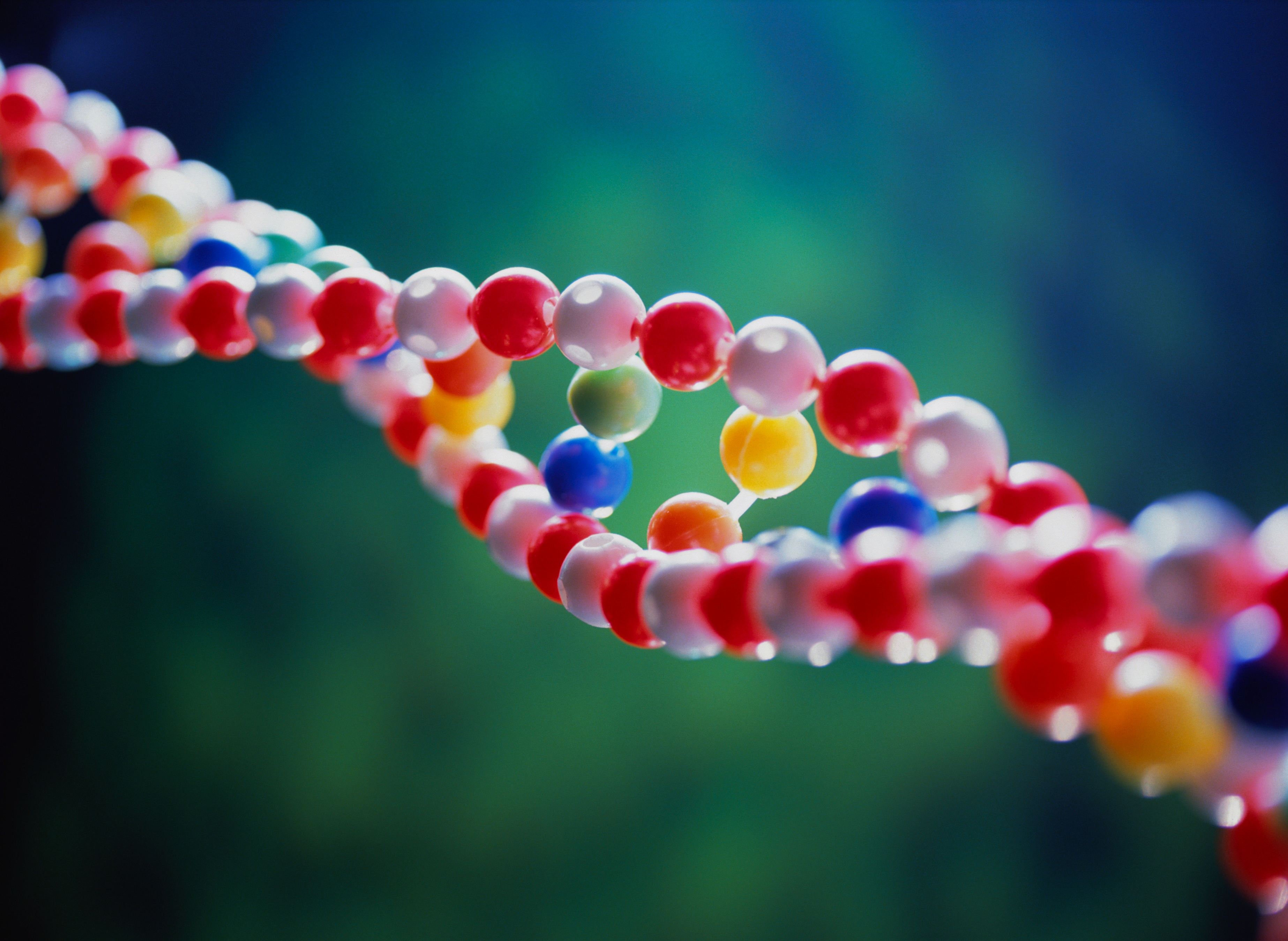
Why is DNA important? Pick the best answer.
a)
It makes bacteria proteins
b)
it serves as the universal blueprint for traits for humans.
c)
it serves as the universal blueprint for traits of all living things
d)
it serves as the universal blueprint for traits for animals only.
16.

Which of the following identifies the processes correctly?
a)
X;Translation; Y:Replication; Z:Transcription
b)
X:Replication; Y:Transcription; Z:Translation
c)
X:Transcription; Y:Replication; Z:Mutation
d)
X:Replication; Y:Mutation; Z:Translation
17.
What are the 4 nitrogen bases of RNA?
a)
adenine, thymine, cytoplasm, and guanine
b)
adenine, thymine cytosine, and guanine
c)
adenine, uracil, cytosine, and guanine
d)
adenine, thymine, cytosine, and glucose
18.
What are the 4 nitrogen bases used in DNA?
a)
adenine, thymine, cytoplasm, and guanine
b)
adenine, thymine cytosine, and guanine
c)
adenine, uracil, cytosine, and guanine
d)
adenine, thymine, cytosine, and glucose
19.
What is the end result of replication?
a)
Two new identical strands of DNA
b)
One parent strand and one daughter strand of DNA
c)
Two new and different strands of DNA
d)
One new strand of DNA
20.

In the diagram strand I and II represent portions of DNA molecule. Strand II would normally include...
a)
AGC
b)
TCG
c)
TAC
d)
GAT
21.
What is genetic engineering?
a)
Manipulation/addition of genes
b)
Naturally breeding two animals with desired traits
c)
Cross-pollinating two crops
d)
Harvesting stem cells
22.
A clone can be BEST thought of as a(n) _____ created in the lab.
a)
identical twin
b)
GMO
c)
science fiction experiment
23.
Which of the following describe a clone?
a)
The DNA of the clone is identical to the DNA of the parent
b)
Clones can happen naturally
c)
Clones can be made in labs
d)
All of the answers are correct
24.
Plasmids are found in bacteria. Scientists use plasmids to
a)
Insert eukaryotic genes into bacteria
b)
insert eukaryotic genes into humans
c)
insert clones into the parent organism
25.

Which enzyme "glues" DNA fragments together?
a)
restriction enzymes
b)
DNA ligase
c)
DNA polymerase
d)
DNA helicase
26.

An organism that contains DNA from another organism is called:
a)
transatlantic
b)
recombinant
c)
binary
d)
selective species
27.
DNA fingerprinting works because
a)
Most genes are dominant
b)
All organisms contain RNA
c)
The most important genes are different among most people
d)
No two people, except identical twins, have exactly the same DNA
28.
After meiosis is complete, the new cells:
a)
are all identical haploid cells
b)
are all different haploid cells
c)
are all identical diploid cells
d)
are all different diploid cells
29.

The stages of mitosis in order
a)
Metaphase, Anaphase, Prophase, Telophase
b)
Prophase, Anaphase, Metaphase, Telophase
c)
Prophase, Metaphase, Anaphase, Telophase
d)
Anaphase, Prophase, Telophase, Metaphase
30.
Goes through P.M.A.T two rounds
a)
Mitosis
b)
Meiosis
c)
Osmosis
d)
Transcription
31.

What genotype is missing from this Punnett Square?
a)
RrYy
b)
RRYY
c)
rryy
d)
RrYY
32.

The image above shows a series of cellular processes. If an error occurs at one of the stages above, which stage would most likely lead to a phenotypic change in an organism?
a)
X
b)
Y
c)
Z
d)
None of the above
33.
Coat color in cats is polygenic. An autosomal gene codes for white color, and a sex-linked gene codes for black or orange color. The sex-linked gene is codominant, which can result in a patchy calico coat. Based on this information, which of the following is impossible to find?
a)
a white and orange male cat
b)
a black and orange male cat
c)
a black and orange female cat
d)
a black, orange, and white female cat
34.
What do mutations change?
a)
DNA
b)
Chromosomes
c)
Genes
d)
Ribosomes
35.
Where does growth happen in a plant?
a)
Dermal Tissue
b)
Ground Tissue
c)
Vascular Tissue
d)
Meristem
36.
The equation below represents a biological process. Where is this process completed?
carbon dioxide + water -> glucose + oxygen
carbon dioxide + water -> glucose + oxygen
a)
mitochondria
b)
ribosomes
c)
cell membrane
d)
chloroplasts
37.

In a molecule of double-stranded DNA, the amount of Adenine present is always equal to the amount of
a)
cytosine
b)
guanine
c)
thymine
d)
uracil
38.

order of replication
a)
3, 2, 1, 4
b)
2, 1, 4, 3
c)
2, 3, 1, 4
d)
3, 4, 1, 2
39.

Genes for medically important proteins can be cloned and inserted into bacteria, as shown in the diagram. Why can bacteria recognize a human gene and then produce a human protein?
a)
DNA replication in bacteria and humans is the same.
b)
Bacterial cells contain the same organelles as human cells.
c)
The basic components of DNA are the same in humans and bacteria.
d)
Bacterial cells and human cells contain the same kind of chromosomes.
40.
A woman develops throat cancer after prolonged exposure to tobacco through second hand smoke. Would her future children be at risk of inheriting this throat cancer?
a)
Yes, if she had a baby after developing cancer.
b)
Yes, this is a mutation in the DNA of her somatic cells.
c)
No, this condition does not affect the woman’s egg cells.
d)
No, babies cannot get throat cancer because they are immune.
41.
Offspring receives one _____________ from each parent
a)
blue jeans
b)
allele
c)
machines
d)
pedigree
42.
What are the products of photosynthesis?
a)
water and carbon dioxide
b)
oxygen and glucose
c)
oxygen and carbon dioxide
d)
oxygen and water
43.
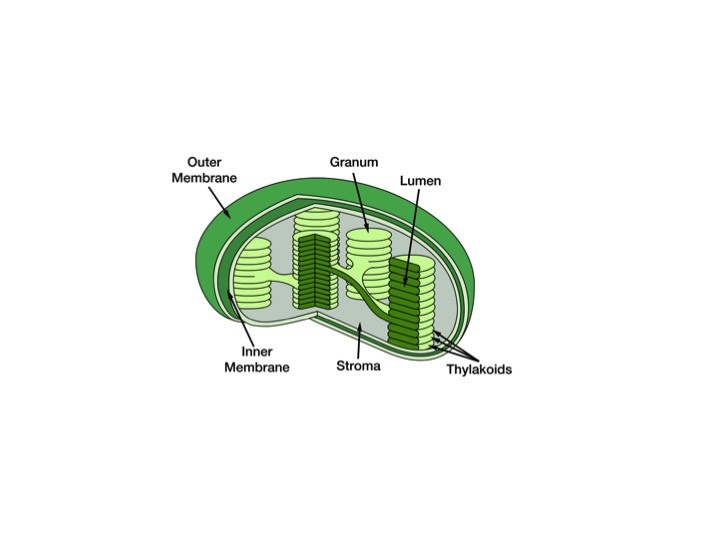
Chloroplasts are...
a)
Structures of animal cells to produce ATP
b)
Organelles where lipids are elaborated
c)
Specialized structures of plants where food is made
d)
Waste organelle of plants
44.
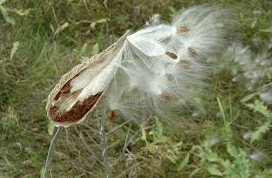
All of the following are examples of seed disbursement except:
a)
wind
b)
volcanic eruptions
c)
physical movement (rolling)
d)
animals feces
45.
Small grains that contain a plant's male reproductive cells.
a)
stamen
b)
pollen
c)
anther
d)
stigma
46.

The stalk connecting the ovaries and stigmas.
a)
filament
b)
pistil
c)
style
d)
anther
100 %

